
Have you ever stopped to ponder how a vacuum cleaner works step by step to keep your home pristine? It’s a clever ballet of physics and engineering! A powerful motor spins a fan, creating a low-pressure zone that pulls in air, dirt, and debris. This dirty air is then meticulously filtered, trapping particles while expelling clean air, making your living space healthier and spotlessly clean.
We’ve all got one. That humming, whirring device that magically sucks up dust bunnies, crumbs, and all manner of mysterious detritus from our floors. It’s a household hero, an unsung warrior against dirt, yet how many of us truly understand the ingenious engineering behind its everyday magic? If you’ve ever paused mid-chore and wondered, “How does a vacuum cleaner work step by step?”, you’re in the right place!
Far from being just a fancy dustpan, a vacuum cleaner is a sophisticated piece of equipment that masterfully applies basic physics principles to achieve sparkling results. It’s not about a magical force, but rather a brilliant orchestration of air pressure, airflow, and filtration. Understanding the intricate dance of these components not only satisfies your curiosity but also empowers you to use your vacuum more effectively and keep it running smoothly for years to come.
So, let’s pull back the curtain and embark on an exciting journey to demystify this household staple. Get ready to explore the fascinating world of vacuum mechanics, as we break down exactly how a vacuum cleaner works step by step, from the moment you hit the power button to the satisfying sparkle of a clean floor.
Key Takeaways
- Suction is Key: The core principle behind how a vacuum cleaner works is the creation of a low-pressure area (a partial vacuum) by a motor-driven fan, which draws in air and debris from higher-pressure surrounding areas.
- Agitation Aids Collection: Many vacuum cleaners, especially upright and stick models, use a motorized brush roll to agitate carpets and dislodge embedded dirt, making it easier for the suction to pull it in.
- Airflow is the Transporter: Once dislodged, dirt and dust particles are suspended in the fast-moving air stream, which carries them through the vacuum’s body to the collection system.
- Filtration Separates Air and Dirt: Essential filters (like pre-motor and exhaust filters, or cyclonic separation in bagless models) are designed to trap dust and allergens, ensuring only clean air is expelled back into your home.
- Bagged vs. Bagless: Vacuum cleaners primarily differ in their dirt collection method: bagged models collect debris in a disposable bag that acts as a filter, while bagless models use cyclonic forces and washable filters to separate dirt into a reusable dustbin.
- Regular Maintenance is Crucial: To maintain optimal suction and filtration efficiency, consistent maintenance such as cleaning filters, clearing brush rolls, and emptying dustbins/replacing bags is vital for understanding how a vacuum cleaner works effectively over time.
Quick Answers to Common Questions
What creates the suction in a vacuum cleaner?
A powerful electric motor spins a fan (impeller) at high speeds, which pushes air out of the vacuum’s exhaust, creating a low-pressure area inside the machine that draws in outside air and debris.
What is the primary role of the brush roll?
The brush roll agitates carpet fibers to dislodge embedded dirt, dust, and pet hair, and then sweeps these loosened particles into the path of the vacuum’s suction.
What is the main difference between bagged and bagless vacuum cleaners?
Bagged vacuums collect dirt in a disposable bag that also acts as a filter, while bagless vacuums use cyclonic separation and a reusable dustbin, requiring regular cleaning of internal filters.
Why is filtration so important in a vacuum cleaner?
Filtration separates dirt and allergens from the air pulled into the vacuum, preventing these particles from being expelled back into your home and ensuring only clean air is released.
How can I prevent clogs in my vacuum cleaner?
To prevent clogs, avoid vacuuming large objects, excessive liquids, or very dense debris. Regularly check and clear the hose, nozzle, and internal pathways for obstructions.
📑 Table of Contents
The Core Principle: Creating Suction
At the heart of every vacuum cleaner, regardless of its size, shape, or brand, lies one fundamental principle: the creation of suction. This isn’t some mystical vacuum from outer space; it’s a very practical application of atmospheric pressure. Think about it: the air around us constantly exerts pressure. A vacuum cleaner essentially creates a lower pressure zone inside its body, and because nature abhors a vacuum, the higher-pressure air from the outside rushes in, bringing dirt and debris along for the ride.
The Motor and Fan – The Heartbeat of Suction
The entire operation begins with the motor. When you switch on your vacuum, you’re activating a powerful electric motor. This motor is directly connected to a fan, or impeller, which typically has angled blades, much like an airplane propeller. As the motor spins the fan at incredibly high speeds – often tens of thousands of revolutions per minute – it pushes air out through the vacuum’s exhaust port. This action of forcing air out of the vacuum creates a region of significantly lower air pressure inside the machine than the atmospheric pressure outside of it. This pressure differential is what we commonly refer to as “suction.”
Imagine sipping through a straw. When you suck, you’re removing air from the straw, creating a low-pressure area. The higher-pressure liquid in your cup then gets pushed up the straw and into your mouth. A vacuum cleaner works on the exact same principle, but on a much larger scale and with much greater force, creating a continuous flow of air.
Airflow Pathway: The Dirt’s Journey Begins
Once that low-pressure zone is established, the magic of airflow takes over. The air outside the vacuum, along with any loose particles on your floor, is pulled into the machine through the cleaning head or nozzle. This opening is specifically designed to maximize the intake of air and dirt. The airflow is incredibly strong and directed, forming a powerful current that sweeps up dirt, dust, pet hair, and crumbs from the floor’s surface. This initial step of drawing air and debris into the system is crucial to understanding how a vacuum cleaner works step by step to clean your home.
The pathway of this dirty air is carefully designed. From the nozzle, it travels through tubes or hoses, often wide and smooth, to prevent clogs. This entire journey is driven by the relentless pulling force generated by the motor and fan. It’s a continuous, one-way street for debris, leading directly into the vacuum’s collection system.
From Dirt to Dustbin: The Collection Process
With the powerful air current now established, the vacuum cleaner moves beyond simply creating suction to actively collecting and transporting the unwanted elements from your home. This stage is where the physical interaction with your floor truly begins, preparing the debris for its final destination: the dustbin or bag.
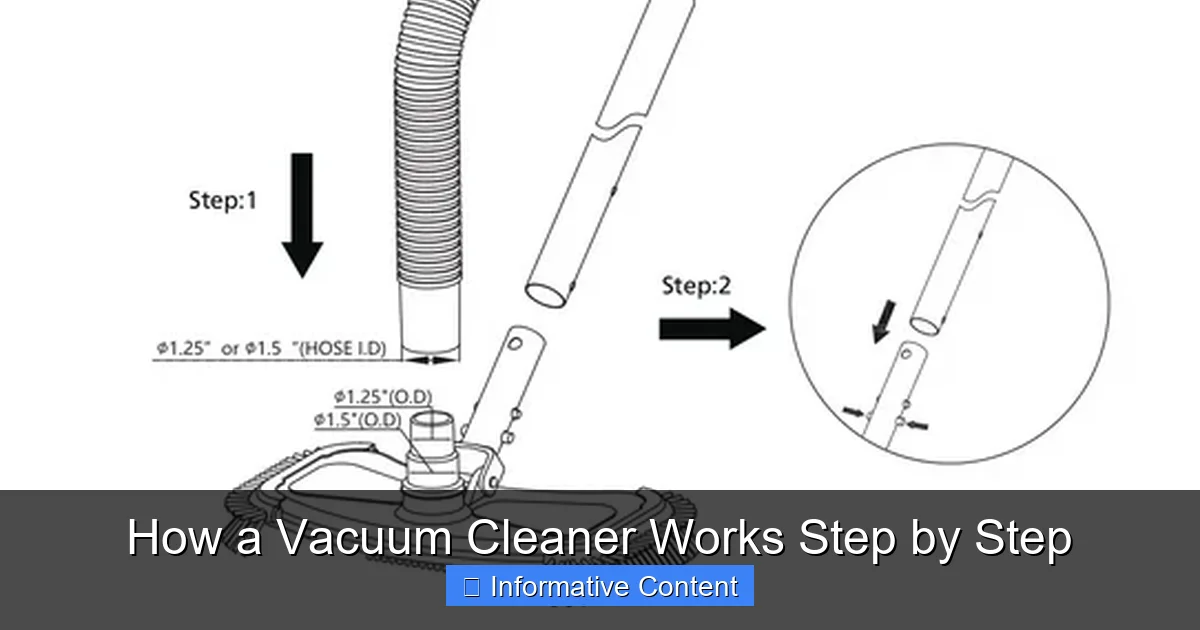
Visual guide about How a Vacuum Cleaner Works Step by Step
Image source: i5.walmartimages.com
The Vacuum Head and Brush Roll – The Dirt Aggregators
Most vacuum cleaners, particularly upright and stick models designed for carpets, feature a specialized cleaning head that plays a critical role in dirt collection. Within this head, you’ll often find a motorized brush roll, or beater bar. This brush roll is equipped with stiff bristles that spin at high speeds, usually driven by its own belt from the main motor or a separate motor.
The purpose of this spinning brush roll is twofold: first, it agitates the carpet fibers, loosening embedded dirt, dust, and pet hair that suction alone might miss. Think of it like a miniature rake aggressively digging into the carpet. Second, it helps to sweep these dislodged particles directly into the path of the vacuum’s powerful airflow, ensuring they are readily available to be sucked up. This agitation is a key component of how a vacuum cleaner works step by step to deep clean your floors, especially carpets.
For hard floors, some vacuum heads have softer bristles or no brush roll at all, relying purely on suction and careful design to lift debris without scratching delicate surfaces. Others might have brush rolls that can be turned off, making them versatile for different floor types.
Agitation and Lifting
Beyond the brush roll, the design of the vacuum head itself contributes to effective dirt lifting. The edges of the cleaning head, often equipped with seals or brushes, create a localized area of higher suction directly around the intake nozzle. This intensified suction, combined with the mechanical agitation from the brush roll, allows the vacuum to efficiently lift even stubborn dirt and debris. Practical tip: if your vacuum isn’t picking up as much as it used to, check the brush roll for tangled hair or debris, as this can severely hinder its ability to agitate and sweep effectively.
Suction’s Role in Dirt Transport
Once the dirt is agitated and positioned at the intake nozzle, the continuous, high-speed airflow created by the motor and fan takes over. The air current acts as a powerful conveyor belt, carrying the dirt, dust, and debris rapidly through the vacuum’s internal pathways. These pathways, typically wide and unobstructed, lead directly to the collection chamber – either a dust bag or a cyclonic dustbin. The force of the suction is strong enough to transport everything from fine dust particles to larger crumbs with ease, ensuring that once it’s picked up, it stays within the system until you’re ready to dispose of it. This entire process highlights the elegant simplicity of how a vacuum cleaner works step by step from floor to dustbin.
Filtration: Keeping the Air Clean
The vacuum cleaner’s job isn’t just about picking up dirt; it’s also about preventing that dirt from being spewed back into your home. This is where the crucial process of filtration comes into play. After the air has carried the debris into the collection chamber, it needs to be separated from the captured particles before being exhausted back into your room. This multi-stage filtration system is vital for air quality.
Primary Filters (Cyclonic Separation and Pre-Motor Filters)
In bagless vacuum cleaners, the initial separation of dirt from air often happens through a process called cyclonic separation. The air, laden with dirt, is spun at high speeds within a conical chamber. This creates a centrifugal force that flings heavier dirt and debris particles outwards against the walls of the chamber, where they lose momentum and fall into the dustbin below. Lighter dust particles continue to spiral upwards towards additional filters. This ingenious method dramatically reduces the amount of dirt that reaches the fine filters, extending their life and maintaining suction power.
In both bagged and bagless systems, a primary filter, often called a pre-motor filter, is usually located before the motor. Its job is to capture the larger, finer dust particles that might have escaped the initial collection or cyclonic separation. This protects the motor from damage by airborne particles and ensures that the air passing through the motor is relatively clean. These filters can be made of foam, felt, or pleated paper and are often washable in bagless models.
Exhaust Filters (HEPA, Post-Motor)
After passing through the motor, the air is still not quite ready to be released. It then encounters one or more exhaust filters, often called post-motor filters. These filters are the last line of defense, designed to trap microscopic particles, allergens, and pollutants that could otherwise be blown back into your living space. Many modern vacuum cleaners feature HEPA (High-Efficiency Particulate Air) filters at this stage. A HEPA filter is a specialized pleated mechanical air filter that can trap at least 99.97% of airborne particles 0.3 micrometers (µm) in diameter. This includes pollen, pet dander, dust mites, and even some bacteria and viruses. The inclusion of HEPA filtration significantly improves indoor air quality, making it a critical aspect of how a vacuum cleaner works step by step to create a healthier home environment.
Regularly cleaning or replacing these filters, as per the manufacturer’s instructions, is paramount. Clogged filters can drastically reduce suction power and diminish the vacuum’s ability to clean the air, effectively making it less efficient and potentially re-circulating dust. This is a common maintenance tip when people ask how a vacuum cleaner works step by step to maintain its performance.
Bagged vs. Bagless Systems
The method of dirt collection is another key differentiator. In a **bagged vacuum cleaner**, the incoming dirty air is directed straight into a disposable bag. This bag acts as both the primary collection vessel and a filter. The bag is made of porous material that allows air to pass through while trapping the dirt. As the bag fills, it acts as an increasingly effective filter, though a very full bag will restrict airflow and reduce suction.
In a **bagless vacuum cleaner**, as mentioned, dirt is separated by cyclonic action and collected in a transparent dustbin. This allows users to see when it needs emptying and avoids the cost of replacement bags. However, bagless systems typically require more frequent cleaning of multiple filters (pre-motor and post-motor) to maintain performance and air quality.
Both systems have their merits, but the filtration principles remain the same: trap the dirt, release clean air. This entire filtration stage is critical to understanding how a vacuum cleaner works step by step to improve your home’s hygiene.
Types of Vacuum Cleaners and Their Specifics
While the fundamental principle of suction and filtration remains constant, vacuum cleaners come in a delightful array of shapes, sizes, and specializations. Each type is designed to excel in different scenarios, leveraging the core mechanics in slightly varied ways.
Upright Vacuums
These are the classic, familiar workhorses, particularly popular in homes with a lot of carpeting. The motor, brush roll, and dust collection system are all housed in one upright unit. Their design typically places the cleaning head (with its powerful brush roll) directly beneath the main body, making them very effective at deep-cleaning carpets. Many uprights also feature onboard tools for versatility, allowing them to clean upholstery or tight corners. Their weight and bulk can sometimes be a drawback for stair cleaning or portability.
Canister Vacuums
Canister vacuums separate the motor and collection unit (the “canister”) from the cleaning head, connecting them via a long, flexible hose. This design offers incredible versatility and maneuverability. The lighter cleaning head makes them excellent for cleaning under furniture, navigating stairs, and reaching into tight spaces. They often come with a variety of attachments for different surfaces, from hard floors to delicate drapes. While they might not always have the same aggressive brush roll as an upright, many models offer powered brush heads for carpet cleaning.
Robotic Vacuums
The ultimate in convenience, robotic vacuums use smart technology to navigate and clean your home autonomously. They feature smaller motors and fans, generating less raw power than traditional uprights or canisters. Their cleaning relies more heavily on efficient brush systems (often a combination of side brushes to sweep debris inward and a main brush roll) and continuous cleaning cycles. Filtration is still a key component, just miniaturized. While they may not offer the deep-cleaning power of larger models, they excel at maintaining cleanliness with minimal effort.
Handheld and Stick Vacuums
These lightweight and compact options are designed for quick clean-ups and specific tasks. Handheld vacuums are perfect for spills, car interiors, or small messes. Stick vacuums are essentially lightweight uprights, often cordless, providing great grab-and-go convenience for hard floors and light carpet cleaning. Due to their smaller size, their motors and dustbins are proportionally smaller, but they still operate on the same principle of creating suction and filtering air. They exemplify how a vacuum cleaner works step by step even in a compact form factor.
Maintenance and Troubleshooting Tips
Understanding how a vacuum cleaner works step by step also means knowing how to keep it working efficiently. Proper maintenance is not just about extending the life of your appliance; it’s about ensuring it consistently delivers maximum cleaning power and maintains good air quality in your home. Neglecting a vacuum can lead to reduced suction, poor filtration, and even damage to the motor.
Regular Filter Cleaning/Replacement
This is arguably the most critical maintenance task. Clogged filters are the number one cause of reduced suction and poor air filtration. For bagless vacuums, check your pre-motor and post-motor filters regularly (e.g., monthly for pre-motor, every 3-6 months for post-motor, depending on usage and manufacturer guidelines). Washable filters should be rinsed thoroughly with cold water and allowed to air dry completely for at least 24 hours before reinserting. Non-washable filters, or those with HEPA ratings, should be replaced as recommended by the manufacturer. For bagged vacuums, replacing the bag regularly (when it’s two-thirds full or less) also serves the purpose of replacing a primary filter.
Brush Roll Care
The brush roll is constantly in contact with your floors, and over time, hair, strings, and carpet fibers can become tangled around it. This not only impedes the brush roll’s ability to agitate and sweep but can also strain the motor or drive belt. Periodically flip your vacuum over and use scissors or a seam ripper to carefully cut and remove any tangled debris. Some brush rolls are removable for easier cleaning. A clean brush roll ensures optimal effectiveness when you consider how a vacuum cleaner works step by step to lift dirt.
Bag/Dustbin Management
For bagged vacuums, replace the bag before it becomes completely full. A very full bag restricts airflow, reducing suction power and potentially making the motor work harder. For bagless vacuums, empty the dustbin after every use, or when the “max fill” line is reached. This prevents dirt from building up and impeding the cyclonic separation process, ensuring consistent suction.
Clog Prevention
A sudden loss of suction is often due to a clog somewhere in the system. The most common culprits are the hose, the intake nozzle, or the tubes leading to the dustbin. Avoid vacuuming large objects like socks, small toys, or excessive amounts of liquid, as these are primary causes of blockages. If you suspect a clog, disconnect the hose and physically inspect it, using a broom handle or a long, flexible tool to dislodge any obstructions. Always turn off and unplug the vacuum before attempting any maintenance or clog removal.
By following these simple tips, you ensure that your vacuum cleaner continues to operate at its peak performance, effectively implementing how a vacuum cleaner works step by step to maintain a clean and healthy home.
Conclusion
From the moment you plug it in to the final whir of its motor, the vacuum cleaner performs a sophisticated, yet seemingly effortless, dance of physics and engineering. We’ve explored how a vacuum cleaner works step by step, from the ingenious creation of suction by a high-speed fan and motor, to the crucial role of the brush roll in dislodging stubborn dirt, and finally, the intricate filtration systems that trap microscopic particles, releasing only clean air back into your environment.
It’s truly a testament to clever design, turning a simple motor and fan into a powerful ally against household grime. Understanding these individual steps not only deepens your appreciation for this everyday device but also empowers you to be a more informed user. You now know why a full bag reduces suction, why filter cleaning is vital, and why clearing a tangled brush roll makes such a difference.
So, the next time you hear that familiar hum, take a moment to marvel at the science in action. By giving your vacuum cleaner a little regular care and attention, you’re not just maintaining a machine; you’re ensuring that your trusty cleaner continues to perform its magic, keeping your home spotless and your air fresh for many years to come. Clean smarter, not harder!
Frequently Asked Questions
Can a vacuum cleaner really improve air quality?
Yes, especially models equipped with HEPA filters. These filters can capture microscopic particles like pollen, pet dander, dust mites, and other allergens, significantly reducing their presence in the air recirculated back into your home and improving overall indoor air quality.
How often should I clean my vacuum’s filters?
It depends on your vacuum model and usage. Generally, washable pre-motor filters in bagless vacuums should be cleaned monthly, while post-motor or HEPA filters might need cleaning or replacement every 3-6 months. Always consult your vacuum cleaner’s manual for specific recommendations.
What does HEPA stand for and why is it important?
HEPA stands for High-Efficiency Particulate Air. It’s a type of pleated mechanical air filter that can trap at least 99.97% of airborne particles 0.3 micrometers in size. This is important because it ensures that even very fine dust, allergens, and pollutants are captured rather than being blown back into your living space.
Why is my vacuum losing suction power?
Loss of suction is commonly caused by clogged filters, a full dustbin or bag, a blockage in the hose or nozzle, or a tangled brush roll. Performing regular maintenance checks and clearing these issues often restores full suction power.
Are robotic vacuums as powerful as traditional ones?
Generally, no. Robotic vacuums have smaller motors and rely more on continuous, systematic cleaning and efficient brush systems than sheer suction power. While excellent for maintaining cleanliness, they typically don’t offer the deep-cleaning power of a full-sized upright or canister vacuum.
How long do vacuum cleaners typically last?
The lifespan of a vacuum cleaner varies greatly depending on its quality, usage, and how well it’s maintained. A well-cared-for vacuum from a reputable brand can last anywhere from 5 to 10 years, or even longer, while cheaper models might only last a couple of years.