
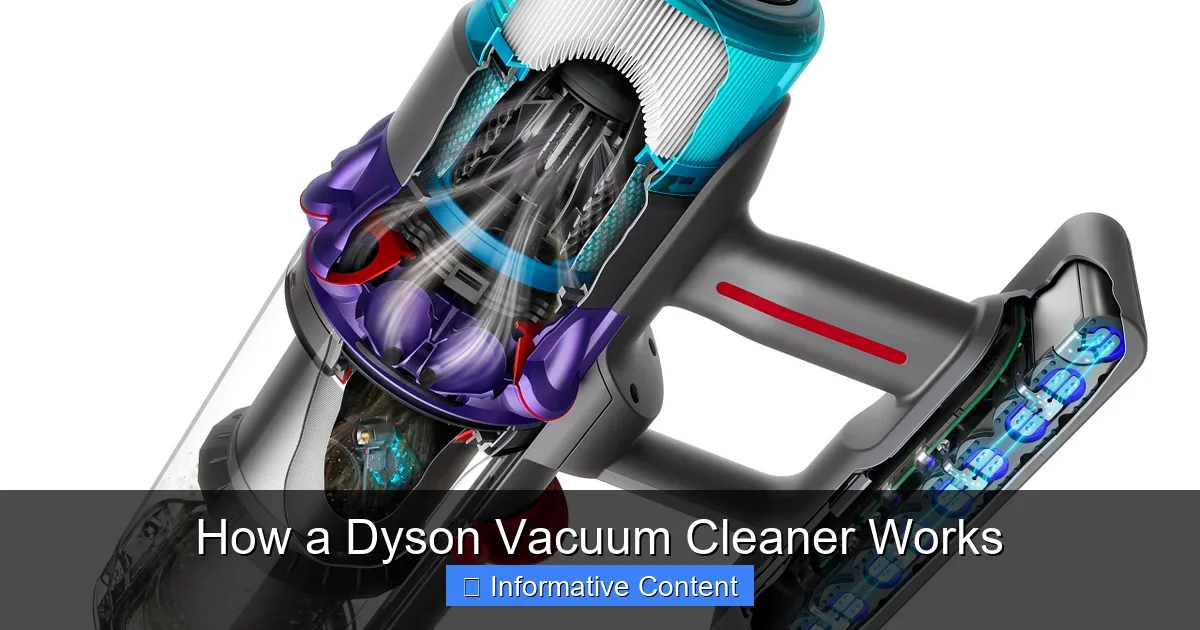
Dyson vacuum cleaners operate on a revolutionary principle known as cyclonic separation. Instead of relying on bags that clog, they use powerful centrifugal forces to spin dust and dirt out of the airflow, collecting it in a clear bin while expelling cleaner air. This bagless design, combined with advanced digital motors and multi-stage filtration, ensures consistent, fade-free suction and superior particle capture for a healthier home environment.
How a Dyson Vacuum Cleaner Works
Have you ever wondered what makes a Dyson vacuum cleaner so different? For many years, vacuum cleaners were simple machines. They sucked up dirt and dust, trapping it in a bag. But those bags had a major flaw: as they filled up, they clogged the airflow. This meant your vacuum would lose suction power, making cleaning less effective. It was a common problem, one that frustrated inventor James Dyson so much he decided to do something about it.
Dyson’s quest led him to a revolutionary idea, inspired by industrial sawmills that used cyclonic technology to separate wood dust from the air. He realized this same principle could be applied to home vacuum cleaners. After thousands of prototypes and countless hours of work, the first bagless, no-loss-of-suction vacuum cleaner was born. It changed the game, setting a new standard for home cleaning appliances.
Today, a Dyson vacuum cleaner is known worldwide for its powerful suction, innovative design, and ability to capture even the tiniest particles. But how exactly does this marvel of engineering achieve such impressive results? Let’s take a deep dive into the science and technology that make a Dyson vacuum cleaner work, from its powerful motors to its sophisticated filtration systems.
Key Takeaways
- Cyclonic Separation: Dyson vacuums use a bagless, multi-stage cyclonic technology that generates powerful centrifugal forces to separate dust and debris from the air, preventing loss of suction.
- Digital Motors: At the heart of many Dyson vacuum cleaners are compact, powerful Dyson Digital Motors (DDM), which spin incredibly fast to provide strong, consistent suction while being energy-efficient.
- Multi-Stage Filtration: Beyond cyclones, Dyson vacuums employ advanced pre-motor and post-motor filtration systems, often including HEPA-grade filters, to capture microscopic particles and allergens, expelling cleaner air.
- No Loss of Suction: The innovative cyclonic design ensures that dust and dirt are kept away from the filters, preventing them from clogging quickly and allowing the vacuum to maintain consistent suction power.
- Advanced Ergonomics and Battery Life: Features like Ball™ technology offer superior maneuverability, while cordless models benefit from sophisticated lithium-ion batteries that provide fade-free power for extended cleaning sessions.
- Engineered for Cleanliness: Every component, from brush bars to attachments, is designed to maximize dirt pick-up and airflow efficiency, making a Dyson vacuum cleaner a highly effective tool for a healthier home.
Quick Answers to Common Questions
What is the main technology in a Dyson vacuum?
The main technology in a Dyson vacuum cleaner is cyclonic separation, which uses centrifugal force to spin dust and dirt out of the airflow, preventing loss of suction.
Do Dyson vacuums use bags?
No, Dyson vacuum cleaners are bagless. They collect dirt in a clear bin that can be easily emptied, eliminating the need for disposable bags.
What is a Dyson Digital Motor?
A Dyson Digital Motor (DDM) is a compact, powerful, and efficient brushless motor that spins at extremely high speeds, providing strong, consistent suction without wear and tear from brushes.
Are Dyson vacuums good for allergies?
Yes, Dyson vacuums are generally excellent for allergy sufferers due to their multi-stage filtration systems, which often include HEPA-grade filters to capture microscopic allergens and expel cleaner air.
How often should I clean my Dyson filter?
Most washable Dyson filters should be cleaned at least once a month under cold water, though specific instructions may vary by model and usage. Always refer to your vacuum’s manual.
📑 Table of Contents
The Core Innovation: Cyclonic Separation Technology
At the heart of every Dyson vacuum cleaner is its ingenious cyclonic separation technology. This is what truly sets it apart from traditional bagged vacuums. Forget about dusty bags and diminishing suction power; Dyson found a better way.
A Brief History of Cyclonic Separation
Before Dyson, almost all domestic vacuum cleaners relied on bags. Air carrying dust and debris was pulled into a bag, which acted as a filter. While the bag trapped the larger particles, it also became a barrier. As dust accumulated on the inside of the bag, the tiny holes that allowed air to pass through would become blocked. This restricted airflow, making the motor work harder and causing a significant drop in suction power. Your vacuum would simply stop cleaning effectively.
James Dyson, frustrated with his own vacuum’s performance, noticed the cyclone dust extractors used in local sawmills. These industrial machines used centrifugal force to separate sawdust from the air, without ever needing a bag. He spent years adapting this principle for a domestic vacuum cleaner, eventually creating the world’s first bagless vacuum that didn’t lose suction. This innovation was the beginning of what we know as a Dyson vacuum cleaner today.
The Principle of Centrifugal Force
So, how does this “cyclonic separation” actually work? It all comes down to centrifugal force. Imagine swirling water in a bucket. The water is pushed outwards against the sides of the bucket. This is centrifugal force in action.
In a Dyson vacuum cleaner, air laden with dust and dirt is sucked into a conical chamber at incredibly high speeds. As this dirty air spins rapidly within the cyclone, centrifugal force takes over. The heavier dust and dirt particles are flung outwards against the walls of the cone. As they hit the walls, they lose speed and gravity takes over, causing them to fall downwards into the clear dust bin. The cleaner air, being lighter, remains in the center of the cyclone and continues its journey through the vacuum. This process efficiently separates the debris from the airflow without ever needing a bag.
From Dust to Air: The Journey Inside a Dyson
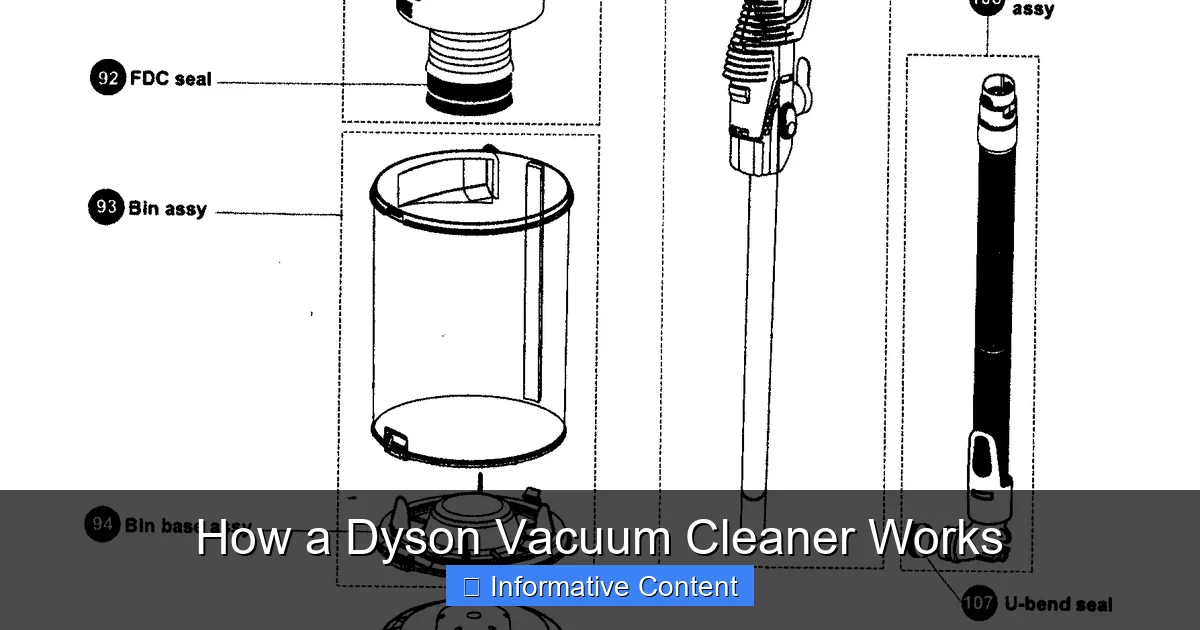
Visual guide about How a Dyson Vacuum Cleaner Works
Image source: i.pinimg.com
Understanding the principle is one thing, but seeing how it’s applied in a Dyson vacuum cleaner is truly fascinating. Let’s trace the path of dirt from your floor, through the machine, and what happens to the air.
The Suction Head and Brush Bar
The journey begins at the vacuum’s head, where the real action of dirt collection starts. Most Dyson vacuum cleaners feature a specialized suction head equipped with a motor-driven brush bar. This brush bar spins at very high speeds, typically made with nylon bristles for carpets and soft carbon fiber filaments for hard floors.
The spinning bristles agitate carpet fibers, dislodging embedded dirt, pet hair, and debris. For hard floors, the softer filaments sweep fine dust and large particles into the suction path. This active agitation is crucial because it ensures that even stubborn grime is lifted from the surface, ready to be sucked up by the powerful airflow generated by the Dyson vacuum.
The Inlet and Initial Separation
Once the dirt and air are pulled into the suction head, they travel through a robust inlet tube into the main body of the Dyson vacuum cleaner. This is where the initial separation of larger debris often occurs. In some Dyson designs, particularly the larger uprights, the very first stage of cyclonic separation is designed to capture bigger pieces of dirt and hair. This prevents them from clogging the smaller, more sensitive cyclones downstream. This first stage is crucial for maintaining consistent airflow and protecting the intricate internal mechanisms.
The Cyclone Assembly: Unpacking the V-Ball™ and Root Cyclone™
The magic truly happens within the cyclone assembly. Early Dyson models, like the original Root Cyclone™, used one large cyclone. But Dyson’s engineers quickly realized they could improve efficiency. By using multiple, smaller cyclones, they could generate even greater centrifugal forces, capturing finer dust particles that a single, larger cyclone might miss.
Modern Dyson vacuum cleaners, especially those featuring Radial Root Cyclone™ or 2 Tier Radial™ cyclone technology, pack dozens of these tiny cyclones into their compact designs. As the air passes from the initial separation stage, it’s channeled into these individual cyclones. The air speeds up even further within these smaller cones, intensifying the centrifugal force. This forces even microscopic dust particles and allergens (like pollen and pet dander) out of the airflow and into the dust bin. The multi-stage nature of this cyclonic separation ensures that a vast majority of debris, from large crumbs to fine dust, is efficiently removed from the air.
Multi-Stage Filtration: Capturing the Tiniest Particles
Even after the powerful cyclonic separation, some extremely fine particles might still be suspended in the air. This is where Dyson’s advanced filtration system comes into play, ensuring that the air expelled back into your home is much cleaner than the air it sucked in.
Pre-Motor Filters: Protecting the Engine
Before the air reaches the vacuum’s motor, it typically passes through a pre-motor filter. This filter’s primary job is to catch any microscopic dust particles that might have escaped the cyclones. By doing so, it protects the motor from damage. Dust can accumulate on motor components, leading to overheating and reduced lifespan.
Most Dyson vacuum cleaner pre-motor filters are washable. This means you can rinse them under cold water, let them air dry completely, and reuse them. This not only saves you money on replacement filters but also contributes to the vacuum’s consistent performance. Regular cleaning of this filter is a key part of maintaining your Dyson’s suction power.
Post-Motor Filters (HEPA): Clean Air Out
The final stage of air purification in many Dyson vacuum cleaners involves a post-motor filter, often a HEPA-grade filter. HEPA stands for High-Efficiency Particulate Air. A true HEPA filter is certified to capture 99.97% of airborne particles 0.3 micrometers in diameter. To give you some perspective, a human hair is about 50-70 micrometers thick. This means HEPA filters are capable of trapping incredibly small particles, including pollen, pet dander, dust mites, and even some bacteria and viruses.
As the air passes through this final filter, it’s stripped of virtually all remaining microscopic pollutants. The result? The air expelled from a Dyson vacuum cleaner is often cleaner than the air you breathe in your room. This is particularly beneficial for allergy sufferers or anyone looking to improve indoor air quality. The sealed system of a Dyson also ensures that no dirty air leaks out before it’s been properly filtered.
Powering the Performance: Dyson’s Digital Motors and Battery Tech
The innovative cyclonic separation and filtration systems wouldn’t be as effective without a powerful and efficient engine. Dyson has invested heavily in developing its own unique motor technology and advanced battery systems.
The Dyson Digital Motor (DDM): Small, Powerful, Efficient
Traditional vacuum motors use carbon brushes, which wear out over time and generate friction and heat. Dyson engineers revolutionized this with the development of the Dyson Digital Motor (DDM). These motors are compact, lightweight, and incredibly powerful. They use digital pulse technology and magnets, rather than brushes, to spin the rotor at astonishing speeds – often up to 125,000 revolutions per minute (RPM). That’s faster than a Formula 1 car engine!
The benefits of the DDM are numerous. Its small size allows for more compact and versatile vacuum designs, especially for cordless models. Its efficiency means it can generate powerful suction using less energy, extending battery life. And because it’s brushless, it’s more durable and requires less maintenance. The digital control allows for precise power management, optimizing performance for different cleaning tasks. This advanced motor is a cornerstone of why a Dyson vacuum cleaner delivers such consistent, strong suction.
Advanced Battery Technology (for Cordless Models): Endurance and Fade-Free Power
For Dyson’s popular range of cordless stick vacuums, battery technology is paramount. Early cordless vacuums were often criticized for short run times and power that faded as the battery drained. Dyson addressed these issues head-on with sophisticated lithium-ion battery packs.
These batteries are designed to deliver “fade-free” power, meaning the suction remains strong from the beginning to the end of the charge. They also incorporate intelligent battery management systems that monitor temperature, power consumption, and remaining run time, optimizing performance and prolonging battery life. Some advanced Dyson vacuum cleaner models even feature swappable battery packs, allowing you to extend your cleaning session simply by clicking in a fully charged spare. This focus on battery innovation makes cordless Dyson vacuums incredibly practical and powerful cleaning tools.
Beyond the Basics: Features That Enhance the Dyson Experience
While the core technologies are impressive, Dyson also integrates a host of user-centric features and design innovations that enhance the overall cleaning experience.
Ball™ Technology: Maneuverability Redefined
One of the most recognizable features of Dyson’s upright and canister vacuums is the Ball™ technology. Instead of traditional fixed wheels, these vacuums sit on a large spherical ball. This ingenious design houses the motor and other heavy components within the ball itself, lowering the vacuum’s center of gravity.
The result is unparalleled maneuverability. With a simple twist of the wrist, a Dyson vacuum with Ball™ technology can pivot and steer around furniture and obstacles with remarkable ease. This makes cleaning intricate spaces less of a chore and reduces strain on the user. It’s a prime example of Dyson’s commitment to thoughtful design that improves practical usability.
Specialized Attachments and Cleaning Modes
A Dyson vacuum cleaner is more than just a floor cleaner; it’s a versatile cleaning system. Every model comes with a range of specialized attachments designed for specific tasks and surfaces. You’ll find crevice tools for tight corners, upholstery tools for sofas and curtains, dusting brushes for delicate surfaces, and sometimes even mini-motorized tools for pet hair on stairs.
Many cordless models also offer different cleaning modes, such as Eco mode for longer run time on light tasks, Auto mode which intelligently adjusts suction based on floor type, and Boost mode for tackling stubborn dirt with maximum power. This adaptability ensures that you have the right tool and the right power for every cleaning challenge in your home.
Maintenance and Longevity: Keeping Your Dyson Running
To ensure your Dyson vacuum cleaner continues to perform at its peak, regular maintenance is essential, though it’s generally straightforward.
First, emptying the clear dust bin. Dyson’s “point and shoot” bin emptying mechanism allows you to hygienically eject debris into the trash with a single push, without touching the dirt. Second, washing the filters. As mentioned, most pre-motor filters are washable. Following the instructions in your manual for cleaning and drying these filters is crucial. Third, checking for blockages. The transparent bins and hoses often make it easy to spot and clear any obstructions that might be affecting suction. Finally, keeping the brush bar clean, especially on pet hair models, prevents tangles and maintains effective agitation. These simple steps ensure the longevity and consistent performance of your Dyson vacuum.
Conclusion
The Dyson vacuum cleaner is a testament to relentless innovation and a deep understanding of physics. By discarding the limitations of traditional bagged vacuums and embracing cyclonic separation, digital motor technology, and multi-stage filtration, Dyson transformed a mundane household chore into an efficient and effective science.
From the initial agitation of the brush bar to the final expulsion of clean air, every component of a Dyson vacuum cleaner is engineered to work in harmony, capturing dust, dirt, and allergens with unwavering power. It’s not just about picking up dirt; it’s about providing a healthier home environment and a more pleasant cleaning experience. The next time you power up your Dyson, you’ll know exactly how this incredible piece of technology brings a new level of clean to your living space.
Frequently Asked Questions
How do Dyson vacuums maintain suction?
Dyson vacuums maintain consistent suction through their cyclonic technology. This system uses centrifugal force to separate dirt and dust from the air, preventing it from clogging the filters as quickly as it would in traditional bagged vacuums. The air paths remain largely unobstructed.
Are Dyson vacuums worth the price?
Many users find Dyson vacuum cleaners worth the investment due to their powerful, consistent suction, advanced filtration, and durable, innovative design. While they come at a premium price, they are built for long-term performance and offer features that enhance the cleaning experience, especially for those with allergies or pets.
What’s the difference between a cordless and an upright Dyson?
Cordless Dyson vacuums prioritize portability and convenience, offering lightweight designs for quick clean-ups and maneuverability around the home. Upright Dyson models typically provide greater power, larger dust bins, and more comprehensive cleaning for larger areas and deep carpet cleaning. Both utilize the core cyclonic technology.
Can I wash my Dyson filters?
Most Dyson filters are washable and designed for easy maintenance. You typically rinse them under cold water until the water runs clear, then let them air dry completely for at least 24 hours before reinserting. Always check your specific Dyson vacuum cleaner’s manual for detailed instructions.
Why is my Dyson losing suction?
Loss of suction in a Dyson vacuum is often due to a clogged filter, a full dust bin, an obstruction in the hose or brush bar, or a component that isn’t properly reassembled. Regular maintenance, such as emptying the bin and cleaning filters, usually resolves these issues.
What is Ball™ technology?
Dyson’s Ball™ technology replaces traditional wheels with a large sphere, allowing the vacuum to pivot easily and steer around furniture and obstacles with a simple wrist twist. This design also houses the motor and other heavy components within the ball, lowering the center of gravity for improved maneuverability and stability.