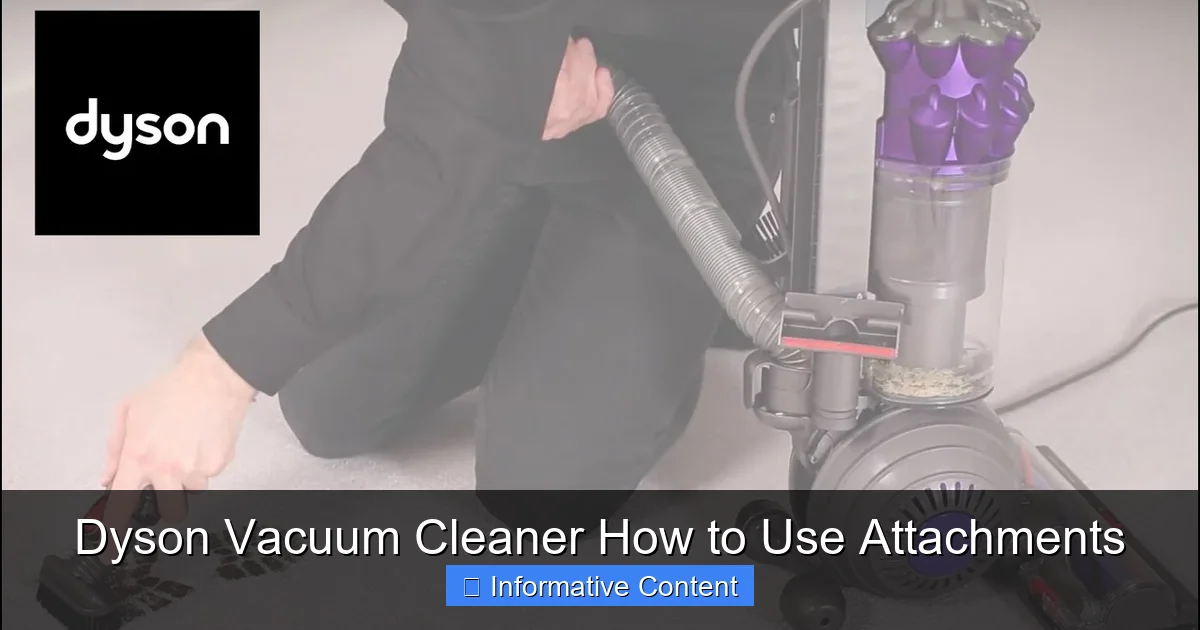
Maximize your Dyson vacuum cleaner’s potential by understanding how to use attachments effectively. Each tool, from the versatile combination tool to specialized brushes, is designed for specific cleaning challenges, ensuring a deeper, more efficient clean. Learning the correct attachment for every surface transforms your cleaning routine, making your home spotless and extending your Dyson’s lifespan.
Dyson Vacuum Cleaner How to Use Attachments
Having a Dyson vacuum cleaner feels like owning a piece of cleaning innovation. These powerful machines are celebrated for their incredible suction, sleek design, and cutting-edge technology. But here’s a little secret: to truly unleash your Dyson’s full potential, you need to master the art of “Dyson vacuum cleaner how to use attachments.” Without understanding these clever tools, you might only be scratching the surface of what your machine can do.
Think of your Dyson as a superhero and its attachments as its utility belt. Each gadget serves a specific purpose, designed to tackle different cleaning challenges in your home. From deep-cleaning carpets to gently dusting delicate surfaces, or even reaching the tightest nooks and crannies, there’s an attachment for almost everything. Learning Dyson vacuum cleaner how to use attachments isn’t just about efficiency; it’s about transforming your cleaning routine from a chore into a highly effective, satisfying process.
This comprehensive guide will walk you through the various attachments that come with your Dyson, explaining what each one does and, more importantly, how to use them to achieve a spotless home. Whether you’re a new Dyson owner or a seasoned user looking to maximize your machine’s capabilities, understanding Dyson vacuum cleaner how to use attachments is your key to a cleaner, healthier living space. Let’s dive in and discover how to make the most of your powerful cleaning companion!
Key Takeaways
- Universal Connection: Most Dyson attachments connect with a simple click mechanism to either the main wand or directly to the handheld unit, making them easy to swap.
- Attachment Versatility: Dyson offers a wide array of attachments, each engineered for a specific cleaning purpose, from delicate dusting to tackling stubborn pet hair.
- Know Your Tools: Understanding the function of essential attachments like the Combination Tool, Crevice Tool, and Soft Dusting Brush is crucial for efficient cleaning.
- Specialized Solutions: Tools like the Hair Screw Tool and Fluffy Optic™ Cleaner Head provide targeted solutions for pet hair, allergens, and hard floor cleaning, enhancing your Dyson’s capabilities.
- Proper Usage is Key: Always select the right attachment for the surface or type of debris you’re cleaning to prevent damage and achieve optimal results.
- Maintenance Matters: Regularly cleaning your Dyson attachments ensures they perform at their best and prolongs their lifespan, preventing blockages and maintaining suction.
- Experiment and Explore: Don’t be afraid to try different attachments in various scenarios; discovering their full potential will revolutionize your cleaning routine.
Quick Answers to Common Questions
How do I attach tools to my Dyson vacuum cleaner?
Simply align the attachment with the opening on the wand or main unit and push firmly until you hear a click. This indicates a secure connection.
Can I use all Dyson attachments with every Dyson model?
While many attachments have a universal click-fit design, some specialized tools or older model attachments might not be compatible with newer machines. Always check your Dyson model’s manual for specific compatibility.
What is the Hair Screw Tool used for?
The Hair Screw Tool is specifically designed for removing pet hair and tangled messes from upholstery, pet beds, car interiors, and small carpeted areas, thanks to its conical, anti-tangle brush bar.
How often should I clean my Dyson attachments?
It’s a good practice to wipe down non-motorized attachments after each use or periodically. For motorized heads, check and clean the brush bar regularly, especially if you have pets, to prevent tangles and maintain performance.
Can I use the Fluffy Optic™ head on carpets?
No, the Fluffy Optic™ (or Soft Roller) cleaner head is specifically designed for hard floors. Its soft nylon material is optimized for picking up fine dust and large debris from smooth surfaces without scratching. Using it on carpets will not be effective for deep cleaning.
📑 Table of Contents
- The Heart of Versatility: Understanding Your Dyson’s Connection System
- Unlocking Every Corner: Essential Dyson Attachments and Their Uses
- Beyond the Basics: Specialized Tools for Targeted Cleaning
- Mastering Attachment Usage: Tips and Tricks
- Elevating Your Cleaning Game: Getting the Most Out of Your Dyson
- Conclusion
The Heart of Versatility: Understanding Your Dyson’s Connection System
Before we explore the individual attachments, it’s helpful to understand how they connect to your Dyson vacuum cleaner. Dyson has designed an intuitive system that makes swapping tools incredibly simple and quick. This ease of use is fundamental to mastering Dyson vacuum cleaner how to use attachments.
Click and Go: The Universal Connection
Most Dyson attachments, whether they are standard tools or specialized accessories, use a click-fit mechanism. You’ll notice a red or gray button on the attachment itself, or on the wand/main body where the attachment connects. To attach a tool, simply align it with the opening and push firmly until you hear a satisfying click. This sound confirms it’s securely in place and ready to clean. To detach, press the release button and pull the attachment away. It’s that easy! This straightforward design ensures that learning Dyson vacuum cleaner how to use attachments is never a complicated affair.
Wand vs. Direct Connection
Many attachments can be used in two main ways:
- With the Wand: For floor cleaning or reaching high places, attachments connect to the end of the long metallic wand. This gives you extended reach and makes maneuvering around furniture much easier.
- Direct to the Handheld Unit: For handheld cleaning tasks, like vacuuming stairs, upholstery, or car interiors, you can remove the wand and attach tools directly to the main motor unit. This provides a more compact and maneuverable setup, perfect for precision cleaning.
Understanding these connection methods is the first step in truly grasping Dyson vacuum cleaner how to use attachments. It allows for incredible flexibility, letting you adapt your Dyson to countless cleaning scenarios with minimal effort.
Unlocking Every Corner: Essential Dyson Attachments and Their Uses
Your Dyson likely came with a few core attachments, often referred to as “combination tools” or “quick-release” accessories. These are your everyday heroes, designed for a wide range of common cleaning tasks. Mastering Dyson vacuum cleaner how to use attachments starts here.
The Versatile Combination Tool
This is often the first attachment new Dyson owners encounter, and for good reason! The combination tool is incredibly versatile, living up to its name by offering two tools in one compact design.
- Brush Mode: Slide the brush head down, and you have a soft bristled brush, perfect for gentle dusting of furniture, shelves, and even delicate electronics like keyboards. The soft bristles lift dust without scratching surfaces.
- Wide Nozzle Mode: Slide the brush head back up, and it transforms into a wide nozzle tool, ideal for tackling larger debris on hard surfaces, vacuuming car mats, or quickly cleaning up spills.
Practical Tip: Use the brush mode to gently clean blinds, lampshades, or car vents. Switch to the nozzle mode for quick clean-ups on countertops or in tight spaces that need more direct suction.
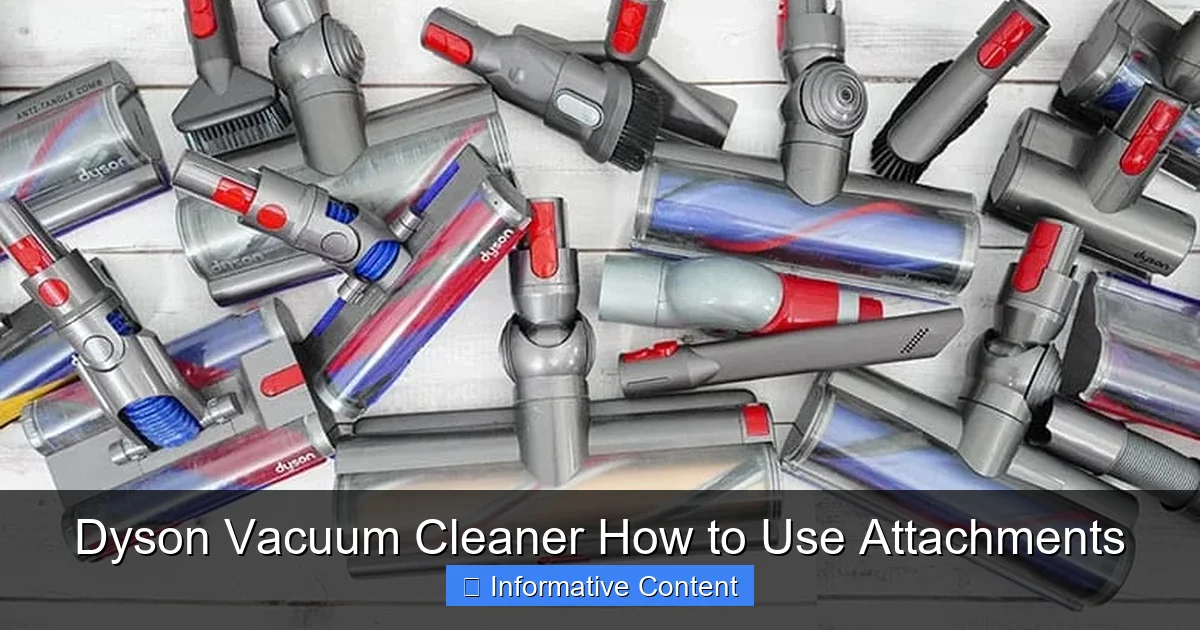
Visual guide about Dyson Vacuum Cleaner How to Use Attachments
Image source: bestcordlessvacuumguide.com
The Agile Crevice Tool
Every home has those hard-to-reach spots – the gaps between sofa cushions, along skirting boards, or the corners of a car interior. That’s where the crevice tool shines.
- Long, Slim Design: Its narrow, elongated shape allows it to delve deep into tight spaces where larger cleaner heads simply can’t go.
- Targeted Suction: The concentrated suction at its tip makes it highly effective at picking up dust, crumbs, and debris from narrow openings.
Practical Tip: Don’t just use it for sofa gaps! It’s fantastic for cleaning window tracks, behind radiators, in between appliances, and even along the edges of ceilings where cobwebs might gather. This is a crucial aspect of Dyson vacuum cleaner how to use attachments for thorough cleaning.
The Dedicated Stair Tool (or Mini Motorized Head)
For homes with stairs, or for cleaning upholstered furniture, this tool is a game-changer. While some models feature a “Stair Tool,” many modern Dysons include a “Mini Motorized Head” (or “Hair Screw Tool” which we’ll discuss later) that serves a similar purpose with added power.
- Compact Power: Designed to be smaller than the main cleaner head, it’s perfect for maneuvering on individual stair treads.
- Powerful Brushes: If it’s motorized, it uses rotating brushes to agitate and lift dirt, dust, and pet hair from carpets and upholstery, providing a deep clean in these high-traffic or often-used areas.
Practical Tip: Use it not just for stairs, but also for pet beds, car seats, and even the fabric seats of dining chairs. It’s excellent for removing embedded pet hair.
The Gentle Soft Dusting Brush
When you need to clean delicate surfaces without scratching or scattering dust, the soft dusting brush is your go-to.
- Fine, Soft Bristles: These bristles are designed to gently lift dust and allergens from sensitive items.
- Even Airflow: The design ensures even airflow around the brush, maximizing dust capture without high-impact suction that could damage delicate objects.
Practical Tip: Use it on computer screens (with care), lamp shades, picture frames, delicate ornaments, plants, and even car dashboards. It’s invaluable for a truly gentle clean, making it a key part of understanding Dyson vacuum cleaner how to use attachments for specific needs.
Beyond the Basics: Specialized Tools for Targeted Cleaning
Dyson goes further than just the essentials, offering a range of specialized attachments designed to tackle specific cleaning nightmares. These tools truly elevate your cleaning game and demonstrate the full power of knowing Dyson vacuum cleaner how to use attachments.
The Fluffy Optic™ Cleaner Head (or Soft Roller Cleaner Head)
If you have hard floors, this head is your best friend. It’s specially engineered for pristine hard floor cleaning.
- Soft Woven Nylon: The head is covered in soft woven nylon that gently captures large debris and fine dust simultaneously, without scratching delicate hard floors.
- Anti-static Carbon Fibre Filaments: These help to remove even the most microscopic dust particles, leaving your hard floors impeccably clean. The Optic versions also have illumination to reveal hidden dust.
Practical Tip: Use this head exclusively on hard floors like wood, tile, or laminate. It’s incredibly effective at picking up everything from cereal to flour, without scattering debris.
The Hair Screw Tool (or Anti-Tangle Conical Brush Bar)
Pet owners, rejoice! This tool is specifically designed to deal with one of the most common cleaning frustrations: pet hair.
- Conical, Anti-Tangle Brush Bar: Its unique tapered design prevents hair from tangling around the brush bar, sending it directly into the bin.
- Motorized Power: This small but mighty head offers powerful suction and agitation, making it ideal for deep cleaning pet beds, upholstered furniture, car interiors, and small carpeted areas where pet hair accumulates.
Practical Tip: This is your secret weapon against pet hair on upholstery. Use it regularly on sofas, cat trees, and dog beds to keep them fresh and hair-free. Knowing how to use this attachment is vital for pet owners learning Dyson vacuum cleaner how to use attachments.
The Mattress Tool
Often overlooked, the mattress tool is essential for maintaining a hygienic sleeping environment.
- Wide Head and Even Suction: Its wide, flat profile ensures maximum contact with mattress surfaces, providing powerful, even suction across a large area.
- Removes Dust Mites and Allergens: It’s highly effective at extracting dust mites, skin flakes, and other allergens embedded deep within mattresses and bedding.
Practical Tip: Use this tool every few months on all mattresses in your home. It’s also great for vacuuming duvets and pillows (if suitable for vacuuming) to reduce allergens.
The Stubborn Dirt Brush (or Stiff Bristle Brush)
For those tough, dried-on messes that standard brushes can’t quite budge, turn to the stubborn dirt brush.
- Stiff Nylon Bristles: These robust bristles are designed to agitate and loosen dried-on dirt, mud, and ground-in debris from coarse carpets, car mats, and high-traffic areas.
Practical Tip: Excellent for cleaning entry mats, boot trays, and the carpet in your car’s footwells after a muddy adventure. It’s too abrasive for delicate surfaces, so use it wisely.
The Flexible Crevice Tool
An upgrade from the standard crevice tool, this version offers even more maneuverability.
- Extendable and Bendable: It can extend and bend to reach truly awkward spots that are otherwise impossible to clean, such as behind heavy furniture or deep inside car crevices.
Practical Tip: Perfect for cleaning under and around car seats, behind washing machines, or reaching high shelves with odd angles. This truly demonstrates the depth of Dyson vacuum cleaner how to use attachments.
The Up-top Adaptor
Reaching high shelves, ceiling fans, or the tops of cupboards can be a stretch. The up-top adaptor makes it easy.
- Articulating Design: This adaptor bends and locks at different angles, allowing you to clean the tops of surfaces that are high up without needing a step ladder.
Practical Tip: Attach a soft dusting brush to the up-top adaptor to easily clean ceiling fans, curtain rails, or the tops of wardrobes without straining.
Mastering Attachment Usage: Tips and Tricks
Knowing what each attachment does is half the battle; the other half is understanding how to use them most effectively. Here are some pro tips for truly mastering Dyson vacuum cleaner how to use attachments.
Choosing the Right Tool for the Job
This is perhaps the most critical tip. Always take a moment to assess the surface and type of debris you’re cleaning.
- Delicate Surfaces: Soft dusting brush.
- Tight Gaps: Crevice tool (or flexible crevice tool).
- Hard Floors: Fluffy Optic™ or Soft Roller cleaner head.
- Carpets: Main motorized cleaner head, or Mini Motorized/Hair Screw tool for small areas/pet hair.
- Upholstery/Stairs/Pet Hair: Mini Motorized/Hair Screw tool.
- Mattresses: Mattress tool.
- Dried Dirt/Stains on Robust Carpets: Stubborn dirt brush.
Using the correct tool not only ensures a better clean but also prevents potential damage to your surfaces or the vacuum itself.
Proper Attachment and Detachment
Always use the red or gray release buttons when changing attachments. Forcing an attachment on or off can damage the connection mechanism. A firm but gentle push until you hear a click is all that’s needed for attachment.
Cleaning and Maintaining Your Attachments
Your attachments work hard, so they need a little care too!
- Wipe Down Regularly: Use a damp cloth to wipe down the exterior of non-motorized attachments.
- Clean Brush Bars: For motorized heads, regularly check and remove any tangled hair or debris from the brush bar. Some Dyson heads have easy-release mechanisms for this.
- Rinse Filter (if applicable): Some older Dyson attachments might have small filters or removable parts that can be rinsed. Always check your specific model’s manual.
- Allow to Dry: If you rinse any parts, ensure they are completely dry before reattaching them to your vacuum to prevent mold or damage.
Proper maintenance ensures your attachments continue to perform optimally and extends their lifespan. This is a vital part of understanding Dyson vacuum cleaner how to use attachments effectively over time.
Experiment and Explore
Don’t be afraid to experiment! Try different attachments in various scenarios. You might discover new ways to clean parts of your home you previously thought were difficult or impossible to vacuum. For instance, the soft dusting brush can be surprisingly effective on certain types of window blinds, or the crevice tool might be perfect for cleaning between car seats in a way you hadn’t considered.
Elevating Your Cleaning Game: Getting the Most Out of Your Dyson
By now, you should have a much clearer picture of “Dyson vacuum cleaner how to use attachments” to tackle virtually any cleaning task. But what does this mean for your overall cleaning routine?
Seamless Transitions for Efficient Cleaning
The beauty of Dyson’s attachment system is the speed and ease with which you can switch between tools. Imagine vacuuming your hard floor with the Fluffy Optic™ head, then instantly swapping to the crevice tool to clean skirting boards, and then to the soft dusting brush for shelves, all without missing a beat. This seamless transition saves time and effort, making your cleaning sessions far more productive. Knowing Dyson vacuum cleaner how to use attachments empowers you to adapt your cleaning instantly.
Achieving a Deeper, Healthier Clean
Each attachment is designed to optimize suction and agitation for specific surfaces and debris types. This means that by using the right tool, you’re not just moving dirt around; you’re actively extracting it, including fine dust, allergens, and pet dander. This leads to a noticeably cleaner home and a healthier environment for you and your family. Your understanding of Dyson vacuum cleaner how to use attachments directly translates to better air quality and a more hygienic living space.
Protecting Your Surfaces and Your Dyson
Using the correct attachment not only cleans more effectively but also protects your valuable furniture, floors, and the vacuum itself. A soft dusting brush prevents scratches on delicate surfaces, while the Fluffy Optic™ head ensures hard floors remain pristine. Furthermore, cleaning your attachments regularly prevents blockages and ensures your Dyson maintains its powerful suction for years to come.
Conclusion
Your Dyson vacuum cleaner is a powerful cleaning machine, but its true magic lies in its versatile attachments. By learning “Dyson vacuum cleaner how to use attachments,” you unlock a world of cleaning possibilities, transforming your routine and ensuring every nook and cranny of your home can be immaculately clean.
From the everyday versatility of the combination tool to the specialized power of the Hair Screw tool for pet hair, each attachment plays a vital role in achieving a comprehensive clean. Take the time to understand each tool, experiment with their uses, and maintain them properly. When you do, you’ll find that your Dyson isn’t just a vacuum cleaner; it’s a complete cleaning system, ready to tackle any mess with precision and power. Happy cleaning!
Frequently Asked Questions
How do I know which attachment to use for different surfaces?
A good rule of thumb is to use soft brushes for delicate surfaces like electronics or blinds, the crevice tool for tight gaps, and motorized heads for carpets, upholstery, or pet hair. Hard floors benefit from soft roller heads, while tough dirt on robust carpets needs stiff bristles. Your Dyson manual also provides guidance for specific tools.
My Dyson attachment isn’t clicking into place properly. What should I do?
First, check for any debris or obstructions in the connection point on both the attachment and the vacuum. Ensure the release button isn’t stuck. If it still won’t click, try another attachment to see if the issue is with the attachment or the vacuum’s connection point. Sometimes, a firm but careful push is needed to engage the mechanism fully.
Can I wash my Dyson attachments with water?
Most non-motorized attachments can be rinsed with water, but always ensure they are completely dry before reattaching them to your vacuum. Motorized heads should generally not be submerged in water; instead, remove hair and debris from the brush bar and wipe the exterior with a damp cloth. Always refer to your specific model’s manual for cleaning instructions.
What’s the best attachment for cleaning car interiors?
For car interiors, a combination of tools works best. The crevice tool is ideal for tight gaps and under seats. The mini motorized head or Hair Screw Tool is excellent for pet hair on car upholstery and mats. A soft dusting brush can be used for dashboards and vents. The flexible crevice tool is also very useful for reaching awkward spaces.
My Dyson vacuum isn’t picking up dirt with an attachment. What could be wrong?
First, check for any blockages in the attachment itself or in the wand/main vacuum body. Ensure the attachment is securely clicked into place. Also, check the vacuum’s filter and bin; a full bin or dirty filter can significantly reduce suction. If it’s a motorized head, ensure the brush bar isn’t tangled or jammed.
Are third-party Dyson attachments as good as original ones?
While some third-party attachments can be cost-effective, their quality, fit, and performance can vary greatly. Original Dyson attachments are designed and tested specifically for your machine, ensuring optimal fit, suction, and durability. Using non-original parts may also void your warranty in some cases. It’s generally recommended to use genuine Dyson parts for the best results.