Why Do Dogs Hate the Vacuum Cleaner
Every pet owner has witnessed it: the moment the vacuum cleaner roars to life, sending dogs scattering in terror or launching into a barking frenzy. This intense dislike stems from a complex mix of sensory overload, evolutionary instincts, and negative associations. Understanding these factors is key to helping your dog cope with this noisy household necessity and making cleaning day a little less stressful for everyone involved.
Why Do Dogs Hate the Vacuum Cleaner
Ah, the vacuum cleaner. For most humans, it’s a necessary evil, a loud but effective tool for keeping our homes free of dirt, dust, and – let’s be honest – a never-ending supply of pet hair. But for many of our beloved canine companions, the mere sight or sound of this household appliance can trigger an extreme reaction, ranging from cautious retreat to full-blown panic. If you’ve ever wondered why your dog transforms into a trembling mess or a barking warrior at the sound of the vacuum, you’re not alone. It’s a common mystery that puzzles countless pet owners worldwide.
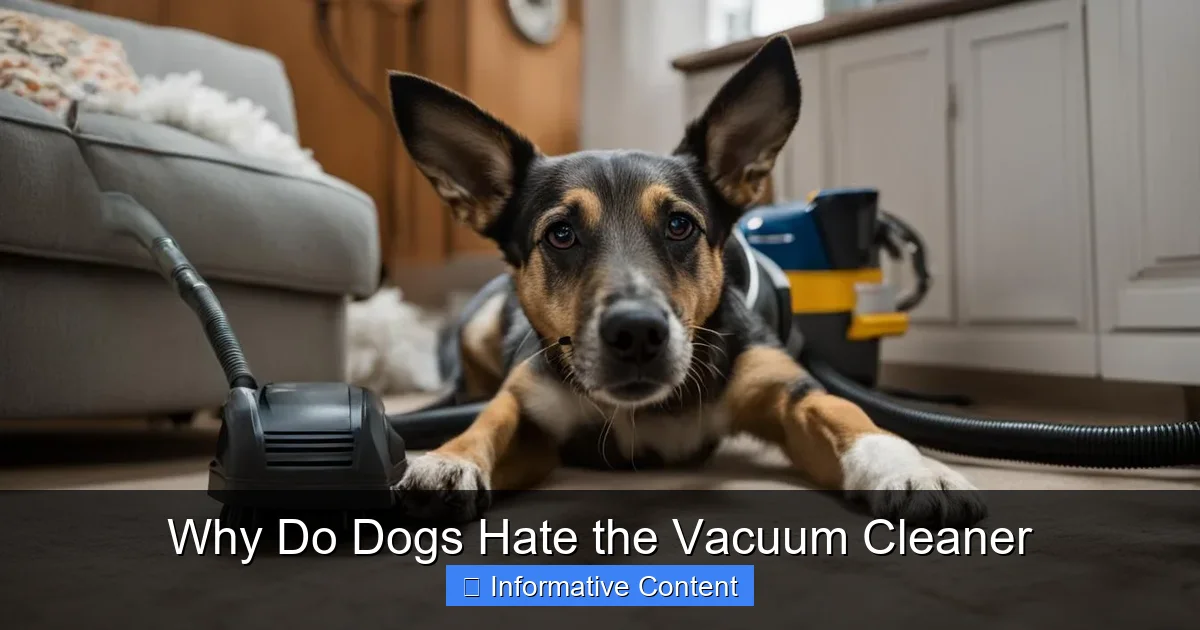
The scene is all too familiar: you plug in the vacuum cleaner, hit the power switch, and immediately, your otherwise calm and confident dog either bolts under the bed, hides behind your legs, or launches into a furious barking spree, sometimes even nipping at the offending machine. This isn’t just a quirky habit; it’s a genuine fear response rooted in a combination of their unique sensory world, evolutionary instincts, and learned experiences. Understanding the “why” behind this intense aversion is the first step toward helping your furry friend cope with the dreaded vacuum cleaner.
Let’s delve into the fascinating and sometimes frustrating reasons why dogs often have such a profound dislike for the vacuum cleaner, and more importantly, what you can do to make cleaning day a little less terrifying for your best friend.
Key Takeaways
- Sensory Overload: Dogs’ acute hearing makes the vacuum’s loud, high-pitched noise and vibrations incredibly jarring and painful, overwhelming their senses.
- Perceived Threat: To a dog, the vacuum cleaner is often seen as a large, noisy, unpredictable intruder that moves erratically, triggering their natural fight-or-flight response.
- Negative Associations: Dogs can develop fear through classical conditioning, associating the vacuum with startling noises, being chased (even playfully), or the general disruption of their environment.
- Lack of Control: Unable to predict or control the vacuum’s movements and sound, dogs experience anxiety and helplessness, amplifying their fear response.
- Common Stress Signals: Dogs display fear through various body language cues, including barking, growling, hiding, trembling, tail-tucking, panting, and pacing.
- Desensitization and Counter-Conditioning: Gradual exposure to the vacuum, paired with positive rewards and a calm environment, can help dogs build a more positive association over time.
- Creating a Safe Space: Providing a quiet, secure retreat where your dog can escape the vacuum’s noise can significantly reduce their stress and anxiety during cleaning times.
Quick Answers to Common Questions
Why does my dog bark at the vacuum cleaner?
Dogs often bark at the vacuum cleaner because they perceive it as a threat or intruder. This barking is usually a fear response, an attempt to warn it away, or an expression of anxiety due to its loud noise and unpredictable movement.
Can a dog’s hearing be damaged by a vacuum cleaner?
While prolonged, extreme noise exposure can theoretically damage a dog’s hearing, typical household vacuum cleaner use is unlikely to cause permanent damage. However, the high decibel levels and frequencies are certainly uncomfortable and even painful for their sensitive ears.
Is it okay to chase my dog with the vacuum cleaner playfully?
No, it is strongly advised not to chase your dog with the vacuum cleaner, even playfully. This can intensify their fear, create negative associations, and erode trust, potentially leading to more severe behavioral issues.
How long does it take to help a dog get used to the vacuum cleaner?
The time it takes varies greatly depending on the dog’s personality, the severity of their fear, and the consistency of your training. It can range from a few weeks to several months, or even longer for deeply ingrained fears. Patience is crucial.
Should I just put my dog outside when I vacuum?
Putting your dog outside is an option if they have a safe, secure, and comfortable outdoor space, but it’s not a solution to their fear. It simply removes them from the situation. For long-term comfort, addressing the fear through training is more beneficial.
📑 Table of Contents
The Sensory Overload: A World Too Loud
Imagine experiencing the world with senses far more acute than your own. That’s a dog’s reality. Their superior hearing and sensitivity to vibrations mean the vacuum cleaner isn’t just loud; it’s a full-blown assault on their auditory system and often their entire body.
The Startling Sound
Dogs can hear frequencies that are well beyond our human range, and their hearing is significantly more sensitive. A typical vacuum cleaner operates at a decibel level that can be uncomfortable even for humans. For a dog, this noise is magnified, often perceived as an ear-splitting roar or a high-pitched shriek, depending on the specific sounds the vacuum emits. It’s not just the volume, but the suddenness and consistency of the sound. It’s an unnatural, mechanical noise that is unlike anything they would encounter in nature, making it inherently alarming.
The high frequency and intensity of the vacuum’s sound can literally be painful for a dog’s sensitive ears. It’s like someone screaming directly into your ear for an extended period, while also producing a deep, rumbling vibration. No wonder they react so strongly!
Unexpected Vibrations
Beyond just sound, vacuum cleaners produce significant vibrations that travel through the floor. Dogs are highly attuned to these subtle movements, which they can perceive through their paws and bodies. These vibrations, combined with the loud noise, create a disconcerting sensory experience. It feels like the ground itself is rumbling and shaking, adding another layer of anxiety and disorientation. For a dog, this can feel like an earthquake or the approach of a large, unknown entity, amplifying their fear of the vacuum cleaner.
Unpleasant Odors
While less discussed than sound, a vacuum cleaner can also produce an unusual smell. The combination of burning motor dust, collected debris, and even cleaning solutions can create a chemical or strange odor that is off-putting to a dog’s incredibly powerful nose. Dogs rely heavily on their sense of smell to interpret their environment, and an odd, strong, or acrid smell coming from a moving, noisy object can contribute to their apprehension and discomfort towards the vacuum.
Evolutionary Instincts and Fear: A Perceived Threat
Visual guide about Why Do Dogs Hate the Vacuum Cleaner
Image source: vacmasterguide.com
A dog’s reactions are often rooted in their ancient instincts. In the wild, unknown, noisy, and rapidly moving objects are typically threats. The vacuum cleaner, in many ways, perfectly fits the description of a dangerous predator or an unwelcome intruder.
A Predator’s Roar
Imagine being a wild canid. A loud, roaring noise that moves unpredictably and seems to “chase” things (like dirt, but from a dog’s perspective, perhaps *them*) would immediately trigger an alarm. The vacuum cleaner’s sound and movement can mimic the growl or charge of a large, unfamiliar creature. A dog’s natural instinct is to either flee (flight) or confront (fight) this perceived threat. This explains why some dogs try to hide, while others bark aggressively or even try to attack the vacuum cleaner.
The erratic movement of the vacuum, as it bumps into furniture and changes direction, further adds to its unpredictability and threat level. Dogs thrive on routine and predictability; a vacuum is the antithesis of that.
The Unknown Intruder
Unlike a familiar person or another animal, the vacuum cleaner has no discernible face, no clear body language, and no predictable patterns. It’s an inanimate object that suddenly comes to life with a terrifying noise and moves independently. This lack of clear identity makes it impossible for a dog to “read” or understand, leaving them feeling vulnerable and confused. They don’t know if it’s friendly, hostile, or what its intentions are. This uncertainty is a major source of anxiety and fear for dogs confronting the vacuum cleaner.
Negative Associations and Past Experiences: The Learning Curve
Dogs are creatures of habit and masters of association. A single bad experience, or repeated uncomfortable encounters, can quickly teach a dog that the vacuum cleaner is something to be feared.
The Sound of “Bad Things”
This is a classic example of classical conditioning. If every time the vacuum cleaner comes out, the dog is startled, feels overwhelmed, or is shooed away, they quickly learn to associate the vacuum’s presence or even its appearance with negative feelings. The sight of the vacuum being pulled from the closet might be enough to trigger anxiety, even before it’s plugged in.
Perhaps they were accidentally bumped by it, or a child playfully (but frighteningly) “chased” them with it. These seemingly minor incidents can leave a lasting impression, solidifying the idea that the vacuum cleaner is a source of discomfort or danger. It’s not the vacuum itself they hate, but the unpleasant sensations and emotions it evokes.
Lack of Control
Dogs, like humans, feel safer when they have some control over their environment. During vacuuming, a dog has no control. They can’t make the noise stop, they can’t make the machine move away, and they can’t predict where it will go next. This lack of agency can be incredibly stressful and frightening. This helplessness amplifies their fear, making them feel trapped or powerless in the face of the roaring monster.
Body Language and Stress Signals: What Your Dog is Telling You
Dogs communicate their feelings through their body language. Understanding these signals is crucial for recognizing your dog’s fear of the vacuum cleaner and knowing when they need help.
Common Signs of Stress
When a dog is scared of the vacuum cleaner, they might exhibit a range of stress signals. These can include:
- Hiding: Seeking refuge under furniture, in another room, or behind a person.
- Trembling or Shaking: Often accompanied by tucked tails and lowered body posture.
- Excessive Panting or Drooling: Even when not hot or thirsty.
- Whining or Crying: Vocalizations indicating distress.
- Pacing: Restless movement, inability to settle.
- Yawning or Lip Licking: Displacement behaviors used to self-soothe in stressful situations.
- Ears Pinned Back: A sign of fear or submission.
- Avoidance: Actively trying to get away from the vacuum.
Escalating Fear Responses
If a dog’s fear of the vacuum cleaner is ignored or not addressed, their responses can escalate. What starts as hiding might turn into aggressive behaviors like:
- Barking or Growling: A warning to stay away from the perceived threat.
- Lunging or Snapping: Attempting to defend themselves or drive the “threat” away.
- Resource Guarding: Protecting their space or toys more intensely when stressed.
These aggressive displays are usually fear-based and are a dog’s last resort when they feel trapped and unable to escape the vacuum cleaner. It’s important never to punish these behaviors, as it will only increase their fear and erode trust.
Helping Your Dog Cope: Practical Strategies
Addressing your dog’s fear of the vacuum cleaner requires patience, understanding, and a structured approach. The goal isn’t necessarily to make them love the vacuum, but to help them tolerate its presence without extreme distress.
Desensitization and Counter-Conditioning
This is the most effective long-term strategy. It involves gradually exposing your dog to the vacuum cleaner in a controlled, positive way.
- Start Small: Begin by simply having the vacuum cleaner in the room, turned off. Let your dog sniff it, and offer treats or praise for calm behavior.
- Distance and Sound: Next, try turning the vacuum on for just a second in another room, far away from your dog. Immediately offer a high-value treat. Gradually decrease the distance and increase the duration, always pairing the sound with something positive.
- Controlled Exposure: Once your dog is comfortable with the sound, move the vacuum cleaner without turning it on, rewarding calm behavior. Slowly introduce short bursts of sound while moving it, always maintaining a comfortable distance.
- Patience is Key: Go at your dog’s pace. If they show any signs of fear, you’ve gone too fast. Revert to an easier step and proceed more slowly.
Creating a Safe Space
Designate a quiet, comfortable area in your home where your dog can retreat during vacuuming. This could be a crate covered with a blanket, a spare room, or a cozy bed.
- Pre-Emptive Measures: Before you even start vacuuming, guide your dog to their safe space. Give them a long-lasting chew toy, a Kong filled with peanut butter, or a favorite blanket.
- Soundproofing: If possible, choose a room furthest from the vacuuming, or play calming music or white noise to help muffle the sound.
- Respect the Retreat: Do not vacuum near their safe space. Allow them to feel truly secure and undisturbed.
Positive Reinforcement and Distraction
Make the vacuum cleaner a predictor of good things, or distract your dog entirely.
- Treats Galore: Always have high-value treats on hand when doing desensitization work. Only give these treats when the vacuum is present and the dog is calm.
- Playtime: Engage your dog in a vigorous play session *before* you vacuum to tire them out, making them more likely to rest calmly during cleaning.
- Interactive Toys: Provide puzzle toys or chews that will keep your dog occupied and distracted while you vacuum, ideally in their safe space.
Consulting a Professional
If your dog’s fear of the vacuum cleaner is severe, leading to aggression, extreme panic, or if you’re struggling to make progress, don’t hesitate to seek help from a certified professional dog trainer or a veterinary behaviorist. They can assess your dog’s specific needs and create a tailored behavior modification plan. They might also suggest calming aids or medication in extreme cases.
Conclusion
The vacuum cleaner might seem like an innocent household tool to us, but for many dogs, it’s a terrifying monster on wheels. Their heightened senses, ancient instincts, and capacity for learning mean that the loud noises, erratic movements, and unfamiliar smells can trigger genuine fear and anxiety. Recognizing the signs of stress and understanding the root causes of their dislike for the vacuum cleaner is the first step toward empathy and effective intervention.
By employing strategies like desensitization, counter-conditioning, and providing a safe haven, you can help your dog gradually overcome their fear. It takes time, patience, and consistency, but seeing your furry friend become more comfortable and less stressed during cleaning times is a rewarding experience for any pet parent. Remember, your dog isn’t trying to be difficult; they’re genuinely scared. With your help, cleaning day can become a little less daunting for everyone in the household.
Frequently Asked Questions
Is it just the noise that bothers dogs about the vacuum cleaner?
While the loud noise is a primary factor, it’s not the only one. Dogs also react to the vacuum’s vibrations, its unpredictable movements, and sometimes even the unusual smells it emits. These sensory inputs combined create a truly overwhelming experience.
My dog sometimes tries to attack the vacuum. Why?
When a dog tries to “attack” the vacuum, it’s typically a fear-based defensive response rather than true aggression. Feeling threatened and unable to escape, the dog might resort to a “fight” response, attempting to drive the perceived intruder away.
Should I punish my dog for being scared of the vacuum cleaner?
Absolutely not. Punishing your dog for showing fear will only increase their anxiety, break down your trust, and teach them to suppress their fear signals, which can lead to unpredictable reactions. Always approach with patience and positive reinforcement.
Can all dogs learn to tolerate the vacuum cleaner?
Most dogs can learn to at least tolerate the vacuum cleaner to some degree, but some may never completely overcome their fear. The goal is to reduce their stress and help them cope, even if they don’t become completely indifferent to it.
Are certain dog breeds more prone to hating the vacuum cleaner?
While individual temperament plays a larger role, some breeds known for their sensitive hearing or anxious tendencies (like certain herding breeds or toy breeds) might be slightly more predisposed to react strongly to the vacuum cleaner. However, any dog can develop this fear.
What if my dog is too stressed to take treats when the vacuum is on?
If your dog is too stressed to take treats, it means you’re moving too fast or are too close to the vacuum. You need to increase the distance from the vacuum, lower the volume, or simply have the vacuum present but off, until they are calm enough to accept treats again.