
Why Can I Vacuum Dirt After Steam Cleaning
It’s a common misconception that steam cleaning removes all dirt instantly. In reality, steam sanitizes and loosens deep-seated grime, but it doesn’t always extract it completely. Vacuuming *after* steam cleaning is crucial because it physically removes the now-mobilized dirt, moisture, and any residue, ensuring a deeper, cleaner, and drier result for your surfaces.
Have you ever steam cleaned your floors or carpets, only to wonder, “Wait, why can I vacuum dirt after steam cleaning?” It’s a common question, and one that often sparks a bit of confusion. After all, if steam cleaning is so powerful, shouldn’t it just make everything disappear as if by magic? While steam cleaning is indeed incredibly effective, its role in the cleaning process might be a little different from what you expect.
Many people imagine steam cleaning as a one-and-done solution that sucks up all the grime as it goes. However, that’s not quite how most steam cleaners operate. Understanding the distinct functions of steam cleaning and vacuuming is key to achieving a truly deep and lasting clean for your home. Think of them not as competitors, but as an unstoppable cleaning duo, each playing a vital role in tackling everything from everyday dust to embedded, stubborn dirt.
In this article, we’re going to dive deep into the fascinating science behind why you *can* and *should* vacuum dirt after steam cleaning. We’ll explore what each method does best, how they complement each other perfectly, and how you can combine them for the most effective, sanitary, and sparkling clean results possible. Get ready to unlock the secrets to cleaner floors and a healthier home!
Key Takeaways
- Steam Loosens, Vacuum Removes: Steam cleaners use heat and moisture to sanitize and break down stubborn dirt, oil, and grime, but they don’t have strong suction to *remove* all of it. Vacuuming, especially with a wet/dry vac or carpet cleaner, is essential to extract the loosened debris.
- The Science of Penetration: Hot steam penetrates deep into fibers and pores, dissolving sticky residues and killing bacteria and allergens that traditional vacuuming can’t reach. This process prepares the dirt for easy removal.
- Preventing Re-Soiling: Without post-steam vacuuming, loosened dirt and excess moisture can remain, potentially leading to faster re-soiling or even mold growth, especially in carpets.
- Pre-Vacuuming is Still Key: Always vacuum thoroughly before steam cleaning to remove loose dirt and debris, allowing the steam cleaner to focus on deep cleaning and sanitization.
- Enhancing Drying Time: Vacuuming after steam cleaning helps extract residual moisture, significantly speeding up drying times and preventing issues like mildew or unpleasant odors.
- A Two-Step Process for Optimal Cleanliness: Think of steam cleaning and vacuuming as complementary steps. One prepares, the other purifies, resulting in a much more effective and lasting clean than either method alone.
- More Than Just Dirt: This combined approach not only removes visible dirt but also extracts allergens, pet dander, dust mites, and chemical residues, contributing to a healthier indoor environment.
Quick Answers to Common Questions
Can I just steam clean without vacuuming afterwards?
While you can, it’s not recommended for a truly deep clean. Without post-steam vacuuming, loosened dirt and excess moisture can remain, potentially leading to faster re-soiling and creating a breeding ground for mildew, especially in carpets.
What kind of vacuum should I use after steam cleaning carpets?
For carpets, you should use a wet/dry vacuum or a dedicated carpet cleaning machine (which usually incorporates a strong vacuum function) to extract the dirty water and loosened grime effectively.
How long should I wait to vacuum after steam cleaning?
You should vacuum immediately after steam cleaning. The goal is to extract the loosened dirt and moisture while it’s still suspended and wet, preventing it from drying back onto the surface.
Does steam cleaning kill dust mites and allergens?
Yes, the high temperature of steam is very effective at killing dust mites, bacteria, viruses, and other allergens on contact, contributing to a healthier indoor environment.
Can I use a regular dry vacuum after steam cleaning?
No, a regular dry vacuum is not suitable for vacuuming after steam cleaning because it’s not designed to handle moisture. Using a dry vacuum on wet surfaces can damage the machine and create a safety hazard.
📑 Table of Contents
The Core Difference: Steam Cleaning vs. Vacuuming
To understand why you can vacuum dirt after steam cleaning, we first need to clarify what each method actually does. They are fundamentally different tools designed for different purposes, even though both aim for a cleaner environment.
What Steam Cleaning Really Does
A steam cleaner, as its name suggests, uses heat and water to produce steam. This superheated vapor is excellent for a few key things:
- Sanitization: The high temperature of steam is incredibly effective at killing bacteria, viruses, mold spores, dust mites, and other allergens on contact. It’s a fantastic, chemical-free way to disinfect surfaces.
- Loosening Dirt and Grime: The intense heat and moisture penetrate deep into surfaces – be it carpet fibers, tile grout, or upholstery – breaking down and emulsifying tough, sticky, and embedded dirt, grease, and stains. It literally melts away grime that’s bonded to surfaces.
- Dissolving Residue: Old soap residues from previous cleaning attempts or sticky spills that have dried can be rehydrated and dissolved by steam.
What a standard steam cleaner *doesn’t* typically do is provide strong suction to physically remove this loosened dirt or the moisture. Some specialized carpet steam cleaners (often called “steam carpet cleaners” or “hot water extractors”) *do* have vacuum functions, but traditional steam cleaners that emit just steam for various surfaces do not.
What Vacuuming Really Does
Vacuuming, on the other hand, is all about suction and physical removal.
- Extracting Loose Debris: A vacuum cleaner uses airflow to lift and remove dry particles like dust, pet hair, crumbs, and other loose debris from surfaces. It’s excellent for daily maintenance and getting rid of surface-level messes.
- Capturing Particles: High-efficiency particulate air (HEPA) filters in many vacuums can trap tiny allergens, improving air quality as you clean.
What a vacuum *doesn’t* typically do is sanitize, deeply penetrate and dissolve embedded grime, or remove sticky residues as effectively as steam.
The Science Behind Steam’s Cleaning Power
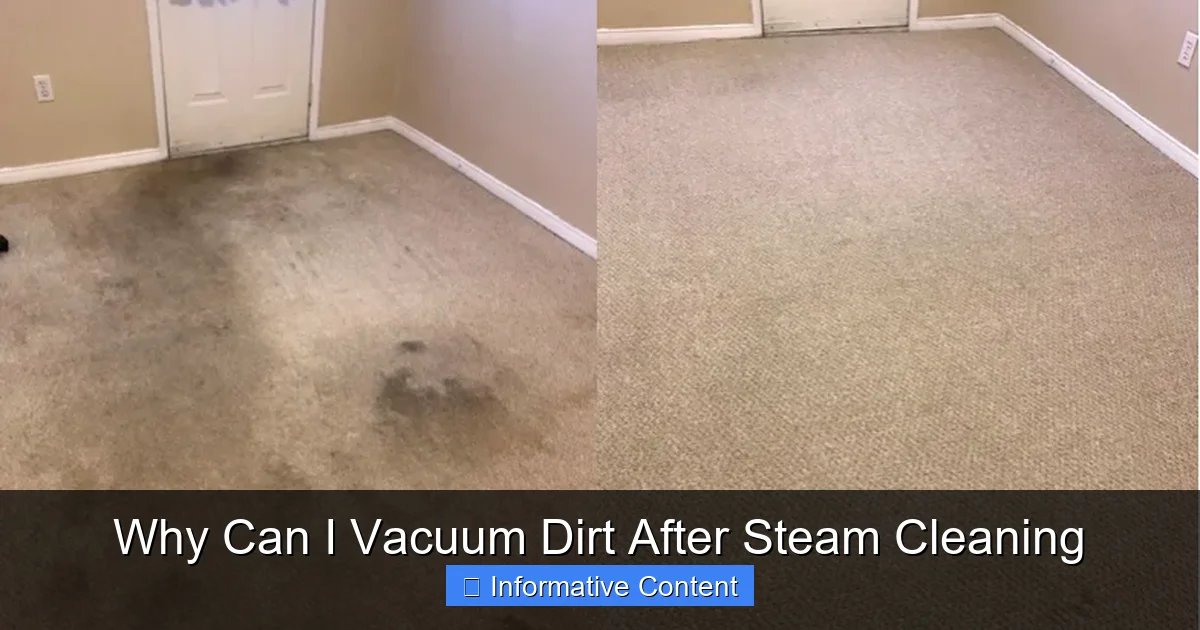
Visual guide about Why Can I Vacuum Dirt After Steam Cleaning
Image source: images.squarespace-cdn.com
The magic of steam lies in its physical properties. When water is heated beyond its boiling point, it turns into steam, a gaseous state with incredible cleaning potential.
Heat and Moisture: The Dynamic Duo
When hot steam makes contact with a dirty surface, several things happen:
- Thermal Shock: The sudden temperature change can cause dirt and grime to expand and loosen their grip on the surface.
- Penetration: Steam particles are tiny and can penetrate deeply into porous surfaces and fabric fibers, reaching dirt that’s invisible or inaccessible to surface cleaning.
- Emulsification and Dissolving: The heat helps to melt or emulsify greasy, oily, or waxy dirt, turning it into a more liquid state. Water-soluble dirt is simply dissolved. This effectively mobilizes the dirt from its resting place.
This process is incredibly powerful. Imagine trying to scrub dried, caked-on mud. Now imagine hitting it with a burst of superheated steam. The steam softens, loosens, and almost “liquefies” the mud, making it far easier to wipe or, in our case, vacuum away.
Sanitize and Disinfect
Beyond just loosening dirt, the high temperature of steam (often 200°F or more at the nozzle) is a natural sanitizer. It can kill up to 99.9% of common household germs like E. coli, Salmonella, Staphylococcus, mold, and dust mites without a single drop of harsh chemicals. This is a huge benefit for families with pets, allergies, or small children, as it leaves surfaces hygienically clean. However, even after these germs are killed, their physical remains, along with the dirt they were clinging to, still need to be removed.
Why Dirt Doesn’t Disappear Instantly After Steam
So, if steam is so effective at loosening and killing, why can I vacuum dirt after steam cleaning? It comes down to the distinct roles we discussed earlier.
Loosened, Not Removed
The most crucial point is this: steam *mobilizes* dirt; it doesn’t always *extract* it. Think of it like a powerful pre-soak. The steam penetrates and breaks down the bonds holding dirt to the surface, but that dirt (now often suspended in water or a more fluid state) still needs to be physically removed.
In carpets, for example, steam will soak into the fibers, dissolving grime. But without strong suction, that dirty, wet mixture remains deep within the carpet pile. On hard surfaces like tile and grout, steam might lift the dirt, but if you don’t wipe or vacuum it up, it can simply resettle as the moisture evaporates, or even spread around, creating streaky residue.
The Role of Residue
Even if you’re not using chemical cleaners with your steam cleaner (which is often recommended for best results), the loosened dirt itself can act as a kind of residue. If left to dry, this now-broken-down grime can re-adhere to surfaces, sometimes even creating a sticky film that attracts new dirt faster. This is why you can vacuum dirt after steam cleaning – you’re removing what the steam has thoughtfully prepared for you.
Deep-Seated Grime
Some dirt has been compacted and embedded over time, especially in high-traffic carpet areas. Steam is excellent at getting to this deep-seated grime. It works its way into the smallest crevices and fibers, breaking up the accumulated layers. However, once broken up, these particles are still *there*. They need a powerful force to pull them out, and that force is vacuum suction.
The Perfect Partnership: How Vacuuming Completes the Clean
This is where the synergy happens. Vacuuming after steam cleaning isn’t a sign that your steam cleaner isn’t working; it’s the *completion* of the deep cleaning process.
Pre-Steam Vacuuming: A Crucial First Step
Before you even think about firing up your steam cleaner, a thorough pre-vacuum is essential. This step removes all loose dirt, dust, pet hair, and surface debris. Why is this so important?
- Efficiency: It allows your steam cleaner to focus its energy on the truly embedded grime and sanitization, rather than pushing around surface dirt.
- Preventing Mud: If you apply steam to a heavily soiled area with loose dirt, you risk turning that loose dirt into a muddy paste, which is much harder to remove.
- No Clogging: Removing large debris prevents potential clogging of your steam cleaner’s nozzles or the recovery tank of a wet/dry vacuum.
Post-Steam Vacuuming: The Extraction Phase
This is the answer to “why can I vacuum dirt after steam cleaning.” Once the steam has done its work—sanitizing, loosening, and dissolving—a powerful vacuum cleaner is needed to physically extract the now-mobilized dirt, moisture, and any lingering residues.
- Carpet & Upholstery: For carpets and upholstery, you’ll want to use a wet/dry vacuum or a carpet cleaner with strong suction. This pulls out the dirty water that’s holding the loosened grime, along with any lingering moisture. Without this step, your carpet could become a breeding ground for mildew, and the dirt would simply resurface as it dries.
- Hard Surfaces: For tile, grout, sealed hardwood, or laminate floors, a powerful wet/dry vacuum can suck up the dirty water that pools after steaming. Alternatively, a clean microfiber mop or cloth can be used to wipe up the residue. However, a wet/dry vacuum is often more efficient at extracting all the dirty liquid.
Enhancing Dry Time and Preventing Re-Soiling
Vacuuming up the excess moisture immediately after steam cleaning has two major benefits:
- Faster Drying: Removing water significantly reduces drying time, which is crucial for preventing mold and mildew growth, especially in humid environments or on dense carpets.
- Preventing Re-Soiling: When moisture and loosened dirt are left behind, they create a sticky residue that acts like a magnet for new dirt particles. By extracting them, you not only remove the old dirt but also prevent your surfaces from getting dirty again too quickly. This leaves your surfaces truly clean and fresh.
Best Practices for Maximizing Your Steam & Vacuum Strategy
Now that you understand the synergy, let’s look at how to implement this powerful two-step cleaning method for the best results.
Choosing the Right Tools
- For Carpets & Upholstery: Invest in a good quality carpet cleaner (often called a “steam cleaner” but is actually a hot water extractor with strong suction) or a wet/dry vacuum. Ensure your machine has powerful suction to remove as much moisture and dirt as possible.
- For Hard Surfaces: A dedicated steam cleaner (for steam only) followed by a wet/dry vacuum or high-quality microfiber cloths/mop works wonders. Ensure your hard surfaces are sealed and appropriate for steam cleaning.
- For Pre-Vacuuming: Any good upright or canister vacuum with strong suction will do the trick.
The Importance of Drying
After your post-steam vacuuming, proper drying is still critical.
- Airflow: Open windows, use fans, or run your HVAC system to encourage air circulation.
- Dehumidifiers: In humid climates, a dehumidifier can dramatically speed up drying times.
- Avoid Traffic: Keep foot traffic off newly cleaned carpets or upholstery until they are completely dry to prevent re-soiling or crushing fibers.
Addressing Stubborn Stains
For particularly stubborn stains, don’t rely solely on steam.
- Pre-Treat: Apply an appropriate stain remover and let it dwell for the recommended time *before* steam cleaning. The steam will then help activate the cleaner and loosen the stain further.
- Repeat Cycles: Sometimes, very old or deep stains might require multiple passes with the steam cleaner and subsequent vacuuming.
Maintenance for Lasting Cleanliness
Regular maintenance is key to extending the life of your clean.
- Frequent Vacuuming: Daily or weekly vacuuming (depending on traffic and pets) prevents dirt from building up and becoming embedded.
- Spot Cleaning: Address spills and stains immediately to prevent them from setting.
- Scheduled Deep Cleans: Plan for professional or DIY deep steam-and-vacuum cleaning sessions every 6-12 months for carpets and upholstery, and as needed for hard surfaces.
Conclusion
The answer to “why can I vacuum dirt after steam cleaning” lies in understanding the complementary nature of these two powerful cleaning methods. Steam cleaning is a master at sanitizing and loosening deep-seated grime, breaking its hold on surfaces. Vacuuming, particularly with a wet/dry extractor, is the essential next step, physically removing all that the steam has prepared.
By combining the sanitizing and loosening power of steam with the physical extraction capabilities of a vacuum, you’re not just moving dirt around; you’re truly removing it. This two-step approach ensures a deeper, healthier, and longer-lasting clean for your carpets, upholstery, and hard floors. So next time you grab your steam cleaner, remember to pair it with your vacuum. Your home will thank you for the truly spotless results!
🎥 Related Video: How to vacuum sand and dust from carpet!
📺 DIY Detail
Clean your interior with Interior Clean & Protect: https://bit.ly/InteriorCleanProtect.
Frequently Asked Questions
Is it really necessary to vacuum before steam cleaning?
Absolutely, yes! Pre-vacuuming removes loose dirt, dust, and debris, allowing your steam cleaner to focus on deep-seated grime and sanitization. Skipping this step can turn surface dirt into mud, making the overall cleaning process less effective.
Won’t the steam cleaner’s own suction remove the dirt?
Many traditional steam cleaners (the kind that emit only steam) do not have a suction function. Some specialized carpet “steam cleaners” are actually hot water extractors that do have powerful suction, but if your machine is just a steam-only device, you’ll need a separate vacuum for extraction.
Can vacuuming after steam cleaning damage my carpet?
No, quite the opposite. Using a wet/dry vacuum or carpet cleaner to extract moisture and dirt after steam cleaning actually helps protect your carpet. It prevents issues like mold, mildew, and re-soiling, which can damage carpet fibers over time.
What if I don’t have a wet/dry vacuum for hard floors?
If you don’t have a wet/dry vacuum for hard floors, you can effectively use clean, absorbent microfiber mops or cloths to wipe up the dirty water and loosened grime immediately after steaming. Ensure you rinse and wring them frequently to avoid spreading dirt.
How often should I combine steam cleaning and vacuuming?
The frequency depends on traffic, pets, and personal preference. For carpets and upholstery, a deep steam and vacuum clean is often recommended every 6-12 months, or more frequently for high-traffic areas or homes with pets and allergies. Regular dry vacuuming should be done weekly or more often.
Does this method replace professional cleaning services?
While combining steam cleaning and vacuuming yourself can achieve a significant deep clean, professional services often use more powerful, commercial-grade equipment and specialized techniques. For very heavily soiled areas or annual deep cleaning, professional services can still be beneficial as a supplement to your DIY efforts.