
Why Are Vacuum Cleaner Cords Round
Have you ever stopped to ponder why vacuum cleaner cords are round instead of flat? This seemingly small design choice is, in fact, a testament to robust engineering and safety. Round cords offer superior durability, enhanced flexibility, and better protection against the constant dragging, bending, and coiling inherent to a vacuum cleaner’s demanding life, ultimately ensuring safer and more efficient cleaning. They are meticulously designed to withstand significant wear and tear, providing crucial strain relief and consistent power delivery in a way flat cords simply cannot.
Why Are Vacuum Cleaner Cords Round?
Imagine a world without vacuum cleaners. Dust bunnies would reign supreme, crumbs would colonize carpets, and pet hair would form new, fuzzy ecosystems in every corner of your home. Thankfully, we have these powerful allies in the fight against household grime. But take a moment, if you will, to truly observe your vacuum cleaner. Beyond its powerful motor, its versatile attachments, and its ability to banish dust bunnies, there’s a component you likely take for granted: its power cord.
Now, think about other appliances in your home. Your toaster likely has a relatively flat cord. Your lamp, too. Even some extension cords are quite flat. But when you look at your vacuum cleaner, you’ll notice its cord almost universally boasts a sturdy, cylindrical shape. This isn’t just an aesthetic choice; it’s a deliberate design decision rooted in practical necessity and longevity. You might never have asked yourself, “Why are vacuum cleaner cords round?” but the answer lies in a fascinating blend of electrical engineering, material science, user safety, and the unique demands of this hardworking appliance.
The humble power cord of your vacuum cleaner is an unsung hero, subjected to a life of constant pulling, bending, dragging, and coiling. Its round shape is no accident. It’s a meticulously engineered feature that addresses specific challenges posed by the vacuum’s operational environment. Understanding why vacuum cleaner cords are round unveils a deeper appreciation for the thought process behind everyday household items, transforming a simple observation into an insightful lesson in design and functionality. Let’s unravel the mystery together and explore the compelling reasons behind this ubiquitous round design.
Key Takeaways
- Enhanced Durability: Round vacuum cleaner cords are inherently more robust, distributing stress and wear evenly around their circumference, making them far less susceptible to damage from dragging, twisting, and repetitive bending compared to flat cords.
- Superior Flexibility and Maneuverability: The cylindrical shape allows the cord to bend smoothly in any direction, making it easier to navigate around furniture, coil for storage, and especially crucial for seamless operation in retractable cord mechanisms without tangling or kinking.
- Increased Abrasion and Strain Resistance: A round outer jacket provides a thicker, more uniform layer of protection against scrapes, cuts, and the constant friction encountered as the cord is pulled across various floor types and thresholds during cleaning.
- Optimized Safety Features: By resisting physical damage more effectively, round cords significantly reduce the risk of exposing live wires, maintaining insulation integrity, and ensuring the grounding path remains secure, thereby enhancing user safety.
- Efficient Power Transmission: The design of round cords often allows for better organization and insulation of internal conductors, ensuring stable power delivery required by powerful vacuum cleaner motors without overheating.
- Compatibility with Retraction Systems: For vacuums with automatic cord retraction, the round shape is essential. It enables smooth, tangle-free coiling into a compact space, a function that would be severely hampered by flat cords which are prone to twisting and jamming.
Quick Answers to Common Questions
Are all appliance cords round?
No, not all appliance cords are round. Many smaller appliances like lamps, radios, and some chargers use flat or ribbon-style cords, which are suitable for their lower power requirements and stationary use.
What makes flat cords different in design?
Flat cords typically feature two or three insulated conductors running parallel to each other, encased in a thinner, flat outer jacket. This design allows for a lower profile, making them less obtrusive for stationary appliances.
Can I replace a round vacuum cleaner cord with a flat one?
No, you should not replace a round vacuum cleaner cord with a flat one. Flat cords lack the durability, flexibility, and robust insulation required for a vacuum cleaner’s demanding use, and could pose significant safety risks including damage and electrical hazards.
How does the round shape help with cord retraction?
The uniform cylindrical shape of a round cord allows it to coil smoothly and evenly onto a spool within a vacuum cleaner’s automatic retraction system. Flat cords would twist, overlap, and jam, making retraction impossible or prone to malfunction.
Do industrial vacuums also use round cords?
Yes, industrial and commercial vacuums almost exclusively use heavy-duty round cords. These environments are even more demanding than residential settings, requiring cords with superior durability, abrasion resistance, and robust construction to ensure safety and longevity.
📑 Table of Contents
The Fundamental Shapes of Power Cords: Flat vs. Round
Before we delve into the specifics of why vacuum cleaner cords are round, let’s briefly touch upon the two main cord shapes you’ll encounter in your home: flat and round. Each shape serves a purpose, dictated by the appliance’s power requirements, how it’s used, and the environment it operates in.
Flat Cords: The Understated Ribbons
Flat cords, often seen on lamps, radios, small kitchen appliances, and some extension cords, typically consist of two or three insulated conductors running parallel to each other, encased in a relatively thin, flat outer jacket. Their primary advantage is their low profile, making them less noticeable and easier to route discreetly along walls or under rugs without creating a tripping hazard. They are often used for low-power devices that remain stationary or are moved infrequently. However, their flat nature makes them more susceptible to kinking, twisting, and damage when subjected to constant movement or bending along a single plane.
Round Cords: The Robust Cylinders
Round cords, on the other hand, house their conductors in a circular arrangement, often with fillers to maintain the cylindrical shape, all encased in a thicker, more uniform outer jacket. These cords are a staple for power tools, heavy-duty extension cords, major appliances like refrigerators, and, of course, vacuum cleaners. Their roundness is key to their superior performance in demanding applications. The inherent geometry allows for even distribution of stress, better protection of internal wires, and greater flexibility without compromising structural integrity. This design is crucial for understanding why vacuum cleaner cords are round.
The Core Benefits: Why Round Reigns for Vacuums
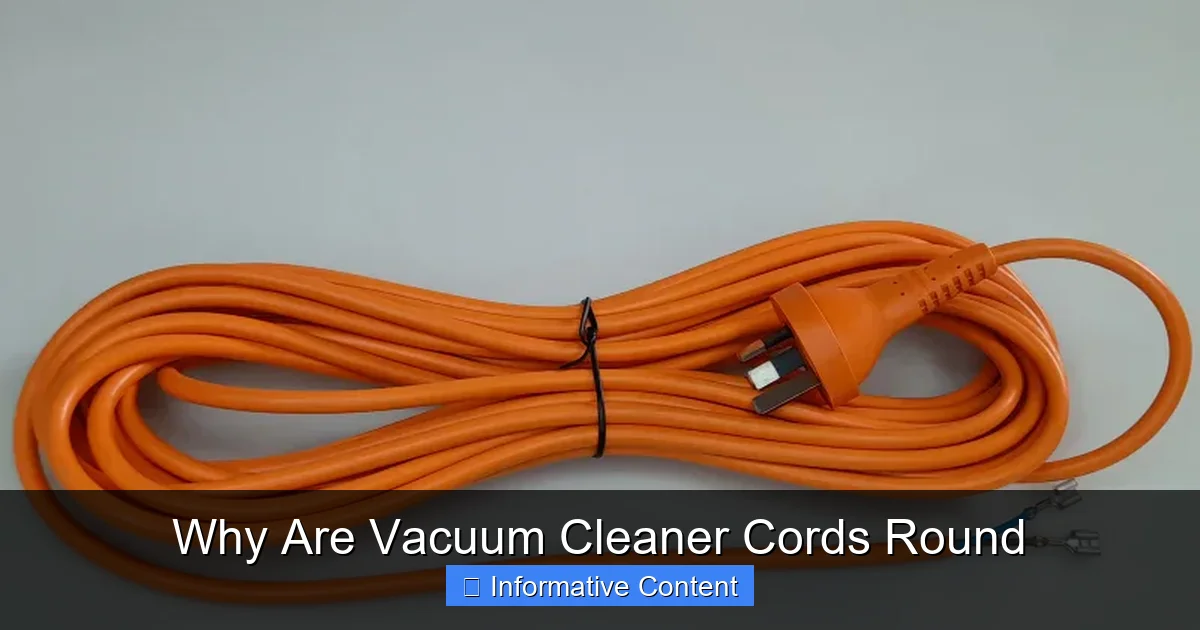
Visual guide about Why Are Vacuum Cleaner Cords Round
Image source: needapart.co.nz
The decision to make vacuum cleaner cords round is not arbitrary; it’s a testament to practical engineering and a deep understanding of how these appliances are used. Several critical benefits make the round shape the undisputed champion for vacuum cleaner cords.
Unmatched Durability and Strain Relief
Vacuum cleaners lead a tough life. They are dragged across various surfaces, around sharp corners, and under heavy furniture. A flat cord would quickly succumb to the constant friction and localized stress points. A round cord, however, distributes mechanical stress evenly around its circumference. When you pull a round cord, the tension is spread across a larger surface area, significantly reducing the likelihood of internal wire damage or jacket abrasion. This inherent robustness is a primary reason why vacuum cleaner cords are round; they are built to endure the rigors of household cleaning.
Superior Flexibility and Maneuverability
Imagine trying to snake a flat, ribbon-like cord around the legs of a dining table or smoothly coil it into a vacuum’s automatic retraction system. It would be a nightmare! Flat cords tend to resist bending in certain directions and are prone to kinking. Round cords, by their very nature, can bend and flex uniformly in any direction without twisting or creating sharp angles that could stress the internal conductors. This flexibility is vital for the ease of use and maneuverability required when cleaning different areas of your home. It’s a key functional aspect of why vacuum cleaner cords are round.
Enhanced Abrasion Resistance
As mentioned, vacuum cords spend a lot of time being dragged across various floor types – hardwood, tile, carpet, concrete. These surfaces can be abrasive. The thicker, uniform jacket of a round cord provides a more substantial barrier against scrapes, cuts, and general wear and tear. If a flat cord were to rub against a sharp edge, the relatively thin jacket could be compromised much faster, exposing the conductors. The bulk and evenness of a round cord offer superior protection, directly contributing to its longevity and safety.
Optimal for Cord Retraction Systems
Many modern vacuum cleaners boast the convenience of an automatic cord retraction button. Press it, and the cord magically winds itself back into the vacuum’s body. This mechanism relies entirely on the cord’s ability to coil smoothly and compactly without twisting, kinking, or jamming. A round vacuum cleaner cord is perfectly suited for this task. Its uniform cross-section allows it to wind evenly onto a spool, minimizing friction and preventing tangles. Flat cords would twist and overlap awkwardly, rendering retraction systems largely ineffective or prone to malfunction. This is perhaps one of the most compelling operational reasons why vacuum cleaner cords are round.
The Demanding Life of a Vacuum Cleaner Cord
To truly appreciate the engineering behind why vacuum cleaner cords are round, it helps to consider the unique challenges they face compared to cords of other household appliances.
Constant Motion and Environmental Interaction
Unlike a toaster that sits on your counter, or a TV that stays put, a vacuum cleaner is designed for active, mobile use. Its cord is constantly being pulled, stretched, and moved across different types of flooring, often interacting with furniture legs, door thresholds, and other obstacles. This dynamic environment requires a cord that can withstand continuous mechanical stress.
High Power Requirements
Vacuum cleaners, especially powerful upright or canister models, often draw significant wattage. This means the internal conductors need to be robust enough to carry substantial current without overheating. While the round shape itself doesn’t directly influence power capacity, the robust construction it enables allows for thicker gauge wires and better insulation, which are crucial for safe and efficient power delivery.
Risk of Over-Bending and Crushing
It’s an unfortunate reality that vacuum cords sometimes get run over by the vacuum itself, or get caught under heavy furniture. While no cord is indestructible, the uniform thickness of a round cord provides a greater degree of resilience against crushing forces and severe bends. The even distribution of material helps absorb impact better than a flat cord, which might have vulnerable thin spots.
Safety First: Round Cords and User Protection
Beyond durability and functionality, safety is paramount when it comes to electrical appliances. The round design of vacuum cleaner cords plays a significant role in ensuring user protection.
Reduced Risk of Exposed Wires
The primary safety concern with any electrical cord is the exposure of live wires, which can lead to electric shock or fire. Because round cords are more resistant to abrasion, cuts, and internal damage from bending and pulling, they are far less likely to develop weak points where the outer jacket might fail. This robust protection keeps the insulated conductors safely encased, significantly reducing the risk of accidental contact.
Enhanced Insulation Integrity
The manufacturing process for round cords often results in a more consistent and thicker outer insulation layer. This uniform thickness ensures that the electrical insulation properties are maintained across the entire length of the cord, even when it’s bent or subjected to minor impacts. A compromised insulation layer, which is more likely in a thinner or less robust flat cord, could allow current to escape, posing a serious hazard.
Maintaining Grounding Path Integrity
Many vacuum cleaner cords include a third, green or bare copper wire known as the ground wire. This vital safety feature provides a path for fault current to safely dissipate, preventing electric shock if there’s an internal electrical fault. The robust nature of a round cord helps protect this crucial ground wire from breaking or disconnecting, ensuring the grounding system remains intact and functional throughout the cord’s life. This is another critical reason why vacuum cleaner cords are round, prioritizing your safety.
The Engineering and Materials Behind the Round Cord
Understanding why vacuum cleaner cords are round also requires a look at the materials and construction techniques that make them so effective. It’s not just the shape, but what goes into making that shape durable and functional.
Outer Jacket Materials
The exterior of a round cord is typically made from resilient polymers like PVC (Polyvinyl Chloride), rubber, or TPE (Thermoplastic Elastomer). These materials are chosen for their excellent combination of flexibility, abrasion resistance, chemical resistance, and ability to withstand various temperature ranges. PVC is common for its cost-effectiveness and good general properties. Rubber and TPE offer superior flexibility in cold temperatures and enhanced resistance to kinking and impact, often found in more heavy-duty or professional vacuum cords.
Inner Conductors and Insulation
Inside the protective jacket, you’ll find two or three insulated copper wires. Copper is chosen for its excellent electrical conductivity. Each copper strand is individually insulated, usually with PVC or polyethylene, to prevent them from touching each other and causing a short circuit. In a round cord, these insulated conductors are often twisted together or arranged with filler materials to maintain the circular cross-section and prevent them from shifting or becoming compressed, which could lead to insulation breakdown.
Cord Gauge and Length
The “gauge” of a cord refers to the thickness of its internal copper wires. A lower gauge number (e.g., 14-gauge) indicates thicker wire, capable of safely carrying more current than a higher gauge number (e.g., 18-gauge). Vacuum cleaners, being high-wattage appliances, require cords with a sufficiently low gauge to prevent overheating. The length of the cord is also a factor, as longer cords require thicker wires to compensate for voltage drop over distance. The robust design of a round vacuum cleaner cord naturally accommodates these thicker, safer wires within its uniform jacket.
Caring for Your Vacuum Cleaner Cord: Tips for Longevity
Knowing why vacuum cleaner cords are round should encourage you to treat this vital component with care. Even the most robust design has its limits. Following these simple tips can extend the life of your vacuum cleaner cord and maintain its safety features:
Avoid Extreme Bending and Kinking
While round cords are flexible, repeated sharp bends, especially at the point where the cord enters the plug or the vacuum, can still stress the internal wires. Try to keep the bends gentle.
Never Drag the Vacuum by Its Cord
Always move your vacuum cleaner by its handle or body. Dragging it by the cord puts immense strain on the cord’s connection points and can lead to internal damage that might not be visible externally.
Unplug Safely: Pull from the Plug, Not the Cord
When disconnecting your vacuum, always grasp the plug firmly and pull it straight from the outlet. Pulling on the cord itself can weaken the connection to the plug, damage the internal wiring, or even pull the wires free from their terminals, creating a shock hazard.
Proper Coiling and Storage
If your vacuum doesn’t have an automatic retraction system, coil the cord loosely in large loops when storing it. Avoid wrapping it tightly around the vacuum’s handle or cord hooks, as this can create tight bends and kinks over time. For retractable cords, ensure they retract smoothly without forcing them.
Inspect Regularly for Damage
Before each use, quickly examine your vacuum cleaner cord for any signs of damage: fraying, cuts, nicks, exposed wires, or discolored areas (which could indicate overheating). If you spot any damage, discontinue use immediately and have the cord professionally repaired or replaced. Attempting to use a damaged cord is extremely dangerous.
In conclusion, the round shape of your vacuum cleaner cord is far from a trivial design choice. It is a fundamental engineering decision driven by the appliance’s demanding use, crucial safety requirements, and the desire for maximum durability and user convenience. From resisting abrasion and strain to enabling smooth cord retraction and protecting internal conductors, the round cord is an unsung hero that ensures your vacuum cleaner operates safely and effectively for years to come. So, the next time you plug in your vacuum, give a nod to that sturdy, round cord – it’s working harder than you think!
🎥 Related Video: A Vacuum Cord Wrapping Tip You Need To Know #wow #cleaning #vacuum #cleaninghacks #needtoknow
📺 Clean That Up
A janitor’s pro tip when wrapping your vacuum cord. You’d be surprised how vacuums I’ve seen damaged being wrapped …
Frequently Asked Questions
Is a round cord stronger than a flat cord?
Generally, yes, a round cord is considered stronger and more durable than a flat cord of comparable length and gauge. Its uniform construction distributes stress more evenly, making it more resistant to bending, twisting, and abrasion, which are common stresses in vacuum cleaner use.
Why do some extension cords look flat?
Some extension cords are flat because they are designed for lighter-duty applications, often for indoor use where a low profile is desirable to run under rugs or along baseboards without creating a tripping hazard. However, heavy-duty outdoor or power tool extension cords are almost always round for greater durability.
Can a damaged round vacuum cleaner cord be repaired?
While minor external nicks might sometimes be safely repaired by a qualified electrician, it’s generally recommended to replace a damaged vacuum cleaner cord entirely. Internal damage isn’t always visible, and improper repairs can create serious electrical hazards, including shock and fire risks.
Does cord length affect its roundness?
The cord’s length itself doesn’t directly affect its roundness; the manufacturing process determines the shape. However, longer cords often need to be of a heavier gauge (thicker wires) to prevent voltage drop and overheating, and the round design naturally accommodates these thicker internal conductors more effectively than a flat design.
Are there any disadvantages to a round vacuum cleaner cord?
One minor disadvantage is that round cords can be bulkier and less aesthetically discreet than flat cords. They are also slightly more expensive to manufacture due to their robust construction and material requirements. However, these are minor trade-offs when considering the significant advantages in durability, safety, and functionality for a vacuum cleaner.
How can I tell if my vacuum cleaner cord is safe to use?
Before each use, visually inspect your cord for any signs of damage such as fraying, cuts, exposed wires, kinks, or unusual bulges. Check the plug for any loose prongs or discoloration. If you notice any of these issues, the cord is not safe to use and should be replaced by a professional.