
Why a Vacuum Cleaner Loses Suction
It can be incredibly frustrating when your vacuum cleaner suddenly loses suction, but don’t despair! Most of the time, the problem isn’t a broken motor, but rather a common, easily fixable issue like a clogged filter, a full dustbin, or a simple blockage in the hose or brush roll. Understanding these common culprits and performing regular, simple maintenance can quickly restore your vacuum’s powerful performance and keep your floors spotless.
There’s nothing quite as frustrating as embarking on a cleaning spree, only to find your trusty vacuum cleaner sputtering and wheezing, barely picking up a crumb. That powerful roar you once relied on is now a sad whisper, and your floors remain stubbornly dirty. You’re left wondering, “Why does my vacuum cleaner lose suction?” You’re not alone in this battle against diminishing suction power; it’s one of the most common complaints among vacuum owners.
Before you consider tossing your machine to the curb and investing in a new one, take a deep breath. In many cases, a vacuum cleaner losing suction isn’t a sign of a terminal illness for your appliance. More often than not, the culprit is a relatively simple and easily fixable issue that can be resolved with a bit of detective work and some basic maintenance. Understanding the common reasons behind this frustrating problem can save you money, time, and the hassle of buying a new vacuum.
This article will guide you through the most frequent reasons why a vacuum cleaner loses suction, offering practical tips and easy-to-follow steps to troubleshoot and restore your machine’s mighty cleaning power. From clogged filters to hidden blockages, we’ll cover everything you need to know to get your vacuum back in top shape, making your cleaning tasks efficient and effective once more.
Key Takeaways
- Clogged Filters are a Top Culprit: Dirty or blocked filters, including HEPA, foam, and pre-motor filters, significantly restrict airflow, causing your vacuum cleaner to lose suction dramatically.
- Full Bags and Canisters Reduce Efficiency: A dust bag that’s too full or a bagless canister packed with debris chokes off the airflow pathway, directly impacting the machine’s ability to suck up dirt.
- Blockages Obstruct Airflow: Debris, pet hair, or larger objects can create physical blockages in the hose, wand, or brush roll, preventing air and dirt from reaching the dustbin.
- Air Leaks Undermine Suction: Cracks in the hose, worn seals, or improperly sealed connections allow air to escape, reducing the vacuum’s effective suction power.
- Incorrect Settings Hinder Performance: Using the wrong height setting for your carpet type or having a clogged brush roll can give the illusion of lost suction, even if the motor is working fine.
- Motor or Belt Issues are Serious: While less common, a failing motor or a broken drive belt (in upright models) can lead to significant suction loss or complete brush roll stoppage, often requiring professional repair or replacement.
- Regular Maintenance is Key: Proactive cleaning of filters, emptying dustbins, checking for blockages, and inspecting seals can prevent most suction loss problems and extend your vacuum’s lifespan.
Quick Answers to Common Questions
Why does my vacuum suddenly lose suction?
Most sudden losses of suction are due to a severe blockage in the hose, a completely full dustbin or bag, or a totally clogged filter. These issues restrict airflow almost immediately.
How often should I clean my vacuum filter?
For most washable filters, it’s recommended to clean them every 1-3 months, or more frequently if you have pets or use your vacuum heavily. Non-washable filters typically need replacement every 6-12 months.
Can a full dustbin really cause a vacuum to lose suction?
Absolutely, yes! Even if it doesn’t look “full to the brim,” a compacted layer of dirt and dust around the internal filters or the inlet can severely restrict airflow, causing your vacuum cleaner to lose suction significantly.
Is it safe to clear a blockage with my hands?
Only if the vacuum cleaner is completely unplugged from the wall outlet. Never attempt to clear a blockage while the vacuum is plugged in, as the motor could accidentally start and cause serious injury.
What’s the easiest way to prevent suction loss?
The easiest way to prevent your vacuum cleaner from losing suction is through consistent, preventative maintenance: regularly empty the dustbin/change bags, clean or replace filters, and periodically check the hose and brush roll for any developing clogs or tangles.
📑 Table of Contents
The Unseen Enemy: Clogged Filters
Think of your vacuum cleaner’s filter as its lungs. Just like our lungs, they can get congested, making it hard to “breathe” – or, in this case, to suck. Clogged filters are arguably the most common reason why a vacuum cleaner loses suction. These filters are designed to capture dust, allergens, and microscopic particles, preventing them from being expelled back into the air. Over time, as they do their job, they become coated in a thick layer of grime, severely restricting airflow.
Types of Filters and Their Roles
Most modern vacuum cleaners come equipped with multiple filters, each serving a specific purpose:
- Pre-Motor Filter: This is usually located near the dustbin or before the motor. Its primary job is to protect the motor from larger dust particles. It’s often washable foam or pleated paper.
- Post-Motor Filter (HEPA Filter): Often found at the exhaust end of the vacuum, this filter captures very fine particles and allergens, ensuring the air released back into your home is clean. HEPA filters are particularly important for allergy sufferers.
- Cyclone Separators (Bagless Vacuums): In bagless models, a series of cones or screens separate dust from the air using centrifugal force before the air reaches the pre-motor filter. If these become coated or clogged, they lose efficiency.
How Clogged Filters Steal Suction
When any of these filters become saturated with dust, they create a barrier that the vacuum’s motor has to work harder to pull air through. This increased resistance directly translates to a significant drop in suction power. The motor might sound like it’s working fine, but the reduced airflow means it simply can’t pick up dirt effectively. If you’ve noticed your vacuum cleaner loses suction, a quick check of the filters should be your very first step.
Filter Cleaning and Replacement Tips
The good news is that maintaining your filters is usually straightforward:
- Check Your Manual: Always refer to your vacuum cleaner’s user manual to determine if your filters are washable or need replacement.
- Washable Filters: Many pre-motor foam filters can be rinsed under cool, running water until the water runs clear. It’s crucial to let them air dry completely – usually for 24-48 hours – before putting them back in the vacuum. Reinstalling a damp filter can damage the motor.
- Replaceable Filters: HEPA and some pleated paper filters are often not washable and must be replaced periodically. Check your manual for recommended replacement intervals, typically every 6-12 months, or more frequently if you have pets or allergies.
- Tap and Clean: For non-washable filters, gently tap them against a trash can to dislodge loose dirt. Use a small brush or an old toothbrush to carefully remove stubborn debris.
Regular filter maintenance is paramount. If your vacuum cleaner loses suction, more often than not, a clean filter will bring it right back to life.
Full Bags, Canisters, and Dustbins – A Simple Fix
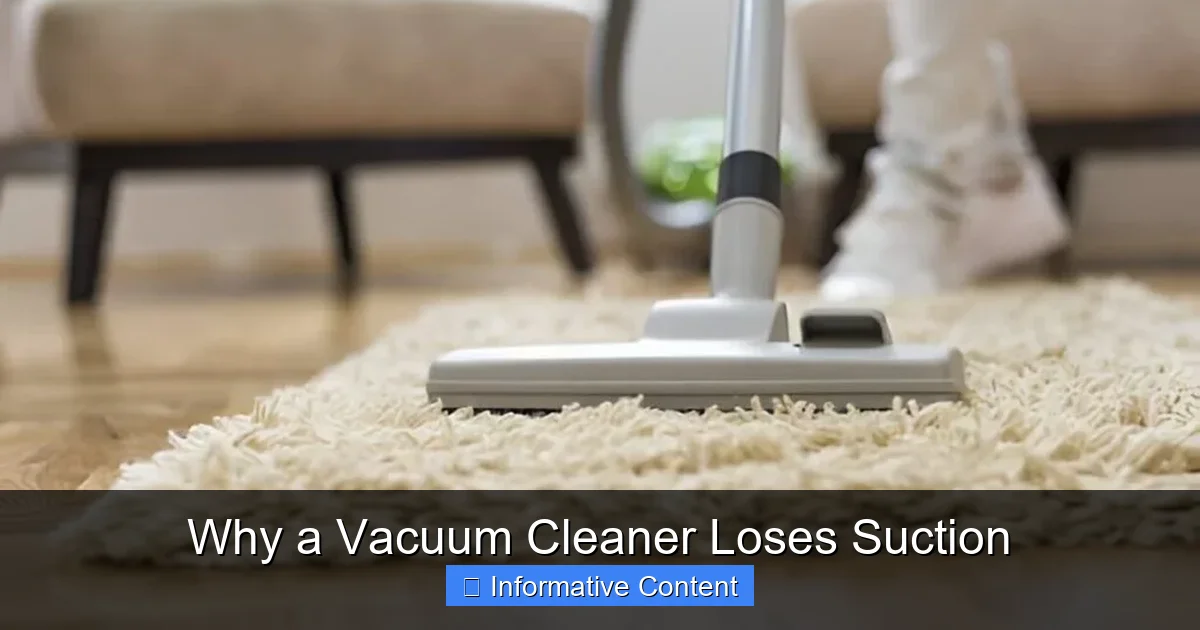
Visual guide about Why a Vacuum Cleaner Loses Suction
Image source: genuinehomecleaner.com
This might seem incredibly obvious, but a surprisingly common reason why a vacuum cleaner loses suction is simply because its dust container is full. Whether you have a traditional bagged vacuum or a modern bagless model with a canister, the principle is the same: once the container is packed with dirt, there’s no room for more air to flow in, and thus, no room for more dirt.
Understanding Airflow Restriction
A vacuum cleaner works by creating a partial vacuum (lower pressure) inside the machine, which then causes higher-pressure air outside to rush in, carrying dirt and debris with it. When the dust bag or canister becomes full, it acts like a dense wall, blocking this crucial airflow. Even if the motor is running perfectly, the restricted airflow means the suction at the nozzle diminishes dramatically. Your vacuum cleaner loses suction not because it’s broken, but because it’s literally overflowing!
Bagged vs. Bagless Systems
- Bagged Vacuums: These systems rely on a disposable bag that collects dirt. As the bag fills, it expands, taking up more space and reducing the internal volume available for air circulation. Some bags also feature filtering material, which, when coated with dust, further restricts airflow.
- Bagless Vacuums: These models collect dirt in a clear plastic dustbin. While you can see the dirt level, it’s easy to underestimate how quickly the bin’s capacity for effective airflow can be reached, especially with fine dust or pet hair. Even if the bin isn’t visibly “full to the brim,” the fine dust compacted against the filter screens can cause significant suction loss.
When to Empty – Don’t Wait!
A good rule of thumb is to empty your bagless canister after every use, or at least when it reaches about two-thirds full. For bagged vacuums, don’t wait until the bag is completely bursting. Most manufacturers recommend changing the bag when it’s about two-thirds to three-quarters full, or when you notice a drop in suction. If your vacuum cleaner loses suction, check the bag or canister immediately. This quick check can often solve the problem in seconds.
Obstructions and Blockages: The Physical Barriers
Imagine trying to drink a thick milkshake through a straw that has a piece of fruit stuck halfway down. That’s essentially what happens to your vacuum cleaner when it encounters a blockage. Physical obstructions within the vacuum’s various pathways are a very common and frustrating reason why a vacuum cleaner loses suction. These blockages can occur anywhere from the cleaning head right up to the dustbin.
Blocked Hoses and Wands
The flexible hose and rigid wand attachments are prime locations for blockages. Items like socks, small toys, wads of paper, or clumps of pet hair can easily get lodged inside, creating a complete or partial obstruction. When this happens, air can no longer flow freely through the hose, and consequently, your vacuum cleaner loses suction at the cleaning head.
Tangled Brush Rolls
For upright and some canister vacuums, the rotating brush roll (also known as the agitator bar or beater bar) is crucial for dislodging dirt from carpets. However, it’s a magnet for hair, threads, and carpet fibers. When the brush roll becomes heavily tangled, it can either stop rotating entirely or rotate inefficiently. This not only makes it less effective at cleaning but can also impede airflow into the suction nozzle. In severe cases, a very tangled brush roll can also strain the motor or break the drive belt (more on that later), leading to a complete loss of brush action and perceived suction.
Clearing the Path: Safety First!
Before you start poking around inside your vacuum, always, always, unplug it from the wall outlet. This is a critical safety step to prevent accidental startup and potential injury.
- Check the Nozzle/Cleaning Head: First, flip your vacuum’s cleaning head over and inspect the opening where dirt enters. Remove any visible debris.
- Inspect the Brush Roll: Carefully cut away any tangled hair, string, or fibers from the brush roll using scissors or a seam ripper. Some brush rolls are removable for easier cleaning.
- Examine the Hose: Disconnect the hose from both the vacuum body and any attachments. Straighten it out and look through it. If you can’t see daylight, there’s a blockage. You can try gently pushing a broom handle or a long, blunt object through the hose to dislodge the obstruction. Avoid using anything sharp that could puncture the hose.
- Check the Wand and Attachments: Do the same for any extension wands or tools you use.
- Look at the Inlet to the Dustbin: Sometimes, debris can get stuck right where the hose connects to the vacuum’s main body or where dirt enters the dust container.
Clearing these blockages is often a messy but satisfying job, instantly restoring your vacuum’s suction power. If your vacuum cleaner loses suction, a thorough check for obstructions is likely to reveal the problem.
Air Leaks and Worn Components
Suction relies on a sealed system. Any breach in this system, no matter how small, can cause your vacuum cleaner to lose suction. Think of it like a leaky straw – if there’s a hole, you won’t be able to suck up your drink effectively. Over time, parts of your vacuum can wear out, crack, or become dislodged, leading to these pesky air leaks.
Cracked Hoses and Seals
The flexible hose is prone to wear and tear. Constant bending, stretching, or accidental impacts can lead to small cracks or tears in the hose material. Even a tiny crack can allow a significant amount of air to escape, drastically reducing the suction power at the nozzle. Similarly, the rubber or plastic seals that connect the hose to the main body, or the dustbin to the motor housing, can degrade or crack over time.
Damaged Gaskets and Connections
Many vacuum cleaners use gaskets or O-rings at connection points – for example, where the dustbin clips into place, or where attachments connect to the wand. If these gaskets become stiff, cracked, or simply fall out, the airtight seal is compromised. Air will enter through these gaps instead of through the cleaning head, resulting in your vacuum cleaner losing suction. Even a poorly seated dustbin or a connection that isn’t fully locked in can create an air leak.
The Importance of a Tight Seal
To diagnose an air leak, carefully inspect your vacuum cleaner’s hose for any visible damage. Feel along the hose while the vacuum is running (if it has some suction left) to detect any air escaping. Check all connection points – the dustbin, attachments, and where the hose attaches to the body – ensuring they are securely fastened and that any seals are intact. Replacing a cracked hose or worn-out gasket is usually a straightforward repair that can make a massive difference if your vacuum cleaner loses suction due to a leak. Many replacement parts are readily available online or from vacuum repair shops.
Adjustments and Settings: Are You Using it Right?
Sometimes, the problem isn’t a malfunction but a simple oversight in how the vacuum is being operated. Improper settings or attachment usage can make it seem like your vacuum cleaner loses suction when it’s actually just not optimized for the task at hand.
The Right Height for the Right Surface
Most upright vacuum cleaners have a height adjustment setting, allowing you to raise or lower the cleaning head. This is crucial for optimal performance:
- Low Pile Carpet/Hard Floors: For these surfaces, the vacuum head should be set lower to create a tighter seal with the floor, maximizing suction.
- High Pile Carpet: A higher setting prevents the brush roll from getting bogged down and allows air to flow freely. If the setting is too low on a thick carpet, the vacuum will essentially “seal” itself to the carpet, making it hard to push and giving the impression that your vacuum cleaner loses suction, even if the motor is working hard.
Check your vacuum’s height adjustment dial or lever and ensure it’s set appropriately for the surface you’re cleaning.
Attachment Misuse
Are you using the right tool for the job? Using the crevice tool for a large area of carpet, or trying to vacuum pet hair from upholstery with the main cleaning head, can lead to frustration and perceived suction loss. Ensure attachments are securely fitted, as loose connections can create minor air leaks. Always opt for the appropriate attachment for specific tasks to achieve the best results.
Beyond the Basics: Power Settings
Some advanced vacuum models come with adjustable power settings. While it might be tempting to always use the lowest power setting to save energy or reduce noise, this can sometimes lead to less effective cleaning, especially on heavily soiled areas or thick carpets. If your vacuum cleaner loses suction on tougher jobs, ensure it’s set to an appropriate power level.
When All Else Fails: Motor and Belt Issues
While less common than clogs or full bags, issues with the vacuum cleaner’s motor or drive belt can certainly cause a significant loss of suction or even a complete breakdown. These problems usually require more technical intervention.
Signs of Motor Trouble
The motor is the heart of your vacuum. If it’s failing, you might notice several warning signs:
- Unusual Noises: Grinding, high-pitched whines, or burning smells coming from the motor usually indicate serious trouble.
- Intermittent Operation: The motor cutting out and restarting, or only working for short bursts, can signal overheating or an electrical fault.
- Complete Loss of Power: If the motor simply stops running, it could be a complete failure.
A failing motor will certainly cause your vacuum cleaner to lose suction, as it’s no longer generating the necessary airflow. At this point, it’s often a job for a professional repair technician or a sign that it might be time for a new vacuum.
The Role of the Drive Belt
In upright vacuums and some canister power nozzles, a drive belt connects the motor to the brush roll, making the brush spin. If this belt breaks, stretches, or slips, the brush roll will stop spinning or spin too slowly. While the vacuum may still have suction, the lack of agitation means it won’t effectively pick up dirt from carpets, giving the impression that your vacuum cleaner loses suction. You might hear the motor running, but the brush roll won’t be moving. Replacing a drive belt is a relatively inexpensive repair and often something a handy individual can do themselves with the right replacement part.
When to Call a Professional (or Replace)
If you’ve checked all the common culprits – filters, bag/canister, blockages, and air leaks – and your vacuum cleaner still loses suction, especially if you hear unusual noises or smell burning, it might be time to call a qualified repair technician. For older, inexpensive models, the cost of professional motor repair might outweigh the cost of a new vacuum. Weigh your options carefully based on the vacuum’s age, brand, and initial cost.
Conclusion
A vacuum cleaner losing suction is a common problem, but rarely a hopeless one. Armed with the knowledge of common culprits – clogged filters, full dustbins, stubborn blockages, hidden air leaks, and incorrect settings – you are now well-equipped to diagnose and often fix the issue yourself. Remember, the vast majority of suction problems stem from simple maintenance neglect rather than a major mechanical failure.
By regularly checking and cleaning your filters, emptying your dust container before it’s completely full, inspecting for and clearing blockages, and ensuring all connections are sealed, you can keep your vacuum cleaner operating at peak performance. These simple, proactive steps not only restore lost suction but also extend the lifespan of your appliance, ensuring your home remains spotless without constant frustration. So, the next time your vacuum cleaner loses suction, don’t fret – get ready to troubleshoot and reclaim its power!
🎥 Related Video: Shark vacuum cleaner NO SUCTION! Why?
📺 Vacuum Help
Customer was going to buy a new vacuum cleaner when her shark stopped sucking #sharkvacuum #sharkclean.
Frequently Asked Questions
What are the most common reasons a vacuum cleaner loses suction?
The most common reasons why a vacuum cleaner loses suction include clogged or dirty filters (pre-motor, post-motor, or HEPA), a full dust bag or canister, physical blockages in the hose, wand, or brush roll, and air leaks due to cracked hoses or worn seals. Addressing these issues often restores suction power.
How can I check for a clog in my vacuum hose?
First, always unplug the vacuum. Then, detach the hose from both the main body and any attachments. Straighten the hose out and look through it; if you can’t see daylight, there’s a clog. You can often dislodge it by gently pushing a broom handle or a long, blunt object through the hose, or by carefully using a powerful shop vac to suck the clog out.
Are there different types of vacuum filters, and how do I maintain them?
Yes, common types include foam pre-motor filters (often washable), pleated paper filters (sometimes washable, sometimes replaceable), and HEPA filters (usually replaceable). Washable filters should be rinsed with cool water and fully air-dried for 24-48 hours. Replaceable filters need to be changed according to the manufacturer’s recommendations, usually every 6-12 months.
My vacuum is bagless, but it still loses suction. What could be wrong?
Even bagless vacuums often lose suction due to common culprits. Check if the dustbin is full or if fine dust has caked onto the internal cyclone components or pre-motor filter. Also, inspect the hose and brush roll for blockages and ensure all seals and connections around the dustbin are airtight. Dirty filters are a prime suspect for bagless models.
How do I know if my vacuum’s motor is failing?
Signs of a failing motor include unusual noises like grinding, whining, or a burning smell, intermittent power, or a complete lack of operation even when plugged in. If you’ve ruled out all other causes for why your vacuum cleaner loses suction, especially with these symptoms, it might be a motor issue requiring professional service or replacement.
Is it worth repairing an older vacuum that loses suction, or should I buy a new one?
This depends on the specific problem and the vacuum’s value. Simple fixes like cleaning filters, clearing clogs, or replacing a drive belt are usually worth it. However, if the motor is failing or there are multiple complex issues, the repair cost for an older, less expensive model might exceed the price of a new one. Consider the age, original cost, and overall condition of your vacuum when making this decision.