Why Is My Vacuum Cleaner So Noisy
Is your vacuum cleaner suddenly roaring louder than usual? A noisy vacuum often signals common issues like clogs in the hose or brush roll, a full dust bin, or dirty filters restricting airflow. Less common but more serious causes include motor or fan damage, or worn-out belts and bearings. Addressing these problems, from simple cleaning to component replacement, can significantly quiet your machine and improve its performance, ensuring your vacuum cleaner is less of a nuisance and more efficient.
Why Is My Vacuum Cleaner So Noisy?
We’ve all been there. You pull out your trusty vacuum cleaner, ready to tackle the week’s dust and debris, only to be greeted by a cacophony that sounds more like a jet engine taking off than a cleaning appliance. That familiar hum has morphed into a shriek, a rattle, or a guttural roar, leaving you wondering, “Why is my vacuum cleaner so noisy?” It’s not just annoying; excessive noise can often be a warning sign that something isn’t quite right with your machine.
A vacuum cleaner that suddenly becomes significantly louder isn’t just trying to make a statement; it’s usually trying to tell you it’s struggling. Understanding the source of this increased noise is the first step toward a quieter, more efficient cleaning experience. From simple fixes to more complex mechanical issues, there are several reasons why your vacuum cleaner might be making more racket than usual. Let’s delve into the common culprits and how you can diagnose and address them.
Key Takeaways
- Common Culprits Are Clogs: The most frequent reason for a noisy vacuum cleaner is often a blockage in the hose, brush roll, or a full dustbin/clogged filter. Regularly checking and clearing these areas can prevent excessive noise.
- Motor and Fan Issues Can Be Serious: While less common, a change in motor sound or a distinct rattling might indicate worn motor bearings or a damaged fan (impeller), which often require professional repair or replacement.
- Brush Roll and Belt Maintenance is Key: For upright and powerhead vacuums, a tangled brush roll, worn belt, or damaged brush roll bearings can create significant noise and reduce cleaning effectiveness. Regular inspection and cleaning are crucial.
- Air Leaks Amplify Sound: Any cracks in the housing, loose hose connections, or degraded seals can allow air to escape, creating a high-pitched whine or whistle that makes your vacuum cleaner sound much louder.
- Age Contributes to Noise: Over time, components naturally wear down. Older vacuums tend to be noisier due to general wear and tear on moving parts and seals, even with regular maintenance.
- Regular Maintenance Prevents Problems: Proactive steps like emptying the canister, cleaning filters, untangling brush rolls, and checking for obstructions are the best ways to keep your vacuum running quietly and efficiently.
Quick Answers to Common Questions
My vacuum suddenly makes a high-pitched whine. What’s the most likely cause?
A sudden high-pitched whine is often a sign of restricted airflow. Check for clogs in the hose, a full dust bag or canister, or a heavily clogged filter. The motor is working harder to pull air through a blockage.
Why does my vacuum cleaner make a grinding noise?
A grinding noise typically points to issues with rotating parts. Check your brush roll for tangled hair or debris that might be impeding its movement. It could also indicate worn motor bearings or damaged brush roll bearings.
Can a full dust bag make my vacuum louder?
Yes, absolutely! A full dust bag or an overfilled canister restricts airflow significantly. This forces the vacuum’s motor to work much harder to maintain suction, leading to increased noise and reduced efficiency.
My vacuum smells like burning and is noisy. What should I do?
Immediately unplug the vacuum! A burning smell, especially combined with noise, often indicates a motor overheating due to a severe blockage or a failing motor. Do not use it until the issue is diagnosed and fixed, as it could be a fire hazard.
Is it normal for a new vacuum cleaner to be noisy?
Some level of noise is normal for all vacuum cleaners due to the motor and airflow. However, if a brand new vacuum is excessively loud or makes unusual sounds right out of the box, it could indicate a manufacturing defect. Consult the user manual or contact customer support.
📑 Table of Contents
- The Basics of Vacuum Noise: What’s Normal and What’s Not?
- Clogs and Obstructions: The Most Common Culprit
- Motor and Fan Issues: More Serious Mechanical Problems
- Brush Roll and Belt Problems: Specific to Upright and Powerhead Models
- Air Leaks and Seals: When the Vacuum Isn’t Airtight
- Age and Wear & Tear: The Natural Progression
- Conclusion: Restoring Peace and Quiet
The Basics of Vacuum Noise: What’s Normal and What’s Not?
Before we dive into problems, it’s helpful to understand that vacuum cleaners are inherently noisy machines. They operate by creating suction, which involves a powerful motor spinning a fan (impeller) at high speeds to move a large volume of air. This process, by its very nature, generates sound. Different models and designs will have varying decibel levels, but there’s a baseline noise you’d expect. The concern arises when your vacuum cleaner becomes noticeably louder than it used to be, or develops new, unusual sounds.
The Role of the Motor and Airflow
The primary source of sound in any vacuum cleaner is its motor. This motor drives the fan that creates suction. As the motor spins, it generates mechanical noise. The movement of air through the vacuum’s system—the intake, through the fan, and out the exhaust—also contributes significantly to the overall sound level. The faster the air moves and the more resistance it encounters, the louder the airflow noise can become. A healthy vacuum has a consistent, powerful hum. When that hum changes into a whine, a roar, a rattle, or a high-pitched scream, it’s time to investigate.
Clogs and Obstructions: The Most Common Culprit
If you’re asking, “Why is my vacuum cleaner so noisy?”, the first place to look is almost always a clog. Obstructions impede airflow, forcing the motor to work harder to maintain suction, which in turn generates more noise. It’s like trying to drink through a straw with a kink in it – you have to suck harder, and it makes a louder gurgling sound.
Visual guide about Why Is My Vacuum Cleaner So Noisy
Image source: i.ytimg.com
Blocked Hoses and Wands
This is arguably the most frequent cause of a sudden increase in vacuum cleaner noise. A large piece of debris—a sock, a toy, a clump of hair—can get lodged in the main hose or one of the extension wands. When this happens, airflow is severely restricted. The motor strains, trying to pull air through a constricted path, leading to a loud, high-pitched whine or roar. Sometimes, it might even sound like the vacuum is choking.
- How to Check: Disconnect the hose from both the vacuum body and any attachments. Look through the hose for visible obstructions. For curved hoses, you might need to use a broom handle or a long, flexible grabber tool to gently push out any blockages. Always ensure the vacuum is unplugged before doing this.
Clogged Filters
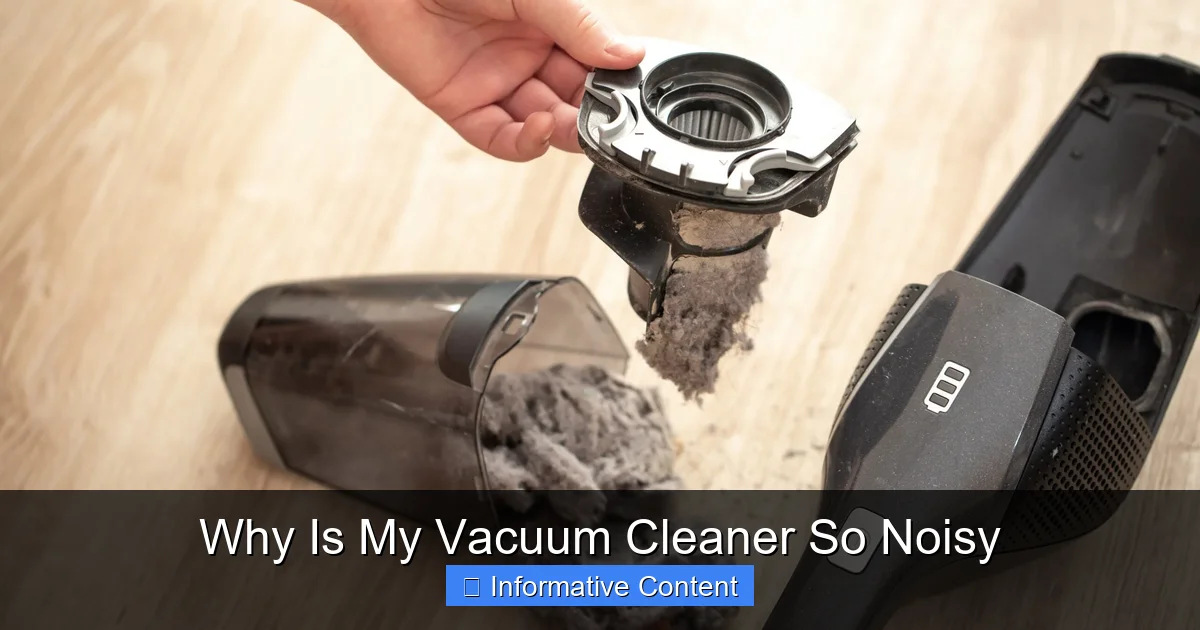
Vacuum filters are designed to trap dust and allergens, protecting the motor and keeping the air clean. Over time, these filters can become completely caked with dirt, significantly restricting airflow. Just like a blocked hose, a dirty filter makes the motor work harder and sound louder.
- How to Check: Locate your vacuum’s filters (pre-motor and/or HEPA exhaust filter). Check their condition.
- Solution: For washable filters, follow the manufacturer’s instructions for cleaning (usually rinsing with water and allowing to air dry completely). For non-washable filters, they will need to be replaced periodically. A clean filter can make a dramatic difference in both noise level and suction power.
Full Dust Bag or Canister
It sounds simple, but a full dust bag or an overfilled dust canister can act much like a clogged filter. The dirt and debris create a barrier, reducing airflow and causing the motor to labor more strenuously. This increased effort translates directly into more noise.
- How to Check: Simply check your bag or canister level.
- Solution: Empty the canister or replace the dust bag. It’s a quick fix that often solves the problem of a vacuum cleaner being too noisy.
Blocked Brush Roll
For upright vacuums or those with a powerhead, the brush roll (beater bar) is essential for agitating carpet and picking up debris. If hair, string, or carpet fibers become tightly wrapped around the brush roll, it can prevent it from spinning freely. This can cause the motor driving the brush roll to strain, leading to a grinding, squealing, or whining noise. In some cases, the brush roll might stop spinning entirely, adding extra stress to the main motor trying to compensate.
- How to Check: Unplug the vacuum, flip it over, and inspect the brush roll.
- Solution: Use scissors or a seam ripper to carefully cut away any tangled hair or debris. Spin the brush roll by hand to ensure it moves freely after cleaning.
Motor and Fan Issues: More Serious Mechanical Problems
If you’ve checked for clogs and the noise persists, the issue might lie within the vacuum’s motor or fan assembly. These are more serious problems, and while some DIY fixes are possible, professional repair or replacement might be necessary.
Worn Motor Bearings
The motor’s shaft spins on bearings, which are designed to reduce friction. Over time, especially with heavy use, these bearings can wear out. When motor bearings start to fail, they often produce a high-pitched whine, grinding sound, or a loud rattling noise. This sound will usually get worse the longer the vacuum runs. If you hear this kind of persistent, metallic noise, it’s a strong indicator of bearing trouble.
- Solution: Replacing motor bearings is a complex task usually best left to a qualified repair technician. Ignoring it can lead to complete motor failure.
Damaged Fan (Impeller)
The fan, or impeller, is responsible for creating the powerful suction. It’s typically located directly behind the motor. If a hard object—like a coin, a small pebble, or a piece of glass—gets past the filter and into the fan assembly, it can chip, bend, or break the fan blades. A damaged fan will often create a loud, unbalanced whirring, vibrating, or rattling noise, sometimes accompanied by a noticeable decrease in suction.
- Solution: Inspecting the fan requires dismantling part of the vacuum. If you find damage, the fan will need to be replaced. This is another job that might require a professional, as improper reassembly can cause further issues.
Loose or Damaged Internal Components
Sometimes, the internal components of the vacuum—such as the motor mounts, fan housing, or even screws—can come loose over time due to vibration. This can result in a rattling or buzzing sound as the parts vibrate against each other. It might also sound like something is simply loose inside the machine when you move it.
- Solution: Carefully inspect the vacuum’s exterior and accessible interior components for anything that appears loose. Tighten screws where appropriate. If the motor itself is loose, it might require more in-depth disassembly to secure it properly.
Brush Roll and Belt Problems: Specific to Upright and Powerhead Models
For vacuums that utilize a rotating brush roll, specific issues related to this component can contribute significantly to noise.
Tangled Brush Roll Bearings/End Caps
Beyond simple hair tangles, the bearings or end caps that support the brush roll can wear out or become clogged with debris. When these components fail, the brush roll will not spin smoothly, creating a squealing, grinding, or loud rubbing noise. Sometimes, it can sound like plastic scraping on plastic.
- How to Check: After cleaning the brush roll of hair, try spinning it by hand. If it doesn’t spin freely or makes unusual noises, the bearings or end caps might be the problem.
- Solution: Some brush rolls have removable end caps that can be cleaned or replaced. For internal bearings, you might need a replacement brush roll assembly.
Worn or Broken Belt
In many upright and powerhead vacuums, a belt connects the motor to the brush roll. If this belt is worn, stretched, or broken, the brush roll won’t spin effectively or at all. A worn belt might slip, causing a high-pitched squealing noise as it tries to grip the pulleys. A broken belt will result in the brush roll not spinning, and sometimes the motor will make a louder, higher-pitched whine because it’s no longer under load from the belt.
- How to Check: Unplug the vacuum and check the belt. Is it frayed, stretched, or completely snapped?
- Solution: Replace the belt. This is usually a straightforward repair, and replacement belts are readily available for most vacuum models.
Air Leaks and Seals: When the Vacuum Isn’t Airtight
A vacuum cleaner relies on an airtight system to maintain optimal suction. Any breaches in this system can cause air to escape or be drawn in where it shouldn’t, leading to a variety of distracting noises.
Loose Hoses or Attachments
If a hose isn’t securely connected to the main vacuum body, or an attachment isn’t firmly seated on the hose, air can leak out. This often creates a whistling or hissing sound as the air escapes, making the vacuum cleaner seem much noisier than it should be.
- Solution: Ensure all hoses and attachments are securely clicked into place. Check for any cracks or damage on the connectors themselves.
Cracked Housing or Damaged Gaskets/Seals
Over time, the plastic housing of your vacuum cleaner can develop cracks, especially if it’s been dropped or subjected to stress. Similarly, rubber gaskets and seals, which help maintain airtight connections, can dry out, crack, or become dislodged. These compromises in the vacuum’s sealed system allow air to leak, resulting in whistling, hissing, or a general increase in motor noise as the system tries to compensate for lost suction.
- How to Check: Visually inspect the entire vacuum body for cracks. Feel along seams and connections while the vacuum is running (carefully!) to detect air leaks.
- Solution: Small cracks might be repairable with strong adhesive or sealant. Damaged gaskets or seals may be replaceable, often requiring ordering specific parts for your vacuum model.
Age and Wear & Tear: The Natural Progression
Even with diligent maintenance, vacuum cleaners don’t last forever. As they age, components naturally wear down, contributing to increased noise.
General Component Degradation
Every moving part in your vacuum—from the wheels to internal linkages—experiences friction and wear. Over years of use, plastic parts can become brittle, metal parts can corrode, and connections can loosen. This general degradation contributes to a louder operational noise as components no longer fit or move as smoothly as they once did. Think of an old car with rattling panels; vacuums are no different.
When to Consider a New Vacuum
If you’ve systematically gone through all the troubleshooting steps, replaced common parts like filters and belts, and your vacuum cleaner is still excessively noisy, it might be time to consider retirement. Sometimes, the cost of repairing multiple worn-out components (motor, fan, seals, etc.) outweighs the cost of a new, more efficient, and quieter model. Modern vacuum cleaners often incorporate advanced noise reduction technologies that make them significantly quieter out of the box.
Conclusion: Restoring Peace and Quiet
A noisy vacuum cleaner isn’t just an annoyance; it’s often a clear signal that something needs attention. By systematically checking for clogs, inspecting filters, examining the brush roll and belt, and listening for specific types of sounds, you can usually pinpoint the source of the problem. Many issues, especially those related to blockages and routine maintenance, are surprisingly easy to fix yourself, saving you money and prolonging the life of your appliance.
Regular maintenance is your best defense against a noisy vacuum. Make it a habit to empty the dustbin, clean or replace filters, and clear the brush roll of tangled hair after every few uses. These simple steps can prevent many common noise-inducing problems. If you find yourself repeatedly asking, “Why is my vacuum cleaner so noisy?”, and the issue points to internal motor or fan damage, don’t hesitate to consult a professional or consider upgrading to a newer, quieter model. A little investigative work can bring back the peace and quiet—and the powerful cleaning performance—you deserve.
🎥 Related Video: Why Is My Vacuum So Loud?
📺 History Facts
Why Is My Vacuum So Loud? Read the full article here: https://vacuumizer.com/why-is-my-vacuum-so-loud/ Why is my vacuum so …
Frequently Asked Questions
How often should I clean my vacuum’s filters?
The frequency depends on your vacuum model and usage. For washable filters, cleaning every 1-3 months is a good general guideline. Non-washable filters should be replaced every 6-12 months, or sooner if you notice a drop in suction or an increase in noise.
Can I repair a broken vacuum belt myself?
In most cases, yes, replacing a broken vacuum belt is a relatively simple DIY repair. You’ll need to unplug the vacuum, remove the bottom plate, take off the old belt, and stretch the new one into place. Always refer to your vacuum’s user manual for specific instructions.
What should I do if I can’t find a clog?
If you’ve checked all obvious areas for clogs and still can’t find one, try using a long, flexible tool (like a drain snake or even a straightened coat hanger) to probe deeper into the hose and internal pathways. You can also try taking it to a professional if you’re uncomfortable disassembling parts.
Does regular vacuum maintenance truly reduce noise?
Absolutely. Regular maintenance, such as emptying canisters, cleaning filters, and clearing brush rolls, ensures optimal airflow and reduces strain on the motor. This preventative care directly helps in keeping your vacuum running as quietly and efficiently as possible.
When is it time to replace a noisy vacuum instead of repairing it?
Consider replacement if the repair cost for major components like the motor or fan approaches the price of a new vacuum, or if your vacuum is very old and frequently breaking down. If you’ve addressed all common issues and it’s still excessively noisy, a new model might offer better performance and quiet operation.
Are some vacuum cleaners inherently quieter than others?
Yes, there’s a significant difference in noise levels between various vacuum models and brands. Many modern high-end vacuums incorporate specialized acoustic designs and sound-dampening materials to reduce noise, often advertised with lower decibel ratings. If quiet operation is a priority, research models specifically designed for low noise.