Why Vacuum Cleaner Sound Relaxing
It might sound strange, but many people find the consistent hum of a vacuum cleaner incredibly relaxing. This article explores why this seemingly mundane sound can be so soothing, delving into the science of white noise, its ability to mask distractions, and the psychological comfort it provides. From a gentle sleep aid to a focus enhancer, the unique characteristics of vacuum cleaner sound relaxing properties are deeply rooted in our brain’s response to consistent, low-frequency sounds.
Why Vacuum Cleaner Sound Relaxing
You’ve probably heard it before, maybe even experienced it yourself. That moment when the vacuum cleaner fires up, and instead of finding it annoying, you feel a strange sense of calm wash over you. It’s a bit of an odd phenomenon, isn’t it? A noisy household appliance, designed to suck up dirt with a powerful roar, somehow manages to lull some of us into a state of blissful relaxation, or even sleep. It’s not just a quirky habit; there’s a fascinating blend of science, psychology, and even a touch of nostalgia that explains why vacuum cleaner sound relaxing is a real thing for so many.
For parents, the vacuum cleaner can sometimes be a secret weapon – a surprising sleep aid for a fussy baby. For adults, it might be the perfect background hum for concentration, or simply a comforting presence during a quiet afternoon. But what exactly is it about this particular drone that our brains find so appealing? Let’s dive deep into the world of sound, our minds, and why this everyday chore often delivers an unexpected dose of tranquility.
Key Takeaways
- White Noise Effect: The consistent, broad-spectrum sound produced by vacuum cleaners acts as a form of white noise, effectively masking sudden, distracting environmental noises and creating a more stable auditory environment.
- Drowning Out Distractions: Its steady hum creates a “sound blanket” that reduces the perception of irritating sounds like traffic, conversations, or household creaks, fostering a sense of peace and quiet.
- Psychological Comfort: For many, the vacuum cleaner’s sound is linked to a sense of order, cleanliness, and accomplishment, evoking feelings of a well-maintained home and a completed task, which can be inherently relaxing.
- Childhood and Womb Associations: Some theories suggest the low-frequency drone might mimic the sounds experienced in the womb or gentle household sounds from childhood, tapping into deep-seated feelings of security and comfort.
- Stress and Anxiety Reduction: By providing a predictable and non-threatening auditory input, the sound can help calm an overactive mind, reduce anxiety, and promote a state conducive to relaxation or sleep.
- Enhances Focus and Sleep: The constant, non-intrusive sound helps some individuals concentrate better by blocking out intermittent distractions, while others find it a powerful tool for drifting off to sleep more easily.
Quick Answers to Common Questions
Why do babies often find vacuum cleaner sounds soothing?
Babies often find vacuum cleaner sounds soothing because the consistent, low-frequency hum can mimic the sounds they experienced in the womb, creating a familiar and comforting auditory environment that helps them feel secure and fall asleep.
Is there scientific evidence supporting the relaxing effect of vacuum sounds?
Yes, the relaxing effect is largely attributed to the sound acting as white or pink noise. Studies on white noise show it can mask disruptive sounds, improve sleep quality, and enhance focus by creating a more stable auditory backdrop.
Can any loud, consistent sound be relaxing like a vacuum cleaner?
While consistency is key, not just any loud sound is relaxing. The specific frequency profile, particularly the presence of lower frequencies found in pink noise, makes vacuum cleaner sounds particularly effective compared to harsher, high-frequency loud noises.
Does the vacuum cleaner sound relaxing affect everyone?
No, not everyone finds the vacuum cleaner sound relaxing. Individual preferences vary widely based on personal experiences, sensory sensitivities, and the specific characteristics (volume, pitch) of the sound produced by different vacuums.
How can I use vacuum cleaner sounds for relaxation or sleep?
You can use the actual sound of a running vacuum, or more practically, use a white noise machine or an app that features vacuum cleaner sounds or similar pink noise profiles. Ensure the volume is comfortable and consistent for optimal relaxation or sleep.
📑 Table of Contents
- The Science Behind the Soothing Sound: White Noise and Pink Noise
- Drowning Out Distractions: A Sound Blanket for Your Brain
- Psychological Comfort: The Association with Cleanliness and Order
- A Return to the Womb? Evolutionary and Childhood Links
- Mindful Moment or Background Bliss: How We Utilize the Sound
- Is There a “Perfect” Vacuum Sound? Factors Influencing Relaxation
- Conclusion
The Science Behind the Soothing Sound: White Noise and Pink Noise
At the heart of why vacuum cleaner sound relaxing lies its sonic profile. The consistent, broadband sound produced by a vacuum cleaner isn’t just random noise; it often falls into categories known as “white noise” or “pink noise.” These sound types have a unique ability to influence our auditory perception and brain activity.
What is White Noise?
Think of white noise as a sound that contains all audible frequencies distributed equally across the entire spectrum. Imagine static on an old TV or radio – that’s a classic example. Because white noise contains so many frequencies, it can effectively “mask” other, more abrupt sounds. Our brains struggle to focus on individual, specific noises when a blanket of white noise is present. This means sudden door creaks, distant traffic horns, or even noisy neighbors become less noticeable, creating a more uniform and less disruptive soundscape.
When a vacuum cleaner operates, it generates a relatively consistent, full-spectrum hum. This drone acts much like white noise, filling the auditory space with a steady presence. Instead of hearing individual distracting sounds, your brain processes the vacuum’s hum as a continuous, non-threatening background. This consistency is key to its relaxing effect, helping to block out the sharp contrasts of everyday life that can often keep our minds alert and restless. It’s why many find the vacuum cleaner sound relaxing and conducive to a peaceful environment.
The Role of Pink Noise
While white noise features equal intensity across all frequencies, pink noise is slightly different. In pink noise, the energy decreases as the frequency increases. This means lower frequencies are more prominent, giving pink noise a “deeper” or “softer” sound than white noise, which can sometimes be perceived as harsh due to its high-frequency content. Examples of pink noise in nature include rustling leaves, steady rain, or ocean waves – sounds many people find inherently calming.
Many vacuum cleaners, especially modern ones, produce a sound profile that leans closer to pink noise, or a combination of white and pink. This means they often have a richer, lower-frequency hum that is less abrasive and more gentle on the ears. This deeper, more natural-sounding hum is often even more effective at promoting relaxation and can explain why for many, the vacuum cleaner sound relaxing is such a powerful experience.
Drowning Out Distractions: A Sound Blanket for Your Brain
One of the most immediate and impactful reasons why the vacuum cleaner sound relaxing is its incredible ability to create a “sound blanket.” Our modern world is filled with auditory clutter – notifications, conversations, street noise, appliance beeps, and countless other sounds that compete for our attention. These intermittent, unpredictable noises are particularly disruptive to our concentration and peace of mind.
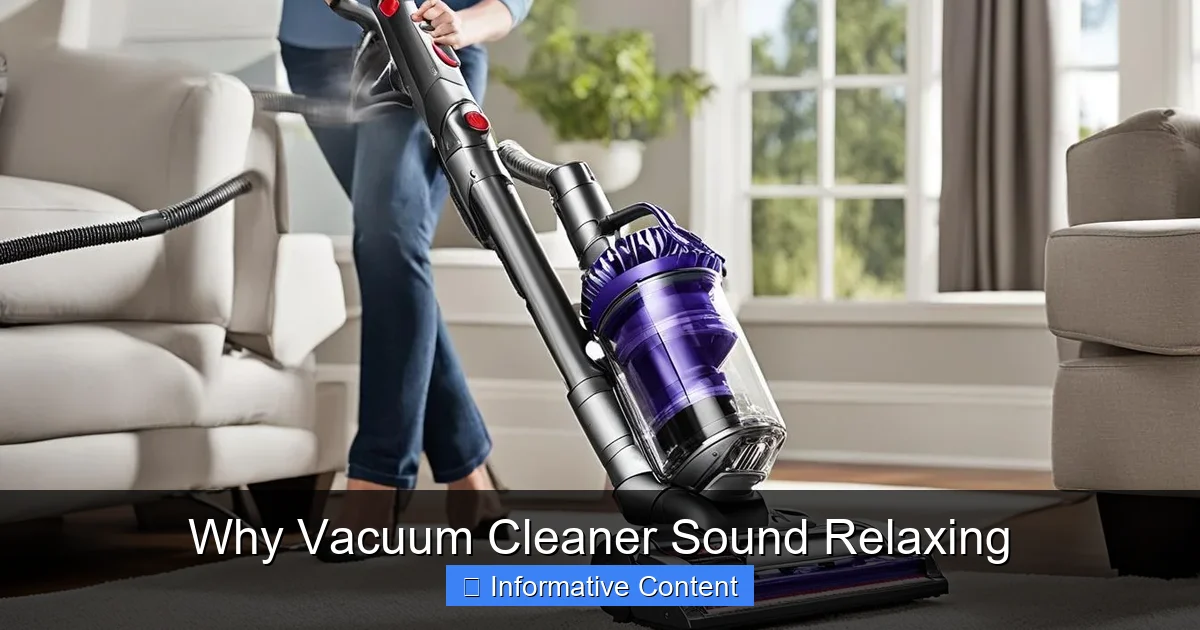
Visual guide about Why Vacuum Cleaner Sound Relaxing
Image source: vacmasterguide.com
Masking Unwanted Noise
Imagine trying to read a book while someone is talking loudly next door. Your brain is constantly switching its focus between the book and the intruding conversation. Now, imagine a consistent, non-intrusive hum is present. While the conversation might still be happening, the vacuum’s consistent drone effectively masks or muffles those distinct sounds. It reduces the perceived difference between the distracting noise and the background, making the former less salient and easier for your brain to ignore.
This masking effect is incredibly powerful. It doesn’t eliminate the other sounds, but it smooths out the peaks and valleys of the auditory landscape. This creates a uniform, less stimulating environment where your brain doesn’t have to constantly be on alert for new or potentially irritating sounds. For some, this transformation from chaotic to consistent is the primary reason the vacuum cleaner sound relaxing. It’s like turning down the volume on the world’s most annoying orchestra.
Creating a Consistent Soundscape
Our brains crave predictability, especially when it comes to sensory input. Sudden, unexpected noises trigger our “fight or flight” response, designed to alert us to potential dangers. A constant, unvarying sound, however, signals safety and consistency. The vacuum cleaner’s hum, once it’s started, is wonderfully predictable. It maintains a steady frequency and volume, without sudden changes or alarming variations.
This consistency allows our brains to “tune out” the sound. Instead of actively listening to it, we perceive it as a neutral background element. This frees up cognitive resources that would otherwise be spent processing and reacting to unpredictable sounds. It’s a form of auditory comfort food – familiar, steady, and entirely non-threatening. This consistent soundscape is a major contributor to why vacuum cleaner sound relaxing for so many individuals.
Psychological Comfort: The Association with Cleanliness and Order
Beyond the purely acoustic properties, there’s a significant psychological component to why vacuum cleaner sound relaxing. For many people, the sound of a vacuum cleaner isn’t just noise; it’s intricately linked to feelings of cleanliness, order, and accomplishment. These associations can trigger powerful positive emotions.
The Satisfaction of a Job Done
Think about the act of vacuuming. It’s often a chore, but it’s also an act of control and improvement. You start with a messy floor, and you end with a clean one. The sound of the vacuum running is the soundtrack to this transformation. For some, hearing that hum signals that a task is being completed, that order is being restored, and that the home is becoming a more pleasant and hygienic place.
This sense of accomplishment and the satisfaction derived from a clean environment can be incredibly soothing. It taps into our innate desire for order and control in our surroundings. The sound becomes a positive reinforcement, a gentle reminder that things are being taken care of, which can significantly contribute to why vacuum cleaner sound relaxing. It’s the sound of productivity and peace rolled into one.
A Sense of Control and Routine
Vacuuming is often part of a regular household routine. Routines, even simple ones, provide a sense of structure and predictability in our lives, which can be very comforting. The sound of the vacuum might signal a specific time of day or week, a familiar pattern that grounds us. In a world that often feels chaotic, these small acts of routine and control can be powerful anchors for our mental well-being.
Moreover, the person operating the vacuum is actively creating this sound. This act of intentional noise production, even if it’s not you, can still signal a sense of agency and purpose within the home. It’s a sound of positive action, not random disturbance. This psychological framework deeply reinforces why vacuum cleaner sound relaxing for many, associating it with a well-ordered and cared-for environment.
A Return to the Womb? Evolutionary and Childhood Links
Some theories about why vacuum cleaner sound relaxing delve even deeper, suggesting connections to our earliest experiences and evolutionary history. These theories are more speculative but offer intriguing insights into our fundamental responses to certain types of sound.
Echoes of the Womb
One popular theory suggests that the consistent, low-frequency hum of a vacuum cleaner might unconsciously remind us of the sounds we heard in the womb. Inside a mother’s womb, a baby is constantly enveloped by sounds: the rhythmic beat of the mother’s heart, the whooshing of blood, and the muffled sounds of the external world. These sounds create a constant, low-frequency auditory environment, much like pink noise.
This primal association with a safe, warm, and secure environment could explain why such sounds can be profoundly calming. For many babies, and perhaps for some adults, the vacuum cleaner’s drone might tap into this deep-seated memory of absolute security and comfort, making the vacuum cleaner sound relaxing on a very fundamental level. It’s a sonic embrace from our earliest days.
Early Childhood Associations
Beyond the womb, our early childhood experiences also shape our responses to sound. For many, a parent or caregiver might have been vacuuming in the background while they were napping, playing quietly, or simply existing safely within the home. The sound wasn’t threatening; it was part of the normal, comforting rhythm of home life.
These early, positive associations can embed the vacuum’s sound with feelings of safety, care, and domestic peace. Even if we don’t consciously remember these moments, the emotional imprint can remain. Thus, the vacuum cleaner sound relaxing because it subconsciously signals a return to simpler, secure times.
Mindful Moment or Background Bliss: How We Utilize the Sound
The relaxing properties of vacuum cleaner sound are not just a passive phenomenon; many people actively or unconsciously utilize this sound for various benefits in their daily lives.
Enhancing Focus and Concentration
In a world full of digital distractions and open-plan offices, finding a quiet space to focus can be challenging. For some, the vacuum cleaner’s consistent hum creates the perfect auditory bubble. By masking other distracting sounds, it allows the mind to settle and concentrate on the task at hand, whether it’s studying, writing, or deep work. It’s a non-invasive way to create a more focused environment without complete silence, which some find even more distracting.
This isn’t about actively listening to the vacuum; it’s about the sound allowing you to stop actively listening to everything else. The steady input keeps your brain from searching for new, potentially interesting sounds, letting it dedicate more resources to cognitive tasks. This unique ability to aid concentration is a key reason why many find the vacuum cleaner sound relaxing and productive.
A Natural Sleep Aid
This is perhaps one of the most well-known benefits. For babies and adults alike, the vacuum cleaner sound can be a highly effective sleep aid. It provides a consistent, soothing background that helps drown out the sharp noises that can jolt us awake or prevent us from falling asleep in the first place. The gentle hum can help regulate brain waves, guiding them towards slower, more relaxed patterns conducive to sleep.
Many parents specifically use white noise machines, often featuring a vacuum cleaner-like sound profile, to help their infants sleep. The consistency offers a sense of security, mimicking the womb, and helps them transition into deeper sleep cycles. For adults suffering from mild insomnia or living in noisy environments, a running vacuum (or a recording of one) can provide that much-needed auditory comfort to drift off. It’s a natural, non-pharmacological way to encourage restful slumber, showcasing why vacuum cleaner sound relaxing is more than just an anecdotal observation.
Reducing Anxiety and Stress
In moments of stress or anxiety, our minds can become overstimulated and hyper-vigilant. The consistent, predictable nature of the vacuum cleaner sound can offer a grounding presence. It provides a simple, unchanging auditory anchor that can help pull the mind away from anxious thoughts and overwhelming external stimuli. It’s like a gentle sonic massage for an overactive brain.
By creating a calmer auditory environment and reducing the need for the brain to process multiple competing sounds, the vacuum’s hum can contribute to an overall reduction in mental load. This reduction in cognitive effort and sensory input can lead to a state of increased relaxation and reduced anxiety, demonstrating its therapeutic potential. This is a significant aspect of why vacuum cleaner sound relaxing for individuals seeking moments of peace.
Is There a “Perfect” Vacuum Sound? Factors Influencing Relaxation
While many find the vacuum cleaner sound relaxing, not all vacuum sounds are created equal. Several factors can influence how soothing or irritating a particular vacuum’s hum might be.
Volume and Decibel Levels
Naturally, an excessively loud vacuum cleaner, especially one with a high-pitched whine, is unlikely to be relaxing. There’s a sweet spot. The ideal sound for relaxation is generally consistent, but not overwhelmingly loud. It needs to be present enough to mask other sounds, but not so loud that it becomes a distraction itself. Most people find decibel levels between 50-70 dB to be most effective for white/pink noise for sleep or focus. Above that, it risks becoming disruptive.
Frequency Range and Pitch
As discussed with pink noise, lower frequencies generally tend to be more soothing than higher, sharper ones. A vacuum that produces a deeper, rumbling hum is often preferred over one that has a high-pitched, piercing whine. This is why some older, less efficient models might paradoxically be more relaxing than newer, higher-pitched ones, even if they are louder overall. The spectral balance of the sound plays a huge role in why vacuum cleaner sound relaxing.
Consistency is Key
The most crucial factor is consistency. Any vacuum cleaner sound that frequently changes pitch, has intermittent rattles, or sputters will likely be irritating rather than relaxing. The brain thrives on predictability in this context. A steady, unbroken stream of sound allows the brain to seamlessly filter it out, allowing relaxation to occur. If the sound is too variable, the brain remains on alert, waiting for the next change, thus negating the relaxing effect.
Conclusion
So, the next time you hear that familiar hum, don’t just dismiss it as mere noise. There’s a whole world of sensory science and psychology at play that explains why vacuum cleaner sound relaxing for so many of us. From its effectiveness as a white or pink noise generator, masking the chaotic symphony of everyday life, to its deep psychological ties to cleanliness, order, and even our earliest memories, the humble vacuum cleaner offers a surprising path to peace.
Whether you’re using it to focus, to calm a fussy baby, or simply to find a moment of quiet serenity amidst a busy day, embracing the soothing power of the vacuum’s drone can be a wonderfully simple way to enhance your well-being. It’s a testament to how our brains interpret and respond to the world around us, turning an ordinary chore into an unexpected source of comfort and calm.
🎥 Related Video: Vacuum Cleaner Sleep Sound for Babies | White Noise Soothes Crying, Colic | 10 Hours
📺 Relaxing White Noise
An age-old trick for parents trying to soothe a crying baby is to run their vacuum cleaner. For many colicky infants, the vacuum …
Frequently Asked Questions
What type of noise does a vacuum cleaner typically produce?
A vacuum cleaner typically produces a broadband sound profile that falls into the categories of white noise or pink noise. White noise contains all audible frequencies equally, while pink noise has more energy in lower frequencies, often perceived as a deeper, softer hum.
Why does the consistency of the vacuum sound matter for relaxation?
The consistency of the vacuum sound matters because our brains find predictable auditory input less threatening and easier to filter out. It allows the brain to “tune out” the background noise, reducing cognitive load and preventing the “fight or flight” response triggered by sudden, unpredictable sounds.
Can vacuum cleaner sounds help with concentration?
Yes, vacuum cleaner sounds can help with concentration by masking other distracting noises in the environment. This creates a more uniform soundscape that allows the brain to focus more effectively on tasks without being interrupted by intermittent sounds.
Are there any downsides to using vacuum cleaner sounds for relaxation?
One potential downside is that some individuals might find the sound irritating or too loud, rather than relaxing. Additionally, relying too heavily on any background noise for sleep might make it harder to fall asleep in silent environments.
Is it safe to use vacuum cleaner sounds for babies?
Using vacuum cleaner sounds (or white noise) for babies can be safe and effective, but it’s crucial to keep the volume at a safe level (under 50-60 dB) and ensure the sound source is not too close to the baby to protect their developing hearing.
How is the sound of a vacuum cleaner different from ambient music for relaxation?
The sound of a vacuum cleaner, as white or pink noise, functions primarily by masking other sounds and providing a consistent, non-patterned auditory backdrop. Ambient music, on the other hand, typically involves melodies, harmonies, and rhythms, which our brains actively process, potentially engaging the mind rather than simply quieting external distractions.