Why My Vacuum Cleaner Suddenly Stopped Working
Your vacuum cleaner suddenly stopped working, but don’t panic! Many common issues are simple fixes, like checking power sources, clearing clogs in hoses or brush rolls, or emptying a full dirt bin. Often, a quick diagnostic can save you a repair bill or replacement cost, getting your cleaning back on track quickly and efficiently.
Why My Vacuum Cleaner Suddenly Stopped Working
There are few household chores as satisfying as seeing a freshly vacuumed floor, free of dust, crumbs, and pet hair. But what happens when that trusty cleaning companion suddenly quits on you? One minute it’s sucking up debris with gusto, the next it’s silent, inert, leaving you staring at a half-finished job and a growing pile of frustration. If you’re asking yourself, “Why did my vacuum cleaner suddenly stopped working?” you’re not alone. This is a remarkably common problem, and the good news is that many of the reasons are surprisingly simple to fix.
It’s easy to jump to the conclusion that your vacuum cleaner is completely broken and that an expensive repair or, worse, a costly replacement is inevitable. However, before you declare it a goner or head to the electronics store, take a deep breath. Many sudden stoppages can be traced back to minor issues that you can diagnose and resolve right at home with a bit of patience and a few basic checks. From simple power glitches to stubborn clogs, understanding the common culprits can save you time, money, and a whole lot of headache.
In this comprehensive guide, we’ll walk you through the most frequent reasons why a vacuum cleaner suddenly stopped working. We’ll explore everything from electrical hiccups to mechanical snags, offering practical troubleshooting steps and easy-to-follow tips. Our goal is to empower you to identify the problem and, hopefully, get your vacuum back in action, restoring peace to your cleaning routine. So, grab a flashlight and let’s get started – your vacuum might just need a little TLC to get roaring again!
Key Takeaways
- Power Check First: Always begin troubleshooting by verifying the vacuum is plugged in correctly and the outlet has power. Check for tripped circuit breakers or internal fuses.
- Clogs are Common Culprits: The most frequent reason a vacuum cleaner suddenly stopped working is a blockage in the hose, brush roll, or filters. Inspect these areas thoroughly.
- Don’t Overlook the Basics: A full dust bag or canister, or an overly dirty filter, can significantly reduce performance or cause the vacuum to stop operating altogether.
- Motor and Belt Issues: Listen for unusual noises. A broken drive belt prevents the brush roll from spinning, while an overheating motor often triggers a safety shutdown.
- Regular Maintenance Prevents Problems: Consistent cleaning of filters, clearing the brush roll, and emptying the dust bin are crucial for your vacuum’s longevity and reliable function.
- Safety First When Troubleshooting: Always unplug your vacuum before inspecting or attempting any repairs to prevent electrical shock or accidental activation.
- Know When to Seek Professional Help: For complex electrical issues, motor failures, or if your vacuum is old and frequently failing, consider a professional repair or replacement.
Quick Answers to Common Questions
What’s the first thing I should check if my vacuum cleaner suddenly stopped working?
The very first thing to check is the power source. Ensure the vacuum is securely plugged into a functioning wall outlet and check your home’s circuit breaker to see if it has tripped.
Can a full dust bag or canister really make my vacuum stop working?
Yes, absolutely. A completely full dust bag or canister severely restricts airflow, causing the motor to work much harder, overheat, and often trigger a safety shutdown to prevent damage.
How do I know if the vacuum hose is clogged?
Unplug the vacuum, then disconnect the hose from both the vacuum body and the floor attachment. Hold it up and look through it. If you can’t see light through the entire length, there’s a clog.
What does it mean if the motor is running but the brush roll isn’t spinning?
If the motor is running but the brush roll isn’t spinning, the most likely cause is a broken or stretched drive belt. It could also be a severe entanglement of hair or debris around the brush roll itself.
When should I consider replacing my vacuum instead of repairing it?
Consider replacement if your vacuum is very old, frequently breaks down, or if the cost of repairing a major component (like the motor or control board) is close to or exceeds the price of a new vacuum cleaner.
📑 Table of Contents
- 1. Power Problems: Is It Even Getting Electricity?
- 2. Blockages and Clogs: The Most Common Culprits
- 3. Motor or Belt Malfunctions: When Things Get Mechanical
- 4. Electronic or Sensor Issues: The Brains of Your Vacuum
- 5. User Error or Preventable Issues: Sometimes It’s Us!
- 6. When to Call a Professional or Consider Replacement
- Conclusion
1. Power Problems: Is It Even Getting Electricity?
When your vacuum cleaner suddenly stopped working, the very first place to check, surprisingly often, isn’t the vacuum itself, but its power source. It sounds basic, but you’d be amazed how many “broken” appliances are just unplugged or victims of a power outage.
The Wall Outlet Itself
It’s a classic for a reason. First, ensure the power cord is securely plugged into a functioning wall outlet. Sometimes, a loose connection is all it takes for the vacuum to stop. Next, test the outlet with another small appliance, like a phone charger or a lamp. If the other appliance doesn’t work either, the problem is with your outlet, not your vacuum. This could mean a tripped circuit breaker or a faulty outlet. Check your home’s electrical panel for any tripped breakers (usually a switch that’s flipped to the middle or ‘off’ position) and reset it.
The Power Cord and Plug
The power cord takes a lot of abuse. It gets tugged, rolled over, and twisted. Inspect the entire length of the cord for any visible damage: fraying, cuts, or pinched spots. Pay close attention to where the cord enters the vacuum and the plug itself. A damaged cord can lead to an intermittent connection or a complete power failure. If you see significant damage, stop using the vacuum immediately, as it poses a serious shock hazard. This kind of repair usually requires a professional or a replacement cord if available, though sometimes it might mean replacing the vacuum itself. The plug prongs should also be straight and intact. Bent or broken prongs won’t make a good connection, explaining why your vacuum cleaner suddenly stopped working.
Internal Fuses or Circuit Breakers
Some vacuum cleaners, especially older or heavy-duty models, have an internal fuse or a reset button designed to protect the motor from overloads. If your vacuum overheats or tries to suck up something it shouldn’t, this fuse might blow or the breaker might trip, causing the vacuum to stop abruptly. Check your owner’s manual to see if your model has such a feature and where it’s located. Often, a small red reset button can be found near the motor housing. Unplug the vacuum, wait about 30 minutes for it to cool down, and then try pressing the reset button. If it has a replaceable fuse, you’ll need to locate it (again, consult your manual) and replace it with one of the exact same rating.
2. Blockages and Clogs: The Most Common Culprits
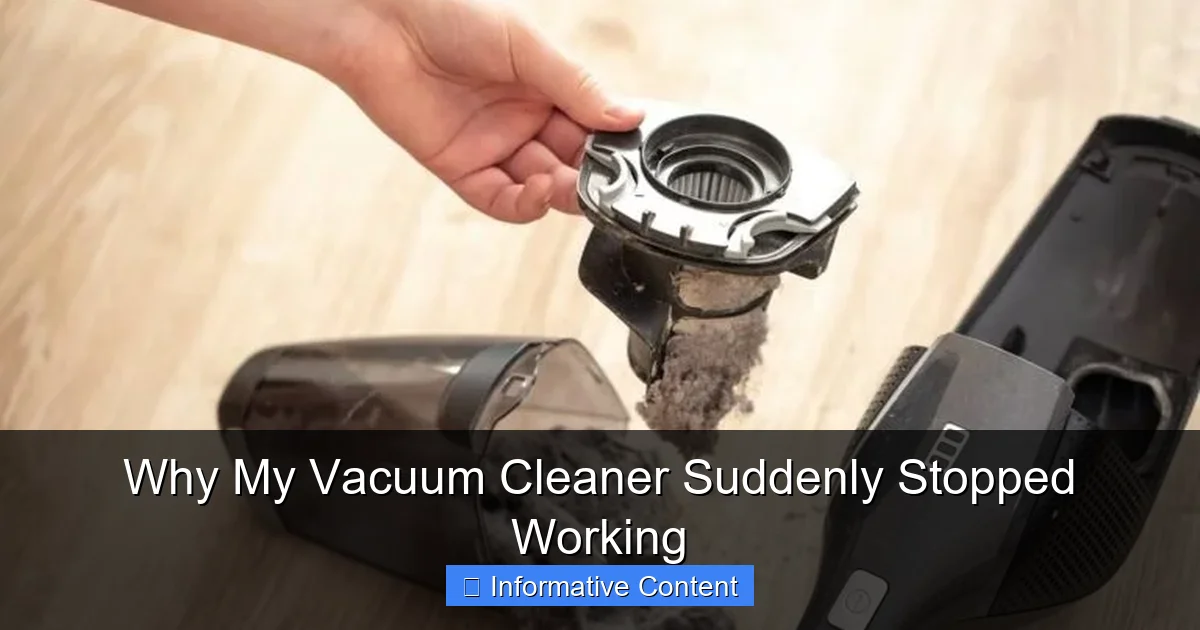
Visual guide about Why My Vacuum Cleaner Suddenly Stopped Working
Image source: cleanerstalk.com
If your vacuum cleaner suddenly stopped working, even though it’s getting power, a blockage is almost certainly the next thing to investigate. Clogs are by far the most frequent reason for a loss of suction or a complete shutdown. When airflow is restricted, the motor has to work harder, leading to overheating and often a safety shutdown.
The Hose is Blocked
This is probably the most common spot for clogs. Large items like socks, small toys, or even wads of pet hair can get stuck in the main hose, the wand, or attachment hoses.
- How to Check: First, unplug your vacuum. Disconnect the main hose from both the vacuum body and the floor tool. Look through it. If you can’t see daylight, there’s a clog.
- How to Clear: Use a broom handle, a long stick, or even a plumber’s snake to carefully push the obstruction out. Be gentle to avoid damaging the hose. Never use sharp objects that could puncture the hose.
Brush Roll Obstructions
The rotating brush roll (also called a beater bar) in the floor head is essential for agitating carpets and picking up debris. If it stops spinning, or if the vacuum suddenly stopped working entirely, a jammed brush roll could be the cause.
- How to Check: Unplug the vacuum. Flip the floor head over. Look for hair, string, carpet fibers, or even small pieces of plastic wrapped tightly around the brush roll. These can prevent it from spinning freely or even seize it completely.
- How to Clear: Use scissors or a seam ripper to carefully cut away hair and threads. Be extremely careful not to cut the bristles or the drive belt. Remove any larger objects that might be caught.
Filter Overload
Vacuum filters, whether HEPA, foam, or pleated, are designed to trap dust and allergens, protecting the motor and keeping the air clean. Over time, these filters become clogged with fine particles. A heavily soiled filter severely restricts airflow, causing the motor to strain and overheat, leading to a shutdown.
- How to Check: Consult your manual for the location of all filters (pre-motor, post-motor, HEPA, etc.). Remove them and visually inspect them. If they’re caked with dust and dirt, they need attention.
- How to Clean/Replace: Some filters are washable (allow them to air dry completely before reinstalling, typically for 24-48 hours). Others are designed for replacement. Always follow the manufacturer’s instructions. Cleaning or replacing a clogged filter is a very common fix for “why my vacuum cleaner suddenly stopped working.”
Dust Bag or Canister Full
This might seem obvious, but it’s often overlooked. A completely full dust bag or a canister packed to the brim with dirt will dramatically reduce suction and can cause the vacuum to stop working. The lack of space for airflow stresses the motor.
- How to Check: Simply check the bag or canister level.
- How to Clear: Empty the canister or replace the dust bag. This simple action often resolves the issue instantly. Don’t let your bag or canister get too full; it’s bad for performance and the motor.
3. Motor or Belt Malfunctions: When Things Get Mechanical
Sometimes, the problem isn’t a simple clog or power issue, but rather something mechanical within the vacuum itself. These issues can be more serious, but some are still within a DIYer’s reach.
Broken Drive Belt
The drive belt is a rubber band that connects the vacuum motor to the brush roll, making it spin. If this belt breaks, the motor will still run, but the brush roll won’t turn, meaning your vacuum will lose its ability to agitate carpets and pick up embedded dirt, often leading you to think the entire vacuum cleaner suddenly stopped working properly.
- How to Check: Unplug the vacuum. Flip the floor head over and look at the brush roll. If the brush roll isn’t spinning when the vacuum is on (and it’s not clogged), it’s likely a broken belt. You might even see a snapped rubber band.
- How to Replace: This is a fairly straightforward repair for most upright vacuums. You’ll need to buy a replacement belt specifically designed for your vacuum model. Accessing the belt usually involves removing a few screws to take off the bottom plate of the floor head. Make sure to buy the correct size and type of belt.
Overheating Motor
Vacuum motors generate heat during operation. To prevent damage, most modern vacuums have thermal cut-off switches that automatically shut down the motor if it gets too hot. This is a safety feature. The motor overheating can be caused by clogs, a full dust bin, dirty filters, or simply using the vacuum for too long without a break.
- How to Check: If your vacuum cleaner suddenly stopped working mid-use and feels hot to the touch, and you’ve already checked for clogs and full bins, it’s likely the thermal protector tripped.
- How to Resolve: Unplug the vacuum and let it cool down for at least 30 minutes to an hour. While it’s cooling, check and clear any clogs or full bins that might have caused the overheating. Once cooled, plug it back in and try again. If it keeps overheating, there might be a more serious motor issue.
Carbon Brush Wear (for older models)
Some older vacuum motors use carbon brushes to conduct electricity to the spinning armature. Over many years of use, these carbon brushes wear down. When they wear too much, they can no longer make proper contact, and the motor will stop working.
- How to Check: This is less common in newer vacuums. If your vacuum is old and makes a sputtering noise before it stops, or there are visible sparks, worn carbon brushes might be the culprit.
- How to Resolve: Replacing carbon brushes can be a DIY task for those comfortable with small motor repair, but it often requires dismantling the motor housing. It might be a job for a professional, or a sign it’s time for a new vacuum.
4. Electronic or Sensor Issues: The Brains of Your Vacuum
Modern vacuum cleaners, especially robotic or high-tech models, incorporate various sensors and electronic control boards. When your vacuum cleaner suddenly stopped working, sometimes the problem lies in these intelligent components.
Control Board Failure
The control board is the “brain” of your vacuum, managing power distribution, motor speed, and various functions. A fault in this board can lead to a complete shutdown or erratic behavior.
- How to Check: Diagnosing a faulty control board without specialized tools is difficult. If you’ve ruled out all other common issues and there’s no power despite everything else checking out, a control board might be the problem.
- How to Resolve: Replacing a control board is typically not a DIY job for the average user. It requires specific parts and technical knowledge. This usually means a trip to a repair shop.
Safety Sensors
Many vacuums have safety sensors. For instance, some uprights won’t power on if the dustbin isn’t correctly seated. Robotic vacuums have cliff sensors, bumper sensors, and charging contact sensors. If any of these sensors are dirty, obstructed, or faulty, the vacuum might refuse to operate.
- How to Check: Ensure all removable parts like the dustbin, filters, and attachments are securely in place. For robot vacuums, clean all visible sensors with a dry cloth. Check that the charging contacts are clean and making good connection.
- How to Resolve: Cleaning the sensors or reseating components often fixes the issue. If not, a faulty sensor could require professional repair.
5. User Error or Preventable Issues: Sometimes It’s Us!
Let’s be honest, sometimes the reason your vacuum cleaner suddenly stopped working isn’t a malfunction at all, but a simple oversight or a lack of routine care.
Using the Wrong Settings
Most vacuums have different settings for different floor types (e.g., high pile carpet, low pile, hard floor). Using the wrong setting can cause issues. For instance, using the highest pile setting on a very plush rug might cause too much suction resistance, making the motor strain and potentially overheat. Or, using the brush roll on a delicate rug might cause it to snag and jam.
- Tip: Always ensure you’re using the appropriate setting for the surface you’re cleaning. Familiarize yourself with your vacuum’s controls.
Ignoring Regular Maintenance
As we’ve seen, many common problems like clogs and dirty filters stem directly from a lack of regular maintenance. Skipping these crucial steps can shorten the life of your vacuum and lead to frequent breakdowns.
- Tips:
- Empty the dustbin or change the bag frequently, ideally after every few uses or when it’s two-thirds full.
- Clean or replace filters as recommended by the manufacturer (usually every 3-6 months).
- Regularly check and clear hair and debris from the brush roll.
- Inspect the hose and attachments for blockages periodically.
- Wipe down the exterior and check the power cord for damage.
Consistent care is the best way to prevent your vacuum cleaner suddenly stopped working unexpectedly.
6. When to Call a Professional or Consider Replacement
While many vacuum problems have simple solutions, there are times when DIY repair isn’t feasible or cost-effective.
Complex Repairs
If you’ve systematically gone through all the troubleshooting steps and your vacuum cleaner suddenly stopped working is still an unsolved mystery, or if you suspect a major motor or electronic control board failure, it might be time for a professional. Technicians have specialized tools and diagnostic equipment to pinpoint intricate issues. Consider the cost of repair versus the cost of a new vacuum.
Age and Cost-Benefit Analysis
How old is your vacuum? If it’s many years old, showing signs of wear and tear, and developing frequent problems, the cost of a professional repair might approach or even exceed the cost of a new, more efficient model.
- Consider:
- The age of the vacuum.
- The cost of the repair versus buying a new unit.
- The availability of parts.
- How frequently you use it.
- The type of vacuum (a basic stick vacuum might be cheaper to replace, while a high-end canister might be worth repairing).
Sometimes, saying goodbye to an old appliance and investing in a new one is the most practical and economical decision in the long run.
Conclusion
It’s incredibly frustrating when your vacuum cleaner suddenly stopped working, turning a simple cleaning task into a puzzling predicament. However, as we’ve explored, many of these sudden stoppages have surprisingly straightforward explanations and fixes. From ensuring your vacuum is simply plugged in, to diligently clearing out hidden clogs, or giving your filters the attention they deserve, a little detective work can often resurrect your cleaning companion.
Remember to always start with the simplest checks: power, plugs, and circuit breakers. Then move on to the most common culprits like hoses, brush rolls, and filters. Most often, the solution to “why my vacuum cleaner suddenly stopped working” lies within these easily accessible areas. Regular maintenance is your best defense against unexpected breakdowns, prolonging the life of your appliance and keeping your home spotless.
So, the next time your vacuum goes silent, don’t despair! Take a systematic approach, follow these troubleshooting steps, and you might just find that your trusty vacuum cleaner is ready to roar back to life, saving you both time and money. Happy cleaning!
🎥 Related Video: Why Did My Vacuum Suddenly Stop Working? Troubleshooting Guide
📺 vacuumera
Why Did My Vacuum Suddenly Stop Working? T Experiencing a sudden halt in your vacuum’s operation can be frustrating.
Frequently Asked Questions
How often should I clean or replace my vacuum’s filters?
The frequency depends on your vacuum model and usage, but generally, washable filters should be cleaned every 1-3 months, and replaceable filters should be changed every 3-6 months. Check your owner’s manual for specific recommendations.
Can pet hair cause my vacuum cleaner to stop working?
Yes, pet hair is a major culprit! It can easily clog hoses, wrap tightly around the brush roll, and quickly fill up dustbins or filters, leading to reduced suction, overheating, and ultimately causing your vacuum cleaner to stop working.
Is it safe to clear a vacuum clog with my hands?
Always unplug your vacuum cleaner before attempting to clear any clogs to prevent accidental activation and injury. While you can use your hands to remove some debris, it’s often safer and more effective to use a broom handle, a long stick, or even a specialized hose clearing tool for deeper clogs.
My vacuum smells like burning. What should I do?
If you notice a burning smell, immediately turn off and unplug your vacuum. This often indicates an overheating motor, a slipping or broken drive belt, or something burning inside a clog. Let it cool down, then inspect for blockages or belt issues before attempting to use it again.
My vacuum keeps shutting off after a short time. What’s wrong?
This is a classic sign of overheating. Your vacuum likely has a thermal cut-off switch that’s protecting the motor. This usually happens due to clogs in the hose, a full dust bin, or heavily soiled filters, all of which restrict airflow and make the motor work harder.
Can using an extension cord affect my vacuum’s performance?
Yes, using an inappropriate extension cord can affect performance. If the extension cord is too long, too thin (not a heavy-duty gauge), or of poor quality, it can cause a voltage drop, leading to your vacuum’s motor struggling, overheating, or even failing to start.