Why Is It Called a Vacuum Cleaner
The term ‘vacuum cleaner’ aptly describes an appliance that harnesses the power of reduced air pressure, or a partial vacuum, to lift and collect dirt. While not creating a perfect vacuum in the scientific sense, these devices effectively generate a significant pressure differential, drawing in debris from surfaces. This ingenious engineering, rooted in early 20th-century innovations, revolutionized home cleaning, making the vacuum cleaner an indispensable tool worldwide.
Why Is It Called a Vacuum Cleaner?
Have you ever stopped to think about the everyday marvels in your home? The toaster that crisps your bread, the microwave that heats your leftovers, or that trusty appliance that keeps your floors sparkling clean. We often use these devices without a second thought about their names or the ingenious science behind them. But today, let’s pull back the curtain on one of the most common and essential household helpers: the vacuum cleaner. It’s a name we all know, but what does it really mean? Why isn’t it called a “suction machine” or a “dust gobbler”?
The name “vacuum cleaner” is more than just a label; it’s a tiny history lesson and a mini-physics lecture all rolled into two simple words. It points directly to the core scientific principle that makes this device work its magic, even if the “vacuum” it creates isn’t quite what a physicist might picture. Understanding why it’s called a vacuum cleaner takes us on a journey through basic science, a bit of fascinating history, and the clever marketing that cemented its place in our language and our homes. Let’s explore the powerful forces at play and uncover the story behind this iconic household item.
The “Vacuum” Part: Understanding the Science Behind the Suction
When we talk about a “vacuum,” our minds might jump to the vast emptiness of space or a perfectly sealed laboratory chamber with absolutely no air. Scientifically, a perfect vacuum is indeed the absence of all matter, including air molecules. However, your household vacuum cleaner doesn’t create anything so extreme. Instead, it works on a much more practical and equally powerful principle: creating a partial vacuum, or an area of significantly reduced air pressure.
How Air Pressure Creates the “Vacuum” Effect
Imagine the air around you right now. It’s pressing down on everything with considerable force – what we call atmospheric pressure. Your vacuum cleaner uses a powerful motor to spin a fan very, very quickly. This fan acts like a mini tornado, pushing air out of an enclosed chamber inside the machine. As air is expelled, the number of air molecules inside that chamber decreases, making the pressure there drop significantly.
This creates a pressure differential: lower pressure inside the vacuum cleaner compared to the higher atmospheric pressure outside. Nature, in its constant quest for balance, abhors a vacuum (or even a partial one!). So, the higher-pressure air from outside rushes into the lower-pressure area inside the vacuum cleaner, eager to equalize the pressure. This rushing air isn’t picky; it brings along whatever loose dirt, dust, crumbs, and pet hair are in its path. That’s the essence of the “suction” you feel and the “vacuum” the machine creates. It’s just like sipping a drink through a straw – you’re creating lower pressure in your mouth, and the higher pressure outside pushes the liquid up the straw. The vacuum cleaner operates on the exact same fundamental physics.
A Trip Through Time: The Evolution of the Vacuum Cleaner and Its Name
The concept of cleaning floors efficiently goes back centuries, but the modern vacuum cleaner as we know it is a relatively recent invention, barely over a hundred years old. Its name, like the technology itself, evolved through trials, errors, and clever innovations.
Early Attempts and the Birth of Suction
Before the electric vacuum cleaner, people relied on manual carpet beaters and mechanical carpet sweepers. These devices used rotating brushes to flick dirt into a pan. They were effective for surface dirt but couldn’t tackle ingrained grime.
The real breakthrough came in the early 20th century. One key figure was British engineer Hubert Cecil Booth. In 1901, after witnessing a demonstration of a device that *blew* dust off railway car seats (and realizing it just moved the dust around), he got an idea. He tested the principle of suction by placing a handkerchief over his mouth and sucking air through it, seeing how much dust it collected. This led him to invent his first “Puffing Billy” or “Booth’s Extractor” – a massive, horse-drawn, petrol-powered machine that would park outside a house, running long hoses inside to clean carpets with suction. People were fascinated by this “pneumatic dust-removing machine,” and it was called a “suction cleaner.”
The American Touch: Portability and Popularity
While Booth’s invention proved the effectiveness of suction, it wasn’t exactly practical for everyday home use. The true dawn of the modern, portable vacuum cleaner came with American inventor James Murray Spangler. In 1907, a janitor who suffered from asthma, Spangler sought a better way to clean. He cobbled together an electric fan motor, a broom handle, a soapbox, and a pillowcase for a dust collector. Crucially, he added a rotating brush, which was a brilliant innovation for dislodging dirt. He called his invention an “electric suction sweeper.”
Spangler’s cousin’s husband, William Henry Hoover, saw the potential. In 1908, Hoover bought Spangler’s patent and started manufacturing the “Hoover electric suction sweeper.” Hoover was a brilliant marketer, and his company became synonymous with vacuum cleaners, much like Kleenex is with facial tissues. The term “to Hoover” even became a verb for vacuuming in many parts of the world!
It was during this period of rapid innovation and marketing that the term “vacuum cleaner” began to solidify. While “suction cleaner” was scientifically accurate, “vacuum cleaner” was more evocative, suggesting a powerful, almost magical ability to make dirt disappear into a void. It was punchy, memorable, and effectively conveyed the primary mechanism to a public eager for efficient cleaning solutions. The name stuck, and the vacuum cleaner became a household staple.
How a Modern Vacuum Cleaner Really Works: The Symphony of Components
While the core principle of creating a partial vacuum remains, modern vacuum cleaners are sophisticated machines that combine several elements to achieve their cleaning prowess. It’s a fantastic example of simple physics applied through clever engineering.
The Motor and Fan: Heart of the Suction
At the very core of every vacuum cleaner is an electric motor. This motor drives a fan, which is usually composed of multiple blades. When the motor spins the fan at incredibly high speeds (tens of thousands of revolutions per minute!), the fan blades push air towards the exhaust port of the vacuum cleaner. This expulsion of air is what creates the low-pressure zone, or partial vacuum, at the intake port, causing external air to rush in, bringing dirt with it. The more powerful the motor and the more efficient the fan design, the greater the suction power of your vacuum cleaner.
The Airflow Pathway and Collection System
Once the air and dirt enter the vacuum cleaner, they embark on a carefully engineered journey.
- Intake: Air and debris are drawn into the nozzle, often enhanced by a rotating brush roll or agitator.
- Collection: The dirt-laden air then enters a collection chamber. In bagged vacuum cleaners, this air passes through a porous bag that traps the dirt while allowing clean air to pass through. In bagless (cyclonic) vacuum cleaners, the air is spun rapidly in a cylinder, creating centrifugal force that separates dirt particles from the air, flinging them into a collection bin. This innovative design helps maintain suction power even as the bin fills, as the dirt doesn’t clog a bag.
- Filtration: Before the air is expelled back into the room, it undergoes filtration. Most modern vacuum cleaners feature multiple filters, often including a pre-motor filter to protect the motor and a post-motor filter to capture fine particles and allergens. High-Efficiency Particulate Air (HEPA) filters are particularly effective, trapping 99.97% of airborne particles 0.3 micrometers or larger, which is fantastic for improving indoor air quality.
- Exhaust: Finally, the filtered air is released back into your home, ideally much cleaner than when it entered the vacuum cleaner.
Beyond Just Suction: The “Cleaner” Aspect
The “vacuum” part of the name explains *how* dirt is moved, but the “cleaner” part describes the overall function and effectiveness of the machine. A vacuum cleaner is much more than just a powerful suction device; it’s a multi-faceted tool designed to actively clean.
Agitation and Brushes: Loosening the Dirt
Think about deeply embedded dirt in a carpet. Simple suction alone might not be enough to dislodge it. This is where the “cleaner” aspects truly shine. Many vacuum cleaners, especially upright and stick models, feature a rotating brush roll (also called a beater bar) in the nozzle. This brush roll spins rapidly, agitating the carpet fibers and physically beating or sweeping stubborn dirt particles loose. Once dislodged, these particles are then easily scooped up by the powerful airflow and suction. Different types of brushes are designed for various floor types, from stiff bristles for carpets to softer brushes for delicate hard floors.
Attachments and Specialized Tools: Versatility in Cleaning
The “cleaner” part also comes from the versatility offered by various attachments. A basic vacuum cleaner might come with a crevice tool for tight spaces, a dusting brush for delicate surfaces, and an upholstery tool for furniture. Wet/dry vacuum cleaners can even handle liquid spills, turning the “vacuum cleaner” into an even more versatile “cleaner” for garages, workshops, and basements. These specialized tools allow the vacuum cleaner to tackle a wide array of messes and surfaces that go far beyond just floor cleaning, embodying the full meaning of “cleaner.”
Filtration: Not Just Collecting, but Purifying
As mentioned, the filtration system is crucial. It ensures that the air expelled from the vacuum cleaner is cleaner than the air it sucked in, effectively removing dust, allergens, and pet dander from your living space. This makes the vacuum cleaner an active participant in improving your home’s air quality, thus acting as a true “cleaner” of your environment, not just your surfaces.
Why the Name Endures: Simplicity, Efficacy, and Cultural Adoption
So, given all the scientific nuances and the historical journey, why did “vacuum cleaner” become the universally accepted name? Why not “suction agitator” or “dust extractor”?
The answer lies in a blend of simplicity, marketing savvy, and directness. “Vacuum cleaner” is short, memorable, and immediately understandable. It captures the essence of the primary mechanism (creating a vacuum-like effect) while clearly stating its purpose (to clean). Early manufacturers and marketers found this term resonated best with consumers, who quickly grasped the concept of dirt being sucked away into an unseen void.
The alternative names, while perhaps more scientifically precise (“suction cleaner,” “pneumatic cleaner”), lacked the same punch or clarity. “Vacuum cleaner” implies a degree of power and thoroughness that was revolutionary at the time and continues to define the appliance today. It became a self-fulfilling prophecy: as more people bought these devices, the name became ingrained in popular culture, passed down through generations. Today, whether you call it a Dyson, a Shark, or a Hoover, you’re almost certainly referring to a vacuum cleaner.
Practical Tips for Maximizing Your Vacuum Cleaner’s Performance
Understanding why it’s called a vacuum cleaner can also help you use yours more effectively. Here are a few practical tips to ensure your trusty appliance lives up to its name and cleans your home optimally:
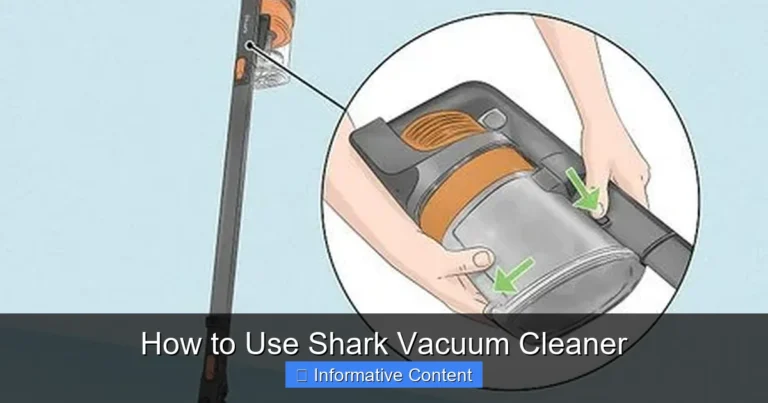
- Empty the Dustbin/Bag Regularly: This is perhaps the most crucial tip. A full dustbin or bag restricts airflow, reducing the “vacuum” effect and thereby decreasing suction power. For bagged models, change the bag when it’s about two-thirds full; for bagless models, empty after every use or when the “max fill” line is reached.
- Clean or Replace Filters: Filters prevent dust and allergens from being expelled back into the air, but they can get clogged. Check your vacuum cleaner’s manual for recommended cleaning or replacement schedules for pre-motor and post-motor filters. Clean filters mean better air quality and stronger suction.
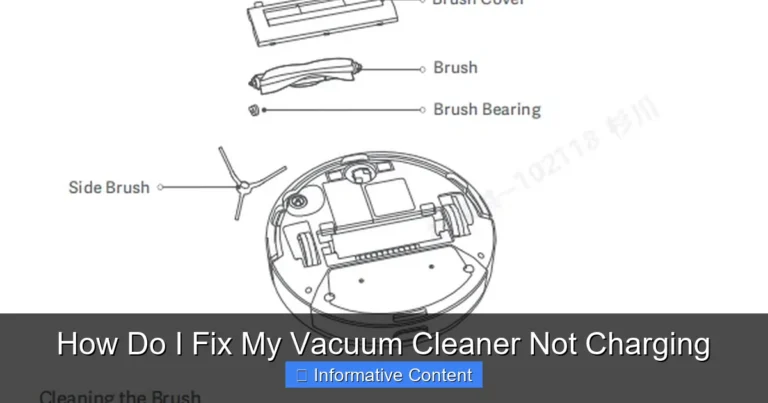
- Check and Clean Brush Rolls: Hair, strings, and fibers can get tangled around the rotating brush roll. This reduces its effectiveness in agitating and loosening dirt. Regularly turn off and unplug your vacuum cleaner, then use scissors to carefully cut away any tangled debris.
- Use the Right Attachments: Your vacuum cleaner comes with specialized tools for a reason! Use the crevice tool for tight corners, the dusting brush for delicate surfaces, and the upholstery tool for furniture. Using the correct attachment optimizes suction and cleaning power for specific tasks.
- Adjust Height Settings: Many upright vacuum cleaners have height adjustment settings for different carpet pile lengths or hard floors. Using the correct height ensures optimal contact between the brush roll and the surface, enhancing cleaning efficiency.
- Don’t Rush: Give your vacuum cleaner time to work. Move slowly over areas, especially carpets, allowing the brush roll to agitate and the suction to fully draw in the dirt. Multiple passes often yield much better results than one quick sweep.
By keeping these tips in mind, you’re not just operating a machine; you’re leveraging the ingenious principles that earned it the name “vacuum cleaner” in the first place, ensuring your home remains truly clean.
Conclusion: The Enduring Legacy of a Brilliant Name
The journey to understand why it’s called a vacuum cleaner takes us from fundamental principles of air pressure to the ingenuity of early 20th-century inventors and the cleverness of marketers. It’s a name that perfectly encapsulates its core function: creating a partial vacuum to powerfully draw in dirt, coupled with the mechanical means to thoroughly clean surfaces.
While not a perfect scientific vacuum, the powerful suction it generates is more than enough to lift debris from our floors and furniture, making it an indispensable tool for maintaining clean and healthy homes. So, the next time you glide your vacuum cleaner across the carpet, take a moment to appreciate the science and history behind those two simple, yet incredibly descriptive, words. It’s a testament to how a clear, impactful name can become an enduring part of our language and a staple of modern living.
Key Takeaways
- The “Vacuum” Principle: A vacuum cleaner doesn’t create a perfect vacuum but rather a low-pressure zone, or partial vacuum, inside the machine.
- Air Pressure Differential: The fundamental mechanism relies on the scientific principle that air (and dirt carried by it) always moves from an area of higher pressure to an area of lower pressure.
- Historical Evolution of the Name: Early devices were called “suction cleaners” or “pneumatic cleaners,” but “vacuum cleaner” became the universally adopted term due to its clarity and conciseness, especially as electric models gained popularity.
- The “Cleaner” Aspect: Beyond just suction, a modern vacuum cleaner uses a combination of mechanical agitation (brush rolls), filtration, and directed airflow to effectively clean various surfaces.
- Simplicity and Efficacy: The name endures because it’s catchy, easy to remember, and effectively communicates the primary action of the device – using a vacuum to clean.
- Key Innovators: Inventors like Hubert Cecil Booth and James Murray Spangler, along with entrepreneur William Henry Hoover, were crucial in developing and popularizing the modern electric vacuum cleaner.
Quick Answers to Common Questions
What is the “vacuum” in a vacuum cleaner?
The “vacuum” in a vacuum cleaner refers to a low-pressure zone, or partial vacuum, created inside the machine by a fast-spinning fan that expels air. This pressure difference causes higher-pressure air from the room to rush in, carrying dirt and dust with it.
Who invented the first vacuum cleaner?
While many contributed, Hubert Cecil Booth in the UK developed the first motor-driven “suction cleaner” in 1901. In the US, James Murray Spangler invented a portable electric “suction sweeper” in 1907, which was later popularized by William Henry Hoover.
Does a vacuum cleaner create a perfect vacuum?
No, a vacuum cleaner does not create a perfect vacuum (which is the complete absence of matter). It creates a partial vacuum, meaning an area of significantly reduced air pressure compared to the outside environment, allowing air and dirt to be drawn in.
What does the “cleaner” part of the name refer to?
The “cleaner” part refers to the overall function and effectiveness of the device beyond just suction. This includes mechanical agitation (like brush rolls), effective filtration systems, and various attachments that allow it to thoroughly clean different surfaces and types of debris.
Why did “vacuum cleaner” become more popular than “suction cleaner”?
“Vacuum cleaner” likely became more popular due to its conciseness, evocative nature, and strong marketing. It succinctly conveyed the powerful, almost magical ability to make dirt disappear into a void, making it easier for the public to understand and adopt.
🎥 Related Video: How does a Vacuum Cleaner Work? | Mocomi Kids
📺 MocomiKids
https://mocomi.com/ presents : How Does A Vacuum Cleaner Work – Science Videos for Kids Get in depth knowledge about how a …
Frequently Asked Questions
How does air pressure help a vacuum cleaner work?
Air pressure is fundamental to how a vacuum cleaner operates. The machine creates an area of lower air pressure inside. Because air naturally moves from higher pressure to lower pressure, the higher atmospheric pressure outside pushes air, along with any loose dirt and debris, into the vacuum cleaner’s nozzle and collection system.
Were early vacuum cleaners portable?
Not initially. Hubert Cecil Booth’s first “Puffing Billy” in 1901 was a massive, horse-drawn machine that remained outside the building being cleaned, with long hoses reaching indoors. It wasn’t until James Murray Spangler’s invention in 1907 that a truly portable, electric vacuum cleaner started to emerge, revolutionizing household cleaning.
What role did William Henry Hoover play in the vacuum cleaner’s history?
William Henry Hoover played a pivotal role by purchasing James Murray Spangler’s patent in 1908 and transforming the small invention into a successful business. His excellent manufacturing and marketing strategies popularized the electric portable vacuum cleaner, making “Hoover” a household name synonymous with the appliance.
Do all vacuum cleaners use the same type of “vacuum” principle?
Yes, all traditional vacuum cleaners operate on the fundamental principle of creating a pressure differential or partial vacuum to draw in dirt. While the specific motors, fans, and airflow designs may vary between models and brands, the underlying physics of using reduced air pressure to achieve suction remains the same across the board.
Why is good filtration important in a vacuum cleaner?
Good filtration is crucial in a vacuum cleaner because it traps dust, allergens, and fine particles that are drawn in, preventing them from being expelled back into the room. This not only keeps your home cleaner but also significantly improves indoor air quality, which is especially beneficial for people with allergies or asthma.
Can a vacuum cleaner be used for wet spills?
Most standard household vacuum cleaners are designed only for dry debris and should not be used on wet spills, as this can damage the motor and electrical components, and pose a shock hazard. However, specialized wet/dry vacuum cleaners (often called shop vacs) are specifically designed to safely handle both wet and dry messes.