How to Make a Homemade Vacuum Cleaner Bag
Making a homemade vacuum cleaner bag is a clever way to handle unexpected situations when you run out of replacements or need a custom solution. This guide will walk you through the process, helping you understand the materials and steps involved to create a functional dust collection bag using common household items, ensuring your vacuum can keep working in a pinch.
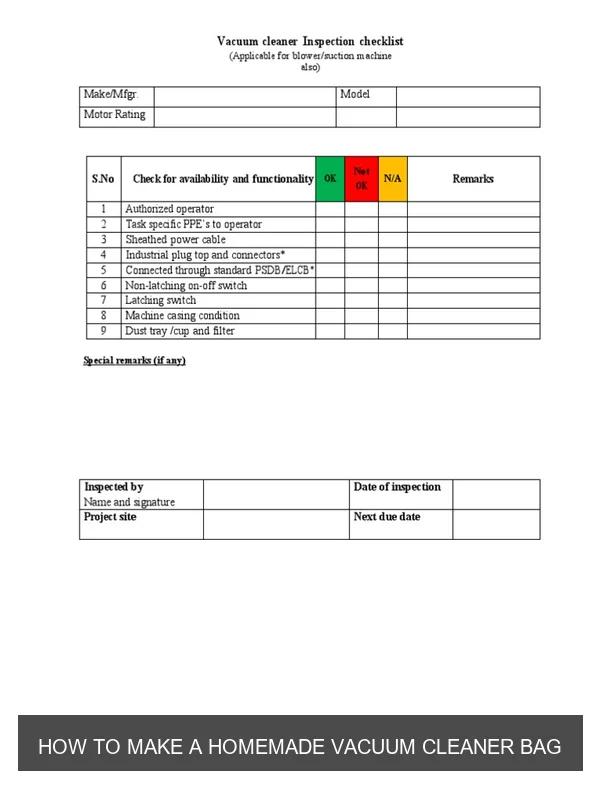
Image source: Scribdassets
📋 Table of Contents
- 🔹 What is a Homemade Vacuum Cleaner Bag?
- 🔹 Why Make a Homemade Vacuum Cleaner Bag?
- 🔹 How Does a Homemade Vacuum Cleaner Bag Work?
- 🔹 Materials You’ll Need
- 🔹 Step-by-Step Guide to Making Your Bag
- 🔹 Benefits of a Homemade Vacuum Cleaner Bag
- 🔹 Common Mistakes to Avoid
- 🔹 Practical Tips and Best Practices
- 🔹 Frequently Asked Questions (FAQ)
- 🔹 Conclusion
Making a homemade vacuum cleaner bag involves repurposing suitable filter-like materials, such as specific types of cloth or non-woven fabrics, to collect dust and debris when a standard replacement isn’t available. You’ll typically create a pouch that fits into your vacuum’s bag compartment and connects to its intake port, often by reusing parts of an old bag for proper attachment.
What is a Homemade Vacuum Cleaner Bag?
A homemade vacuum cleaner bag is essentially a DIY solution for containing the dust and debris your vacuum picks up. Think of it as a temporary, handcrafted substitute for the official bags designed for your specific vacuum model. People usually make these when they’ve run out of official bags, can’t find the right size, or are working on a custom vacuum setup, like for a shop project. It’s about adapting what you have to keep your cleaning machine working.
These bags are generally constructed from materials that can trap particles while still allowing air to flow through. The main goal is to collect dirt without letting it escape back into the air or into the vacuum’s motor, which could cause damage. It’s a practical hack, not a permanent engineered solution.
Why Make a Homemade Vacuum Cleaner Bag?
You might wonder why anyone would bother making a vacuum bag when you can just buy them. Well, there are a few good reasons!
- Emergency Situations: Imagine you’re in the middle of a big cleanup, and suddenly your last vacuum bag is full. The stores are closed, or you simply don’t have time to go out and get a new one. A homemade bag can save the day and let you finish the job.
- Specific Needs: Sometimes, standard bags just don’t cut it. Maybe you’re working on a DIY shop vacuum to collect wood dust from a saw, and you need a custom-sized bag that fits your unique setup better. Or perhaps you want a bag that can handle slightly different types of debris.
- Resourcefulness: It’s a great way to be resourceful and use materials you already have around the house. This can sometimes be a more sustainable option than constantly buying new plastic-heavy bags.
- Understanding Your Vacuum: Going through the process of making one can actually teach you a lot about how your vacuum cleaner works and what makes a bag effective. It’s an educational experience!
It’s important to remember that a homemade bag is often a temporary fix or for specialized applications. It might not offer the same filtration efficiency or durability as a professionally designed bag.
How Does a Homemade Vacuum Cleaner Bag Work?
The principle behind a homemade vacuum cleaner bag is pretty much the same as a store-bought one. Here’s a simple breakdown:
- Suction Power: Your vacuum cleaner creates suction, pulling air and debris through the hose and into the bag compartment.
- Airflow into the Bag: The dirty air enters the homemade bag, usually through an opening that connects to the vacuum’s intake port.
- Filtration: As the air tries to escape the bag, it passes through the chosen fabric. The fabric acts as a filter, trapping the larger dust particles, dirt, and debris inside the bag. The material needs to be porous enough to let air out, but fine enough to keep dust in.
- Clean Air Exit: The filtered, cleaner air then exits the bag and passes through the vacuum’s motor, and eventually out of the machine.
- Collection: Over time, the bag collects more and more debris until it’s full or the airflow is significantly reduced, indicating it’s time to empty or replace your homemade creation.
The key to success is creating a bag that forms a good seal where it connects to the vacuum and uses a material that filters effectively without choking off airflow too much.
Materials You’ll Need
To make a homemade vacuum cleaner bag, you’ll need a few common items. The most important thing is selecting the right fabric.
Essential Materials
- A Suitable Fabric: This is your primary material. You need something breathable but tightly woven enough to trap dust. Good options include:
- Sturdy Cotton Cloth: Like an old pillowcase or a canvas tote bag. Make sure it’s not too thin.
- Felt or Flannel: These materials offer good filtration but can reduce airflow more significantly.
- Non-Woven Fabric: Some reusable shopping bags or certain types of interfacing used in sewing can work.
- Old Vacuum Bag (for parts): If you have an old, ripped bag, you can salvage its plastic or cardboard collar, which is crucial for fitting into your vacuum.
- Scissors: For cutting your fabric.
- Measuring Tape or Ruler: To get your dimensions right.
- Marker or Fabric Chalk: For marking cutting lines on your fabric.
- Sewing Machine or Needle and Thread: For assembling the bag. Fabric glue can also be an alternative for some materials, but stitching is usually stronger.
- Strong Adhesive or Hot Glue Gun: If you’re attaching a salvaged collar or reinforcing seams.
- Pencil/Pen: For tracing.
Optional but Helpful Materials
- Elastic Band or Drawstring: For closing the bag opening, especially if it’s meant to be emptied.
- Stiff Cardboard or Thin Plastic: If you can’t salvage a collar from an old bag, you might need to create your own adapter.
- Hole Punch: If making your own collar/adapter.
When choosing your fabric, consider the type of vacuum you have (upright, canister, shop vac) and the kind of debris you’ll be picking up. Finer dust requires a denser weave, but that can also reduce suction.
Step-by-Step Guide to Making Your Bag
Ready to get started? Here’s how you can make your own homemade vacuum cleaner bag.
Step 1: Gather Your Tools and Materials
First, lay out everything you’ll need as listed above. Having it all within reach makes the process much smoother.
Step 2: Prepare Your Template or Old Bag
The easiest way to get the right shape and size is to use an old, empty vacuum bag as a template. Carefully cut open the seams of the old bag to lay it flat. This will give you the exact pattern you need, including the shape of the opening where it connects to your vacuum.
If you don’t have an old bag, you’ll need to measure the dimensions of your vacuum’s bag compartment and the size of the intake port. You’ll want to create a rectangular or slightly tapered pouch that will fit comfortably inside the compartment when full, plus extra material for seams.
Step 3: Cut Your Fabric
Lay your chosen fabric flat. Place your opened old bag template on top of the new fabric. Trace around the template with your marker or fabric chalk. Remember to add about 1/2 to 1 inch (1.2 to 2.5 cm) extra all around for seam allowances. If you’re not using a template, measure and draw out your pouch shape, adding those seam allowances.
Carefully cut out your fabric pieces. You’ll typically need two identical pieces (front and back) for a simple pouch-style bag.
Step 4: Sew or Glue the Bag Seams
Place your two fabric pieces right sides together (if your fabric has a “right” and “wrong” side). Sew or glue the edges together, leaving one end open. This open end will be where the vacuum’s intake port connects, and also where you might eventually empty it if you choose to make it reusable.
- For Sewing: Use a strong thread and a durable stitch (like a double stitch or a zigzag stitch) to ensure the seams hold up to suction and collected debris.
- For Gluing: Use a heavy-duty fabric glue. Apply it evenly along the edges and press the fabrics together firmly. Allow plenty of time for the glue to dry completely according to the product instructions.
Turn the bag right side out once your seams are secure.
Step 5: Attach the Collar/Adapter
This is often the trickiest but most crucial part. The collar is the stiff ring (often plastic or cardboard) that fits into your vacuum’s bag holder and connects to the air intake tube. It needs to create a tight seal.
- Salvage from an Old Bag: Carefully cut out the collar from your old vacuum bag, making sure to leave a small flap of fabric around its edge.
- Attach to New Bag: Position the salvaged collar over the opening of your new fabric bag. You’ll want the opening of the collar to align with the opening you left in your fabric bag. Use strong adhesive or hot glue to securely attach the fabric flap of the collar to the inside or outside of your new bag’s opening. Make sure it’s sealed completely to prevent dust leaks.
- Create Your Own (if necessary): If you don’t have an old collar, you can try to cut a stiff piece of cardboard or thin plastic to the exact shape and size of your vacuum’s bag opening. Then, carefully cut a hole in the center that matches the vacuum’s intake port. You’ll then need to attach this custom collar very securely to your fabric bag’s opening, ensuring a good seal with a strong adhesive or even by carefully stitching around it.
Step 6: Finish the Bag Opening (Optional for Reusable Bags)
If you intend for your homemade bag to be reusable and emptied, you’ll need a way to close the bottom. You can simply fold the bottom edge over and sew a casing for a drawstring, or add a zipper if you’re feeling ambitious. For a disposable bag, you might just seal it completely once full, or simply tuck the bottom in.
Step 7: Test Your Homemade Bag
Before doing a big cleanup, put your new bag into your vacuum cleaner. Make sure it fits securely into the bag compartment and that the collar clicks or seats properly into the vacuum’s intake port. Turn on the vacuum briefly to check for any obvious air leaks around the collar. Listen for unusual sounds or a significant drop in suction. If everything seems okay, you’re ready to try it out!
Benefits of a Homemade Vacuum Cleaner Bag
While not a perfect replacement for commercial bags, making your own offers some clear advantages:
- Immediate Solution: It’s a lifesaver when you’re out of bags and need to clean right away. No waiting for a store to open or an online order to arrive.
- Cost-Effective (in a pinch): You’re using materials you likely already have, saving you the immediate expense of buying new bags.
- Customization: You can tailor the size and shape to fit unusual vacuum models or specialized DIY vacuum systems.
- Learning Experience: It deepens your understanding of how vacuum cleaners function and the importance of proper filtration.
- Resourcefulness: It’s a great example of problem-solving and making do with what’s available.
These benefits highlight the practical utility of knowing how to create a homemade vacuum cleaner bag, especially for those unexpected moments.
Common Mistakes to Avoid
Making a homemade vacuum bag is a great skill, but there are some pitfalls to watch out for. Avoiding these can make your DIY project much more successful and safer.
- Using the Wrong Fabric:
- Too Thin: Material that’s too thin (like tissue paper or very loose-weave cloth) won’t trap dust effectively and might tear easily, letting dirt into your vacuum’s motor or back into the air.
- Too Thick/Non-Porous: Fabric that’s too thick or not breathable enough (like plastic bags or heavy waterproof canvas) will severely restrict airflow, causing your vacuum to overheat, lose suction, and potentially damage the motor.
- Poor Sealing: If the seams aren’t tightly sewn or glued, or if the collar isn’t perfectly sealed to the fabric, dust will escape. This means dirt gets back into your home or into the vacuum’s internal components.
- Incorrect Size or Fit:
- Too Small: A bag that’s too small will fill up very quickly and drastically reduce suction.
- Too Large: A bag that’s too large might not sit properly in the compartment, bunching up and blocking airflow, or even getting caught in moving parts.
- Collar Mismatch: If the collar doesn’t fit snugly into the vacuum’s intake port, you’ll have massive dust leaks and poor suction.
- Neglecting Filtration: Commercial bags often have multiple layers or specific filter media. A homemade bag typically won’t match this level of filtration. Don’t expect it to capture microscopic allergens or fine dust as effectively. Using it for very fine dust might even be risky for your health if particles escape.
- Overfilling the Bag: Just like with a regular bag, letting a homemade bag get too full will severely reduce suction and put strain on your vacuum’s motor.
- Ignoring Safety: Never use a homemade bag if it compromises the vacuum’s electrical components or motor safety. If it feels like it’s overheating, turn it off immediately.
Practical Tips and Best Practices
To get the most out of your homemade vacuum cleaner bag, keep these tips in mind:
- Double-Check Measurements: Measure twice, cut once! Accuracy is key for a good fit and seal.
- Reinforce Seams: If sewing, use a double stitch, or go over the seams twice for extra durability. If gluing, apply a generous, even bead and allow ample drying time.
- Consider Layers: For better filtration, you might try using two thinner layers of fabric instead of one thick one. For example, an old pillowcase on the outside with a coffee filter (carefully placed) on the inside for fine dust.
- Make it Reusable (if practical): If your fabric is durable, consider adding a drawstring or a simple Velcro closure to the bottom so you can empty and reuse it. This works best for larger debris like in a shop vacuum.
- Label Your Creation: If you plan to keep it for emergencies, label it clearly so you remember which vacuum it’s for.
- Always Monitor Performance: Pay attention to your vacuum’s suction. If it drops significantly, or if you smell anything unusual, stop using the homemade bag.
- Cleanliness: Always handle dust carefully. Empty reusable bags outdoors or into a sealed trash can to avoid re-releasing dust into your home.
Frequently Asked Questions (FAQ)
What kind of fabric is best for a homemade vacuum bag?
The best fabric for a homemade vacuum bag is one that is breathable yet tightly woven enough to trap dust. Sturdy cotton cloth (like from an old pillowcase or canvas bag), felt, or certain non-woven fabrics are good choices. Avoid materials that are too thin and easily tear, or too thick and non-porous, which can restrict airflow and damage your vacuum.
Can you reuse a vacuum cleaner bag if it’s homemade?
Yes, some homemade vacuum cleaner bags can be designed for reuse, especially if made from durable fabric like canvas and fitted with a drawstring or zipper closure. However, they generally won’t offer the same filtration levels as disposable commercial bags. For very fine dust or allergens, reusing might not be ideal as it can release trapped particles when emptied.
Is a homemade vacuum bag as effective as a store-bought one?
Typically, a homemade vacuum bag is not as effective as a store-bought one. Commercial bags are engineered with specific filter media, multiple layers, and precision fits to maximize filtration efficiency and airflow, often trapping microscopic particles. Homemade bags are usually a practical, temporary solution and may not offer the same level of performance or fine dust filtration.
What are the safety concerns with homemade vacuum bags?
Safety concerns with homemade vacuum bags primarily include fire hazards if the fabric isn’t breathable enough and causes the motor to overheat. There’s also a risk of motor damage if dust escapes the bag due to poor sealing or unsuitable fabric. Lastly, ineffective filtration can lead to dust and allergens being released back into the air, posing health concerns.
How often should I replace a homemade vacuum bag?
How often you should replace or empty a homemade vacuum bag depends on its material, design, and how much dirt it collects. For disposable versions, replace it once it’s full or when suction noticeably drops. For reusable ones, empty and clean it after each significant use or when it’s about two-thirds full to maintain good airflow and suction.
Conclusion
Learning how to make a homemade vacuum cleaner bag is a valuable skill for those unexpected moments when a replacement bag isn’t readily available, or when you need a custom solution for a specific cleanup task. While it won’t entirely replicate the advanced filtration and durability of a commercially engineered bag, a carefully constructed homemade bag can certainly get your vacuum up and running in a pinch.
By choosing the right materials, paying close attention to measurements, and ensuring a tight seal, you can create a functional dust collection system. Remember, this DIY approach is best suited for temporary fixes or specialized projects. Always prioritize safety, monitor your vacuum’s performance, and empty or replace your homemade bag regularly to keep your cleaning efforts effective and your appliance in good working order. With a little resourcefulness, you can ensure your vacuum is always ready to tackle dirt and debris.