Understanding How Many Watts a Vacuum Cleaner Uses
Vacuum cleaner wattage primarily indicates the electrical power consumed by its motor, typically ranging from 500 to 2000 watts. However, this figure doesn’t directly measure cleaning effectiveness, as actual suction power and efficiency depend heavily on the vacuum’s design and airflow dynamics. Understanding these nuances helps clarify what the numbers truly represent for a vacuum cleaner’s performance.
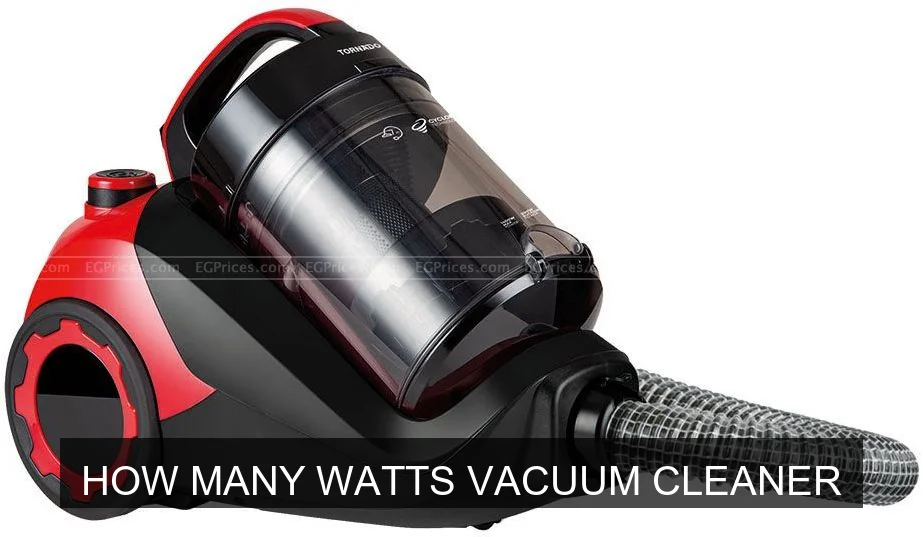
Image source: Egprices
📋 Table of Contents
- 🔹 Introduction: Unpacking Vacuum Cleaner Watts
- 🔹 What Do Watts Really Mean for a Vacuum Cleaner?
- 🔹 The Crucial Difference: Input Watts vs. Air Watts
- 🔹 Why Understanding Vacuum Cleaner Wattage Matters
- 🔹 How Wattage (and Other Factors) Influence Cleaning Power
- 🔹 Typical Wattage Ranges for Different Vacuum Cleaner Types
- 🔹 Common Misconceptions About Vacuum Cleaner Watts
- 🔹 Practical Tips for Interpreting Vacuum Cleaner Specifications
- 🔹 Frequently Asked Questions About Vacuum Cleaner Wattage
- 🔹 Conclusion: Beyond the Wattage Number
Introduction: Unpacking Vacuum Cleaner Watts
You’re probably curious about “how many watts vacuum cleaner” really needs, or what that number even means. It’s a common question, and honestly, the answer is a little more nuanced than you might think. Many folks assume a higher wattage automatically means a better, more powerful vacuum, but that’s not always the full story. Understanding vacuum cleaner watts is about more than just a number; it’s about grasping the underlying principles of how these appliances work.
In this guide, we’re going to dive deep into what wattage represents for vacuum cleaners. We’ll explore the difference between the power a vacuum consumes and the actual cleaning power it delivers. By the time we’re done, you’ll have a clear, helpful understanding of this often-misunderstood specification, helping you make sense of any vacuum’s capabilities.
What Do Watts Really Mean for a Vacuum Cleaner?
When you see “watts” listed for a vacuum cleaner, it typically refers to the electrical power the appliance’s motor draws from your home’s power outlet. Think of it as the input energy the vacuum needs to operate its motor. This motor then spins a fan, creating the suction that pulls dirt and debris into the vacuum.
Watts are a standard unit of power in the International System of Units (SI). One watt equals one joule per second, representing the rate at which electrical energy is used. So, in simple terms, a 1000-watt vacuum cleaner uses 1000 joules of electrical energy every second it’s running.
It’s important to recognize that this measurement is primarily about energy consumption. While it’s related to the motor’s strength, it’s not a direct indicator of how effectively the vacuum will pick up dirt from your floors. That’s a crucial distinction we’ll explore further.
The Crucial Difference: Input Watts vs. Air Watts
This is where things often get confused. There are actually two main types of “watts” you might hear about with vacuum cleaners:
- Input Watts (or Motor Watts): This is the most common wattage figure you’ll see on a vacuum cleaner’s label. As we discussed, it measures the electrical power consumed by the motor. It tells you how much electricity the vacuum is drawing.
- Air Watts (or Suction Power): This is a much better indicator of a vacuum cleaner’s actual cleaning ability. Air watts measure the power generated by the airflow and suction at the nozzle, essentially how much power is effectively used to move air and dirt. It’s an output measurement.
Think of it like this: a car engine might consume a certain amount of fuel (input), but its actual horsepower at the wheels (output) depends on how efficient the engine and drivetrain are. Similarly, a vacuum’s motor consumes electricity (input watts), but only a portion of that energy gets converted into useful suction power (air watts). The rest might be lost as heat, noise, or friction.
Many manufacturers use “Air Watts” to give consumers a clearer idea of performance, but it’s not always listed, especially for older models or in regions where it’s not a standard requirement. The higher the Air Watts, the more effective the vacuum is at moving air and lifting debris.
Why Understanding Vacuum Cleaner Wattage Matters
Even though input wattage isn’t the sole indicator of cleaning prowess, it still holds importance for a few reasons:
- Power Consumption: A higher input wattage means the vacuum cleaner is drawing more electricity. This can impact your energy bill, especially if you use your vacuum frequently or for extended periods.
- Motor Capability: Generally speaking, a motor designed for higher input wattage can generate more raw power. Whether that raw power translates into effective cleaning depends on the vacuum’s overall design. It suggests the potential for strong suction, assuming the design is efficient.
- Regulatory Standards: In some regions, there are regulations on the maximum input wattage for vacuum cleaners to promote energy efficiency. For example, in the EU, vacuum cleaners are generally limited to 900 watts of input power. These regulations aim to encourage manufacturers to design more efficient vacuums that achieve good cleaning performance with less electricity.
So, while it’s not the “be-all and end-all,” understanding input wattage gives you insight into the machine’s electrical demands and its potential raw power.
How Wattage (and Other Factors) Influence Cleaning Power
Input wattage provides the raw electrical power for the motor, but several other factors determine how well a vacuum cleaner actually cleans. It’s a complex interplay:
- Motor Efficiency: A more efficient motor can convert a higher percentage of its input electrical watts into mechanical power to spin the fan.
- Vacuum Design: The overall design of the vacuum plays a huge role. This includes:
- Airflow Path: How smoothly air flows from the nozzle, through the hose, dust bin/bag, and filters, and out the exhaust. Restrictions reduce suction.
- Seal and Gaskets: Good seals prevent air leaks, ensuring maximum suction at the nozzle.
- Nozzle and Brush Roll Design: The design of the floorhead, especially the brush roll (if present), is critical for agitation and lifting dirt from carpets and hard floors. A powerful motor won’t help much if the brush roll isn’t effectively sweeping up debris.
- Filtration System: An efficient filtration system cleans the air without creating excessive back pressure, which can reduce suction.
- Airflow (CFM/LPS): Cubic Feet per Minute (CFM) or Liters per Second (LPS) measures the volume of air the vacuum moves. High airflow is vital for picking up light, bulky debris like pet hair or cereal.
- Sealed Suction (Water Lift/Pascals): This measures the maximum suction power a vacuum can generate when the nozzle is completely blocked. It’s important for lifting heavy debris or deep-seated dirt from carpets.
An analogy might help: Imagine two garden hoses. One has a powerful pump (high input watts) but is full of kinks and leaks (poor design). The other has a less powerful pump but a perfectly straight, wide hose with no leaks (efficient design). The second hose will likely deliver more water pressure and volume at the nozzle, even with less “input” power.
So, while a higher wattage motor has the potential for greater suction, it’s the engineering and design that translate that potential into actual cleaning performance. This is why a modern, well-designed vacuum with lower input watts can often outperform an older, less efficient model with higher input watts.
Typical Wattage Ranges for Different Vacuum Cleaner Types
The input wattage can vary quite a bit depending on the type of vacuum cleaner. Here’s a general idea of common ranges:
| Vacuum Cleaner Type | Typical Input Wattage Range | Notes |
|---|---|---|
| Stick Vacuums (Corded) | 100 – 600 watts | Often designed for lighter tasks, quick clean-ups. Efficiency is key. |
| Upright Vacuums | 800 – 1500 watts | Traditional workhorses, designed for carpets and general household cleaning. |
| Canister Vacuums | 800 – 2000 watts | Versatile, often with strong motors and various attachments. |
| Handheld Vacuums (Corded) | 100 – 300 watts | For small spills and quick spot cleaning. |
| Robotic Vacuums | 20 – 100 watts (when operating) | Lower due to battery power and smaller motors, focus on consistent, automated cleaning. |
| Wet/Dry Shop Vacuums | 1000 – 2200 watts+ | Designed for heavy-duty messes, often with powerful motors for large volumes of air/liquid. |
Keep in mind that these are general ranges. Specific models within each category might fall outside these averages, especially as technology advances and energy efficiency regulations evolve.
Common Misconceptions About Vacuum Cleaner Watts
Let’s clear up some common misunderstandings about “how many watts vacuum cleaner” really needs:
- “Higher Watts Always Mean Better Suction”: This is the biggest misconception. As we’ve seen, high input wattage only indicates power consumption. A poorly designed 2000-watt vacuum can have weaker suction than a well-engineered 800-watt model. Efficiency and design are paramount.
- “Watts Directly Correlate to Cleaning Performance”: Again, not true. While a motor needs sufficient power, the actual cleaning performance is a holistic result of suction, airflow, brush roll effectiveness, and nozzle design. You can’t just look at the watts and know how well it cleans.
- “You Always Need the Highest Wattage Available”: For most household cleaning tasks, an overly high input wattage isn’t necessary and can simply lead to higher energy use without proportional gains in cleaning. Modern, efficient vacuums often perform excellently with moderate wattage.
“Focusing solely on input wattage for a vacuum cleaner is like judging a car’s speed only by the size of its fuel tank. It tells you about its capacity, but not its actual performance or efficiency.”
Practical Tips for Interpreting Vacuum Cleaner Specifications
Instead of getting fixated on input wattage alone, here are some tips for a more complete understanding of a vacuum cleaner’s potential:
- Look for Air Watts: If available, this is your best single indicator of actual cleaning power. It’s a direct measure of effective suction.
- Consider Airflow (CFM/LPS) and Sealed Suction (Water Lift): These two metrics, often provided by manufacturers or independent reviews, give you a detailed picture of how well a vacuum handles different types of debris and cleaning challenges.
- High CFM/LPS is good for picking up light, bulky items like pet hair or cereal.
- High Water Lift is good for deep cleaning carpets and pulling embedded dirt.
- Research Brush Roll and Nozzle Design: For carpet cleaning, a strong, effective brush roll is often more important than raw motor power. For hard floors, a good seal and specialized brushes can make all the difference.
- Read Independent Reviews (Focus on Performance): While this guide avoids product specifics, remember that real-world tests often reveal more about a vacuum’s cleaning ability than any single specification. Look for descriptions of how well it picks up various types of debris on different surfaces.
- Think About Your Needs: A small apartment with mostly hard floors will have different cleaning demands than a large home with thick carpets and pets. The “best” wattage or suction depends on your specific cleaning environment.
Frequently Asked Questions About Vacuum Cleaner Wattage
What is the ideal wattage for a vacuum cleaner?
There isn’t a single “ideal” wattage, as it depends on the vacuum’s design efficiency and your cleaning needs. Generally, modern, well-engineered vacuums between 600 and 1200 input watts can provide excellent cleaning performance for most homes. More importantly, look for Air Watts if listed, or focus on overall design and reported suction/airflow metrics.
Does higher wattage mean more energy consumption?
Yes, typically, a higher input wattage means the vacuum cleaner motor consumes more electrical energy. However, modern regulations often push manufacturers to achieve high cleaning performance with lower wattage, meaning a newer 800-watt vacuum might be more effective and energy-efficient than an older 1500-watt model.
Are vacuums with low watts less powerful?
Not necessarily. While a very low wattage (e.g., under 100 watts for a full-size vacuum) might indicate less raw motor power, a vacuum with efficient design, excellent airflow, and an optimized nozzle can deliver impressive cleaning power even with moderate input watts. The conversion of electrical watts to actual suction (Air Watts) is what truly matters.
Why do some countries have wattage limits for vacuum cleaners?
Many countries, particularly in the European Union, have implemented wattage limits (like the 900-watt cap) to promote energy efficiency and reduce electricity consumption. The goal is to encourage manufacturers to innovate and design vacuums that achieve effective cleaning through better engineering rather than simply brute-force power, thus lowering their environmental impact.
Can a vacuum cleaner be too powerful in terms of watts?
In terms of cleaning power, a vacuum isn’t usually “too powerful.” However, an excessively high input wattage that doesn’t translate into proportional cleaning benefits simply means higher energy waste. If the suction is too strong for certain delicate surfaces or rugs, it’s often adjustable on the vacuum itself, separate from its maximum input wattage.
Conclusion: Beyond the Wattage Number
Hopefully, this deep dive has helped you understand that “how many watts vacuum cleaner” refers to is primarily about electrical consumption, not necessarily cleaning prowess. While input wattage gives you a basic idea of the motor’s power draw, it’s the combination of efficient design, effective airflow, sealed suction, and brush roll performance that truly defines a vacuum’s ability to clean.
Instead of fixating on a single wattage number, consider the bigger picture: how well the vacuum is engineered to convert that electrical energy into actual dirt-lifting power. By focusing on metrics like Air Watts, CFM, and design features, you’ll gain a much clearer and more practical understanding of any vacuum cleaner’s capabilities.