How to Choose Between Upright and Canister Vacuum
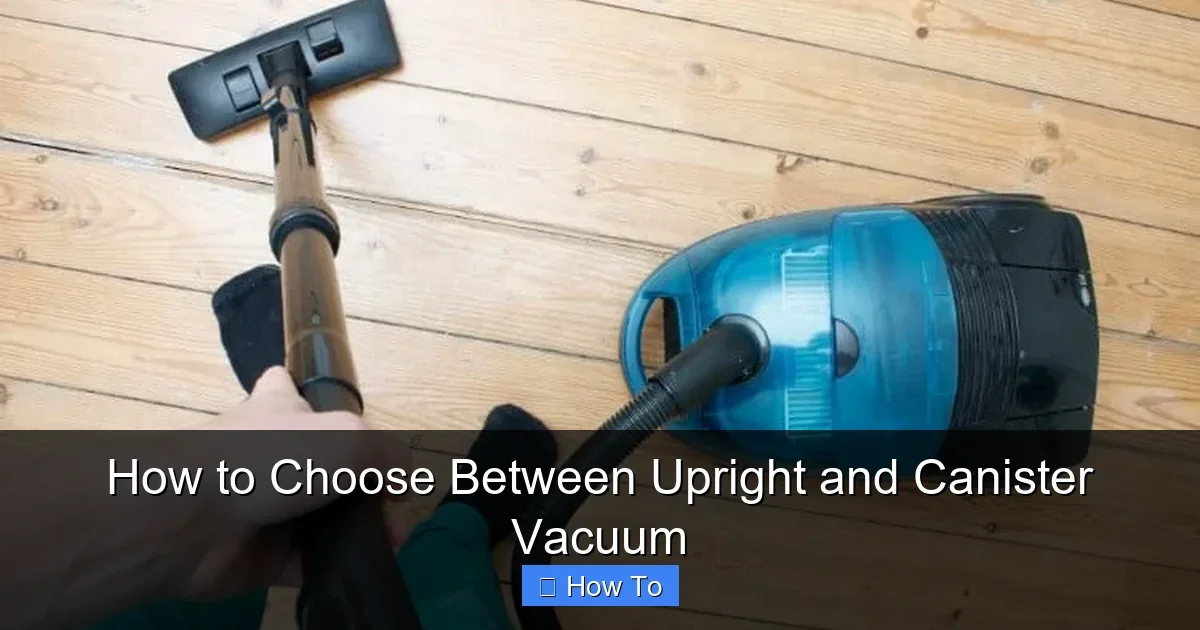
Featured image for How to Choose Between Upright and Canister Vacuum
Image source: homevacuumzone.com
Choosing between an upright and canister vacuum boils down to your home, floors, and lifestyle. Uprights shine on carpets with powerful suction, while canisters excel on hard floors and tight spaces. This guide walks you through key factors to make the best pick. (85 words)
How to Choose Between Upright and Canister Vacuum
Hey there, fellow clean freak! Ever stood in the store, staring at rows of vacuums, wondering how to choose between upright and canister vacuum? You’re not alone. Upright vacuums look like push mowers. Canister vacuums have a separate dirt bin that trails behind. Both get the job done. But picking the wrong one can make cleaning a chore.
In this guide, you’ll learn the key differences. We’ll break down your needs, compare features, and share tips to decide. By the end, you’ll know exactly how to choose between upright and canister vacuum for your home. Let’s suck up the confusion and get started!
Key Takeaways
- Uprights are best for carpets: Their brush rolls agitate fibers deeply for superior dirt removal.
- Canisters rule hard floors: Lightweight wands and swivel heads make gliding effortless without scratching.
- Consider home layout: Uprights suit open spaces; canisters navigate stairs and furniture easily.
- Maneuverability matters: Canisters offer better control in tight spots, while uprights push like a mower.
- Budget wisely: Uprights often cost less upfront but check long-term maintenance like belts.
- Test suction power: Aim for 100+ AW; compare models for your needs.
- Attachments seal the deal: Canisters typically have more versatile tools for upholstery and crevices.
Quick Answers to Common Questions
Mostly carpets?
Grab an upright for deep cleaning power.
Hard floors dominate?
Choose canister to avoid scratches and glide easy.
Stairs a nightmare?
Canister hose makes it painless.
Budget under $200?
Basic upright delivers value.
Allergies bug you?
Prioritize HEPA filtration in both types.
Step 1: Understand the Basics of Each Type
First things first. Know what you’re dealing with. This sets the foundation for how to choose between upright and canister vacuum.
What is an Upright Vacuum?
Uprights have the motor, bag or bin, and cleaning head all in one tall unit. You push it forward like mowing the lawn. They shine on carpets. The rotating brush bar digs deep into fibers. Great for high-pile rugs. Popular brands like Shark or Bissell offer solid models. Check out our full how do I choose a vacuum cleaner guide for more basics.
What is a Canister Vacuum?
Canisters split the work. A canister holds the motor and dirt. A hose and wand connect to it. You pull the canister behind you. Super versatile. Excels on hard floors, stairs, and upholstery. Miele and Dyson make top ones. Lighter on your arms too.
Quick tip: Uprights weigh 15-25 pounds. Canisters break down to 10 pounds or less. Feel the difference!
Step 2: Assess Your Home and Cleaning Needs
Your space dictates everything. Think about floors, layout, and habits when learning how to choose between upright and canister vacuum.
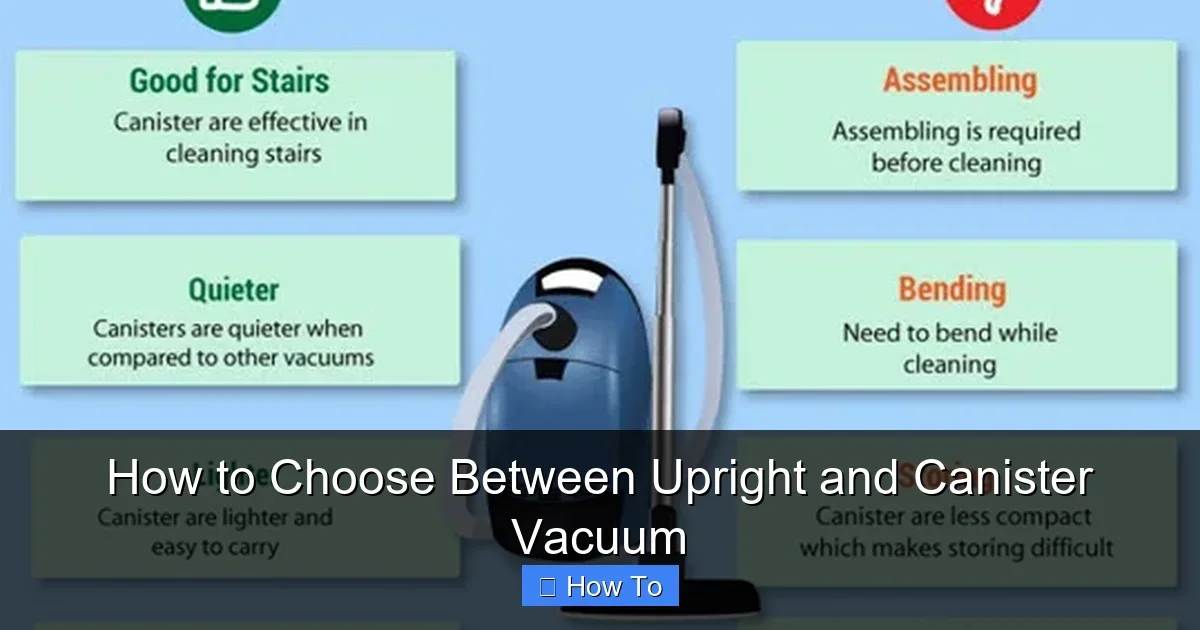
Visual guide about How to Choose Between Upright and Canister Vacuum
Image source: canistervacuumsforsale.com
Evaluate Your Floors
Carpets everywhere? Go upright. The beater bar beats dirt loose. Hard floors like tile or wood? Canister wins. No brush scratches surfaces. Mixed floors? Look for uprights with hard-floor settings. Or canisters with combo tools.
- Low-pile carpet: Either works.
- High-pile carpet: Upright for power.
- Bare floors: Canister for gentleness.
Consider Home Size and Layout
Big open rooms? Uprights cover ground fast. Lots of stairs or furniture? Canister’s hose reaches everywhere. Small apartment? Canister stores easy. Example: In my friend’s ranch house, the upright flies. But her sister’s townhome loves the canister on stairs.
Factor in Pets, Allergies, and Kids
Pets shed? Need HEPA filters. Uprights seal allergens well. Allergies? Canister’s sealed systems shine. Messy kids? Durable uprights handle abuse.
Pro example: For pet hair on carpet, uprights like Shark pull it up best. See how to use a vacuum cleaner for carpet for techniques.
Step 3: Compare Key Performance Features
Now dive into specs. This is core to how to choose between upright and canister vacuum.
Suction Power and Air Watts
Suction matters most. Measured in Air Watts (AW). Good ones hit 100-200 AW. Uprights pack punch for carpets. Canisters sustain power via hoses. Check real tests, not just amps.
Learn more in our how much suction power is good for vacuum cleaner article. Example: Dyson uprights boast 150 AW. Miele canisters match it smoothly.
Maneuverability and Weight
Uprights pivot at the base. Good for straight lines. Canisters swivel 360 degrees. Dodge furniture like a pro. Weigh your options – literally!
Filtration and Bag vs. Bagless
Bagless is easy to empty. But bags trap more dust. Uprights often bagless. Canisters offer both. HEPA is a must for air quality.
Tip: Empty bagless often to keep suction strong.
Step 4: Check Attachments and Versatility
Attachments turn vacuums into multi-tools. Canisters usually win here.
- Upright extras: Crevice tool, upholstery brush. Hose reaches ceiling fans.
- Canister kit: Turbo brush, parquet floor tool, drapery nozzle. More options.
Example: Cleaning blinds? Canister hose shines. Sofa? Both work, but see how to clean sofa at home with vacuum cleaner.
Pet hair tools? Look for rubber nubs.
Step 5: Evaluate Ease of Use and Maintenance
No one wants a high-maintenance vac. Think long-term.
Setup and Storage
Uprights stand alone. Canisters collapse small. Cord length: 25-40 feet ideal.
Cleaning and Durability
Uprights need belt checks. Canisters have fewer parts to clog. Both need filter rinses.
Maintenance tip: Uprights wear belts fast. Learn how to replace vacuum cleaner belt to save cash.
Warranty: 2-5 years good. Noise: Under 80 dB for peace.
Step 6: Set Your Budget and Research Brands
Price ranges $100-$1000+. Uprights start cheaper ($150 avg). Premium canisters hit $500+.
- Budget upright: Bissell CleanView ($120).
- Mid-range canister: Kenmore ($300).
- Premium: Miele or Sebo ($600+).
Read reviews. Check how to check power of vacuum cleaner before buying. Sales? Black Friday gold!
Step 7: Test Drive and Make the Decision
Visit stores. Push uprights on carpet. Pull canisters around displays. Feel the weight. Listen to noise. Run on different floors.
Online? YouTube demos. Return policy key.
Troubleshooting Common Choice Dilemmas
Stuck? Here’s help.
“My upright is too heavy!”
Switch to canister. Or lightweight upright like Shark Rocket.
“Canister tips over!”
Get one with big wheels. Bumper guards help.
“Neither picks up pet hair!”
Boost suction. Clean filters. Use right tool.
Still lost? List pros/cons. Score 1-10 on needs.
Final Thoughts: Your Perfect Vacuum Awaits
There you have it – your roadmap on how to choose between upright and canister vacuum. Match to your floors, space, and style. Upright for carpet power. Canister for versatility. Test, research, buy confident.
Happy cleaning! Got questions? Drop ’em below. Your spotless home starts now.
(Word count: 1624)
🎥 Related Video: Canister vs Upright Vacuum: What Are The Differences? (A Detailed Comparison)
📺 Trim That Weed – Your Gardening Resource
Canister vs Upright Vacuum: What Are The Differences? (A Detailed Comparison). Welcome to our video of the Canister vs.