
How Much Suction Power Is Good for Car Vacuum Cleaner
Choosing the right suction power for your car vacuum cleaner is crucial for effective cleaning. This guide demystifies metrics like Air Watts (AW), Kilopascals (kPa), and Cubic Feet per Minute (CFM), explaining what they mean for dirt, crumbs, and pet hair. Learn how to assess your specific cleaning needs to select a car vacuum with optimal power, ensuring a pristine interior every time, making your cleaning efforts efficient and satisfying.
How Much Suction Power Is Good for Car Vacuum Cleaner
Ever found yourself staring at a messy car interior, wondering if your current vacuum cleaner can actually tackle the crumbs, pet hair, and forgotten dirt? Choosing a car vacuum cleaner can feel a bit like a puzzle, especially when you start looking at all the numbers and specifications. You’ll see terms like Air Watts, kPa, and CFM, and it’s easy to get confused. But don’t worry! This guide is here to clear things up.
We’re going to dive deep into what suction power truly means for your car vacuum cleaner. You’ll learn how to understand these technical terms, figure out exactly how much suction power is good for *your* specific needs, and discover other vital features that contribute to a spotless car. By the end, you’ll feel confident in choosing the perfect cleaning companion for your vehicle.
Key Takeaways
- Understand Suction Metrics: Air Watts (AW) are best for cordless car vacuums, indicating cleaning power. Kilopascals (kPa) measure static pressure, often for corded units, and Cubic Feet per Minute (CFM) show airflow. For car vacs, AW is often the most practical indicator.
- Match Power to Debris: For light dust and daily maintenance, 20-30 AW or 3-5 kPa might suffice. For general dirt, crumbs, and sand, aim for 30-50 AW or 5-8 kPa. For stubborn dirt and pet hair, you’ll need 50-80+ AW or 8-12+ kPa.
- Consider Your Cleaning Habits: If you clean frequently and mostly deal with light dust, you might not need the most powerful vacuum. If you have pets or a busy family, investing in higher suction power will save you time and effort.
- Beyond Raw Suction: Don’t just focus on power. Good attachments (crevice tool, brush), long battery life, efficient filtration (HEPA), and a comfortable design are equally important for a great car cleaning experience.
- Maintain for Optimal Performance: Regularly emptying the dustbin, cleaning or replacing filters, and checking for clogs are essential steps to ensure your car vacuum maintains its maximum suction power over time.
- Test Real-World Performance: Product specifications are a starting point. Reading reviews and watching video demonstrations of the vacuum cleaner in action can provide a clearer picture of its actual cleaning effectiveness on car interiors.
Quick Answers to Common Questions
What’s the absolute minimum Air Watts (AW) for a car vacuum?
For truly light dust and quick maintenance, you might get by with 20-30 AW, but for effective general cleaning, aim for at least 30-50 AW.
How does a pet hair attachment improve suction effectiveness?
A pet hair attachment often features rotating brushes or rubberized nubs that agitate the carpet fibers, loosening embedded hair so the vacuum’s suction can more easily pull it up. It makes the existing suction much more efficient.
Should I prioritize AW or kPa for a cordless car vacuum?
Always prioritize Air Watts (AW) for cordless car vacuums. AW combines both suction and airflow, giving you a better real-world indicator of cleaning performance than kPa alone.
How often should I clean the filter to maintain good suction?
It’s best to clean your vacuum’s filter every 2-4 uses, or more frequently if you’re cleaning very dirty environments. A clogged filter is a primary cause of reduced suction power.
Does a larger dustbin mean better suction?
No, dustbin size doesn’t directly impact suction power. However, a larger dustbin means you can vacuum for longer without needing to empty it, which helps maintain consistent suction by preventing the bin from getting too full and restricting airflow.
Understanding the Language of Suction Power
Before we can determine how much suction power is good for a car vacuum cleaner, we need to understand the metrics. These numbers aren’t just jargon; they tell you a lot about a vacuum’s capability. Let’s break down the most common ones:
Air Watts (AW): The Best Indicator for Cordless Car Vacuums
Air Watts (AW) is often considered the most useful and comprehensive measure of a vacuum’s cleaning power. It’s a calculation that combines both airflow (how much air moves through the vacuum) and suction (how much pressure is created). In simpler terms, AW tells you how much power the vacuum actually delivers to the cleaning surface, taking into account both how strongly it pulls and how much volume it can move. For most portable, cordless car vacuum cleaners, Air Watts is the go-to metric.
- Why it matters: A high AW rating means the vacuum can pick up more debris more effectively. It’s particularly good for showing real-world cleaning performance.
- Typical range for car vacuums: You’ll commonly see car vacuums ranging from 20 AW to over 100 AW.
Kilopascals (kPa): Measuring Static Suction Pressure
Kilopascals (kPa) measure the static pressure or “lift” generated by a vacuum. Think of it as how strongly the vacuum can pull against a sealed surface. While kPa is a good indicator of raw pulling power, it doesn’t tell you anything about the volume of air moved, which is crucial for picking up bulkier debris.
- Why it matters: Higher kPa generally means stronger suction for embedded dirt, but it doesn’t tell the whole story without airflow. Often seen on corded, more powerful models.
- Typical range for car vacuums: Portable car vacuums might range from 3 kPa to 12 kPa or higher.
Cubic Feet per Minute (CFM): The Airflow Measurement
Cubic Feet per Minute (CFM) measures the volume of air the vacuum moves per minute. It’s all about airflow. A high CFM means the vacuum can quickly move a lot of air, which is great for picking up light, fluffy debris like pet hair or dust bunnies. However, a high CFM alone won’t pick up heavy, embedded dirt if the suction (kPa) is low.
- Why it matters: Good for light debris and general cleaning, but needs to be balanced with suction power for heavier messes.
- Typical range for car vacuums: Less commonly advertised for portable units, but good to know for context.
The takeaway: When deciding how much suction power is good for a car vacuum cleaner, prioritize Air Watts for cordless models. It gives you the best overall picture of cleaning ability.
What’s ‘Good’ Suction Power for Different Cleaning Tasks?
The “good” amount of suction power really depends on what you’re cleaning. A deep clean after a road trip with kids and pets will demand more power than a quick tidy-up of a single driver’s car.
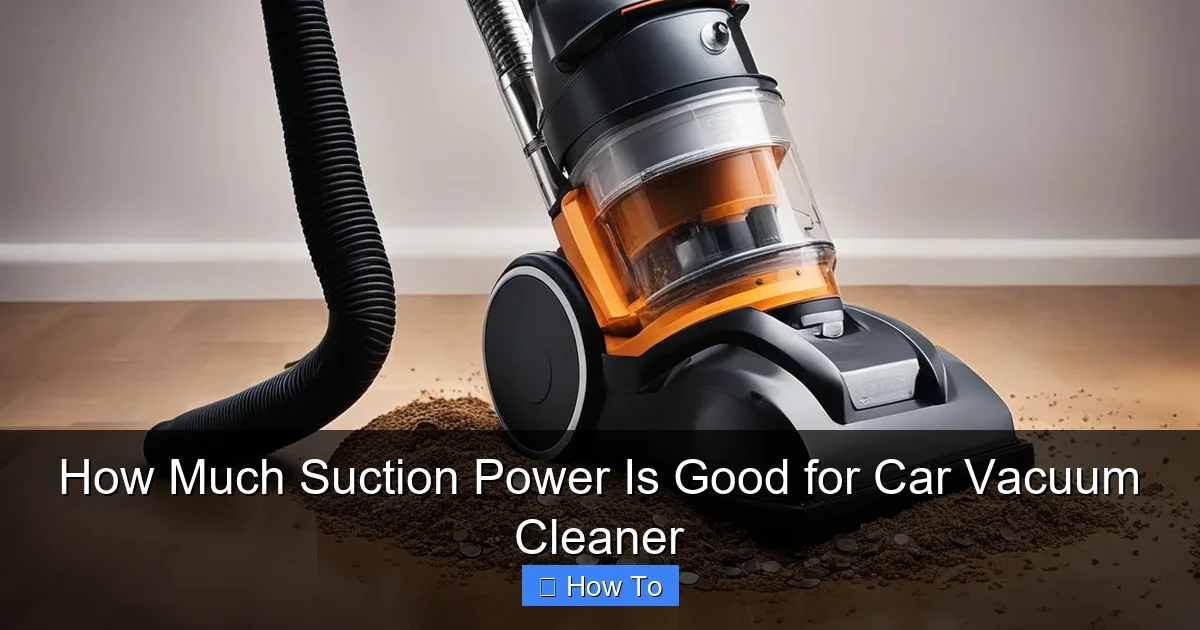
Visual guide about How Much Suction Power Is Good for Car Vacuum Cleaner
Image source: vacmasterguide.com
For Light Dust & Daily Maintenance
If your car typically only gathers a light layer of dust, a few crumbs, or some superficial dirt from daily commutes, you don’t need industrial-grade power. For these tasks, a car vacuum with moderate suction is usually perfectly fine.
- Recommended Power: 20-30 AW (Air Watts) or 3-5 kPa (Kilopascals).
- What it handles: Loose dust, small crumbs, dry leaves, and light pet dander.
- Examples: Ideal for quick touch-ups or maintaining an already clean interior.
For General Dirt, Crumbs & Sand
This category covers most family cars or vehicles that see regular use, perhaps carrying kids, groceries, or sports equipment. You’re dealing with more significant crumbs, tracked-in dirt, sand, and general debris that settles into carpets.
- Recommended Power: 30-50 AW or 5-8 kPa.
- What it handles: Embedded crumbs, larger dirt particles, sand from shoes, light-to-moderate pet hair, and dried mud.
- Examples: Great for weekly or bi-weekly cleaning to keep your car looking presentable. This range is often considered a good baseline for how much suction power is good for a versatile car vacuum cleaner.
For Stubborn Dirt, Pet Hair & Deep Cleaning
If you frequently transport pets, live in an area with a lot of mud or sand, or just let your car get really dirty between cleanings, you’ll need a vacuum with serious muscle. Pet hair, especially, can be incredibly stubborn and requires strong suction combined with the right attachments to lift it from upholstery and carpets.
- Recommended Power: 50-80+ AW or 8-12+ kPa. Some high-end models can even go above 100 AW.
- What it handles: Deeply embedded pet hair, heavy sand, dried mud, small stones, and tough-to-remove debris.
- Examples: Essential for pet owners, off-road enthusiasts, or anyone needing a thorough, infrequent deep clean. If you want to know how much suction power is good for pet hair in a car, this is your target range.
Factors That Influence Your Suction Needs
Choosing how much suction power is good for your car vacuum isn’t just about the numbers; it’s also about your lifestyle and car.
Type of Debris You Encounter
Consider the most common messes in your car. Is it mostly dust, or do you regularly deal with muddy boots, spilled cereal, or a shedding dog? Heavier, stickier, or more fibrous debris like pet hair will always require more robust suction.
Frequency of Cleaning
If you’re a meticulous cleaner who vacuums weekly, dirt won’t have a chance to get deeply embedded. A mid-range suction might be enough. If you only clean your car once a month or less, dirt and grime will build up, requiring a vacuum with higher suction power to effectively remove it.
Car Size and Interior Materials
A small two-seater car with leather seats will have different cleaning needs than a large SUV with plush carpet and fabric upholstery. Larger cars mean more surface area to clean, potentially requiring better battery life and stronger suction to get through the job efficiently. Different carpet textures can also affect how much suction power is good; some deep pile carpets hold onto dirt more stubbornly.
The Role of Attachments
Don’t underestimate the power of a good attachment! A fantastic crevice tool can direct suction into tight spots, and a motorized brush tool (often called a pet hair tool or turbo brush) can agitate and lift embedded pet hair, making even a moderately powerful vacuum much more effective. Sometimes, the right attachment can make a vacuum with slightly less raw suction power perform just as well as a more powerful one without specialized tools.
How to Choose Your Ideal Suction Power
Now that you know the metrics and factors, here’s a step-by-step approach to pick the right vacuum:
Step 1: Assess Your Primary Use Case
Ask yourself: What do I primarily need this car vacuum for? Is it for quick daily tidying, weekly family car maintenance, or infrequent deep cleans after adventurous outings?
- Example: If you drive alone and just need to suck up occasional dust, a 30 AW model might be perfect. If you have two dogs and three kids, you’ll definitely want something closer to 60-80 AW.
Step 2: Check the Vacuum’s Specifications
Look for the Air Watts (AW) primarily, especially for cordless models. If only kPa is listed, remember that higher numbers mean more static suction. Compare these numbers against our recommended ranges for light, general, and heavy cleaning.
- Tip: Don’t be fooled by just “watts” (W) on its own. This usually refers to motor wattage, not cleaning power. Always look for “Air Watts” (AW).
Step 3: Read Reviews and Watch Demos
Specifications are a starting point, but real-world performance is key. Read customer reviews specific to car cleaning. Do people with similar needs (e.g., pet owners) find the suction adequate? Watch video demonstrations on YouTube to see how the vacuum handles different types of debris in a car interior.
- Consider: Pay attention to comments about how well it picks up pet hair, sand, or crumbs from various surfaces. This will give you practical insight into how much suction power is good for various tasks.
Step 4: Prioritize Air Watts for Cordless Models
For the convenience of a cordless car vacuum, Air Watts is your best friend. Aim for at least 30-50 AW for general cleaning, and 50 AW or more if pet hair or heavy debris is a concern. Corded models can often offer higher kPa, but they come with the hassle of needing an outlet.
More Than Just Raw Power: Other Features That Matter
While suction power is vital, it’s just one piece of the puzzle. A car vacuum is only truly good if it’s practical and user-friendly.
Attachments and Tools
A good set of attachments can make even moderate suction incredibly effective. Look for:
- Crevice Tool: Essential for reaching into tight corners, between seats, and along trim.
- Brush Tool: Great for agitating dirt on carpets and upholstery, and for dusting surfaces.
- Pet Hair Tool (Motorized or Rubberized): A must-have for lifting stubborn pet hair.
- Flexible Hose: Allows you to reach awkward areas without moving the entire unit.
Battery Life and Charging
For cordless models, battery life is paramount. A powerful vacuum with only 10 minutes of run time might leave you frustrated mid-clean. Look for at least 20-30 minutes of continuous cleaning time for most cars, and consider models with fast-charging capabilities.
Filtration System
A good filter traps dust and allergens, preventing them from being expelled back into your car’s air. HEPA filters are excellent for capturing fine particles. Ensure the filter is easy to clean or replace, as a clogged filter drastically reduces suction power.
Portability and Ergonomics
A car vacuum should be lightweight and easy to handle. Check its size, weight, and how comfortable it is to hold and maneuver around your car’s interior. A bulky or awkward vacuum, no matter how powerful, will be a pain to use.
Dustbin Capacity
A larger dustbin means you won’t have to stop and empty it as often, especially during a deep clean. Look for a transparent dustbin so you can easily see when it’s full.
Noise Level
While some noise is unavoidable with powerful vacuums, excessively loud models can be unpleasant to use for extended periods. While dB ratings aren’t always provided, reviews might mention noise levels.
Practical Tips for Maximizing Suction Power and Cleaning
Even with the best car vacuum, proper technique and maintenance are key to getting the most out of its suction power.
Pre-Clean Loose Debris
Before vacuuming, remove large items, loose trash, and shake out floor mats outside the car. This prevents clogs and allows the vacuum to focus its suction on the more challenging dirt.
Use the Right Attachment
Always select the appropriate attachment for the task. The crevice tool concentrates suction for tight spots, while a brush tool enhances cleaning on fabric. Using the correct tool optimizes the effective suction power for the specific surface or debris.
Empty the Dustbin Regularly
A full dustbin severely restricts airflow and reduces suction. Empty it frequently, ideally after every major use, or when it reaches two-thirds full.
Clean or Replace Filters
Filters are crucial for trapping dust. A dirty, clogged filter is one of the biggest culprits for low suction. Follow the manufacturer’s instructions for cleaning (washing and drying) or replacing your filters regularly. This is vital for maintaining how much suction power is good for your car vacuum.
Don’t Overfill
Avoid trying to vacuum extremely large or wet items not designed for the vacuum. This can damage the motor, clog the intake, or reduce effective suction.
Maintain Battery Health (for Cordless)
Follow charging recommendations. Don’t leave the battery completely drained for long periods, and avoid overcharging. A healthy battery ensures consistent power output and strong suction.
Troubleshooting Common Suction Issues
If your car vacuum isn’t performing as expected, don’t panic. Here are some common problems and solutions:
H3: Clogged Nozzles or Hoses
Problem: Something might be stuck in the vacuum’s nozzle, hose, or intake port. This is a very common reason for reduced suction.
Solution: Disconnect the vacuum from power (or remove the battery). Visually inspect the nozzle, any attached tools, and the flexible hose. Use a stick or a broom handle (carefully!) to dislodge any blockages. Never use your fingers or sharp objects.
H3: Full Dustbin or Dirty Filter
Problem: As mentioned, a full dustbin or a clogged filter will drastically reduce suction power.
Solution: Empty the dustbin completely. Remove and clean or replace the filter according to the manufacturer’s instructions. Make sure washable filters are completely dry before putting them back.
H3: Battery Issues (for Cordless Vacuums)
Problem: A low or failing battery won’t be able to provide consistent, strong suction.
Solution: Ensure the vacuum is fully charged. If the battery life has significantly degraded over time, it might be time to replace the battery pack if possible, or consider a new unit.
H3: Poorly Assembled Parts or Loose Seals
Problem: If parts aren’t fitted together correctly, or if there’s a crack or gap in the housing or dustbin, air can leak out, reducing effective suction.
Solution: Double-check that all attachments, the dustbin, and filters are securely clicked into place. Inspect the vacuum’s body for any visible damage or gaps.
Conclusion
Choosing how much suction power is good for a car vacuum cleaner doesn’t have to be overwhelming. By understanding key metrics like Air Watts, assessing your specific cleaning needs, and considering other important features like attachments and battery life, you can make an informed decision.
Remember, for most general car cleaning, a cordless vacuum with 30-50 AW is a great starting point. If you battle pet hair or heavy dirt, aim for 50-80+ AW. Don’t forget that proper maintenance—emptying the bin and cleaning filters—is just as crucial as the initial suction power. With the right vacuum and a little care, you can keep your car’s interior looking spotless and feeling fresh, making every drive a more pleasant experience.
🎥 Related Video: Vacuum Cleaner Suction Power Test Part 3 From Cool Lab
📺 Cool Gadget
CoolGadget VS ThisWork. Who is the king of Vacuum Cleaner?