How Much Should I Spend on a Vacuum Cleaner
Deciding how much to spend on a vacuum cleaner requires careful consideration of your specific cleaning needs, home size, and flooring types. This comprehensive guide helps you navigate various vacuum models and features, ensuring you find the best value for your budget. Learn to prioritize essential functions to make an informed purchase and avoid overspending on features you don’t truly need.
How Much Should I Spend on a Vacuum Cleaner?
Choosing a new vacuum cleaner can feel like a big decision. With so many models, features, and price tags out there, it’s easy to get overwhelmed. You might find yourself asking: “How much should I spend on a vacuum cleaner?” Is it worth investing in a high-end model, or will a budget-friendly option do the trick? The truth is, there’s no single right answer, but this guide will help you figure out the perfect spending sweet spot for your unique needs.
We’re going to walk you through a clear, step-by-step process. By the end, you’ll understand what factors influence vacuum cleaner costs, what features matter most for different situations, and how to set a realistic budget so you can make a smart purchase without buyer’s remorse. Let’s find out exactly how much you should spend on a vacuum cleaner.
Key Takeaways
- Assess Your Needs First: Before setting a budget, evaluate your home’s size, flooring types, presence of pets or allergies, and how often you clean. These factors significantly dictate the type and features you’ll need.
- Understand Price Ranges by Type: Different vacuum cleaner types (upright, canister, stick, robot, handheld) come with distinct price brackets. Knowing these helps you align your budget with the functionality you require.
- Prioritize Essential Features: Don’t pay for features you won’t use. Focus your spending on core aspects like suction power, filtration (especially for allergies), and appropriate attachments for your specific cleaning challenges.
- Factor in Long-Term Costs: Remember that the initial purchase price isn’t the only expense. Consider the ongoing cost of bags, filters, and potential maintenance when determining how much you should truly spend on a vacuum cleaner over its lifespan.
- Set a Realistic Budget: Categorize vacuums into entry-level, mid-range, premium, and high-end tiers. This allows you to set a practical budget and manage expectations about features and performance within that price point.
- Shop Smart: Compare prices across online retailers, department stores, and specialty shops. Look for sales, especially during holiday seasons, to get the best value for your investment.
Quick Answers to Common Questions
Should I always buy the cheapest vacuum cleaner?
No, not necessarily. While saving money is great, the cheapest options often lack power, durability, and features like good filtration. It’s usually better to find a balance between price and performance for your specific needs.
Is it worth spending more on a vacuum cleaner with HEPA filtration?
Absolutely, if anyone in your household suffers from allergies or asthma, or if you have pets. HEPA filtration significantly improves indoor air quality by trapping tiny allergens, making the extra investment worthwhile.
How often should I replace my vacuum cleaner?
A good quality vacuum can last 5-10 years, or even longer for premium brands like Miele or Sebo. Cheaper models might only last 1-3 years. Regular maintenance (cleaning filters, replacing bags) can extend its lifespan.
Can a robot vacuum replace a traditional one?
For many homes, a robot vacuum is excellent for daily maintenance but usually can’t replace the deep cleaning power of a good upright or canister vacuum. They work best as a complementary tool, especially for larger homes or pet owners.
What’s the best time of year to buy a vacuum cleaner?
Major sales events like Black Friday, Cyber Monday, Amazon Prime Day, and other holiday sales (e.g., post-Christmas, Labor Day) are often the best times to find significant discounts on vacuum cleaners.
Step 1: Understand Your Cleaning Needs First
Before you even look at a price tag, the most crucial step is to understand what you need your vacuum to do. Your lifestyle, home, and family members all play a role in determining how much you should spend on a vacuum cleaner.
Your Home Size and Layout
- Small Apartments/Single Rooms: For compact spaces, a lightweight stick vacuum or a small canister vacuum might be perfect. You probably don’t need to spend a lot on heavy-duty power or a vast array of attachments.
- Medium-Sized Homes (2-3 bedrooms): You’ll likely need a more versatile vacuum. An upright or a medium-sized canister vacuum could be ideal. Consider something with good maneuverability to tackle different rooms and furniture.
- Large Homes (4+ bedrooms/multi-level): For extensive cleaning areas, a durable, powerful upright or a full-sized canister vacuum is often necessary. You might also consider a robot vacuum for daily maintenance to complement your main cleaner. In this scenario, you might spend more on a vacuum cleaner because of the sheer volume of work it needs to do.
Types of Flooring
- Hardwood, Tile, Laminate: Vacuums with a “bare floor” setting, a soft brush roll (or no brush roll), or good suction-only options are key. Canister and stick vacuums often excel here.
- Low-Pile Carpets/Rugs: Most upright and canister vacuums with a height adjustment or multi-surface settings will work well.
- High-Pile Carpets/Thick Rugs: This is where powerful suction and an adjustable brush roll with strong agitation are essential. Upright vacuums or canister vacuums with a powerhead are usually best. You might need to spend more on a vacuum cleaner designed for deep carpet cleaning.
- Mixed Flooring: A versatile model with multiple settings or interchangeable heads is a must. Many modern uprights and canisters offer this flexibility.
Pets and Allergies
- Pet Owners: Pet hair requires strong suction, specialized attachments (like a mini motorized brush), and tangle-free brush rolls. Vacuums specifically designed for pet hair usually come with these features and might push the price up slightly. Don’t skimp here; it’s worth the extra to spend on a vacuum cleaner that truly tackles pet messes.
- Allergy Sufferers: Look for vacuums with sealed systems and HEPA filtration. These prevent allergens from being recirculated into the air. This feature is non-negotiable for allergy relief and will influence how much you should spend on a vacuum cleaner.
Cleaning Frequency
- Daily/Frequent Cleaning: A lightweight, easy-to-grab stick vacuum or a robot vacuum is great for quick clean-ups. A more robust upright or canister can then handle deeper weekly cleans.
- Weekly/Bi-Weekly Cleaning: A good quality upright or canister vacuum that matches your home’s needs should suffice.
- Occasional Cleaning: If you only vacuum rarely, you might not need to spend as much on a top-tier model. A reliable mid-range option could be perfect.
Step 2: Explore Vacuum Cleaner Types and Their Price Ranges
Once you know your needs, you can start to match them with the various types of vacuum cleaners available. Each type has a general price range and specific strengths, which will help you decide how much to spend on a vacuum cleaner.
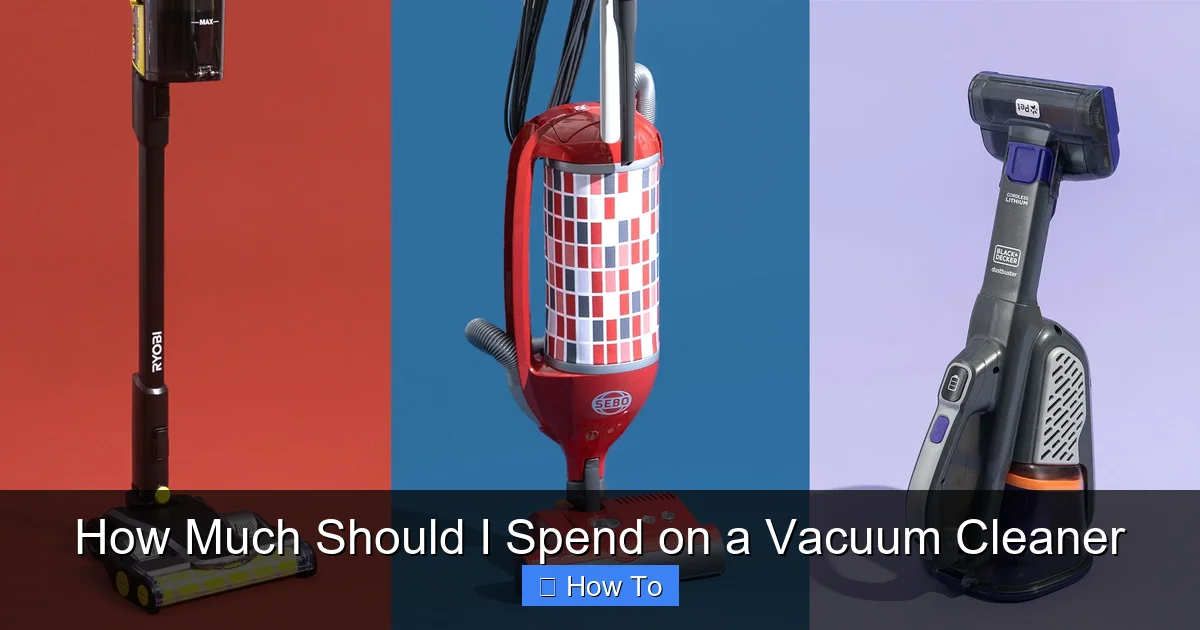
Visual guide about How Much Should I Spend on a Vacuum Cleaner
Image source: cdn.thewirecutter.com
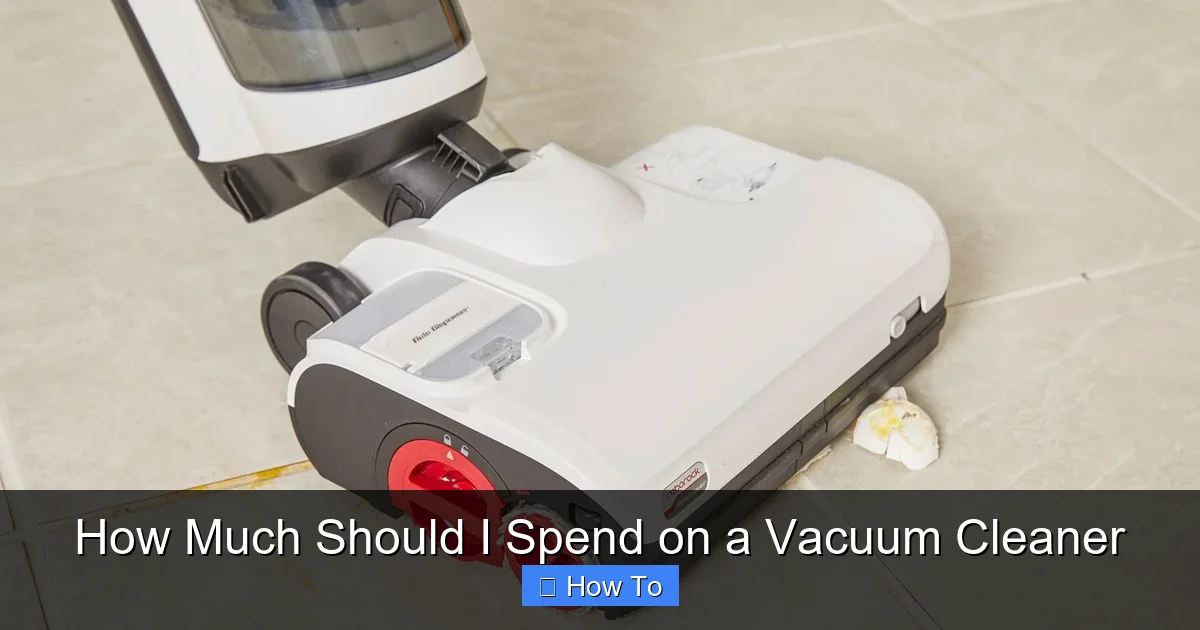
Upright Vacuums
- Best For: Carpets, large areas, homes with pets.
- Price Range: $100 – $800+
- Pros: Powerful suction, wide cleaning path, often good for pet hair, easy to store upright.
- Cons: Can be heavy, less maneuverable around furniture, not always great on hard floors without adjustments.
- How much should I spend on a vacuum cleaner? A good quality upright for a medium home might be $150-$300. Premium models with advanced filtration or specialized pet features will be $300-$600+.
Canister Vacuums
- Best For: Hard floors, delicate rugs, stairs, versatile cleaning, quiet operation.
- Price Range: $200 – $1,000+
- Pros: Excellent maneuverability, lightweight wand, usually quieter, better for above-floor cleaning.
- Cons: Can be bulky to store, have a learning curve with the hose and canister.
- How much should I spend on a vacuum cleaner? For a decent canister, expect to pay $250-$500. High-end models from brands like Miele or Sebo can easily exceed $700, offering superior filtration and durability.
Stick Vacuums (Corded and Cordless)
- Best For: Quick clean-ups, small apartments, mixed flooring, secondary vacuum.
- Price Range: $50 – $700+
- Pros: Lightweight, easy to store, convenient for small messes. Cordless models offer ultimate freedom.
- Cons: Shorter run times (cordless), smaller dustbins, less powerful than full-sized vacuums, not ideal for deep cleaning.
- How much should I spend on a vacuum cleaner? A basic corded stick vacuum might be under $100. Cordless models, especially from brands like Dyson or Shark, can range from $200 to $600+, with battery life and suction power being key price drivers.
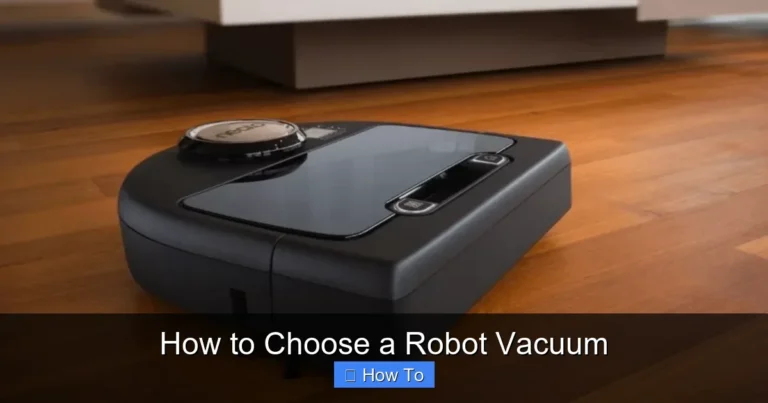
Robot Vacuums
- Best For: Daily maintenance, hands-free cleaning, homes with pets, busy individuals.
- Price Range: $150 – $1,500+
- Pros: Automated cleaning, smart mapping, app control, great for pet hair maintenance.
- Cons: Can get stuck, don’t replace deep cleaning, small dustbins, higher maintenance.
- How much should I spend on a vacuum cleaner? Entry-level robots might be $150-$300. Mid-range models with better navigation and features are $300-$700. High-end self-emptying or mapping models can cost $800-$1500+.
Handheld Vacuums
- Best For: Spot cleaning, car interiors, upholstery, quick spills.
- Price Range: $30 – $150
- Pros: Portable, lightweight, convenient for small tasks.
- Cons: Limited power, small dustbin, short battery life (cordless).
- How much should I spend on a vacuum cleaner? Most handheld vacuums are under $100. More powerful cordless options with specialized attachments might reach $150.
Wet/Dry Vacuums (Shop Vacs)
- Best For: Garages, workshops, flood clean-up, heavy-duty messes, picking up liquids.
- Price Range: $50 – $300+
- Pros: Extremely powerful, handles wet and dry debris, very durable.
- Cons: Noisy, bulky, not suitable for indoor carpet cleaning.
- How much should I spend on a vacuum cleaner? A basic model for garage use is around $50-$100. More powerful, larger capacity units can be $150-$300+.
Step 3: Key Features That Influence Cost
Beyond the type of vacuum, specific features can significantly impact how much you should spend on a vacuum cleaner. Decide which of these are “must-haves” and which are “nice-to-haves” based on your needs.
Suction Power and Motor Quality
More powerful motors and efficient airflow designs generally translate to better cleaning performance, especially on tough carpets or with heavy debris. Premium brands often use higher-quality motors that last longer and maintain consistent suction. Expect to spend more on a vacuum cleaner with superior suction.
Filtration System (HEPA)
For allergy sufferers, a HEPA filter is crucial. It traps 99.97% of airborne particles down to 0.3 microns, including pollen, pet dander, and dust mites. A true HEPA filter system, especially a sealed one, adds to the cost but is invaluable for air quality. This is where it’s often wise to spend more on a vacuum cleaner if allergies are a concern.
Attachments and Accessories
A good set of attachments (crevice tool, dusting brush, upholstery tool, pet hair tool) enhances versatility. Some vacuums come with many specialized tools, which can increase the price. Consider if you’ll actually use all of them.
Bagged vs. Bagless Systems
- Bagged: Generally better for allergy sufferers as dust is contained and disposed of cleanly. Requires buying replacement bags, which is an ongoing cost.
- Bagless: Convenient, no bags to buy. However, emptying the bin can expose you to dust, and filters need regular cleaning or replacement.
Neither system is inherently more expensive upfront, but bag costs can add up over time, influencing your total spend on a vacuum cleaner.
Noise Level
If you’re sensitive to noise or live in an apartment, a quieter vacuum might be a priority. Canister vacuums tend to be quieter than uprights, and some premium models are specifically designed for low noise, which often comes with a higher price tag. Quiet operation is a luxury feature where you might choose to spend more on a vacuum cleaner.
Durability and Warranty
Cheaper vacuums often use more plastic components and have shorter warranties. Investing in a more durable vacuum with a longer warranty (e.g., 5-10 years) means fewer repairs and replacements in the long run, even if the initial spend on a vacuum cleaner is higher. Consider the reputation of the brand for build quality.
Smart Features (for robots)
Advanced robot vacuums come with features like LiDAR mapping, self-emptying docks, zone cleaning, and voice control. These “smart” additions significantly drive up the cost. Decide if the convenience justifies the extra expense for you.
Step 4: Factor in Long-Term Ownership Costs
The initial purchase price isn’t the only expense. To truly understand how much you should spend on a vacuum cleaner, you need to consider the cost of ownership over its lifespan.
Replacement Bags and Filters
If you choose a bagged vacuum, you’ll need to buy replacement bags regularly. HEPA filters, whether for bagged or bagless models, also need replacing periodically (typically every 6-12 months). Factor these consumable costs into your overall budget. Some brands have proprietary bags/filters that can be expensive.
Maintenance and Repairs
While a good warranty helps, general maintenance (like replacing brush rolls or belts) can sometimes be needed. High-quality vacuums tend to break down less often and are often easier to repair, potentially saving money in the long run. If you spend more on a vacuum cleaner upfront, you might save on repairs down the road.
Electricity Consumption
Though usually minor, some very powerful vacuums use more electricity. For most households, this isn’t a significant cost driver, but it’s part of the overall picture of spending on a vacuum cleaner.
Step 5: Setting Your Realistic Budget: Price Tiers
Now that you’ve assessed your needs and understood the features, you can set a realistic budget. Here’s a general guide to what you can expect within different price tiers when deciding how much to spend on a vacuum cleaner.
Entry-Level (Under $150)
- What to Expect: Basic uprights, simple stick vacuums, small handhelds, basic robot vacuums (less intelligent navigation).
- Pros: Affordable, good for small spaces or light cleaning.
- Cons: Less powerful suction, fewer features, often poorer build quality, shorter lifespan, basic filtration. Don’t expect to spend this little on a vacuum cleaner and get top-tier performance.
Mid-Range ($150 – $400)
- What to Expect: Good quality uprights, versatile canister vacuums, capable cordless stick vacuums (e.g., Shark, some Dyson V-series on sale), mid-tier robot vacuums with basic mapping.
- Pros: Good balance of features, performance, and durability. Often includes HEPA filtration, better attachments, and more powerful motors.
- Cons: May lack some premium features or the longest lifespan of higher-end models. This is often the sweet spot for many households on how much to spend on a vacuum cleaner.
Premium ($400 – $800)
- What to Expect: High-performance uprights (e.g., Dyson Animal, premium Shark models), excellent canister vacuums (e.g., Miele Classic C1/C2, Sebo K-series), top-tier cordless stick vacuums, advanced robot vacuums with good navigation and self-emptying options.
- Pros: Excellent suction, superior filtration, durable construction, specialized features for pets or allergies, longer warranties.
- Cons: A significant investment, but often worth it for specific needs or larger homes. If you need robust performance, this is a sensible amount to spend on a vacuum cleaner.
High-End/Luxury (Over $800)
- What to Expect: Flagship models from brands like Miele (C3 series), Sebo (D-series), Dyson (V15 Detect, Gen5detect), and high-end robot vacuums (e.g., Roomba j7+/j9+, Roborock S8 Pro Ultra).
- Pros: Best-in-class performance, exceptional durability, advanced technology, long lifespan, often comes with extensive accessory kits.
- Cons: A very substantial investment. Only necessary for very specific, demanding cleaning needs or if budget isn’t a major concern. Deciding to spend this much on a vacuum cleaner means you prioritize the absolute best features and longevity.
Step 6: Where to Shop and When to Buy
Smart shopping can help you get the best value for how much you should spend on a vacuum cleaner.
Online Retailers
Sites like Amazon, Best Buy, Walmart, and manufacturer websites often have competitive prices and a vast selection. Look for free shipping and easy return policies. Reading customer reviews online is invaluable.
Department Stores
Stores like Macy’s or Kohl’s often carry popular brands and might have sales. The advantage here is sometimes being able to see and touch the vacuum, but selection might be limited.
Specialty Vacuum Stores
These stores offer expert advice, allow you to test vacuums, and often provide better after-sales service and repairs. They might also carry higher-end, more durable brands. While prices might be less negotiable, the service value can be high, especially if you’re not sure how much to spend on a vacuum cleaner and need guidance.
Look for Sales and Promotions
Black Friday, Cyber Monday, Amazon Prime Day, and other holiday sales events are excellent times to find discounts. Seasonal sales (e.g., back-to-school) can also offer good deals. If you can wait, patience can save you a significant amount on how much you spend on a vacuum cleaner.
Step 7: Making Your Final Decision
Read Reviews
After narrowing down your choices, read both professional reviews (from consumer reports or tech sites) and user reviews. Look for patterns in feedback regarding performance, durability, and customer service.
Test It Out (If Possible)
If buying from a brick-and-mortar store, lift the vacuum, push it around, try the attachments. See how it feels in your hand. This helps ensure it’s comfortable to use.
Don’t Be Swayed by Unnecessary Features
Stick to your core needs. A vacuum with a built-in air freshener or laser-guided pet hair detection might sound cool, but if it pushes you over budget and doesn’t address a primary need, it’s not worth the extra spend on a vacuum cleaner.
Avoiding Buyer’s Remorse: What If You Spend Too Much (or Too Little)?
Even with careful planning, sometimes you might feel you’ve made the wrong choice. Understanding how much to spend on a vacuum cleaner is a personal journey.
If You Feel You Overspent
If you’ve bought an expensive vacuum and now regret the high price tag, try to focus on the benefits. Is it making your cleaning easier? Is it improving air quality? Is it saving you time? Often, the value of a high-end vacuum lies in its durability and performance over many years, which can offset the initial shock of the purchase price. Remind yourself that a well-made vacuum can last a decade or more, meaning your annual spend on a vacuum cleaner is lower than if you bought a cheap one every few years.
If You Regret Saving Too Much
On the flip side, if you opted for a very cheap vacuum and it’s not meeting your needs (e.g., poor suction, breaking down, difficult to use), don’t be afraid to cut your losses. Sometimes, buying a slightly better mid-range vacuum that actually works for your home is a smarter long-term investment. Consider if the frustration and time wasted trying to clean with an inadequate machine are worth the initial savings.
Conclusion
Deciding how much to spend on a vacuum cleaner isn’t just about the price tag; it’s about investing in a tool that genuinely meets your home’s unique cleaning demands. By thoroughly assessing your needs, understanding the various types and their price points, prioritizing essential features, and considering long-term costs, you’re empowered to make a confident and smart purchase.
Remember, the “best” vacuum isn’t always the most expensive, nor is it the cheapest. It’s the one that delivers the right balance of performance, features, and durability for your specific situation and budget. Use this guide to navigate the options, set a realistic budget, and ensure your next vacuum cleaner is a perfect fit for your home and wallet. Happy cleaning!
🎥 Related Video: The best Wet and Dry Vacuum Cleaner to keep your home spotless #vacuumcleaner #vacuum #amazon 53
📺 Best Products
The best Wet and Dry Vacuum Cleaner to keep your home spotless #vacuumcleaner #vacuum #shorts #amazon Looking for the …