How Much Is a Pool Vacuum Cleaner
Understanding how much a pool vacuum cleaner costs involves looking at different types and their features. Prices vary widely, from budget-friendly manual options to high-tech robotic cleaners, influenced by brand, pool size, and desired automation. Investing in the right pool vacuum cleaner ensures a sparkling pool and can save time and effort in the long run, making the initial investment worthwhile.
How Much Is a Pool Vacuum Cleaner
Keeping your swimming pool sparkling clean is essential. A clean pool is more inviting, safer, and extends the life of your pool equipment. One of the best tools for this job is a good quality pool vacuum cleaner. But if you’re new to pool ownership or looking to upgrade, you might be asking: “How much is a pool vacuum cleaner?”
The answer isn’t always straightforward. The cost of a pool vacuum cleaner can vary dramatically. It depends on many factors, from the type of cleaner you choose to its features and the size of your pool. This comprehensive guide will walk you through everything you need to know. We’ll explore the different types of pool vacuum cleaners, what drives their prices, and how to choose the best one for your budget and needs. By the end, you’ll have a clear understanding of the investment involved in keeping your pool pristine.
Key Takeaways
- Wide Price Range: Pool vacuum cleaners vary significantly in price, from under $100 for basic manual models to over $2,000 for advanced robotic units.
- Four Main Types: Manual, suction-side, pressure-side, and robotic pool vacuum cleaners each offer different levels of automation, cleaning power, and cost.
- Factors Affecting Cost: Price is influenced by the cleaner’s type, brand, features (e.g., smart navigation, Wi-Fi), pool size and surface type, and overall durability.
- Hidden Costs: Beyond the initial purchase, consider ongoing expenses like replacement parts, filters, energy consumption, and potential repair costs.
- Match to Your Needs: The “best” pool vacuum cleaner isn’t always the most expensive. It’s the one that best fits your pool’s specific needs, your budget, and your desired level of convenience.
- Research is Key: Thoroughly research different models, read reviews, and compare features to ensure you make an informed decision and get the best value for your money.
Quick Answers to Common Questions
What’s the best cleaner for heavy leaves?
For pools with heavy leaf debris, pressure-side or robotic pool vacuum cleaners are often the best choice. Pressure-side cleaners with large intake ports and leaf bags are very effective, as are robotic cleaners designed for large debris.
Can I use a robotic cleaner in an above-ground pool?
Yes, many robotic pool vacuum cleaners are suitable for above-ground pools. Look for models specifically designed for above-ground use or those that mention compatibility with all pool types. They offer great convenience for above-ground pool owners.
How often should I run my pool vacuum cleaner?
The frequency depends on your pool’s environment and usage. Generally, running your pool vacuum cleaner 2-3 times per week is a good starting point. If you have heavy debris or frequent swimmers, daily cleaning might be necessary, especially for robotic models.
Do manual cleaners save money in the long run?
While manual pool vacuum cleaners have the lowest initial cost, they don’t necessarily save money in the long run. They require significant time and effort, and their efficiency can be lower than automated options. They also don’t contribute to filtering the pool water like suction or robotic cleaners do.
Is a Wi-Fi enabled robotic cleaner worth the extra cost?
A Wi-Fi enabled robotic pool vacuum cleaner offers convenience, allowing you to control and schedule cleaning cycles from your smartphone. If you value this level of remote control and automation, especially for a busy lifestyle, the added cost can be well worth it for the ease of use.
Understanding the Different Types of Pool Vacuum Cleaners
The first step to understanding the cost of a pool vacuum cleaner is to know the different types available. Each type offers unique benefits, varying levels of automation, and different price points.
Manual Pool Vacuum Cleaners
Manual pool vacuum cleaners are the most basic and typically the least expensive option. They consist of a vacuum head, a telescoping pole, and a vacuum hose. You connect the hose to your skimmer or a dedicated vacuum line. Then, you manually push and pull the vacuum head across your pool’s floor and walls, much like vacuuming a carpet.
* Features: Simple design, no moving parts beyond brushes or wheels.
* Pros: Very affordable, great for spot cleaning, complete control over where you clean.
* Cons: Requires significant physical effort and time, not ideal for large pools or daily cleaning.
* Typical Price Range: A basic manual pool vacuum cleaner kit can cost anywhere from $50 to $200. This often includes the pole, hose, and head.
Suction-Side Pool Vacuum Cleaners
Suction-side pool vacuum cleaners are a popular automated choice. They connect directly to your pool’s skimmer or a dedicated suction line. They use the suction created by your pool’s filtration pump to move around the pool and suck up debris. The debris then travels through the hose and gets trapped in your pool’s filter system.
* Features: Uses the existing pool pump, simple setup, various designs (disk, wheel-driven).
* Pros: Generally affordable for an automated cleaner, easy to install, no extra energy consumption beyond your existing pump.
* Cons: Relies on your pool pump’s efficiency, can clog your skimmer basket or filter, might struggle with larger debris, can increase wear and tear on your pool pump.
* Typical Price Range: A good suction-side pool vacuum cleaner usually costs between $100 and $500. More advanced models with better scrubbing brushes or larger intake can be at the higher end.
Pressure-Side Pool Vacuum Cleaners
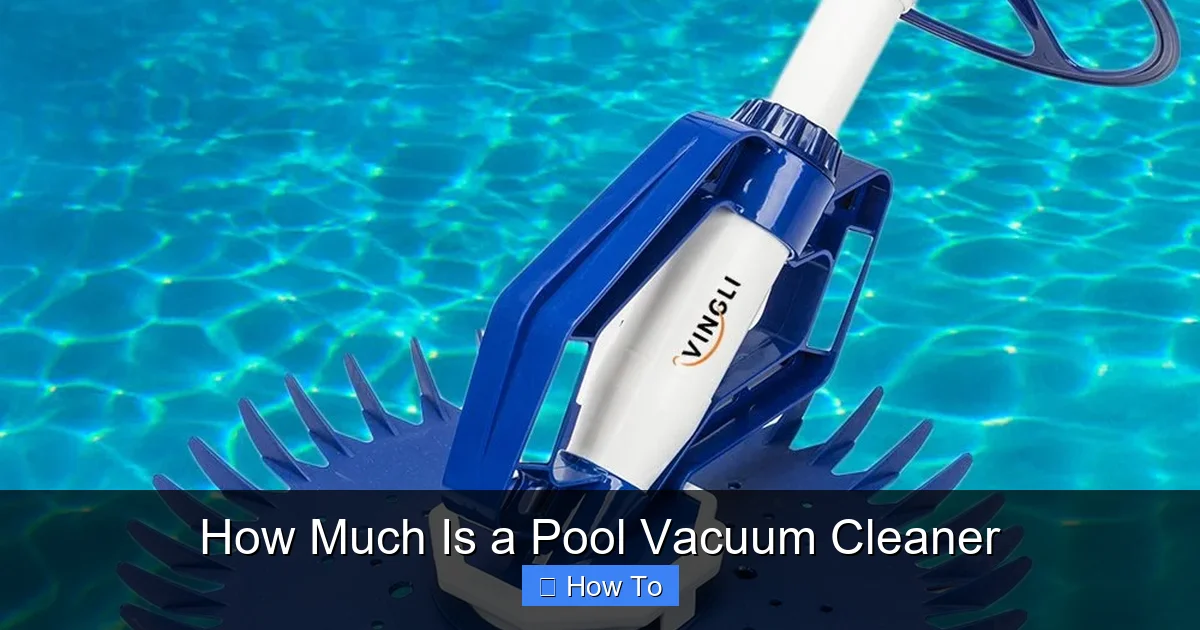
Pressure-side pool vacuum cleaners connect to your pool’s return line. They use the pressure of the water returning to the pool to propel themselves around and collect debris. Unlike suction cleaners, they often have their own filter bag, which prevents debris from reaching your main pool filter. Some models require a separate booster pump to operate effectively, adding to the overall cost.
* Features: Separate filter bag, can handle larger debris, various drive mechanisms (sweepers, wheels).
* Pros: Don’t put strain on your pool’s main filter, excellent at picking up larger debris like leaves and twigs, robust cleaning power.
* Cons: Generally more expensive than suction cleaners, might require a dedicated booster pump (additional cost and energy use), can sometimes stir up fine dust.
* Typical Price Range: A pressure-side pool vacuum cleaner can range from $200 to $1,000. If you need a booster pump, that’s an additional $300 to $500, plus installation.
Robotic Pool Vacuum Cleaners
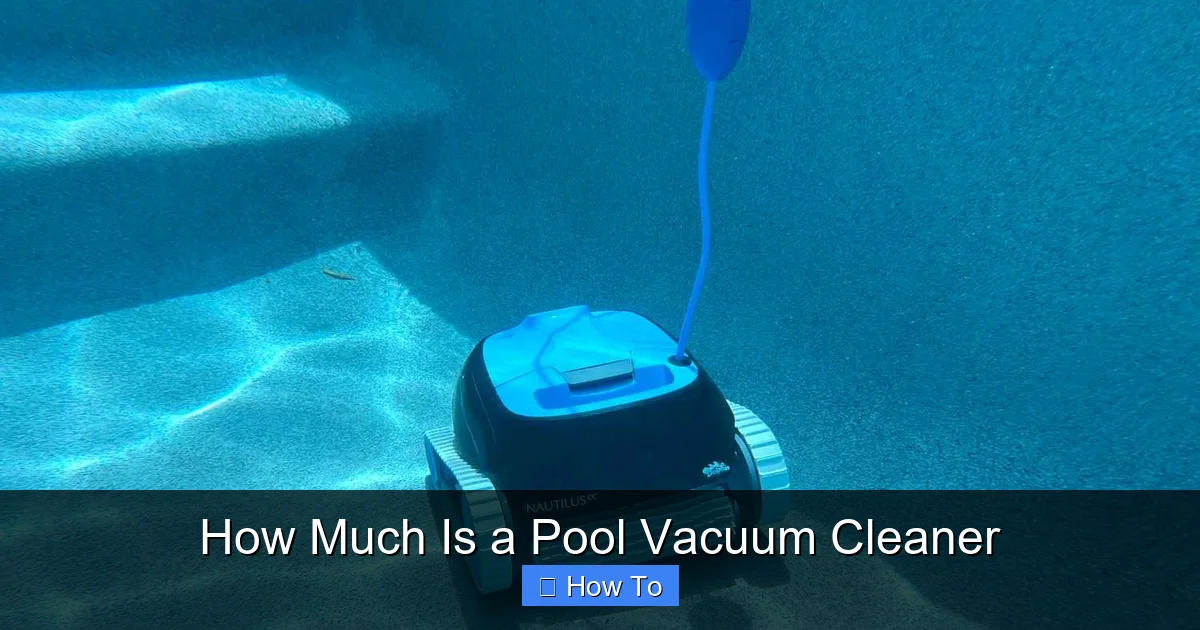
Robotic pool vacuum cleaners are the most advanced and autonomous option. They are entirely self-contained units with their own motors, filtration systems, and often intelligent navigation. You simply plug them in, drop them in the pool, and they get to work. They filter out debris into their onboard collection bins.
* Features: Independent operation, smart navigation, programmed cleaning cycles, often climb walls and clean waterlines, some have Wi-Fi connectivity.
* Pros: Most convenient, highly efficient, excellent filtration, reduces wear on your pool’s main filter and pump, often energy-efficient.
* Cons: Highest initial cost, internal parts can be expensive to replace if they wear out, requires regular cleaning of the filter basket.
* Typical Price Range: Robotic pool vacuum cleaners typically cost between $400 and $2,000. High-end models with advanced features like smartphone control and superior mapping can exceed this range.
Key Factors Influencing the Price of a Pool Vacuum Cleaner
Visual guide about How Much Is a Pool Vacuum Cleaner
Image source: people.com
Beyond the basic type, several other factors play a significant role in how much a pool vacuum cleaner costs. Understanding these will help you make a more informed decision.
Brand and Reputation
Just like cars or appliances, the brand of a pool vacuum cleaner can impact its price. Well-established brands with a reputation for quality, durability, and excellent customer service often come with a higher price tag. Examples include Polaris, Hayward, Dolphin, and Maytronics. You might pay a premium for their proven track record and reliability.
Features and Technology
The more advanced features a pool vacuum cleaner has, the more expensive it will likely be.
- Navigation Systems: Basic cleaners move randomly. Advanced robotic cleaners use smart mapping, gyroscopes, and sensors for systematic coverage.
- Cleaning Modes: Some robotic cleaners offer different modes for floor-only, wall-climbing, or quick cleans.
- Brush Types: PVA brushes are great for tile, while combo brushes work well on most surfaces. Specialized brushes can add to the cost.
- Filter Capacity: Larger, finer filter bags or cartridges for robotic cleaners allow for better debris collection and less frequent emptying.
- Connectivity: Wi-Fi or Bluetooth connectivity for smartphone control, scheduling, and diagnostic reporting on robotic cleaners adds to the price.
- Cable Length: Longer cables are needed for larger pools and can increase cost. Swivel cables prevent tangling.
Pool Size and Type
The size and type of your pool directly influence the kind of pool vacuum cleaner you need, and thus its cost.
- Small Pools: A basic manual or smaller suction-side cleaner might suffice.
- Large Pools: Robotic or pressure-side cleaners with powerful motors and longer cables are necessary, which are typically more expensive.
- Inground vs. Above-Ground: Many cleaners are specifically designed for one or the other. Above-ground models are often simpler and less expensive.
- Pool Surface: Cleaners need to be compatible with your pool surface (vinyl, plaster, fiberglass, pebble-tec). Some cleaners perform better on certain surfaces, and specialty brushes for delicate surfaces might add cost.
- Debris Type: If your pool gets a lot of leaves and large debris, you’ll need a cleaner designed to handle that, which usually means a more robust and possibly more expensive unit like a pressure-side or powerful robotic pool vacuum cleaner.
Durability and Warranty
A pool vacuum cleaner built with high-quality, durable materials is designed to last longer. This often translates to a higher initial cost. However, it can save you money in the long run by reducing the need for frequent repairs or replacements. A longer, more comprehensive warranty (e.g., 2-3 years) also reflects the manufacturer’s confidence in their product and can indicate a higher quality, and thus higher-priced, item.
Operating Costs and Energy Efficiency
While not part of the initial sticker price, consider the ongoing operating costs.
- Energy Consumption: Robotic pool vacuum cleaners are often very energy-efficient because they run independently and have low-voltage motors. Suction and pressure-side cleaners, especially those requiring a booster pump, can significantly increase your electricity bill if your main pump or booster pump runs for long periods.
- Replacement Parts: Filter bags, brushes, hoses, and wheels will wear out over time. The availability and cost of these replacement parts vary by model and brand.
Setting Your Budget and Assessing Your Needs
Before you even look at specific models, take some time to evaluate what you truly need from a pool vacuum cleaner.
Evaluate Your Pool
Consider the size, shape, and depth of your pool. How much debris does it typically accumulate? Are there many trees nearby? What kind of debris is it – fine dust, leaves, acorns? A pool with heavy leaf debris will benefit more from a pressure-side or robotic cleaner with large intake ports and filter capacity. A smaller, cleaner pool might only need a simple suction-side or even manual cleaner.
Consider Your Time and Effort
How much time and effort are you willing to put into pool cleaning? If you enjoy a hands-on approach and have a small pool, a manual cleaner might be perfectly fine. If you prefer a “set it and forget it” solution and have a busy schedule, a robotic pool vacuum cleaner is a worthy investment despite its higher price.
Long-Term Value
Sometimes, spending a bit more upfront on a durable, efficient pool vacuum cleaner can save you money and headaches in the long run. A high-quality robotic cleaner, for instance, can extend the life of your main pool filter by taking on much of the debris load, and its energy efficiency can lower electricity bills over time.
Where to Purchase Your Pool Vacuum Cleaner
The place you buy your pool vacuum cleaner can also influence the price and your overall buying experience.
Online Retailers
Websites like Amazon, PoolSupplyWarehouse, and others offer a vast selection of pool vacuum cleaners, often at competitive prices. You can easily compare models, read customer reviews, and have the unit delivered to your door. However, expert advice might be limited, and returns can sometimes be less convenient.
Local Pool Supply Stores
These brick-and-mortar stores often have knowledgeable staff who can provide personalized recommendations based on your specific pool. They might also offer installation services or be a convenient place for warranty claims and purchasing replacement parts. Prices might be slightly higher than online, but the added service can be valuable.
Home Improvement Stores
Big box stores like Home Depot or Lowe’s carry a selection of pool vacuum cleaners, usually focusing on popular brands and mid-range models. Their selection might be more limited, and staff expertise can vary. They are a good option for basic models or if you prefer to see the product in person before buying.
Beyond the Sticker Price: Hidden Costs and Maintenance
The initial purchase price of a pool vacuum cleaner is just one part of the equation. Be aware of these potential ongoing costs.
Replacement Parts and Filters
Over time, parts like filter bags, cartridges, brushes, tracks, or wheels will wear out and need replacing. For robotic cleaners, these can be somewhat expensive. For suction or pressure cleaners, hoses can also degrade. Factor in the cost and availability of these parts when making your initial purchase decision.
Energy Consumption
As mentioned, suction and pressure-side cleaners use your main pool pump, which can be a significant energy draw if it runs for many hours. If a pressure-side cleaner requires a booster pump, that’s an additional motor consuming electricity. Robotic pool vacuum cleaners are typically the most energy-efficient.
Repair Costs
Like any appliance with moving parts, a pool vacuum cleaner can eventually break down. If it’s out of warranty, you’ll be responsible for repair costs. Consider the availability of local service centers or authorized repair technicians for the brand you choose. Some brands are easier and cheaper to repair than others.
Making Your Final Decision
Choosing the right pool vacuum cleaner is a balance of features, convenience, and cost. There’s no single “best” option for everyone.
Start by assessing your pool’s needs and your budget. Are you looking for the absolute cheapest way to clean, even if it requires more effort? Or are you willing to invest more for automation and convenience? Do you have specific debris challenges, like heavy leaves or fine silt?
Once you have a clear idea of your requirements, you can narrow down the types of cleaners that will work for you. Then, compare models within that category, looking at specific features, brand reputation, warranty, and customer reviews.
Conclusion
The question “How much is a pool vacuum cleaner?” opens the door to a world of options, with prices ranging from under $100 to over $2,000. Your ideal pool vacuum cleaner won’t necessarily be the cheapest or the most expensive. Instead, it will be the one that perfectly balances performance, features, and durability with your budget and specific pool cleaning demands. By understanding the different types, the factors influencing their cost, and considering both upfront and ongoing expenses, you can make an informed decision. Investing in the right pool vacuum cleaner means less time cleaning and more time enjoying your beautifully maintained pool.
🎥 Related Video: I Let a Robot Clean My Pool!! Trying the new AI Beatbot AquaSense Ultra 2 Pool Cleaner
📺 Melissa Metrano
Check out the link now to enjoy a time-limited Spring Cleaning event Offer! https://bit.ly/41tki9L https://amzn.to/4kwCkRa.