
How Much Does It Cost to Ship a Vacuum Cleaner
Shipping a vacuum cleaner involves understanding several key factors that determine the final cost, including the item’s weight and dimensions, shipping distance, and your chosen carrier and service speed. By properly preparing your vacuum, comparing quotes, and selecting appropriate services, you can effectively manage and often reduce the expense of shipping a vacuum cleaner. This guide will walk you through every step to ensure a smooth and cost-effective shipment.
How Much Does It Cost to Ship a Vacuum Cleaner
Shipping a vacuum cleaner might seem like a straightforward task, but if you’ve ever found yourself staring at a shipping calculator with a look of pure confusion, you’re not alone. The truth is, the cost to ship a vacuum cleaner isn’t a fixed price. It’s a dynamic figure influenced by a variety of factors that, once understood, can help you not only anticipate the expense but also find ways to save money.
Whether you’re moving, selling an old appliance online, or sending a gift to a family member, knowing how to accurately estimate and manage the cost of shipping a vacuum cleaner is incredibly valuable. This comprehensive guide will break down all the variables, walk you through the preparation process, help you choose the right carrier, and provide practical tips to ensure your vacuum cleaner arrives safely and without breaking the bank. By the end of this guide, you’ll be able to confidently answer the question: “How much does it cost to ship a vacuum cleaner?” and execute the process like a pro.
Key Takeaways
- Cost Varies Widely: The cost to ship a vacuum cleaner can range from $20 to over $100, depending heavily on its size, weight, distance, and chosen shipping speed.
- Preparation is Crucial: Proper cleaning, disassembly, and secure packing in a sturdy box with ample cushioning are vital not only for safety but can also impact dimensional weight costs.
- Compare Carriers: USPS, UPS, and FedEx each offer different pricing structures and services. Always get quotes from multiple carriers to find the best deal for your specific shipment.
- Weight and Dimensions Rule: These are the most significant factors influencing your shipping cost. Accurately measure and weigh your packaged vacuum to get precise quotes.
- Consider Insurance: For valuable vacuum cleaners, purchasing shipping insurance is a wise investment to protect against loss or damage during transit, adding a small but important cost.
- Slower is Cheaper: Opting for ground or standard shipping services over expedited options can significantly reduce the cost of shipping a vacuum cleaner, especially for non-urgent deliveries.
- Minimize Package Size: Disassembling the vacuum as much as possible and using the smallest appropriate box can help reduce dimensional weight charges and overall shipping expenses.
Quick Answers to Common Questions
What’s the best way to pack a vacuum cleaner?
Disassemble all detachable parts, wrap them individually, and cushion the main unit generously in a sturdy, double-walled box with at least 2-3 inches of padding on all sides. Fill all voids to prevent shifting.
Should I clean my vacuum before shipping?
Absolutely! Empty the dustbin/bag, clean filters, and wipe down the exterior. This prevents debris from escaping and keeps the package hygienic for handlers.
How can I estimate the cost of shipping a vacuum cleaner accurately?
First, fully package your vacuum. Then, weigh it and measure its exact length, width, and height. Use these precise figures with online shipping calculators from USPS, UPS, and FedEx, along with your origin and destination zip codes.
Is shipping insurance necessary for a vacuum cleaner?
For valuable vacuum cleaners, yes. Basic carrier insurance often covers only $50-$100. If your vacuum is worth more, purchasing additional insurance protects you against loss or damage during transit.
What’s the cheapest way to ship a vacuum cleaner?
Typically, the cheapest way is to use a ground service (like UPS Ground or FedEx Ground), pack it compactly to minimize dimensional weight, use your own sturdy box, and compare quotes from multiple carriers.
Understanding the Factors Affecting Shipping Costs
Before you even think about packaging, it’s essential to understand what exactly goes into calculating the cost of shipping a vacuum cleaner. These factors are universal across most carriers and services.
Weight and Dimensions
This is arguably the most significant factor. Carriers use both the actual weight of your packaged vacuum cleaner and its “dimensional weight.” Dimensional weight (DIM weight) calculates the package’s theoretical weight based on its volume. If the DIM weight is greater than the actual weight, you’ll be charged based on the DIM weight. This means a bulky but light vacuum can sometimes cost more to ship than a heavy but compact one.
- Actual Weight: The true weight of your vacuum cleaner once it’s packed in its box with all cushioning.
- Dimensional Weight: Calculated by multiplying the package’s length, width, and height, then dividing by a specific dimensional factor (which varies by carrier).
Always aim for the smallest appropriate box to minimize potential dimensional weight charges when shipping a vacuum cleaner.
Shipping Distance
Unsurprisingly, the farther your vacuum cleaner needs to travel, the more expensive it will be to ship. Carriers typically divide the country (or world) into shipping zones. A shipment going from Zone 1 to Zone 2 will be cheaper than one going from Zone 1 to Zone 8. Cross-country or international shipments will naturally incur higher costs.
Service Speed and Type
How quickly do you need the vacuum cleaner to arrive? Expedited services (e.g., overnight, 2-day air) are significantly more expensive than standard ground or economy options. If time isn’t a critical factor, opting for a slower service can lead to substantial savings on your vacuum cleaner shipping cost.
Insurance and Declared Value
Most carriers offer a basic level of insurance automatically, but this often only covers up to $50 or $100. If your vacuum cleaner is worth more, purchasing additional insurance based on its declared value is highly recommended. This adds a small percentage to the overall cost but provides peace of mind in case of loss or damage.
Packaging Materials
While often overlooked, the cost of sturdy boxes, bubble wrap, packing peanuts, and tape adds to the overall expense. Using recycled materials or items you already have can help reduce this component of your vacuum cleaner shipping cost. However, never compromise on safety for savings; inadequate packaging can lead to damage.
Carrier Choice
Different shipping companies (USPS, UPS, FedEx, etc.) have varying pricing structures, especially for different sizes and weights. What might be cheap for a small, light package with one carrier could be expensive for a larger item with another. Always compare.
Preparing Your Vacuum Cleaner for Shipment
Proper preparation is key to ensuring your vacuum cleaner arrives safely and helps you avoid unexpected charges.
Thorough Cleaning is Key
Before you pack anything, give your vacuum cleaner a thorough cleaning. Empty the dustbin or replace the bag, clean out any filters, and wipe down the exterior. This prevents dust and debris from escaping during transit and potentially damaging other items in the package or irritating handlers. It’s also just good etiquette!
Disassemble and Secure
Most vacuum cleaners have removable parts (hoses, attachments, handles, power cords).
- Remove Detachable Parts: Take off all hoses, brushes, and accessories. Wrap them individually in bubble wrap or newspaper.
- Secure Moving Parts: If the handle detaches, remove it. If it folds, secure it with tape or zip ties. Ensure any wheels are taped down if they can move excessively.
- Manage the Power Cord: Neatly wrap the power cord and secure it with a tie or rubber band. You might even tape it to the body of the vacuum to prevent it from snagging or unwrapping.
Choose the Right Box
This is critical. You’ll need a sturdy, double-walled cardboard box that is large enough to comfortably hold your disassembled vacuum cleaner and at least 2-3 inches of cushioning material on all sides.
- New or Sturdy Used Box: A new box is always best. If using a used box, ensure it’s in excellent condition with no tears, punctures, or signs of wear that could compromise its integrity.
- Appropriate Size: Don’t use a box that’s too big, as this increases dimensional weight and requires excessive cushioning. Don’t use one that’s too small, as it won’t provide adequate protection.
Proper Cushioning and Filling Voids
This is where your vacuum cleaner gets its protective cocoon.
- Wrap Individual Parts: Each disassembled part should be wrapped in bubble wrap, foam sheets, or several layers of newspaper.
- Layer the Bottom: Place a thick layer (at least 2-3 inches) of cushioning material (packing peanuts, crumpled paper, foam) at the bottom of the box.
- Position the Main Unit: Carefully place the main body of the vacuum cleaner in the center of the box.
- Fill All Voids: Surround the vacuum cleaner and its parts with more cushioning material, ensuring there are no empty spaces. The goal is for nothing to shift or move when the box is shaken. Use foam inserts, packing peanuts, or tightly crumpled paper.
- Top Layer: Finish with another 2-3 inches of cushioning on top before sealing.
Seal it Up Securely
Use strong packing tape (2-3 inches wide) to seal all seams and flaps of the box. Apply tape generously in an “H” pattern on both the top and bottom of the box for maximum security. Do not use masking tape or scotch tape, as they are not strong enough for shipping.
Labeling for Success
Attach your shipping label securely to the largest side of the box, ensuring it’s clearly visible and not obscured by tape. If you’re writing the address, use a permanent marker and write legibly. It’s always a good idea to put a duplicate shipping label or your contact information *inside* the box as well, just in case the outer label gets damaged or detached.
Choosing Your Shipping Carrier and Service
Now that your vacuum cleaner is perfectly packed, it’s time to select the right carrier.
USPS: Good for Lighter Items
The United States Postal Service (USPS) can be a cost-effective option for lighter, smaller vacuum cleaners, especially if you’re using their Priority Mail Flat Rate boxes (though a vacuum cleaner rarely fits these) or their standard ground services. However, for heavier or bulkier items, their prices can quickly become less competitive.
- Pros: Generally good for smaller, lighter packages; often cheaper for cross-country ground shipping; convenient drop-off locations.
- Cons: Less robust tracking than private carriers; potential for slower delivery times; weight limits can be restrictive for some vacuums.
UPS: Reliable for Larger Packages
UPS is a popular choice for shipping larger, heavier items like vacuum cleaners. They offer reliable tracking and various service levels, from economical ground shipping to expedited air services. Their online quoting tools are generally very accurate.
- Pros: Excellent tracking; reliable service; handles heavier and bulkier packages well; good for both domestic and international shipping.
- Cons: Can be more expensive than USPS for certain weight classes; residential delivery surcharges may apply.
FedEx: Another Strong Contender
Similar to UPS, FedEx provides a comprehensive range of shipping services suitable for vacuum cleaners. They also offer excellent tracking and various speed options. Many businesses use FedEx, and they have a strong reputation for handling larger parcels.
- Pros: Strong tracking capabilities; reliable delivery; competitive rates for larger packages; wide network of drop-off points.
- Cons: Similar pricing structure to UPS, can be more expensive than USPS for smaller items; surcharges can add up.
Specialized Movers or Freight
If you’re shipping a very large industrial vacuum cleaner, or if you’re moving an entire household and the vacuum is just one item among many, you might consider specialized moving companies or freight services. These are typically more expensive but handle very large or multiple items efficiently. This is rarely necessary for a standard residential vacuum cleaner.
Comparing Services and Speeds
Each carrier offers different service levels (e.g., Ground, 3-Day Select, 2nd Day Air, Overnight). Always compare the prices and estimated delivery times for each carrier’s equivalent service to find the best balance of cost and speed for shipping a vacuum cleaner. Their online calculators are your best friends here.
Getting Accurate Shipping Quotes
Accuracy in your quotes is paramount to avoiding surprises.
Online Calculators
All major carriers have online shipping calculators. This is your first stop.
- Input Details: You’ll need the exact origin and destination zip codes, the precise dimensions (length, width, height) of your *packaged* box, and its accurate weight.
- Select Service Type: Choose the desired speed (e.g., Ground, Express) to see different price points.
- Add Insurance: Don’t forget to include the declared value for insurance in your calculations.
In-Person Quotes
If you’re unsure about your measurements or prefer human interaction, take your packaged vacuum cleaner to a carrier’s retail location (USPS post office, UPS Store, FedEx Office). They can weigh and measure it accurately and provide a precise quote. This is especially helpful if you’re worried about dimensional weight calculations.
Be Prepared with Details
No matter how you get your quote, ensure you have all the necessary information ready:
- Sender’s Zip Code
- Recipient’s Zip Code
- Package Dimensions (L x W x H in inches)
- Package Weight (in pounds and ounces)
- Declared Value for Insurance
- Desired Delivery Speed
Inaccurate information leads to inaccurate quotes, which can result in unexpected charges when shipping a vacuum cleaner.
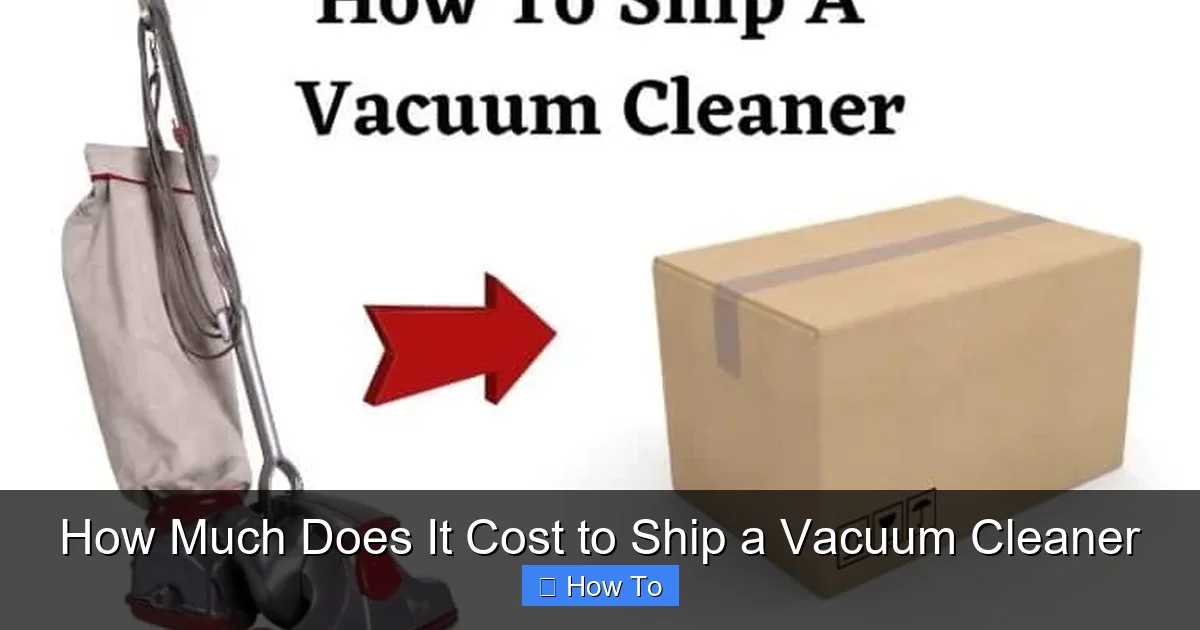
Visual guide about How Much Does It Cost to Ship a Vacuum Cleaner
Image source: fulfilledmerchant.com
Understanding Insurance and Tracking Options
These two features are invaluable for peace of mind.
Why Insurance Matters
Accidents happen. Packages can get lost, stolen, or damaged during transit. While proper packaging significantly reduces the risk of damage, it doesn’t eliminate it entirely. Shipping insurance protects your financial investment. If your vacuum cleaner is valuable, the small added cost of insurance is a wise expenditure.
- Basic Coverage: Most carriers include minimal basic coverage ($50-$100) automatically.
- Additional Coverage: You can purchase additional coverage up to the full declared value of your vacuum cleaner. The cost is typically a small percentage of the declared value.
Always photograph your vacuum cleaner before and after packing as proof of its condition, especially if you’re purchasing insurance.
How Much Insurance Do You Need?
Insure your vacuum cleaner for its actual replacement value. If it’s a brand new, high-end model, insure it for what it would cost to buy a new one. If it’s an older model, consider its market value. Don’t over-insure, as carriers will only pay out the verifiable actual value.
The Importance of Tracking
Tracking is essential for monitoring your shipment’s progress. You’ll receive a tracking number that allows you to see where your vacuum cleaner is at every stage of its journey. This helps you anticipate delivery, communicate with the recipient, and quickly identify any potential issues or delays. All major carriers offer robust online tracking services.
What If Something Goes Wrong? (Troubleshooting)
Even with the best preparation, sometimes things go awry.
- Damaged Package: If the vacuum cleaner arrives damaged, document it immediately. Take photos of the package and its contents. Contact the shipping carrier to file a claim. You’ll need your tracking number, proof of value (receipt), and often the packaging itself for inspection. The insurance you purchased will be crucial here.
- Lost Package: If tracking indicates your package is lost or stalled, contact the carrier immediately. They will initiate an investigation. If it’s deemed lost, your insurance claim will come into play.
- Delayed Delivery: Most carriers provide estimated delivery dates, not guaranteed ones for standard services. If your package is significantly delayed, check the tracking first. If there’s no update or a clear issue, contact the carrier’s customer service.
Minimizing Your Vacuum Cleaner Shipping Costs
Everyone wants to save a few bucks. Here are practical tips to reduce the cost of shipping a vacuum cleaner.
Compare, Compare, Compare!
This cannot be stressed enough. Always get quotes from at least two, preferably three, different carriers (USPS, UPS, FedEx). Their pricing models differ, and what’s cheapest for one package might be expensive for another. Use their online calculators for quick comparisons.
Package Smartly and Lightly
As discussed, dimensional weight is a huge factor.
- Disassemble Fully: Break down the vacuum as much as possible to fit it into the smallest possible box.
- Avoid Excess Packaging: Use enough cushioning for protection, but don’t overdo it with unnecessary layers that add bulk and weight. Every inch and ounce counts when calculating the cost to ship a vacuum cleaner.
Use Your Own Packaging
While carriers often provide free boxes for certain services (like USPS Priority Mail Flat Rate), these are usually too small for a vacuum cleaner. Buying your own sturdy box and using recycled cushioning materials (like newspaper or old towels) can save you money compared to purchasing packing services or specialized boxes from the carrier’s retail stores.
Consider Slower Shipping Speeds
If there’s no urgent deadline, opt for standard ground shipping. It’s almost always significantly cheaper than expedited options. The difference in cost can be substantial, sometimes cutting the shipping price in half or more. This is one of the easiest ways to reduce your vacuum cleaner shipping cost.
Look for Online Discounts
Many carriers offer discounts for creating and printing shipping labels online. Some third-party shipping platforms or business accounts might also provide better rates. Always check for online promotions or coupon codes.
Ship with Other Items (if applicable)
If you’re moving or sending multiple items, consolidating shipments can sometimes be more cost-effective than shipping items individually. However, this depends on the overall size and weight and might push you into freight territory, which isn’t typically cost-effective for just one vacuum. For a single vacuum cleaner, focus on optimizing its individual shipment.
Conclusion
Shipping a vacuum cleaner doesn’t have to be a guessing game or an overly expensive endeavor. By understanding the key factors that influence shipping costs—weight, dimensions, distance, and service speed—you can make informed decisions. Proper preparation, from thorough cleaning and disassembly to choosing the right box and cushioning, is paramount for both safety and cost efficiency.
Remember to compare quotes from multiple carriers like USPS, UPS, and FedEx, always prioritizing the most economical service if time isn’t a factor. And don’t forget the peace of mind that comes with adequate insurance and reliable tracking. With these steps, you’ll be well-equipped to confidently and cost-effectively ship your vacuum cleaner, ensuring it arrives safely at its new destination. Happy shipping!