
How Many Watts Is a Dyson Vacuum Cleaner
When asking how many watts is a Dyson vacuum cleaner, it’s important to understand that Dyson’s cutting-edge technology means raw wattage isn’t the only, or even primary, indicator of cleaning performance. While older corded models might range from 1000-1600 watts, newer, highly efficient cordless models typically operate between 200-600 watts, leveraging powerful digital motors and battery innovations to deliver exceptional suction. Ultimately, Dyson prioritizes air watts and overall efficiency, providing powerful cleaning with surprisingly lower energy consumption compared to traditional vacuums.
You’re standing in the appliance aisle, or perhaps browsing online, contemplating a new vacuum cleaner, and a thought pops into your head: “How many watts is a Dyson vacuum cleaner?” It’s a natural question, right? We’ve all been conditioned to think that more watts mean more power, more suction, and ultimately, a cleaner home. But when it comes to Dyson, that simple equation isn’t quite the whole story. In fact, it’s a bit like asking how many horsepower a Tesla has without considering its instant torque and advanced software – the numbers alone don’t tell you everything about the performance.
Dyson has always prided itself on doing things differently, and their approach to vacuum cleaner power is no exception. Instead of just chasing bigger wattage numbers, they’ve focused on engineering incredibly efficient motors and intelligent designs that deliver powerful cleaning performance using less energy. This means that a Dyson vacuum, whether it’s a compact cordless stick or a robust upright, might have a seemingly lower wattage rating than you’d expect, yet still outperform many traditional, high-wattage competitors. Let’s dive into the fascinating world of Dyson’s power figures and discover what really drives their cleaning prowess.
Key Takeaways
- Wattage Varies by Model: Dyson vacuum cleaner wattage isn’t a single number; older corded models generally range from 1000-1600 watts, while modern cordless models typically fall between 200-600 watts.
- Watts Don’t Equal Suction Power: Higher wattage primarily indicates energy consumption, not direct suction strength. Dyson’s innovative digital motors achieve powerful suction (measured in Air Watts) with impressive energy efficiency, especially in cordless units.
- Cordless Efficiency is Key: Dyson’s cordless vacuums like the V-series and Gen5Detect use advanced battery technology and hyperdymium motors to deliver significant cleaning power on lower wattages, optimizing for run time and portability.
- Corded Provides Consistent Power: Dyson’s corded Ball and Cinetic models, with their higher wattage, offer continuous, unwavering power for larger homes and deep cleaning tasks without battery limitations.
- Air Watts are a Better Metric: For a true understanding of a vacuum’s cleaning prowess, look at “Air Watts,” which measure airflow and suction at the nozzle, reflecting effective cleaning power regardless of electrical wattage.
- Energy Efficiency Matters: Despite powerful performance, many Dyson models are designed with energy efficiency in mind, potentially leading to lower electricity consumption compared to less efficient alternatives over time.
- Consider Your Needs: When choosing a Dyson, prioritize factors like cleaning area, floor types, and required run time over a simple wattage number. Both high-wattage corded and lower-wattage cordless models excel in different scenarios.
Quick Answers to Common Questions
What is the typical wattage range for Dyson cordless vacuums?
Dyson cordless vacuums generally range from 200 watts for older or lower-power models up to 750 watts for the latest, most powerful flagship models like the Gen5Detect when operating at maximum suction.
Are Dyson corded vacuums higher in wattage than cordless models?
Yes, Dyson corded vacuums typically have significantly higher wattage ratings, often ranging from 1000 to 1600 watts, because they draw continuous power directly from a wall outlet.
Does higher wattage always mean better suction for a Dyson?
Not necessarily. While higher wattage indicates more electrical power consumed, Dyson’s advanced digital motors and efficient design mean they can achieve very high suction (measured in Air Watts) even with lower electrical wattage, particularly in their cordless models.
What is “Air Watts” and why is it important for Dyson vacuums?
Air Watts is a more accurate measure of a vacuum’s effective cleaning power, combining airflow and suction at the nozzle. It’s important because it directly reflects how well the vacuum picks up dirt, regardless of its electrical wattage.
Is a Dyson vacuum cleaner energy efficient despite its power?
Yes, Dyson designs its vacuums with energy efficiency in mind. Their digital motors convert electrical power into suction very effectively, and cordless models, especially, consume far less electricity than traditional corded vacuums, leading to lower energy consumption.
📑 Table of Contents
Understanding Watts vs. Suction Power: The Dyson Difference
Before we pinpoint exactly how many watts a Dyson vacuum cleaner typically uses, let’s clear up a common misconception. Watts, in the context of vacuum cleaners, primarily measure the electrical power consumed by the motor. It tells you how much electricity the machine is drawing from the outlet, but it doesn’t directly translate to how effectively it cleans your floors. Think of it this way: a powerful car engine consumes a lot of fuel (like watts), but its actual speed and acceleration (like suction power) depend on many other factors, such as aerodynamics, transmission, and vehicle weight.
What are Air Watts?
This is where “Air Watts” come into play, and it’s a much more useful metric when evaluating a vacuum cleaner’s actual cleaning ability. Air Watts measure the effectiveness of a vacuum cleaner by combining airflow and suction power at the nozzle – in other words, how much air the vacuum moves and how much force it uses to pick up debris. Dyson, along with many other reputable brands, often provides Air Watt ratings for their machines because it gives a more accurate picture of performance than just electrical watts alone. A vacuum with a high Air Watt rating is generally more effective at picking up dirt and dust.
Dyson’s Digital Motor Advantage
The secret sauce behind Dyson’s ability to achieve powerful cleaning with relatively modest electrical wattage lies in their groundbreaking digital motors. Unlike conventional motors that use carbon brushes and can be less efficient, Dyson’s digital motors (like the Hyperdymium™ motor found in their latest models) are small, light, and incredibly fast. They spin at astonishing speeds – up to 125,000 revolutions per minute in some models – creating immense suction power while consuming less electricity. This engineering marvel allows Dyson to pack serious cleaning punch into compact, energy-efficient designs, especially evident in their cordless lineup.
Dyson Cordless Vacuums: Power Without the Plug
When most people ask “how many watts is a Dyson vacuum cleaner” today, they’re often thinking of the sleek, futuristic cordless stick models that have become synonymous with the brand. These machines represent a significant leap in vacuum technology, combining convenience with genuine cleaning power. But because they run on batteries, their electrical wattage figures are often lower than corded models, which can sometimes be misleading if you’re only looking at the numbers.
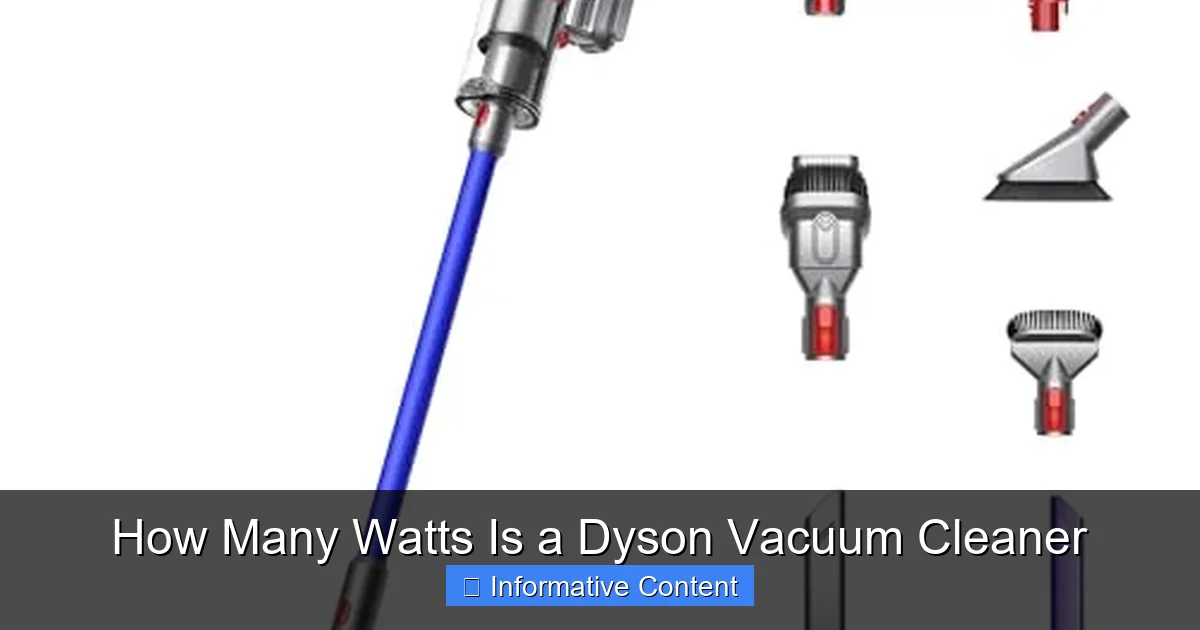
Visual guide about How Many Watts Is a Dyson Vacuum Cleaner
Image source: m.media-amazon.com
The V-Series Evolution
Dyson’s popular V-series cordless vacuums – from the V7 and V8 to the V10, V11, and V12 Detect Slim – generally operate in a wattage range that might surprise you. These models typically draw anywhere from 200 to 450 watts when running at their highest power settings. For example, a Dyson V11 might be rated around 545 watts max, while a V15 Detect can go up to 660 watts. This wattage figure reflects the power needed to run the motor and associated electronics from the battery. It’s not a direct comparison to the input wattage of a corded vacuum, which draws continuous power from an electrical outlet.
- Dyson V7/V8: Around 200-300 watts
- Dyson V10/V11: Around 300-500 watts
- Dyson V12 Detect Slim: Around 450-545 watts
- Dyson V15 Detect: Around 660 watts
These figures demonstrate how Dyson has incrementally increased power while maintaining efficiency. The true magic lies in how effectively these watts are converted into suction and airflow, thanks to those high-speed digital motors and cyclonic technology that prevents loss of suction.
Gen5Detect: The Latest Powerhouse
The Dyson Gen5Detect, their latest flagship cordless model, pushes the boundaries even further. With its advanced Hyperdymium motor, it’s designed to deliver the most powerful suction of any Dyson cordless vacuum. While exact maximum wattage figures can vary slightly by region and specific model iteration, the Gen5Detect operates in a similar, albeit on the higher end, range to the V15, often around 750 watts at peak performance. This wattage is astonishingly low when you consider its ability to capture microscopic dust and allergens, rivaling many corded machines in terms of sheer cleaning efficacy.
Battery Life and Power Modes
It’s also worth remembering that cordless Dyson vacuums often have multiple power modes (e.g., Eco, Auto, Boost). The wattage consumption will be highest in “Boost” or “Max” mode, providing intense suction but for a shorter run time. In “Eco” or “Auto” mode, the wattage (and thus battery drain) is lower, extending the cleaning duration. This flexibility means you’re only using the necessary power, optimizing energy use for different cleaning tasks.
Dyson Corded Vacuums: The Classic Powerhouses
While cordless vacuums have captured much of the spotlight, Dyson still offers a range of powerful corded upright and canister vacuums. These models, free from battery limitations, typically feature higher wattage ratings because they can draw continuous, unrestricted power directly from your wall socket. When you ask “how many watts is a Dyson vacuum cleaner” in reference to a corded model, you’re looking at different numbers.
Dyson Ball and Cinetic Models
Older Dyson corded uprights, such as the various Dyson Ball Animal models or the Dyson Cinetic Big Ball, often had wattage ratings ranging from 1200 to 1600 watts. These higher numbers indicate a robust motor designed for sustained, heavy-duty cleaning over large areas. For instance:
- Dyson Ball Animal 2: Often rated around 1400 watts
- Dyson Cinetic Big Ball Animal + Allergy: Can be around 1600 watts
These machines are built for maximum power and no fade suction, making them ideal for homes with extensive carpeting, multiple pets, or those who simply prefer the unwavering performance that only a corded machine can provide. The higher wattage allows these vacuums to maintain powerful suction consistently throughout an entire cleaning session, without worrying about battery drain.
Why Corded Still Has Its Place
Despite the undeniable convenience of cordless vacuums, corded Dysons still hold a significant appeal for many users. The higher wattage ensures that they can power through stubborn dirt, deep-seated pet hair, and large debris without any drop in performance. They are often preferred for whole-house deep cleans, especially in larger homes where battery life would be a limiting factor. The continuous power supply means you never have to pause cleaning to recharge, offering a different kind of freedom than cordless models.
Decoding Dyson’s Efficiency and Energy Consumption
It’s clear that understanding how many watts is a Dyson vacuum cleaner involves more than just a single number. It’s about efficiency, motor technology, and the specific application (corded vs. cordless). But what does all this mean for your energy bill and the environment?
Beyond the Numbers: Real-World Efficiency
Dyson’s focus on digital motors and optimized airflow isn’t just about raw cleaning power; it’s also about energy efficiency. A vacuum that cleans effectively with fewer watts per Air Watt is a more efficient machine. While a corded Dyson might draw 1400 watts, it’s often more efficient at converting those watts into useful cleaning power than a less engineered, high-wattage generic vacuum. This means it might get the job done faster and more thoroughly, potentially reducing the total time it needs to run, which in turn saves energy.
For cordless models, the energy efficiency is even more pronounced. Operating at 200-750 watts, they consume significantly less power than their corded counterparts. While they need to be recharged, the charging process itself doesn’t consume an exorbitant amount of electricity. A full charge for a cordless Dyson might only add a few cents to your electricity bill, far less than the cost of running a high-wattage corded vacuum for an extended period.
Eco-Friendly Cleaning
Many modern Dyson vacuums are designed with energy labels and efficiency ratings, adhering to international standards that encourage lower energy consumption. By choosing a highly efficient Dyson, you’re not only getting a powerful cleaning tool but also making a more environmentally conscious choice. Less energy consumption translates to a smaller carbon footprint, which is a win for both your wallet and the planet.
Choosing the Right Dyson for Your Needs: Watts and Beyond
So, after all this, you might still be wondering, “how many watts is a Dyson vacuum cleaner that’s right for me?” The answer isn’t about finding the highest or lowest wattage, but about matching the vacuum’s capabilities to your specific home and cleaning habits.
Factors to Consider
Here are some practical considerations that go beyond just the wattage number:
- Home Size: For smaller apartments or quick touch-ups, a lower-wattage cordless Dyson (like a V10 or V12) is perfect. For larger homes with extensive carpeting, a higher-wattage corded model (like a Dyson Ball Animal) might be more suitable for deep cleaning.
- Floor Types: All Dysons are generally excellent on various floor types, but for very thick carpets or deep-pile rugs, the sustained power of a corded, higher-wattage model can be beneficial.
- Pet Hair: Dyson excels at pet hair removal across its range. High Air Watt performance, regardless of electrical wattage, is key here, often found in both cordless (V15, Gen5Detect) and corded (Ball Animal) models.
- Battery Life: If you opt for a cordless model, consider the typical run time on your preferred power setting. If you need to clean your whole house in one go, ensure the battery life is sufficient or consider a corded model.
- Weight and Maneuverability: Cordless Dysons are significantly lighter and easier to maneuver, making them ideal for quick cleans and multi-story homes. Corded models are heavier but offer powerful, sustained performance.
Don’t Obsess Over Watts Alone
The key takeaway is this: when you ask how many watts is a Dyson vacuum cleaner, remember that it’s a piece of the puzzle, not the whole picture. Dyson has revolutionized vacuum technology by showing that raw power isn’t the sole determinant of cleaning effectiveness. Their focus on highly efficient digital motors, advanced cyclonic separation, and optimized airflow means they can achieve incredible cleaning results with wattage figures that might seem modest compared to older, less efficient machines. Instead of just watts, look at Air Watts, motor type, battery performance, and the specific features of each model to make an informed decision.
Conclusion
In conclusion, the question of “how many watts is a Dyson vacuum cleaner” opens up a fascinating discussion about modern appliance engineering. We’ve seen that Dyson’s cordless vacuums typically operate between 200-750 watts, while their robust corded models can range from 1000-1600 watts. However, the raw wattage figure is less important than what Dyson does with those watts.
Through their pioneering digital motors, advanced cyclonic technology, and commitment to efficiency, Dyson ensures that every watt drawn is put to maximum use, delivering exceptional suction power and superior cleaning performance. So, when you’re considering a Dyson, shift your focus from merely electrical watts to the holistic picture of power, efficiency, and innovative design. Choose the model that best fits your lifestyle and cleaning demands, confident that regardless of its specific wattage, a Dyson vacuum cleaner is engineered to keep your home spotlessly clean, efficiently and effectively.
Frequently Asked Questions
How does Dyson achieve high suction with relatively low wattage in cordless models?
Dyson achieves high suction with lower wattage in cordless models primarily through its patented digital motors, such as the Hyperdymium motor. These motors spin at incredibly high speeds (up to 125,000 rpm), creating powerful airflow and suction while being remarkably energy-efficient and lightweight. This allows them to maximize performance from battery power.
Should I prioritize wattage or Air Watts when buying a Dyson?
You should prioritize Air Watts when evaluating a Dyson’s cleaning performance. While wattage indicates electrical consumption, Air Watts directly measure the vacuum’s effective suction and airflow at the cleaning head, providing a much clearer picture of how well it will actually pick up dirt and debris.
Do Dyson vacuums consume a lot of electricity and impact my energy bill?
No, Dyson vacuums are generally quite energy efficient. While corded models consume more power when running, their efficiency often means faster cleaning times. Cordless models consume significantly less electricity overall, and the cost of charging their batteries is negligible, typically adding only a few cents to your monthly energy bill.
Why do some Dyson models have varying wattages, even within the same series?
Wattage can vary within the same Dyson series or across different models due to factors like motor evolution, battery size, and specific features. Newer, more powerful motors often increase efficiency to deliver more suction per watt, while different battery configurations or additional functionalities (like LCD screens) can also influence the overall electrical draw.
Is there a Dyson vacuum cleaner that doesn’t use any watts?
No, all Dyson vacuum cleaners require electrical power to operate their motors and other components, meaning they all consume a certain amount of watts. Even cordless models consume watts from their battery, which in turn needs to be charged using household electricity.
How does Dyson’s cyclonic technology relate to wattage and suction?
Dyson’s cyclonic technology works in tandem with its powerful motors to separate dust and debris from the airflow without losing suction. This means the motor, regardless of its wattage, can maintain consistent high performance because the filters don’t clog as quickly, ensuring that the Air Watts remain high throughout the cleaning process.