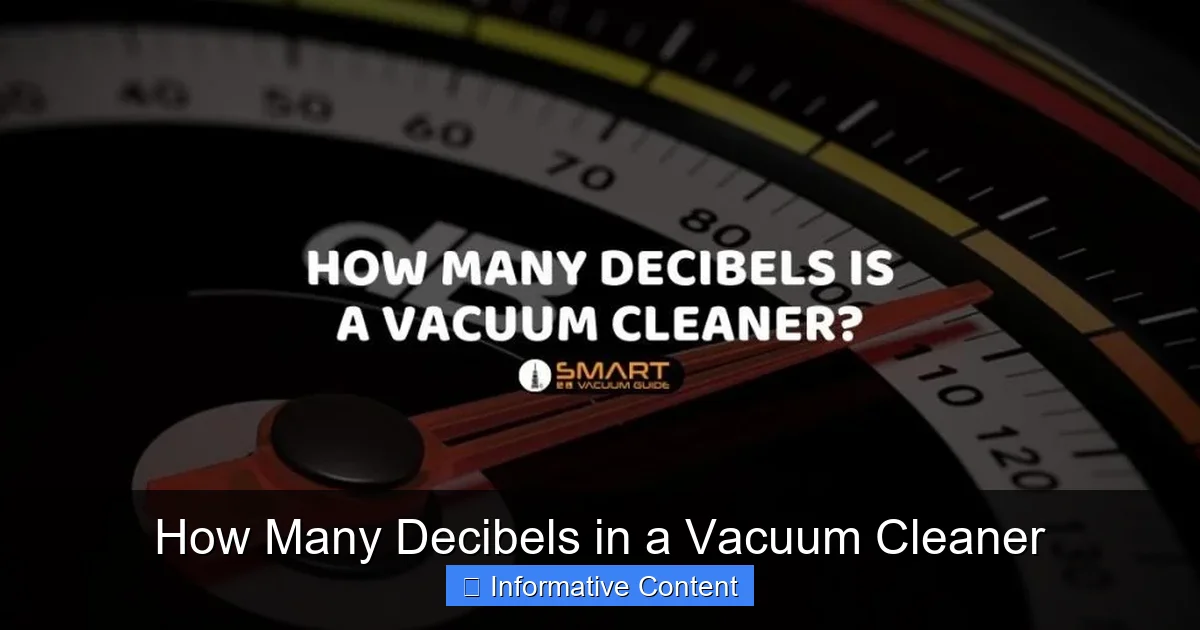
How Many Decibels in a Vacuum Cleaner
Vacuum cleaners typically operate between 60 to 80 decibels (dB), with some older or less efficient models reaching 85 dB or higher. Understanding these noise levels is crucial because prolonged exposure to sounds above 70 dB can lead to hearing fatigue or even permanent damage over time. This article explores factors influencing vacuum noise, health impacts, and practical tips for choosing a quieter model and protecting your hearing.
Do you ever find yourself bracing for impact, or perhaps just the sheer auditory assault, when it’s time to pull out the vacuum cleaner? You’re not alone. That distinct roar, whine, or rumble is a universal experience, and it often leaves us wondering: *just how loud is this thing, anyway?* It’s a question that goes beyond mere annoyance; it touches on comfort, well-being, and even long-term hearing health.
In a world where quiet is often a luxury, the noise produced by our everyday appliances can be a significant disruptor. Vacuum cleaners, in particular, are known for their sound output. But what does “loud” really mean in measurable terms? And what are the implications of all that noise? We’re going to dive deep into the world of decibels to answer these questions and help you understand exactly how many decibels in a vacuum cleaner, what that means for you, and how you can make more informed choices for a quieter home.
This comprehensive guide will explore the typical decibel range of vacuum cleaners, the factors that make some models louder than others, the potential impact on your hearing and overall comfort, and practical tips for choosing and using a quieter machine. By the end, you’ll be well-equipped to tackle dust bunnies without the accompanying sonic boom!
Key Takeaways
- Average Noise Levels: Most vacuum cleaners operate in the range of 60 to 80 decibels (dB), comparable to a normal conversation or heavy traffic.
- Hearing Health Risks: Continuous exposure to sounds above 70 dB can cause hearing fatigue, while levels above 85 dB risk permanent hearing damage over time. Older or powerful vacuums can exceed this threshold.
- Factors Affecting Noise: Motor power, design (airflow, insulation), filtration systems, attachments, and the type of surface being cleaned all influence a vacuum’s decibel output.
- Quieter Options Exist: Manufacturers are actively designing quieter models through improved motor technology, sound dampening materials, and optimized airflow, often achieving levels below 65 dB.
- Impact Beyond Hearing: High vacuum noise can cause stress, disrupt concentration, annoy pets, and be particularly problematic for individuals working from home or with young children.
- Smart Shopping and Usage: Look for decibel ratings on product specifications, read reviews, and consider using ear protection or vacuuming during optimal times to mitigate noise exposure.
Quick Answers to Common Questions
What is the average decibel level of a vacuum cleaner?
The average decibel level of a vacuum cleaner typically ranges from 60 dB to 80 dB, comparable to a normal conversation to heavy city traffic.
Is 70 dB too loud for a vacuum cleaner?
While 70 dB is not immediately damaging, prolonged or regular exposure to sounds at or above this level can lead to hearing fatigue and discomfort over time.
Do robot vacuums make less noise than upright vacuums?
Yes, robot vacuums generally make less noise than upright vacuums. They typically operate in the 55-70 dB range, thanks to smaller motors and less powerful suction designed for everyday light cleaning.
What makes a vacuum cleaner noisy?
Several factors contribute to a vacuum cleaner’s noise, including the motor’s power and design, the efficiency of its airflow path, the type of vacuum, its filtration system, and its overall age and maintenance condition.
Can vacuum cleaner noise damage my hearing?
Yes, prolonged or frequent exposure to high vacuum cleaner noise, especially if it’s consistently above 80-85 dB, can potentially lead to noise-induced hearing loss or tinnitus over time.
📑 Table of Contents
Understanding Decibels: The Language of Sound
Before we can talk about how many decibels in a vacuum cleaner, it’s helpful to understand what a decibel actually is. Think of it as the universal language for measuring sound intensity.
What is a Decibel?
A decibel (dB) is a unit used to measure the intensity or loudness of a sound. It’s not a linear scale like inches or pounds; instead, it’s a logarithmic scale. This means that a small increase in decibels represents a much larger increase in sound energy. For example, a sound that is 10 dB louder than another is perceived as twice as loud, but it actually has ten times the sound energy. A 20 dB increase means 100 times the energy! This logarithmic nature is why even a seemingly small increase in decibel levels can make a noticeable difference to your ears.
How Loud is Too Loud?
Our ears are incredibly sensitive instruments, but they also have their limits. The World Health Organization (WHO) and various health bodies provide guidelines on safe noise exposure levels. Here’s a quick rundown of common sounds and their typical decibel levels to give you some context:
- 0 dB: The threshold of human hearing (the quietest sound we can hear).
- 30 dB: A whisper, a quiet library.
- 60 dB: Normal conversation, a quiet office.
- 70 dB: A busy street, a ringing telephone. This is generally considered the threshold where prolonged exposure can start to cause hearing fatigue.
- 80-85 dB: Heavy city traffic, a noisy restaurant, a garbage disposal. Continuous exposure at this level for 8 hours can lead to permanent hearing damage.
- 100 dB: A motorcycle, a jackhammer. Even brief exposure without protection can be harmful.
- 120 dB: A rock concert, an ambulance siren. Painful and immediate risk of damage.
Knowing these benchmarks helps us put the noise level of our vacuum cleaners into perspective. When you consider how many decibels in a vacuum cleaner, remember that sustained exposure, even at moderate levels, can have an impact.
The Decibel Range of Vacuum Cleaners
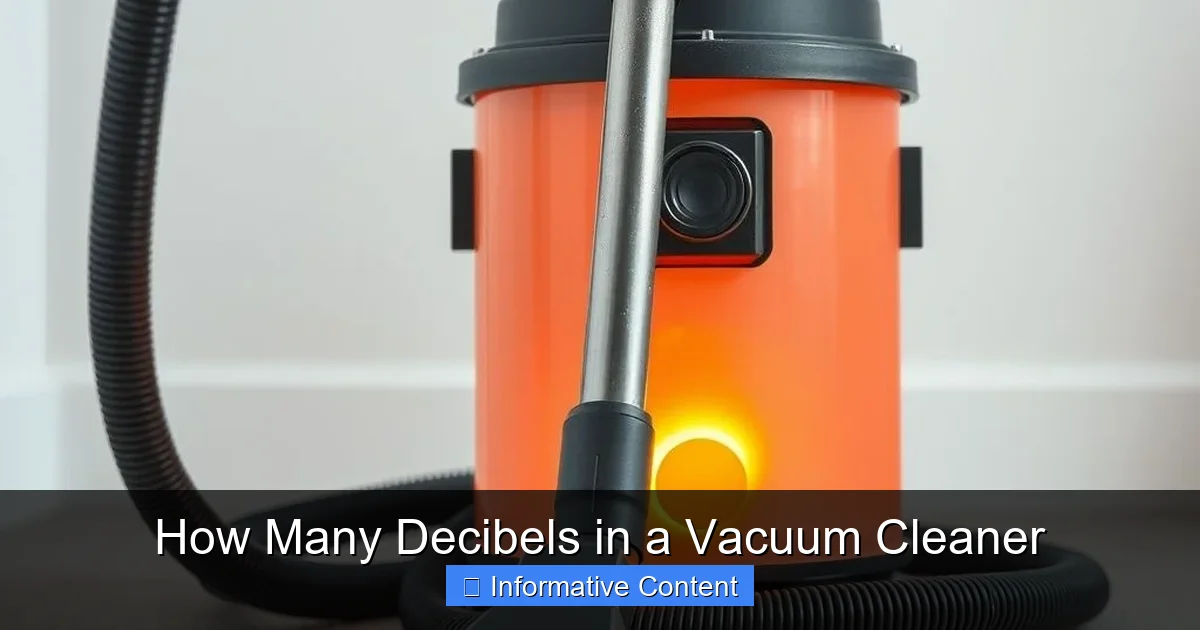
Visual guide about How Many Decibels in a Vacuum Cleaner
Image source: image.pollinations.ai
Now for the main event: just how many decibels in a vacuum cleaner? The answer isn’t a single number, but rather a range that depends heavily on the type, age, and design of the machine.
Average Vacuum Cleaner Noise Levels
Most household vacuum cleaners operate in a decibel range of approximately 60 dB to 80 dB. To put that into perspective:
- A vacuum at 60 dB is comparable to a normal conversation or a quiet air conditioner.
- A vacuum at 70 dB is closer to a washing machine or a busy street.
- A vacuum at 80 dB is similar to heavy city traffic or a garbage disposal.
Older, more powerful, or less efficiently designed models can easily exceed 80 dB, sometimes reaching 85 dB or even higher. On the flip side, some modern “quiet” models boast noise levels as low as 55-60 dB.
Factors Influencing Vacuum Noise
Several key elements contribute to how many decibels in a vacuum cleaner:
- Motor Power and Design: The motor is the heart of the vacuum, and its rotational speed and efficiency directly affect noise. Older, less refined motors often produce more vibration and airflow turbulence, leading to higher decibel levels. Modern motors are often insulated or designed for smoother operation.
- Airflow Path: The way air moves through the vacuum — from the intake nozzle, through the hose and filter, and out the exhaust — plays a huge role. Restricted or turbulent airflow creates whistling, rushing, and humming sounds. Manufacturers optimize these paths for smoother, quieter operation.
- Vacuum Type:
- Upright Vacuums: Often louder due to the motor being closer to the user and sometimes less internal sound dampening.
- Canister Vacuums: Can be quieter as the motor unit is on the floor, separate from the cleaning head, allowing for more insulation.
- Stick Vacuums: Vary widely. Compact designs can sometimes make them noisy, but newer models are focusing on quiet operation.
- Robot Vacuums: Generally the quietest, as their motors are smaller and less powerful, designed for daily light cleaning rather than deep cleaning. Many operate around 50-70 dB.
- Filtration System: High-efficiency particulate air (HEPA) filters, while great for trapping allergens, can sometimes restrict airflow slightly, leading to increased motor strain and noise.
- Attachments and Floor Type: Using a powerful brush roll on hard floors can be noisier than on carpet. Similarly, certain attachments might create more airflow noise.
- Age and Maintenance: An older vacuum with worn bearings, a clogged filter, or a cracked hose will almost certainly be louder than a well-maintained, newer model.
Comparing Types: Uprights, Canisters, Stick, Robot Vacuums
When considering how many decibels in a vacuum cleaner you might encounter, the type of vacuum matters.
Upright vacuums, particularly older or more powerful ones, tend to be on the higher end, often 75-85 dB. Canister vacuums often have the potential for lower noise, with some models dropping into the 65-75 dB range. Stick vacuums are a mixed bag; some budget models can be quite noisy, while premium ones might be surprisingly quiet, around 60-70 dB. Robot vacuums are generally the undisputed champions of quiet operation, typically ranging from 55-70 dB, making them ideal for homes where noise is a major concern.
The Impact of Vacuum Cleaner Noise on Your Health and Well-being
It’s not just about the numbers; it’s about what those numbers mean for your ears, your stress levels, and your general peace of mind. The decibel levels produced by vacuum cleaners can have significant effects.
Hearing Damage and Long-Term Exposure
As mentioned earlier, sustained exposure to noise levels above 70 dB can lead to hearing fatigue. When you consider how many decibels in a vacuum cleaner, often ranging between 60-80 dB, regular use can accumulate. Prolonged exposure to levels at or above 85 dB drastically increases the risk of permanent hearing damage, including noise-induced hearing loss (NIHL) and tinnitus (a persistent ringing or buzzing in the ears). If you vacuum for extended periods, several times a week, with a louder machine, you are putting your hearing at risk. This is especially true for professional cleaners who might use industrial-strength vacuums.
Beyond Hearing: Stress, Annoyance, and Concentration
The impact of a noisy vacuum extends beyond just your hearing. Constant, intrusive noise can contribute to:
- Increased Stress Levels: The sudden burst of noise can elevate cortisol levels, leading to feelings of stress and anxiety.
- Annoyance and Irritability: It’s simply unpleasant to be around, making household chores feel more like a burden.
- Disrupted Concentration: If you’re working from home, trying to read, or engage in a conversation, a loud vacuum will make it nearly impossible to focus.
- Sleep Disruption: While you’re not vacuuming in your sleep, the residual stress from loud noises during the day can affect sleep quality.
Special Considerations: Babies, Pets, and Working from Home
The noise from a vacuum cleaner affects everyone differently.
* Babies and Young Children: Their developing ears are more sensitive, and loud noises can be distressing or even harmful. A screaming vacuum can easily wake a napping baby or make playtime uncomfortable.
* Pets: Dogs and cats often react strongly to vacuum cleaners, seeing them as a threat. The high decibel levels can cause anxiety, fear, and even aggression in some animals. Many pets will hide or become agitated during vacuuming.
* Working from Home: The rise of remote work means many people are trying to maintain a productive environment at home. A noisy vacuum can bring a halt to virtual meetings or deep work sessions, making it challenging to balance chores with professional responsibilities. Understanding how many decibels in a vacuum cleaner can help you choose a model that doesn’t constantly interrupt your workflow.
How Manufacturers Are Tackling the Noise Problem
Recognizing the widespread concern about noise, many vacuum cleaner manufacturers are making significant strides in producing quieter models. It’s a key selling point for many consumers today.
Design Innovations for Quieter Operation
The quest for a quieter vacuum cleaner involves sophisticated engineering:
- Improved Motor Technology: Modern motors are often brushless, more precisely balanced, and encased in sound-dampening materials to reduce vibration and overall noise output.
- Optimized Airflow Paths: Engineers design smoother, wider air channels with fewer sharp turns to minimize turbulence, which is a major source of whooshing and whistling noises.
- Sound-Absorbing Materials: Internal components are often lined with foam or other acoustic materials to absorb sound waves before they escape the machine.
- Anti-Vibration Mounts: Motors and other moving parts are mounted on special dampeners to prevent vibrations from resonating through the vacuum’s casing.
- Sealed Systems: Better sealing of components not only improves suction but also prevents noise leakage.
The “Silent” Vacuum Myth and Reality
While some manufacturers market “silent” vacuums, it’s important to understand that a truly silent vacuum cleaner is a myth. Any machine that uses a motor to generate powerful airflow will produce some level of noise. The goal is to reduce that noise to a tolerable and safe level. A vacuum operating at 55-60 dB might be marketed as “silent” because it’s dramatically quieter than a typical 75-80 dB machine, but it’s not literally soundless. The focus is on *perceived* quietness and making the noise less grating and intrusive.
Decibel Ratings and Certifications
When shopping for a new vacuum, pay attention to the decibel rating, if available. Many brands are now proudly displaying these figures on their product specifications. Look for models explicitly advertised as “low noise” or “quiet.” Some may even have specific certifications from noise abatement organizations. Comparing how many decibels in a vacuum cleaner across different models is one of the most direct ways to choose a quieter option. Always check independent reviews as well, as user experiences can sometimes provide additional real-world insight.
Tips for a Quieter Vacuuming Experience
Even if you already own a vacuum, or if you’re in the market for a new one, there are steps you can take to make your cleaning routine less jarring.
Choosing a Low-Decibel Vacuum
If quiet operation is a priority, keep these tips in mind when shopping:
- Check Decibel Specifications: This is your primary tool. Aim for models in the 60-65 dB range or lower.
- Read Reviews: Look for user comments specifically mentioning noise levels. Real-world experiences are invaluable.
- Consider Vacuum Type: Robot and canister vacuums generally offer quieter options.
- Look for Features: Search for terms like “quiet motor,” “sound dampening,” or “acoustic design.”
- Test in-Store (if possible): While not always practical, if you can briefly turn on a demo model in a store, it can give you a rough idea of its sound.
Practical Steps to Reduce Noise
Even with a louder vacuum, you can mitigate the impact:
- Regular Maintenance: A well-maintained vacuum is a quieter vacuum. Clean or replace filters regularly to ensure optimal airflow. Clear blockages from the hose or brush roll. Lubricate any squeaky wheels or moving parts (if appropriate for your model).
- Use the Correct Settings: Many vacuums have variable power settings. Use a lower power setting for lighter cleaning tasks, which will often result in less noise.
- Wear Ear Protection: If you have an older, very loud vacuum (80 dB or more) and use it for long periods, consider wearing earplugs or noise-canceling headphones. This is a simple and effective way to protect your hearing.
- Vacuum During Optimal Times: If possible, vacuum when others are out of the house, or when babies are awake and playing, not napping. This minimizes disruption to others.
- Use Attachments Wisely: Some attachments might be louder than others. Experiment to find the quietest way to clean different surfaces.
- Address Rattles: If your vacuum rattles, check for loose parts or accessories that might be vibrating against the main body. A bit of foam tape or tightening a screw can sometimes help.
Alternative Cleaning Methods
For very light tasks, or if you simply need a break from the noise, consider these alternatives:
- Brooms and Dustpans: For quick clean-ups on hard floors.
- Dust Mops/Swiffers: Great for picking up dust and pet hair on hard surfaces without any noise.
- Handheld Dusters: For furniture and delicate items.
- Small Handheld Vacuums: While still producing noise, some cordless handhelds are quieter than full-sized uprights for spot cleaning.
Ultimately, understanding how many decibels in a vacuum cleaner and taking proactive steps can transform your cleaning routine from a noisy chore into a more manageable and comfortable task.
Conclusion
The question of “how many decibels in a vacuum cleaner” is more important than you might initially think. From protecting your hearing to simply enjoying a more peaceful home environment, the noise output of your vacuum has a tangible impact. We’ve explored that most vacuums hover between 60 and 80 decibels, with significant variations depending on the model and type. We’ve also seen how factors like motor design, airflow, and even simple maintenance play a crucial role in these noise levels.
Remember, prolonged exposure to sounds above 70 dB can lead to discomfort, and anything consistently above 85 dB poses a serious risk to your long-term hearing health. The good news is that manufacturers are actively innovating, offering quieter models that prioritize both cleaning power and acoustic comfort. By being an informed consumer, looking for decibel ratings, and practicing smart vacuuming habits, you can significantly reduce the noise pollution in your home. Choose wisely, vacuum safely, and enjoy a cleaner, quieter living space.
Frequently Asked Questions
How many decibels in a vacuum cleaner makes it considered “quiet”?
A vacuum cleaner is generally considered “quiet” if its decibel rating is 65 dB or below. Many newer models are designed to operate in the 55-60 dB range, which is significantly more comfortable than traditional louder vacuums.
Why do some vacuum cleaners sound like jet engines?
The “jet engine” sound usually comes from a combination of a powerful motor operating at high RPMs, coupled with turbulent or restricted airflow within the machine. Older designs may lack sufficient sound dampening or have less optimized air paths, amplifying the noise.
Are more powerful vacuums always louder?
Not necessarily. While higher suction power often correlates with a larger motor and thus potential for more noise, modern engineering allows manufacturers to build powerful vacuums with advanced sound dampening and optimized airflow, resulting in quieter operation despite strong performance.
How can I find out the decibel level of a vacuum cleaner before buying?
The best way is to check the product specifications provided by the manufacturer or retailer. Many brands now prominently display the decibel rating, especially for models marketed as “quiet.” Reading independent reviews can also offer real-world insights into noise levels.
Can earplugs help reduce vacuum cleaner noise?
Yes, wearing earplugs or noise-canceling headphones is a very effective way to protect your hearing if you have a particularly loud vacuum cleaner (e.g., above 80 dB) or if you vacuum for extended periods. It significantly reduces your exposure to harmful decibel levels.
Does a clogged vacuum filter increase noise?
Yes, a clogged filter can absolutely increase vacuum noise. A clogged filter restricts airflow, forcing the motor to work harder and strain more to maintain suction, which often results in a louder, more labored sound from the machine.