How Many Cfm Is a Vacuum Cleaner
Understanding how many CFM is a vacuum cleaner is key to choosing the right cleaning power for your home. While CFM measures airflow and is crucial for picking up light debris, it’s just one part of the suction puzzle; Air Watts, brush roll design, and filtration also play vital roles. Don’t just chase high CFM numbers, but consider your specific cleaning needs for optimal performance.
Have you ever found yourself staring at a vacuum cleaner’s specifications, feeling a bit overwhelmed by terms like “CFM,” “Air Watts,” and “static pressure”? You’re not alone! Many of us just want a vacuum that cleans well, and figuring out what those numbers mean can feel like deciphering a secret code. But understanding these specs, especially “how many CFM is a vacuum cleaner,” can genuinely help you make a smarter choice for your home.
Think of it this way: choosing the right vacuum is like choosing the right tool for a job. You wouldn’t use a tiny screwdriver for a large bolt, would you? Similarly, a vacuum with insufficient power for your specific needs will leave you frustrated. Our goal today is to demystify one of the most common and important metrics – CFM – so you can confidently pick a cleaning companion that truly performs.
So, let’s dive in and explore what CFM really means, how it relates to overall suction, and how different types of vacuum cleaners stack up. By the end of this, you’ll not only know how many CFM is a vacuum cleaner, but you’ll also understand why it matters, and what other factors contribute to that satisfyingly clean feeling underfoot.
Key Takeaways
- CFM Measures Airflow: Cubic Feet per Minute (CFM) quantifies the volume of air a vacuum can move, which is critical for picking up light debris like dust and pet hair.
- Air Watts Measures Overall Suction Power: Air Watts is often a more comprehensive metric as it combines both airflow (CFM) and static pressure, indicating the vacuum’s ability to lift heavier or embedded dirt.
- Residential Vacuum CFM Varies Widely: Standard home vacuum cleaners typically range from 50 to 100 CFM, with stick vacuums often on the lower end and powerful uprights or canisters on the higher end.
- Shop Vacs Offer Much Higher CFM: Industrial or shop vacuums designed for heavy-duty tasks can boast CFM ratings well over 100, sometimes reaching 200 or more, due to their powerful motors and wider hoses.
- Higher CFM Isn’t Always the Only Answer: While important for efficient cleaning, CFM alone doesn’t guarantee superior performance. Factors like brush roll effectiveness, filtration, and hose design also significantly impact how well a vacuum cleans.
- Match CFM to Your Needs: For mostly hard floors and light debris, a moderate CFM might suffice. For deep carpets and heavier dirt, a balance of good CFM and high static pressure (reflected in Air Watts) combined with strong agitation is more effective.
- Consider Other Features: When choosing a vacuum, look beyond just CFM. Evaluate its filtration system, attachments, maneuverability, and overall build quality to find the best fit for your specific cleaning challenges.
Quick Answers to Common Questions
What is CFM in vacuums?
CFM stands for Cubic Feet per Minute and measures the volume of air a vacuum cleaner can move in one minute, indicating its airflow capacity.
What’s a good CFM for a home vacuum?
For most residential needs, a CFM of 60-100 is generally considered good, providing effective cleaning for both hard floors and carpets. Stick vacuums might be lower, while powerful uprights can be higher.
Is higher CFM always better?
Not always. While high CFM is good for moving air and picking up light debris, overall performance also depends on static pressure (lifting power), brush roll agitation, and filtration. A balanced approach is often best.
Do stick vacuums have high CFM?
Generally, stick vacuums have lower CFM ratings, often in the 30-60 range, as they prioritize lightweight design and maneuverability for quick clean-ups over raw suction power.
What’s the difference between CFM and Air Watts?
CFM measures only airflow (volume of air moved), while Air Watts is a more comprehensive metric that combines both airflow (CFM) and static pressure (the ability to lift or overcome resistance), providing a better indicator of actual cleaning power.
📑 Table of Contents
Understanding Vacuum Cleaner Suction: More Than Just “Strong”
When we talk about a vacuum cleaner’s “suction,” it’s easy to just think “strong” or “weak.” But behind that simple idea are several scientific principles and measurements. Two of the most important metrics you’ll often encounter are CFM and Air Watts. Let’s break them down.
What is CFM (Cubic Feet per Minute)?
CFM stands for Cubic Feet per Minute. In simple terms, it measures the volume of air a vacuum cleaner can move in one minute. Imagine filling a box with air; CFM tells you how many of those “boxes” (each one cubic foot in size) the vacuum can process in sixty seconds.
A higher CFM generally means the vacuum can move more air. This is incredibly important for picking up lighter debris like dust, pet hair, crumbs, and fine particles. It’s the “airflow” that carries these lightweight items from your floor into the vacuum’s collection bin. Think of it as the breath of the vacuum – how much air it can inhale quickly.
What is Air Watts?
While CFM focuses purely on airflow volume, Air Watts is a more comprehensive measurement of a vacuum cleaner’s overall cleaning power. It combines both airflow (CFM) and static pressure (the ability to lift heavier objects or overcome resistance, like the weight of dirt embedded in carpet fibers).
Static pressure refers to the force a vacuum exerts to lift things against gravity or overcome resistance. So, a vacuum might have good CFM (moving lots of air) but low static pressure (not strong enough to lift a heavy crumb). Air Watts gives you a better idea of the vacuum’s actual working power – its ability to both move air and create the necessary pull to dislodge and pick up debris. This is often considered the most practical metric for comparing a vacuum’s real-world suction performance.
The Relationship Between CFM and Air Watts
You might be wondering, “Which one should I look at?” The truth is, they work together.
A vacuum needs good CFM to efficiently pick up light, loose debris from a surface, especially hard floors. But for deep cleaning carpets, lifting embedded dirt, or sucking up heavier items, it also needs good static pressure, which contributes to a higher Air Watt rating.
Think of it like this:
- High CFM, Low Static Pressure: Excellent for sweeping large volumes of light dust quickly. Not great for deeply embedded dirt.
- Lower CFM, High Static Pressure: Good for lifting heavier debris, but might take longer to clean a large area of fine dust.
- High CFM, High Static Pressure (High Air Watts): The ideal combination for versatile and powerful cleaning across various surfaces and debris types.
So, when asking “how many CFM is a vacuum cleaner,” remember to consider Air Watts as well, especially if deep cleaning is a priority for you.
So, How Many CFM is a Vacuum Cleaner, Really?
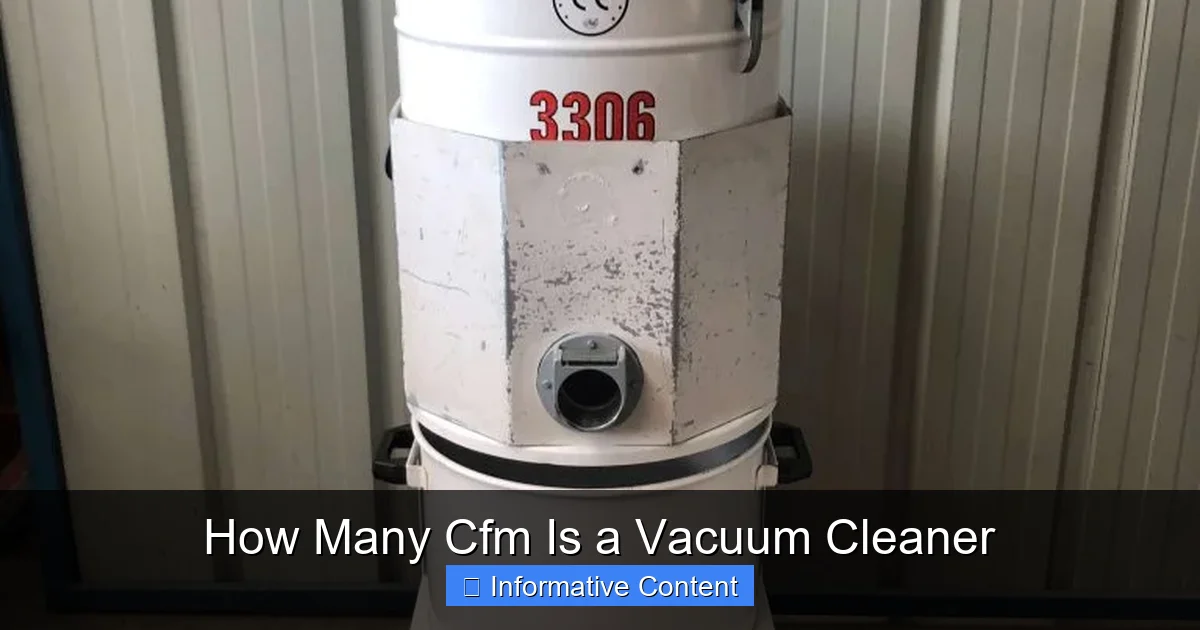
Visual guide about How Many Cfm Is a Vacuum Cleaner
Image source: osertech.eu
The CFM rating of a vacuum cleaner can vary dramatically depending on its type, intended use, and motor power. There’s no single answer to “how many CFM is a vacuum cleaner” because they are designed for different jobs.
Average CFM for Residential Vacuums (Uprights, Canisters, Sticks)
For typical household vacuum cleaners, the CFM range can be quite broad:
- Stick Vacuums: These lightweight, often cordless models are designed for quick clean-ups and hard floors. Their CFM typically falls in the range of 30-60 CFM. They prioritize maneuverability and convenience over raw power.
- Upright Vacuums: Traditional uprights, especially those designed for carpets, often have CFM ratings between 60-90 CFM. Many higher-end models can push past 100 CFM. They often balance good airflow with strong brush roll agitation.
- Canister Vacuums: Known for their versatility and strong suction, canister vacuums can range from 70-100+ CFM. Many premium canister models excel in both CFM and Air Watts, making them effective for both hard floors and carpets.
- Robotic Vacuums: While most manufacturers don’t prominently advertise CFM for robotic vacuums, their suction power is generally on the lower end, often comparable to stick vacuums, focusing more on consistent, autonomous cleaning.
These numbers are general estimates. Always check the manufacturer’s specifications for exact figures, though some brands are more transparent about CFM than others.
CFM for Shop Vacs and Industrial Cleaners
When you step into the world of shop vacuums (wet/dry vacuums) or industrial cleaners, the CFM numbers jump significantly. These machines are built for heavy-duty tasks, often dealing with construction debris, sawdust, liquids, and larger particles.
- Small to Medium Shop Vacs: You’ll typically find models with 100-150 CFM.
- Large and Industrial Shop Vacs: High-performance units can easily reach 150-200+ CFM, sometimes even exceeding 250 CFM for specialized applications.
The robust motors and wider hoses of shop vacs allow them to move a much larger volume of air and handle tougher jobs than their residential counterparts. So, if you’re asking “how many CFM is a vacuum cleaner” with an eye towards a workshop, expect much higher numbers!
Comparing Different Vacuum Types by CFM
To put it simply:
- Low CFM (30-60): Great for light, daily cleaning on hard surfaces (e.g., stick vacs, some robotic vacs).
- Medium CFM (60-100): Suitable for general household cleaning, including carpets and hard floors (e.g., most uprights and canisters).
- High CFM (100+): Excellent for deep cleaning, pet hair, and heavy-duty tasks (e.g., powerful uprights/canisters, shop vacs).
Understanding these ranges helps set expectations and guides your choice based on your typical cleaning challenges.
Why CFM Matters: Performance and Application
Knowing the CFM rating isn’t just an academic exercise; it directly impacts how well a vacuum performs in different scenarios.
Surface Type and CFM Requirements (Hardwood vs. Carpet)
The type of flooring in your home is a major factor in determining your ideal CFM needs.
- Hardwood and Tile Floors: For smooth surfaces, good CFM is crucial for efficiently sucking up dust, crumbs, and pet hair. You need enough airflow to create a strong current that pulls debris directly into the nozzle. Too little CFM, and lighter particles might just get pushed around. However, extremely high CFM isn’t always necessary, as there’s little resistance for the air to overcome.
- Carpets and Rugs: This is where it gets a bit more complex. While good CFM helps with surface debris, carpets pose more resistance. Embedded dirt, dust mites, and pet dander cling to carpet fibers. Here, a combination of high CFM, strong static pressure (contributing to Air Watts), and effective brush roll agitation is key. The brush roll loosens the debris, and then the strong airflow and suction lift it out. A vacuum with high CFM but low static pressure might struggle to pull dirt from deep within the carpet pile.
Dealing with Different Debris (Dust, Pet Hair, Larger Particles)
Consider the typical mess you’re cleaning up:
- Fine Dust and Allergens: High CFM is excellent for quickly pulling large volumes of fine dust and microscopic allergens into the filtration system. This is especially important for allergy sufferers.
- Pet Hair: Pet hair can be tricky. Lighter, detached hairs benefit from good CFM, but matted or deeply embedded pet hair on carpets requires both strong CFM and effective brush agitation to loosen and lift.
- Larger Particles (Cereal, Crumbs): While CFM plays a role, for larger, heavier particles, static pressure becomes more critical. You need the lifting power to get those items into the vacuum. A wider nozzle and hose also help prevent blockages.
Airflow vs. Static Pressure: A Crucial Balance
We’ve touched on this, but it bears repeating: a good vacuum achieves a balance between airflow (CFM) and static pressure.
Imagine trying to drink water through a straw. If the straw is too wide (high CFM), you might not get enough suction (low static pressure) to lift the water far. If the straw is too narrow (low CFM), you get great suction (high static pressure) but only a tiny amount of water.
A great vacuum offers a good “drink” – meaning it moves a good volume of air with enough force to pick up what it needs to. Many top-tier vacuums achieve this by having powerful motors designed for both high airflow and high sealed suction.
Beyond the Numbers: Other Factors Affecting Vacuum Performance
While “how many CFM is a vacuum cleaner” is a vital question, it’s not the only one. Several other design and engineering choices significantly influence a vacuum’s real-world cleaning effectiveness.
Filtration Systems (HEPA, Multi-stage)
What good is strong suction if the vacuum expels dust and allergens back into the air? A robust filtration system is essential, especially for allergy sufferers.
- HEPA Filters: These are gold standard, trapping 99.97% of airborne particles as small as 0.3 microns. A sealed HEPA system ensures that once dust is sucked in, it stays in.
- Multi-stage Filtration: Many vacuums use several layers of filtration (e.g., pre-filters, foam filters, fine dust filters) to protect the motor and capture particles effectively.
Excellent CFM combined with poor filtration means you’re just recirculating dust.
Brush Roll Design and Agitation
For carpets, the brush roll (also called the beater bar) is arguably as important as suction.
- Agitation Power: A rotating brush roll physically dislodges dirt, dust, and pet hair from carpet fibers, making it easier for the vacuum’s CFM to suck them up.
- Brush Type: Some brush rolls have stiff bristles for deep cleaning, while others have softer bristles for delicate hard floors. Look for models with adjustable brush rolls or ones that can be turned off for hard surfaces.
- Motorized vs. Air-driven: Motorized brush rolls offer consistent, powerful agitation, while air-driven ones rely on the vacuum’s airflow and can sometimes stall.
Hose Diameter and Length
Believe it or not, the physical design of the air path affects performance.
- Hose Diameter: A wider hose generally allows for higher CFM, as there’s less restriction to airflow. This is why shop vacs have noticeably wider hoses. For residential vacuums, a wider diameter can also reduce the risk of clogs, especially with larger debris.
- Hose Length: A longer hose can be convenient for reaching distant areas, but excessive length or narrow diameter can create more friction and reduce effective CFM and static pressure at the cleaning head.
Bagged vs. Bagless Systems
Both bagged and bagless vacuums have their pros and cons that can indirectly affect perceived suction.
- Bagged: Generally offer better filtration and are more hygienic for emptying. However, a full bag can restrict airflow, reducing CFM over time.
- Bagless: Convenient and cost-effective as there are no bags to buy. However, they require more frequent filter cleaning to maintain optimal airflow, and emptying can be dusty. Cyclonic technology in many bagless models helps maintain suction as the bin fills.
Choosing the Right Vacuum: Practical Tips
Now that you’re well-versed in “how many CFM is a vacuum cleaner” and other critical factors, how do you apply this knowledge to buy the right one?
Assess Your Cleaning Needs
Start by honestly evaluating your home and lifestyle:
- Flooring Types: Mostly carpet, mostly hard floors, or a mix? This dictates the need for brush rolls and suction power.
- Debris Type: Lots of pet hair? Fine dust from woodworking? Heavy crumbs?
- Allergies: Is a sealed HEPA system a must-have?
- Frequency of Cleaning: Daily touch-ups or weekly deep cleans?
- Budget: Be realistic about what you’re willing to spend.
Don’t Rely Solely on CFM
As we’ve explored, CFM is important, but it’s not the whole story. Look for Air Watt ratings where available, as they give a more holistic view of suction power. Consider the brush roll, filtration, and overall design. A vacuum with a strong brush roll and moderate CFM might outperform a high-CFM vacuum with a weak brush roll on carpets.
Read Reviews and Compare Models
Manufacturer specs are a great starting point, but real-world user reviews and independent tests can provide invaluable insights. Look for comments on:
- Suction performance: Does it pick up pet hair effectively? Does it deep clean carpets?
- Maneuverability: Is it easy to use and store?
- Maintenance: How easy is it to empty, clean filters, or untangle hair from the brush roll?
- Durability: How well does it hold up over time?
Maintenance for Optimal Suction
Finally, remember that even the best vacuum cleaner won’t perform optimally if neglected. Regular maintenance is crucial:
- Empty the bin/change the bag: A full bin or bag significantly reduces CFM and suction power.
- Clean or replace filters: Clogged filters restrict airflow and strain the motor.
- Clear brush roll tangles: Hair and debris wrapped around the brush roll hinder its effectiveness.
- Check for clogs: Hoses and attachments can get blocked, instantly killing suction.
Conclusion
Understanding “how many CFM is a vacuum cleaner” is a fantastic step towards becoming an informed consumer. You now know that CFM measures airflow, essential for picking up light debris, and that Air Watts provides a more comprehensive picture of overall suction, combining airflow with lifting power. We’ve seen how CFM varies greatly between stick vacuums, uprights, canisters, and powerful shop vacs, each designed for specific tasks.
However, remembering that CFM is just one piece of a larger puzzle is crucial. The effectiveness of a vacuum cleaner also hinges on its filtration, brush roll design, hose efficiency, and even how well it’s maintained. By considering all these factors in conjunction with your specific cleaning needs, you can move beyond just “strong” or “weak” and choose a vacuum cleaner that truly delivers a powerful, efficient, and satisfying clean for your home. Happy cleaning!
Frequently Asked Questions
How important is CFM for pet hair?
CFM is quite important for pet hair, especially for lighter, loose hairs on hard surfaces. However, for pet hair embedded deeply in carpets, a strong brush roll for agitation combined with good CFM and static pressure (reflected in Air Watts) is even more effective for thorough removal.
Does a full vacuum bag affect CFM?
Yes, a full vacuum bag significantly affects CFM. As the bag fills with dirt and debris, it creates resistance, restricting airflow and reducing the vacuum’s effective Cubic Feet per Minute, which in turn diminishes its suction power.
Can I increase my vacuum’s CFM?
While you can’t typically increase a vacuum’s inherent motor-driven CFM, you can ensure it operates at its peak by performing regular maintenance. This includes emptying the dustbin or changing the bag, cleaning or replacing filters, and clearing any clogs in the hose or brush head.
What CFM is best for hardwood floors?
For hardwood floors, a moderate CFM of around 50-80 is often sufficient, as the primary need is to effectively suck up dust, crumbs, and pet hair without much resistance. What’s more crucial is a vacuum that doesn’t scratch the floor, often with softer brush rolls or a “bare floor” mode.
Are robotic vacuums rated by CFM?
Most manufacturers of robotic vacuums don’t prominently advertise CFM ratings. Instead, they often focus on “Pa” (Pascals), which measures static pressure, or simply refer to “suction power” in general terms. Their design prioritizes automated, consistent cleaning over raw power metrics.
How does hose diameter impact CFM?
Hose diameter has a direct impact on CFM. A wider hose generally allows for a higher CFM because there is less internal resistance and more space for air to flow through efficiently. This is why powerful shop vacuums, which boast high CFM, typically feature much wider hoses compared to residential models.