How Many Amps Does a Vacuum Cleaner Use
Understanding how many amps a vacuum cleaner uses is key for household safety and efficiency. Most corded models draw between 6 to 12 amps, with heavy-duty units possibly reaching 15 amps, while cordless vacuums operate differently on battery power. Knowing your vacuum’s amperage helps prevent tripped circuit breakers and ensures you’re using appropriate extension cords, protecting your home’s electrical system.
Cleaning your home can be a chore, but it’s much easier with the right tools. Your trusty vacuum cleaner is probably one of the most used appliances in your household. But have you ever stopped to think about the invisible force making it all happen? We’re talking about electricity, specifically, how many amps does a vacuum cleaner use. It might sound like a technical detail, but understanding your vacuum’s electrical appetite is actually pretty important for your home’s safety and your cleaning efficiency.
Knowing your vacuum cleaner’s amp draw isn’t just for electricians or super-techy folks. It’s practical knowledge that can save you from a tripped circuit breaker in the middle of cleaning day. It can also help you understand why certain extension cords are better than others, and even give you a peek into how much energy your vacuum is consuming. Let’s pull back the curtain on this often-overlooked aspect of home appliances and make sense of how many amps your vacuum cleaner uses.
In this article, we’re going to dive deep into the world of vacuum cleaner amperage. We’ll explore what amps actually are, what the typical range for vacuums is, and why some models might use more or less power. We’ll also cover how to find this information on your own vacuum and, most importantly, provide tips to ensure you’re using your cleaning powerhouse safely and efficiently. By the end, you’ll be a little more electrically savvy and much better prepared to handle your vacuuming tasks without any power hiccups.
Key Takeaways
- Typical Amp Range: Most corded vacuum cleaners use between 6 to 12 amps. Heavy-duty models or those with powerful motors might draw up to 15 amps.
- Cordless Vacuums Differ: Cordless models operate on battery power and are typically rated by wattage or battery voltage/amp-hours, not direct AC amp draw from a wall outlet during operation.
- Importance of Amps: Knowing your vacuum’s amp draw helps you understand its power needs, prevents circuit overloads, and ensures compatibility with your home’s electrical circuits, which are usually 15 or 20 amps.
- Factors Affecting Amp Draw: Motor size, special features (like power nozzles or self-propulsion), and the vacuum’s overall design directly influence how many amps it uses.
- Find Amp Info on Labels: You can usually find the vacuum cleaner’s amp rating on its rating label (often on the bottom or back), in the user manual, or on the manufacturer’s website.
- Safety First: Avoid plugging multiple high-amp appliances into a single circuit. Use extension cords that are rated for the vacuum’s amperage to prevent overheating and electrical hazards.
Quick Answers to Common Questions
How many amps does an average corded vacuum cleaner use?
An average corded vacuum cleaner typically uses between 6 to 12 amps, with more powerful or heavy-duty models sometimes drawing up to 15 amps.
Does a cordless vacuum cleaner use amps from the wall outlet?
No, a cordless vacuum cleaner operates on battery power during use. It only draws a small amount of amps from the wall outlet when its battery is being charged.
Why is it important to know my vacuum cleaner’s amp rating?
It’s important for electrical safety, helping you avoid overloading circuits and tripping breakers. It also guides you in choosing the correct extension cord to prevent overheating.
Where can I find the amp rating for my vacuum cleaner?
You can usually find the amp rating on a label or sticker located on the vacuum cleaner itself (often on the back or bottom), in the user manual, or on the manufacturer’s website.
Can a vacuum cleaner trip a circuit breaker?
Yes, if the vacuum cleaner’s amp draw, combined with other appliances on the same circuit, exceeds the circuit’s maximum amp rating (typically 15 or 20 amps), it can cause the circuit breaker to trip.
📑 Table of Contents
Understanding Amps: The Basics of Electrical Power
Before we talk about how many amps a vacuum cleaner uses, let’s get a handle on what an amp actually is. Don’t worry, we’ll keep it simple! Think of electricity flowing through wires like water flowing through pipes.
What is an Amp (Ampere)?
An amp, short for ampere, is the unit used to measure electric current. In our water analogy, it’s like measuring the *volume* of water flowing past a certain point in a pipe per second. So, a higher amp rating means more electrical current is flowing. For your vacuum cleaner, a higher amp draw generally means a more powerful motor or more features are running, demanding more electricity.
Volts, Watts, and Amps: A Quick Relationship
Amps don’t work alone. They’re part of a team with volts and watts.
- Volts (V): Think of voltage as the *pressure* pushing the water through the pipes. In North America, standard household outlets typically supply 120 volts.
- Watts (W): Watts measure the total *power* being used by an appliance. This is often what you see advertised for vacuums as “suction power” or “motor power.” It’s like the total amount of work the water is doing.
- Amps (A): As we said, this is the *current* or flow rate.
These three are connected by a simple formula: Watts = Volts x Amps (P = V x I). This means if you know any two, you can figure out the third. So, if you know your vacuum’s wattage and the standard voltage, you can calculate how many amps it uses!
Why Amps Matter for Your Home Appliances
Understanding amps is crucial for your home’s electrical safety. Every electrical circuit in your house has a limit to how much current (amps) it can safely handle. These limits are protected by circuit breakers or fuses.
- Circuit Breakers: These are your home’s safety devices. If too much current flows through a circuit – meaning too many amps are being drawn by connected appliances – the circuit breaker “trips.” It automatically shuts off the power to prevent wires from overheating, which could cause a fire.
- Avoiding Overload: Knowing the amp draw of your vacuum helps you avoid plugging it into a circuit that’s already heavily loaded with other high-amp devices. Imagine trying to run a vacuum, a microwave, and a hair dryer all on the same circuit – that’s a recipe for a tripped breaker!
This is why knowing how many amps does a vacuum cleaner use is more than just trivia; it’s about keeping your home safe and your electricity flowing smoothly.
So, How Many Amps Does a Vacuum Cleaner Use? The Range You Can Expect
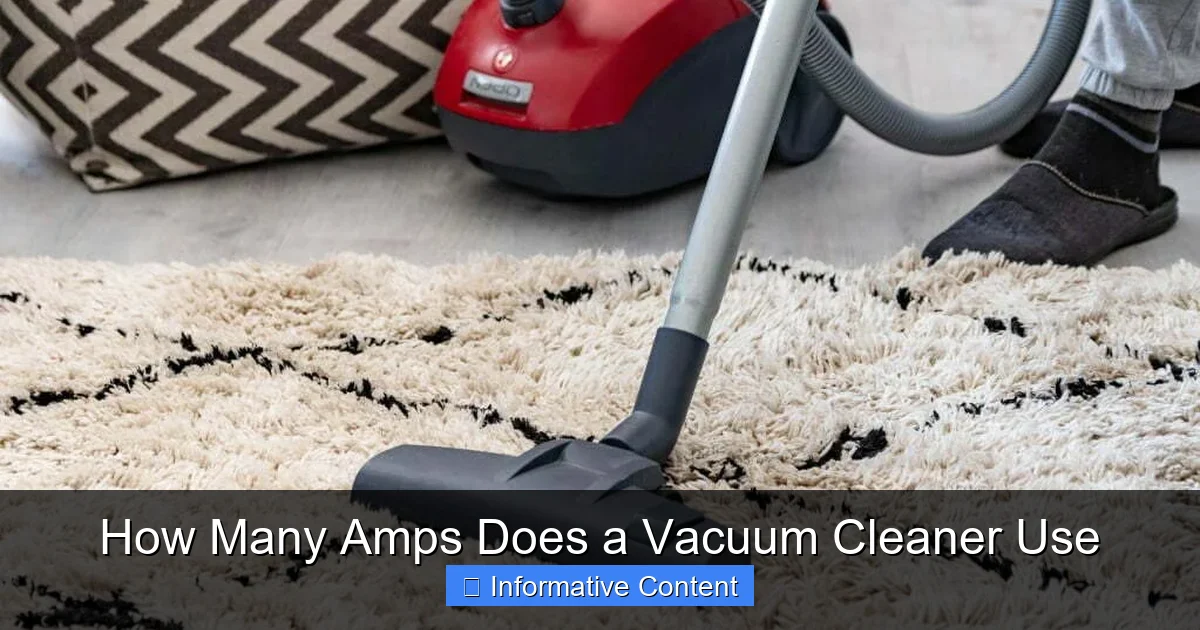
Visual guide about How Many Amps Does a Vacuum Cleaner Use
Image source: gadgetreview.com
Alright, let’s get to the heart of the matter: what’s the typical amp draw for a vacuum cleaner? The answer isn’t a single number, as it varies quite a bit depending on the type and power of the vacuum.
Corded Vacuums: The Typical Amp Draw
For most standard corded vacuum cleaners you’d find in a home, the amp draw usually falls within a predictable range.
- General Home Vacuums: Most residential corded vacuums, including uprights, canisters, and stick vacuums, typically draw between 6 to 12 amps. This covers a wide range of models, from basic to moderately powerful.
- Heavy-Duty or Commercial Models: Some more powerful vacuum cleaners, especially those designed for deep cleaning, pet hair, or light commercial use, might draw a bit more, sometimes up to 14 or 15 amps. These usually have larger, more powerful motors.
It’s important to remember that these are the *maximum* amp ratings. Your vacuum might not always be drawing its maximum amps during light cleaning.
Cordless Vacuums: A Different Power Story
Cordless vacuums are becoming incredibly popular, but they work a little differently when it comes to amps from the wall outlet.
- Battery Powered: Cordless vacuums run on rechargeable batteries, so they don’t draw amps directly from your wall outlet during operation. Instead, they draw power *from their battery*.
- Charging Amp Draw: The only time a cordless vacuum draws amps from your home’s electrical system is when its battery is charging. This charging draw is usually very low, often less than 1 amp, and isn’t typically something to worry about for circuit overloads.
- Internal Power: The internal power of a cordless vacuum is often described in terms of battery voltage (e.g., 18V, 20V, 25.2V) and sometimes in watts or air watts (which measures effective cleaning power). So, when asking how many amps does a vacuum cleaner use for a cordless model, you’re usually referring to the internal battery’s current capabilities, not what it pulls from your home’s AC power.
Factors Influencing Amp Draw
Several things can make a vacuum cleaner draw more or fewer amps:
- Motor Size and Power: This is the biggest factor. A larger, more powerful motor designed for stronger suction will naturally require more electricity, hence a higher amp draw.
- Attachments and Features: Some vacuums come with motorized brush rolls, self-propulsion features, or even specialized attachments that have their own small motors. These extra components all add to the overall amp draw.
- Vacuum Type: As noted, corded vacuums have a direct amp draw, while cordless models do not during operation. Larger upright or canister vacuums tend to have higher amp ratings than compact stick vacuums, even within the corded category.
- Condition of the Vacuum: Believe it or not, a poorly maintained vacuum can draw more amps. Clogged filters, full bags/canisters, or blockages in the hose can make the motor work harder to maintain suction, potentially increasing its amp draw.
So, when you consider how many amps does a vacuum cleaner use, keep these variations in mind. It’s rarely a one-size-fits-all answer.
Decoding Your Vacuum Cleaner’s Specifications
So, you want to know the exact amp draw for *your* vacuum cleaner? Great! Finding this information is usually pretty straightforward once you know where to look.
Where to Find Amp Information
Manufacturers are required to list the electrical specifications of their appliances for safety and consumer information.
- The Rating Label: This is the first place to check. Most vacuum cleaners have a rating label, sticker, or plate somewhere on the unit itself. It’s often found on the back, bottom, or side of the motor housing. Look for “Amps,” “A,” or “AMP” followed by a number (e.g., 10A, 12 Amps). Sometimes it might be listed as “Input Power” in watts, from which you can calculate amps (Watts / 120 Volts = Amps).
- User Manual: If you still have the owner’s manual that came with your vacuum, the electrical specifications will definitely be listed there, usually in a “Specifications” or “Technical Data” section.
- Manufacturer’s Website: A quick search on the manufacturer’s official website for your specific model number should also yield the electrical ratings. Look under product specifications or technical details.
Don’t be surprised if you see a range of numbers or just a single maximum rating. The single number is usually the maximum current the vacuum is designed to draw under normal operating conditions.
Understanding “Input Amps” vs. “Operating Amps”
Sometimes you might see terms like “input amps” or “rated amps.” These generally refer to the maximum amount of electrical current the vacuum is designed to draw when operating at full power.
- Rated Amps / Input Amps: This is the number you’ll usually find on the label. It represents the maximum current the vacuum needs to function properly and safely. This is the crucial number for ensuring you don’t overload circuits or use undersized extension cords.
- Actual Operating Amps: In reality, a vacuum cleaner might not always draw its *maximum* rated amps. For example, if you’re vacuuming a light rug on a lower setting (if applicable), or if the motor isn’t under heavy strain, it might draw slightly less current. However, always plan for the maximum rated amps to be on the safe side.
The “Peak Horsepower” Myth
You might see some vacuum cleaners advertised with “peak horsepower” (HP) ratings, especially shop vacs. While horsepower is a measure of power, it can be a bit misleading for household vacuums.
- Marketing vs. Reality: Peak horsepower often refers to the maximum power a motor can briefly generate, usually during startup, rather than sustained operational power. It doesn’t directly translate to how many amps the vacuum cleaner uses during normal cleaning, nor does it always correlate with effective cleaning performance.
- Focus on Amps/Watts: For residential vacuums, focusing on the amp rating or wattage provides a much clearer picture of its electrical draw and how it will interact with your home’s circuits. Air Watts is another useful metric that measures effective suction power at the nozzle.
So, when determining how many amps does a vacuum cleaner use, stick to the clear amp or watt ratings provided by the manufacturer.
The Impact of Amperage on Your Home’s Electrical System
Now that you know how many amps a vacuum cleaner uses, let’s talk about why this number is so important for your home’s electrical system. It’s all about safety and preventing those annoying power interruptions.
Circuit Breakers: Your Home’s Safety Net
We touched on this earlier, but it’s worth reiterating. Your home’s electrical circuits are designed to handle a certain amount of current.
- Typical Circuit Sizes: Most standard wall outlets in homes are on either 15-amp or 20-amp circuits. Your kitchen and laundry room often have 20-amp circuits for high-draw appliances, while bedrooms and living areas might have 15-amp circuits.
- How They Work: If you plug in too many appliances, or a single appliance with a very high amp draw, and the total current exceeds the circuit’s rating, the circuit breaker will trip. This immediately cuts off power to all outlets on that circuit, preventing wires from overheating and potentially causing a fire.
Imagine you have a 15-amp circuit, and you plug in a 12-amp vacuum. That leaves only 3 amps for any other device on that circuit. If you then turn on a lamp (maybe 1 amp) and a TV (maybe 1.5 amps), you’re still within limits. But if someone plugs in a 1500-watt hair dryer (around 12.5 amps) on the same circuit while the vacuum is running, you’re well over 15 amps, and *pop!* – goes the breaker.
Avoiding Overloads and Tripped Breakers
Understanding how many amps your vacuum cleaner uses can help you proactively prevent tripped breakers.
- Identify High-Draw Appliances: Know which appliances in your home are “power hogs.” Besides vacuum cleaners, common culprits include microwaves, toasters, coffee makers, hair dryers, space heaters, and air conditioners.
- Distribute the Load: When possible, avoid running multiple high-amp appliances on the same circuit simultaneously. If you’re vacuuming and need to use another power-hungry device, consider moving the vacuum to an outlet on a different circuit, if feasible.
- Learn Your Circuits: If you’re constantly tripping breakers, it might be helpful to map out which outlets are on which circuits in your home. You can do this by turning off breakers one by one and noting which outlets lose power.
Extension Cords and Amperage
Using an extension cord with your vacuum cleaner is common, but it’s crucial to use the right one.
- Gauge Matters: Extension cords are rated by “gauge,” which indicates the thickness of the wire. A lower gauge number means a thicker wire, and thicker wires can safely carry more current (more amps).
- Matching the Rating: Always use an extension cord that is rated to handle at least as many amps as your vacuum cleaner draws. For example, if your vacuum is 12 amps, use a cord rated for 12 amps or more. Using an undersized cord can cause the cord itself to overheat, melt, or even catch fire.
- Avoid Long, Thin Cords: Longer and thinner (higher gauge number) extension cords lose more voltage along their length, forcing the vacuum’s motor to work harder and potentially draw more current, leading to heat buildup. Stick to the shortest, thickest cord necessary.
Paying attention to these details will ensure your vacuum operates safely without putting undue stress on your home’s electrical system or accessories.
Tips for Efficient and Safe Vacuum Cleaner Usage
Knowing how many amps does a vacuum cleaner use is a great first step. Now, let’s put that knowledge into action with some practical tips for safe and efficient cleaning.
Know Your Circuits
As mentioned, having a basic understanding of your home’s electrical layout can save you a lot of hassle.
- Identify Breakers: Take a look at your electrical panel. Often, circuits are labeled (e.g., “Kitchen Outlets,” “Living Room Lights”). If they’re not, consider labeling them yourself.
- Test Outlets: Plug a small lamp or radio into various outlets throughout your home. Then, go to your electrical panel and flip off one breaker at a time, noting which outlets lose power. This helps you identify which outlets belong to which circuit.
This proactive step can prevent you from accidentally overloading a circuit by plugging your vacuum into an already burdened line.
Distribute Your Appliance Load
This is especially important in older homes or homes with fewer circuits.
- Avoid Concurrent High-Draw Use: If you’re vacuuming (10-15 amps) and someone else is using a hair dryer (10-15 amps) or a space heater (12-15 amps), make sure they’re on different circuits.
- Plan Your Cleaning: If you know you have limited circuit capacity, plan to vacuum when other major appliances (like the microwave or dishwasher) aren’t in active use.
By distributing the electrical load, you reduce the risk of constantly tripping breakers, making your cleaning routine much smoother.
Maintain Your Vacuum
A well-maintained vacuum cleaner not only cleans better but can also operate more efficiently, potentially keeping its amp draw closer to its intended operational level.
- Clean or Replace Filters: Clogged filters restrict airflow, forcing the vacuum’s motor to work harder to pull air through. This extra strain can make the motor draw more amps and shorten its lifespan. Regularly clean washable filters or replace disposable ones.
- Empty Dust Bin/Bag: A full dust bin or bag also restricts airflow, causing the same issues as a clogged filter. Empty it regularly!
- Clear Blockages: Hoses, brush rolls, and nozzles can get clogged with debris, pet hair, or larger items. Blockages make the motor strain, leading to reduced performance and increased energy consumption. Periodically check and clear any obstructions.
Good maintenance ensures your vacuum isn’t fighting itself, thereby optimizing its power usage and prolonging its life.
When to Upgrade or Consider a Different Vacuum
Sometimes, understanding how many amps does a vacuum cleaner use might lead you to consider a new model.
- Older, Inefficient Models: Very old vacuum cleaners might be less energy-efficient than modern ones. While amp ratings haven’t changed drastically for corded models, overall design and motor efficiency have improved.
- Specific Cleaning Needs: If you find your current vacuum is constantly tripping breakers because it’s too powerful for your older home’s wiring, or conversely, not powerful enough for your heavy-duty cleaning tasks, it might be time for a change.
- Consider Cordless: If circuit capacity is a major concern, switching to a high-performance cordless vacuum for everyday cleaning can alleviate the problem, as it won’t draw continuous AC amps during use.
Making informed decisions about your cleaning appliances contributes to both efficiency and safety in your home.
Conclusion
Understanding how many amps a vacuum cleaner uses might seem like a small detail, but it’s a vital piece of information for any homeowner. From ensuring your household circuits are safe and sound to maximizing your cleaning efficiency, a little knowledge about electrical current goes a long way. Most corded vacuums will draw between 6 to 12 amps, while powerful units can hit up to 15 amps, directly impacting your home’s circuit load.
Remember to always check your vacuum’s rating label or manual to find its specific amp draw. Use appropriately rated extension cords, maintain your vacuum by keeping filters clean and bins empty, and be mindful of other high-amp appliances running on the same circuit. By doing so, you’ll not only prevent inconvenient power outages but also ensure a safer and more effective cleaning experience every time you power up your vacuum. So go forth and clean with confidence, knowing you’re well-versed in your vacuum’s electrical demands!
Frequently Asked Questions
What is the difference between amps and watts for a vacuum cleaner?
Amps (amperes) measure the electric current flowing to the vacuum, while watts measure the total power consumed by the vacuum. You can calculate amps if you know the watts and voltage (Amps = Watts / Volts).
Do older vacuum cleaners use more amps than newer ones?
Not necessarily more amps, but older vacuum cleaners might be less energy-efficient, meaning they might use the same or similar amps but convert less of that electricity into effective suction power compared to modern, more efficient designs.
How does a clogged filter affect my vacuum’s amp usage?
A clogged filter restricts airflow, forcing the vacuum’s motor to work harder to maintain suction. This increased strain on the motor can cause it to draw more amps, potentially leading to overheating or inefficiency.
Is it safe to use an extension cord with my vacuum cleaner?
Yes, it is safe, but you must use an extension cord rated for at least the same amperage as your vacuum cleaner. Using an undersized cord (higher gauge number) can cause the cord to overheat and poses a fire hazard.
Can a vacuum cleaner with higher amps clean better?
While a higher amp rating often indicates a more powerful motor, “better cleaning” also depends on factors like suction design, brush roll effectiveness, and filtration. A higher amp rating primarily tells you about its electrical demand, not solely its cleaning prowess.
What should I do if my vacuum cleaner keeps tripping the circuit breaker?
First, check if other high-amp appliances are running on the same circuit. If so, try unplugging them or moving your vacuum to a different outlet. Also, ensure your vacuum isn’t clogged or overdue for filter cleaning, as motor strain can increase amp draw.