How Make Vacuum Cleaner
Ever wondered how make vacuum cleaner work or if you could build one yourself? This article dives into the fascinating world of vacuum cleaner mechanics, explaining the core principles of suction, airflow, and filtration. While creating a commercial-grade appliance at home is challenging, understanding how make vacuum cleaner for learning is an exciting and educational journey into engineering and physics.
Have you ever looked at a powerful machine, whirring away and sucking up dust with impressive ease, and thought to yourself, “How does that even work?” Or perhaps, with a curious glint in your eye, “Could I build one of those?” The idea of how make vacuum cleaner from scratch might seem daunting, like something only engineers in labs could accomplish. But at its heart, a vacuum cleaner is a brilliant combination of simple physics and clever design.
This article isn’t just about building a device; it’s about understanding the fascinating principles that make suction possible. We’ll explore the core components, the science behind the suck, and even outline a simplified, safe approach if you’re keen to experiment with how make vacuum cleaner concepts in your own home workshop. Think of it as a journey into the mechanics of everyday marvels, demystifying one of our most indispensable household appliances.
So, let’s roll up our sleeves and dive into the world of air pressure, motors, and filters. By the end, you’ll not only appreciate the engineering prowess behind a commercial vacuum but also gain a deeper insight into the foundational ideas that answer the question: how make vacuum cleaner actually function.
Key Takeaways
- Core Principle: A vacuum cleaner creates suction by rapidly moving air, generating a lower pressure inside the device than the outside atmosphere, which then pushes dirt into the cleaner.
- Essential Components: Key parts include a powerful motor with an impeller (fan), an airtight housing, a dust collection system (bag or cyclonic chamber), and a multi-stage filtration system.
- DIY is for Learning: Building a fully functional, safe, and efficient vacuum cleaner at home is complex due to precision engineering and safety standards. DIY projects are best approached as educational exercises to understand the principles.
- Safety First: When experimenting with any mechanical or electrical project like understanding how make vacuum cleaner, prioritize electrical safety, protect against moving parts, and ensure proper dust containment and adult supervision.
- Airflow is King: The efficiency of a vacuum cleaner heavily relies on an unobstructed, high-velocity airflow from the nozzle, through the collection system, and past the filters.
- Filtration is Crucial: Effective filtration not only keeps the motor clean but, more importantly, prevents dust and allergens from being recirculated back into the air you breathe.
Quick Answers to Common Questions
Can I build a powerful vacuum cleaner at home?
Building a powerful, safe, and efficient vacuum cleaner comparable to commercial models at home is extremely challenging due to the need for precision engineering, specialized components, and rigorous safety standards.
What is the most important part of a vacuum cleaner?
The motor and its attached impeller (fan) are arguably the most important parts, as they create the necessary airflow and pressure differential for suction.
How does a vacuum cleaner create suction?
It creates suction by rapidly spinning an impeller, which pushes air out of the machine, creating a lower pressure inside. Higher atmospheric pressure outside then pushes air and dirt into the vacuum.
Are homemade vacuum cleaners safe to use?
Homemade vacuum cleaners, especially those involving electrical components and moving parts, can be unsafe if not designed and built with extreme care, proper materials, and safety features. They are best for educational demonstrations, not daily use.
What materials are commonly used for vacuum cleaner casings?
Commercial vacuum cleaner casings are typically made from durable, lightweight plastics like ABS (Acrylonitrile Butadiene Styrene) or polypropylene, chosen for their impact resistance and moldability.
📑 Table of Contents
Understanding the Core Principles of a Vacuum Cleaner
Before we even think about how make vacuum cleaner, we need to grasp the fundamental science at play. It’s not magic; it’s physics! The core idea is to create a difference in air pressure.
The Magic of Air Pressure
Imagine blowing air out of your mouth. That’s creating higher pressure. Now, imagine sucking air in. That’s creating lower pressure. A vacuum cleaner works on this second principle. Inside the vacuum cleaner, a motor spins a fan (called an impeller) at very high speeds. This fan pushes air out through an exhaust port. As air is expelled, the pressure inside the cleaner’s housing drops. Nature hates a vacuum (or even a partial one!), so atmospheric pressure, which is higher outside the cleaner, pushes air (and any lightweight dirt, dust, or debris along with it) into the cleaner through the nozzle. It’s this pressure difference that creates the “suction” we rely on.
The Power of the Motor and Impeller
At the heart of every vacuum cleaner is an electric motor. This motor provides the power to spin the impeller. The impeller is essentially a fan with specially designed blades. As it spins, it creates a powerful airflow. The faster and more efficiently the impeller moves air, the greater the pressure differential, and thus, the stronger the suction. Understanding this relationship is crucial when you consider how make vacuum cleaner achieve their cleaning power. A robust motor and a well-designed impeller are non-negotiable for effective suction.
The Importance of Airflow and Suction
It’s a common misconception that a vacuum cleaner sucks up dirt. More accurately, it’s the *outside air pressure* that pushes the dirt into the low-pressure area created by the vacuum. For this to work efficiently, the vacuum needs excellent airflow. Any blockages in the hose, filters, or dust bin can reduce airflow, which in turn reduces suction power. A strong airflow carries the dirt and dust from the floor through the hose and into the collection system. When you consider how make vacuum cleaner effective, maintaining an open and direct path for air is paramount.
Filtration for a Clean Home
Once the air and dirt are inside the vacuum, they can’t just be blown back out! This is where filtration comes in. The dirty air passes through one or more filters. These filters trap the dust, pollen, pet dander, and other microscopic particles, allowing only clean air to exit the machine. Good filtration is not just about keeping the motor clean; it’s about protecting the air quality in your home. From basic foam filters to advanced HEPA filters, each plays a vital role in ensuring that what goes in stays in, preventing allergens from recirculating.
Essential Components for Your DIY Vacuum Cleaner
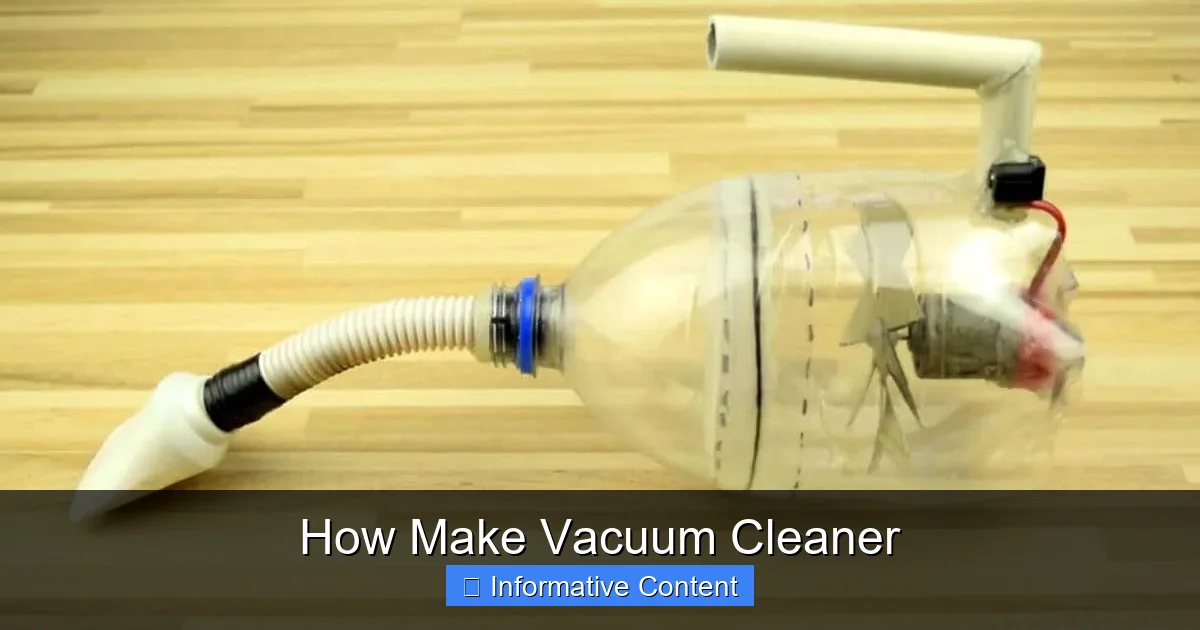
Visual guide about How Make Vacuum Cleaner
Image source: homemadebklyn.com
To illustrate how make vacuum cleaner work, let’s break down the key parts you’d need, even for a conceptual DIY project.
The Heart: Motor and Impeller
This is the absolute core. You’ll need a powerful electric motor. For a DIY project, you might repurpose a motor from an old hairdryer (though these are often not powerful enough for serious suction), a small industrial fan, or even a leaf blower motor for more robust experiments. The impeller must be securely attached to the motor shaft and housed in a way that directs airflow efficiently. Safety is paramount here; exposed spinning parts are dangerous.
The Body: Casing and Dust Bin
The casing needs to be strong and, most importantly, airtight. Any leaks will reduce the pressure differential and weaken suction. For a DIY approach, sturdy plastic containers (like an old bucket or a large plastic food container) can work. You’ll need to create openings for the intake hose, the motor exhaust, and the dust collection system. The dust bin is where the collected debris settles. It needs to be easily accessible for emptying.
The Lungs: Filtration System
A multi-stage filtration system is ideal.
- Primary Filter: This is often a coarse filter or a dust bag that traps larger debris, protecting the finer filters. For DIY, a cloth bag or a mesh screen could serve this purpose.
- Secondary Filter: This could be a foam or pleated paper filter designed to catch smaller particles. You might adapt furnace filters or even multiple layers of suitable fabric.
- Exhaust Filter (e.g., HEPA): If you want to trap very fine particles, you’d need a true HEPA filter. These are specialized and hard to replicate effectively at home, highlighting the challenge of how make vacuum cleaner perform professionally.
The Arms: Hoses and Attachments
You’ll need a flexible hose that can connect to the intake port of your vacuum. The hose needs to be durable and resistant to kinking. Various attachments (like a wide floor nozzle, a crevice tool, or a brush tool) can be made from PVC pipes, repurposed plastic bottles, or even strong cardboard for experimental use. The key is to ensure an airtight seal between the hose and the cleaner body, and between attachments and the hose.
Powering Your Creation
Most commercial vacuum cleaners run on household AC power (120V or 240V). For a DIY project, especially for experiments, you might start with low-voltage DC motors powered by batteries for safety. If using AC power, extreme caution, proper wiring, and grounding are absolutely essential. An on/off switch and a circuit breaker would be critical safety features. Understanding the electrical requirements is a huge part of how make vacuum cleaner safe and functional.
Step-by-Step Guide: How Make Vacuum Cleaner (Simplified DIY Concept)
Let’s outline a very basic, experimental setup for understanding the principles, emphasizing that this is for learning, not for creating a commercial-grade appliance.
Planning Your Project
Start with a clear goal: do you want to demonstrate suction, or actually pick up some light dust? Your materials and complexity will vary. Sketch out your design. Where will the motor go? How will air flow? Where will the dust collect? This planning stage is critical for any project related to how make vacuum cleaner.
Gathering Your Tools and Materials
You’ll need:
- A strong DC motor (e.g., from an old drone, RC car, or a dedicated hobby motor).
- A small, lightweight fan blade or impeller (can be 3D printed or repurposed).
- Two sturdy plastic containers (one for the main body, one for dust).
- Flexible hose (e.g., from an old swimming pool cleaner, dryer vent hose, or even a sturdy flexible tube).
- Filter material (e.g., non-woven fabric, foam, or a piece of an old car air filter).
- Strong adhesive/sealant (e.g., silicone caulk, hot glue).
- Basic tools: utility knife, drill, screwdriver, wire cutters, electrical tape.
- Power source: batteries (e.g., 9V or a battery pack suitable for your motor).
Assembling the Suction Unit
First, carefully attach the impeller to the motor shaft. Ensure it spins freely without hitting anything. Next, create a motor housing within one of your plastic containers. Cut an opening for the motor to vent air out (this will be your exhaust) and an opening for the intake. The motor and impeller assembly must create an airtight chamber where the pressure drops. Seal all joints around the motor mount meticulously.
Constructing the Dust Collection System
The second plastic container will serve as your dust bin. Cut an intake hole in its lid or side, where the flexible hose will connect. Inside this container, position your primary filter (e.g., a cloth bag) so that the incoming air passes through it before reaching the motor chamber. The collected dust will fall into this bin.
Integrating Filtration
After the primary filter, the air still needs to be cleaned further before it reaches the motor and then exits your DIY cleaner. You can place a secondary filter (e.g., a foam sheet cut to size) between the dust bin and the motor chamber. This protects the motor and cleans the exhaust air. Remember, the tighter the seal around these filters, the better the performance.
Testing and Refining
Once assembled, connect your power source. Listen for leaks – you might hear a hissing sound. Use your hand to feel for suction at the hose opening. Try picking up some very light debris like crumbs or lint. If suction is weak, check for:
- Air leaks in the casing or hose connections.
- A weak motor or inefficient impeller design.
- Blocked filters.
- Too much resistance in the airflow path.
Refine your seals, adjust filter placement, and ensure the impeller has a clear path to move air. This iterative process is part of learning how make vacuum cleaner concepts work in practice.
Safety First: Crucial Considerations When Building
While exploring how make vacuum cleaner is a fantastic learning experience, safety absolutely must be your top priority. These are not toys.
Electrical Hazards
Working with electricity carries risks. Always use low-voltage DC motors and batteries for experimental projects, especially if you’re new to electronics. If you must use AC power, ensure you understand basic electrical safety, use properly insulated wires, fused circuits, and never work with wet hands or near water. Improper wiring can cause shocks, fires, or damage.
Protecting Against Moving Parts
An impeller spinning at high speeds can cause serious injury if touched. Ensure all moving parts are fully enclosed within a robust housing that cannot be easily opened during operation. Use appropriate guards and never operate the device without them.
Ensuring Proper Dust Containment
A DIY vacuum might not have the sophisticated filtration of a commercial unit. Be aware that fine dust, especially from certain materials, can be hazardous if inhaled. Use your experimental vacuum in a well-ventilated area, and avoid vacuuming anything potentially dangerous (like fine wood dust, asbestos, or lead paint chips). The goal is to collect dust, not disperse it into your breathing air.
The Importance of Adult Supervision
For anyone under adult age, building any kind of mechanical or electrical device, including exploring how make vacuum cleaner, should always be done under strict adult supervision. An experienced adult can guide safe practices and intervene if issues arise.
Beyond the Basics: Enhancements and Advanced Concepts
Once you grasp the fundamental principles of how make vacuum cleaner work, you can start thinking about more advanced features.
Exploring Cyclonic Action
Many modern bagless vacuums use cyclonic separation. Instead of air passing directly through a filter bag, it’s spun rapidly in a conical chamber. Centrifugal force pushes heavier dust particles to the outside wall, where they lose momentum and fall into a dirt cup, while cleaner air moves to the center and then through filters. This reduces strain on filters and maintains suction power. Replicating this involves precise chamber design and strong airflow.
Wet/Dry Capabilities
A wet/dry vacuum cleaner is designed to pick up both dry debris and liquids. The main difference lies in the motor’s protection (sealed from moisture), specialized filters that don’t clog with liquids, and a collection bin that can hold water without leaking. Safety mechanisms prevent the motor from being submerged or damaged by water. Designing one of these would significantly complicate how make vacuum cleaner safely.
Portable Power
Cordless vacuums run on rechargeable batteries. This adds complexity in terms of battery management systems, motor efficiency (to maximize run time), and charging circuitry. Selecting the right battery chemistry and motor for portability is a key design challenge.
Designing for Comfort and Efficiency
Commercial vacuum cleaners are engineered for ergonomics, low noise, and ease of use. This includes features like adjustable handles, lightweight materials, quiet motors, and intuitive controls. These are often overlooked aspects when focusing solely on how make vacuum cleaner suction, but they are crucial for a good user experience.
Conclusion
The journey to understand how make vacuum cleaner is a fascinating dive into physics, engineering, and practical design. While building a fully functional, safe, and efficient vacuum cleaner that rivals commercial products is a complex undertaking best left to professionals, exploring the core principles through simplified DIY projects offers invaluable educational insights.
From the crucial role of air pressure and the powerful spin of an impeller to the vital function of multi-stage filtration, every component plays a part in creating that satisfying suction. Remember, safety is always paramount, especially when experimenting with electricity and moving parts. So, whether you’re dreaming of inventing the next big thing or simply satisfying a curiosity about the machines that keep our homes clean, understanding the “how make vacuum cleaner” empowers you with knowledge and appreciation for the ingenuity all around us. Keep experimenting, keep learning, and keep asking “how?”
Frequently Asked Questions
Is it possible to make a vacuum cleaner that uses water for filtration?
Yes, it’s definitely possible! Water filtration vacuum cleaners exist commercially. They draw air through a water bath, trapping dust and allergens in the water before clean air is expelled. While conceptually simple, designing a safe and efficient water filter vacuum requires careful engineering to prevent water from reaching the motor and to ensure effective dust trapping.
What’s the hardest part about making a vacuum cleaner from scratch?
The hardest part is often achieving an airtight seal throughout the entire system while also integrating a powerful motor and efficient impeller. Any air leaks significantly reduce suction power. Additionally, designing a robust, multi-stage filtration system that effectively captures fine particles without clogging is a major challenge.
Can a leaf blower be converted into a vacuum cleaner?
Many leaf blowers are designed with a “vacuum mode” feature, meaning they can switch between blowing and sucking air. If yours doesn’t, adapting a leaf blower to vacuum mode would primarily involve reversing the airflow path or adding an intake hose and collection bag to the existing fan unit. This often requires mechanical modification to the blower’s housing and impeller, which can be complex and may void warranties or create safety risks.
How important is the filter quality in a DIY vacuum cleaner?
Filter quality is incredibly important. A poor filter not only allows dust and allergens to be blown back into the air you breathe but can also let fine particles enter and damage the motor. For a DIY project, aiming for multi-stage filtration, even with improvised materials, is crucial for both air quality and the longevity of your homemade device.
What role does the nozzle or attachment play in suction effectiveness?
The nozzle or attachment plays a critical role. A well-designed nozzle creates a focused, high-velocity airflow directly at the cleaning surface, which maximizes the dirt-lifting power of the vacuum. Different attachments are shaped to optimize suction for specific tasks, like wide nozzles for floors or narrow crevice tools for tight spaces, by concentrating the airflow.
Are there any health risks associated with a poorly built DIY vacuum cleaner?
Yes, there are significant health risks. A poorly built DIY vacuum cleaner might not effectively filter fine dust and allergens, recirculating them into the air and potentially exacerbating respiratory issues. There are also risks of electrical shock, burns, or injury from exposed moving parts if electrical and mechanical safety precautions are not meticulously followed during construction and use.