How Is Vacuum Cleaner Suction Measured
When asking how is vacuum cleaner suction measured, it’s not just about motor power. Key metrics like Air Watts (AW), CFM (airflow), and Water Lift (sealed suction) provide a comprehensive understanding of a vacuum’s actual cleaning capability. Understanding these measurements helps you make an informed choice beyond misleading marketing claims.
How Is Vacuum Cleaner Suction Measured
Ever stood in the vacuum cleaner aisle, staring at a dizzying array of models, each promising “unbeatable suction power”? It’s enough to make your head spin! You might see numbers like “X watts,” “Y amps,” or even just vague marketing terms like “cyclonic technology.” But what do these numbers really mean, and more importantly, how can you truly compare one vacuum’s cleaning ability to another’s? It turns out, figuring out how is vacuum cleaner suction measured is a bit more involved than just looking at the motor size.
The truth is, vacuum cleaner suction isn’t a single, simple metric. It’s a dynamic interplay of several factors, and understanding these will empower you to make a much more informed decision when buying your next cleaning companion. Forget the marketing hype for a moment; let’s dive into the science and the industry standards that help us truly gauge a vacuum cleaner’s muscle. We’ll break down the key measurements, explain what they mean for your cleaning tasks, and give you practical tips to ensure your vacuum performs its best.
Key Takeaways
- Suction is Complex: Vacuum cleaner suction isn’t just about motor wattage; it’s a combination of airflow and sealed suction working together.
- Air Watts (AW): This is often considered the most comprehensive metric, as it accounts for both the volume of air moved (airflow) and the strength of the vacuum’s pull (sealed suction).
- CFM (Cubic Feet per Minute) / Airflow: Measures the volume of air a vacuum moves. High CFM is crucial for picking up larger debris, pet hair, and cleaning carpets effectively.
- Water Lift (WL) / Sealed Suction: Indicates the static pressure a vacuum can create. High Water Lift is excellent for fine dust, deep-seated dirt, and tasks requiring a strong “pull.”
- Real-World Factors Matter: Beyond lab measurements, factors like nozzle design, filter cleanliness, hose length, and blockages significantly impact a vacuum’s effective suction power in your home.
- Balancing Act: Different cleaning tasks prioritize different aspects of suction; a good all-around vacuum often balances high CFM and good Water Lift, reflected in its Air Watt rating.
- Maintenance is Key: Regularly emptying the dustbin, cleaning or replacing filters, and checking for obstructions are vital for maintaining optimal suction performance over time.
Quick Answers to Common Questions
What is the most important measurement for vacuum suction?
While all metrics are important, Air Watts (AW) is often considered the most comprehensive measurement because it accounts for both airflow (CFM) and sealed suction (Water Lift), providing a balanced indicator of overall cleaning power.
Does a higher motor wattage always mean better suction?
No, not necessarily. Motor wattage indicates how much electricity the motor consumes, but not how efficiently that power is converted into airflow and suction. A lower wattage motor with better design can sometimes outperform a higher wattage, less efficient one in terms of actual cleaning power.
What is the difference between airflow (CFM) and sealed suction (Water Lift)?
Airflow (CFM) measures the volume of air moved, good for lifting larger, lighter debris. Sealed suction (Water Lift) measures the static pressure, indicating the vacuum’s ability to create a strong pull, ideal for fine dust and deeply embedded dirt.
How often should I clean my vacuum’s filters to maintain suction?
The frequency depends on your vacuum model and usage, but generally, washable filters should be cleaned every 1-3 months, and disposable filters replaced every 6-12 months, or more often if you vacuum frequently or have pets.
Can a full dustbin really affect suction that much?
Yes, absolutely. As a dustbin or bag fills, it restricts airflow significantly, causing a dramatic drop in the vacuum’s effective suction power. Emptying it regularly is one of the easiest ways to maintain optimal performance.
📑 Table of Contents
- Beyond “Powerful”: Understanding the Core Metrics of Vacuum Suction
- How These Metrics Are Actually Measured in the Lab (and What They Mean for You)
- The Dynamic Duo: Airflow vs. Suction Power – Why Both Matter
- What Influences a Vacuum Cleaner’s Suction in the Real World?
- Practical Tips for Choosing and Maintaining Suction Power
- Conclusion
Beyond “Powerful”: Understanding the Core Metrics of Vacuum Suction
When we talk about vacuum cleaner suction, we’re really looking at a few distinct but related performance indicators. These are the numbers that industry experts and savvy consumers rely on. Understanding these will demystify the specs sheet and give you a clear answer to how is vacuum cleaner suction measured.
Air Watts (AW): The Gold Standard?
If there’s one metric that tries to encompass the overall cleaning power of a vacuum, it’s Air Watts. This is often considered the most comprehensive measurement because it takes into account both airflow and sealed suction, which are the two critical components of effective vacuuming. Essentially, Air Watts tell you how much power is actually being converted into moving air and creating suction *at the working end* of the vacuum, rather than just how much power the motor consumes.
The formula for Air Watts is a bit technical, but the concept is straightforward: it’s derived from the vacuum’s airflow (in CFM) and its water lift (in inches of water). A higher Air Watt rating generally means a more powerful cleaning performance, as it indicates a good balance between the ability to lift debris and the ability to pull air through the system. This makes Air Watts a great benchmark when you’re trying to figure out how is vacuum cleaner suction measured for overall effectiveness. For residential vacuums, you might see ratings anywhere from 100 AW for compact models to over 250 AW for high-end uprights or canisters.
CFM (Cubic Feet per Minute) / Airflow: The “Lift” Power
Imagine you’re trying to pick up a pile of cereal crumbs or a scattering of pet hair. What you need most is a strong “whoosh” of air to lift and carry that debris into the dustbin. That’s where CFM comes in. CFM, or Cubic Feet per Minute, measures the volume of air that a vacuum cleaner moves in sixty seconds.
A high CFM rating indicates excellent airflow, which is crucial for picking up larger, lighter debris, thoroughly cleaning carpets (by literally “lifting” dirt from fibers), and dealing with things like pet dander or sawdust. Vacuums designed for deep carpet cleaning or wet/dry applications often boast impressive CFM figures because they need to move a large volume of air to be effective. For example, industrial shop vacs can have CFM ratings well into the hundreds, while a good household vacuum might range from 70 to 120 CFM. When you’re asking how is vacuum cleaner suction measured for volume, CFM is your answer.
Water Lift (WL) / Suction Power (in inches/mm of water): The “Pull” Power
Now, let’s think about fine dust trapped deep in carpet fibers or dirt clinging to upholstery. For these tasks, you need a strong, focused “pull.” This is where Water Lift, also known as sealed suction or static pressure, becomes critical. Water Lift measures the vacuum’s ability to create a vacuum seal and lift a column of water against gravity. It’s typically expressed in inches or millimeters of water.
A high Water Lift rating means the vacuum can create a very strong, concentrated suction. This is excellent for picking up fine particles, extracting deeply embedded dirt, cleaning crevices, or effectively using attachments that require a tight seal, like upholstery tools. While high CFM handles volume, high Water Lift handles tenacity. Handheld vacuums and those designed for hard floors often have impressive Water Lift numbers, as they focus on strong, direct pull. You might see residential vacuum Water Lift ratings anywhere from 50 to 100+ inches. This is how is vacuum cleaner suction measured for pure pulling strength.
How These Metrics Are Actually Measured in the Lab (and What They Mean for You)
Visual guide about How Is Vacuum Cleaner Suction Measured
Image source: images.nexusapp.co
These aren’t just arbitrary numbers; they come from standardized testing procedures designed to provide consistent, comparable data. Knowing a little about these tests helps you appreciate the validity of these measurements when considering how is vacuum cleaner suction measured.
The Air Watt Test: A Combination Approach
The Air Watt measurement is typically conducted following industry standards, such as ASTM F558, which is specifically designed for vacuum cleaners. During this test, the vacuum is connected to a dynamometer or a specific test rig that can measure both airflow and sealed suction simultaneously under various load conditions. The vacuum’s nozzle is typically fitted with restrictor plates that simulate different levels of carpet pile or debris, allowing for measurements at both maximum airflow (minimal restriction) and maximum sealed suction (complete restriction), as well as points in between.
The results from these tests — specifically the airflow and the vacuum’s ability to lift water (its pressure) — are then fed into the Air Watt formula. This comprehensive approach means an Air Watt rating isn’t just a snapshot but an indicator of performance across a range of operational conditions, giving you a good idea of overall cleaning efficiency.
Measuring CFM: Airflow Sensors and Resistance
Measuring CFM involves attaching the vacuum to a test chamber with precise airflow sensors, often called flow meters or anemometers. The vacuum is operated, and the sensors accurately record the volume of air moving through the system over a period. To get a realistic picture, measurements are often taken both with no obstruction and with various levels of resistance (simulating a full bag, a clogged filter, or different types of surfaces).
It’s important to note that the *effective* CFM you experience can be less than the laboratory-measured maximum. Factors like the design of the nozzle, the length and diameter of the hose, and the cleanliness of the filters all play a significant role. A wider hose might have less resistance, allowing for higher CFM, while a narrow crevice tool, despite strong sealed suction, will naturally have lower CFM due to restricted airflow.
Testing Water Lift: The Manometer Method
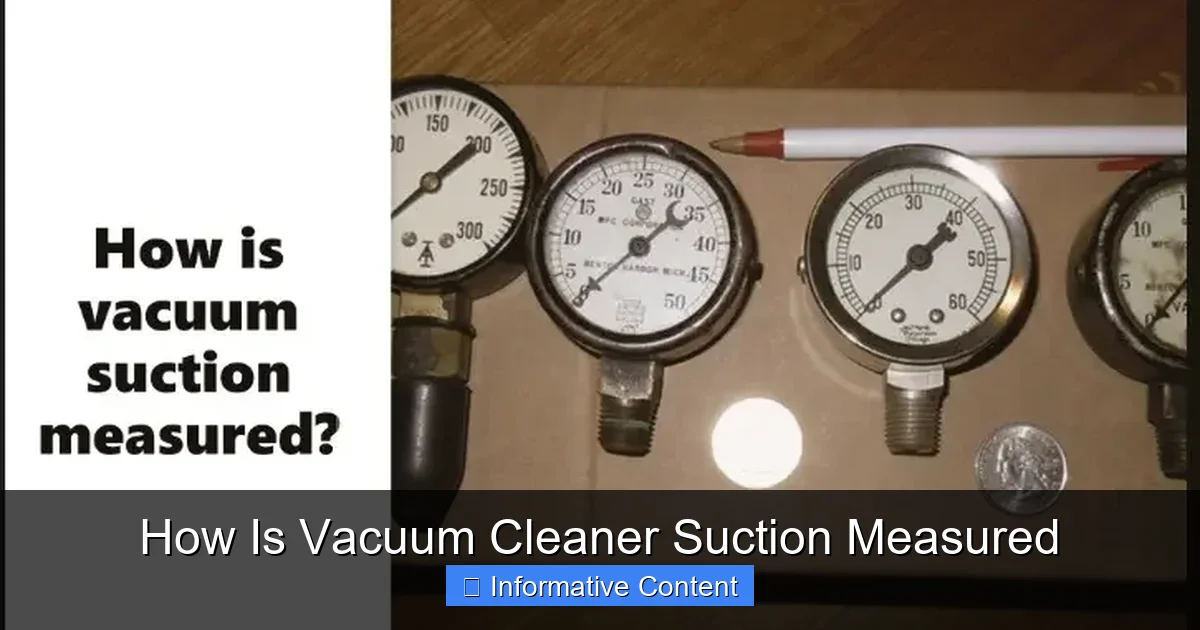
Water Lift is measured using a device called a manometer. In a typical test, the vacuum’s hose or nozzle is sealed completely shut, creating a maximum static pressure condition. A U-shaped tube filled with water (the manometer) is then connected to the sealed vacuum system. The vacuum’s “pull” creates a pressure difference, causing the water level in one side of the U-tube to drop and the other to rise. The difference in the water levels, measured in inches or millimeters, directly indicates the Water Lift.
This “sealed suction” test shows the vacuum’s raw power to create a vacuum. While important, it doesn’t tell the whole story, as a vacuum rarely operates in a completely sealed environment. However, it’s an excellent indicator of how well a vacuum can pull air through very restrictive environments, like deep carpet or dense filters, and precisely how is vacuum cleaner suction measured for its raw pulling power.
The Dynamic Duo: Airflow vs. Suction Power – Why Both Matter
It’s tempting to think that “more suction” is always better, but the reality is that the ideal balance between airflow (CFM) and sealed suction (Water Lift) depends on what you’re cleaning. A vacuum needs both, but the emphasis shifts. This is a crucial distinction when considering how is vacuum cleaner suction measured for real-world performance.
When Airflow (CFM) Dominates
Think about cleaning up after a lively party – crumbs, confetti, maybe a few stray popcorn kernels. For these types of tasks, where you have light, bulky debris spread across a wide area, high CFM is your best friend. A vacuum with strong airflow can efficiently “sweep” these items into the nozzle and through the hose without getting bogged down.
* Pet Hair: A large volume of air is needed to effectively lift and transport pet hair, especially from carpets.
* Dry Leaves or Larger Debris: Wet/dry vacs are designed with very high CFM to handle such items.
* Overall Carpet Cleaning: Good airflow helps lift carpet fibers and extract embedded dry soil, not just surface dirt.
When Suction Power (Water Lift) is Key
Now, switch gears to fine dust on hardwood floors, sand embedded in floor mats, or deeply set grime in upholstery. Here, pure pulling strength, or Water Lift, takes center stage.
* Fine Dust & Allergens: A strong pull ensures even the smallest, lightest dust particles are captured, especially important for allergy sufferers.
* Embedded Dirt: For dirt that’s settled deep into fabrics or carpets, high sealed suction can pull it out more effectively.
* Crevice Cleaning: When using narrow attachments, you need that intense, focused pull to dislodge dirt from tight spots.
* Upholstery and Car Interiors: Often involves tightly packed dirt that benefits from strong, concentrated suction.
The Air Watt Sweet Spot
This is why Air Watts are so valuable – they represent a balance of both. A vacuum with a high Air Watt rating typically has enough CFM to handle volume and enough Water Lift to handle tenacity. It’s the overall performance indicator, suggesting the vacuum will be versatile and effective across a range of cleaning challenges. If you’re looking for a single number to indicate how is vacuum cleaner suction measured for general-purpose cleaning, Air Watts is often the most reliable.
What Influences a Vacuum Cleaner’s Suction in the Real World?
Laboratory measurements are excellent for comparison, but your everyday experience with vacuum cleaner suction can be influenced by many factors that aren’t always reflected in the spec sheet.
Motor Power and Design
While motor wattage (e.g., 1200W) or amperage (e.g., 10 amps) tells you how much electricity the motor consumes, it doesn’t directly translate to effective suction. A more efficient motor design can produce better suction with less power, and conversely, a high-wattage motor can be inefficient. It’s the motor’s ability to drive the fan and create airflow and pressure that truly matters.
Filtration System
A multi-stage filtration system, especially one with HEPA filters, can significantly impact airflow. While these filters are crucial for trapping microscopic particles and allergens, they inherently create resistance, which can reduce CFM and, consequently, effective suction if not properly maintained. A clogged filter is a major culprit for reduced suction.
Nozzle and Brush Roll Design
The design of the vacuum’s floorhead is paramount. A good seal between the nozzle and the floor is crucial for maximizing suction. Adjustable height settings ensure optimal contact on different carpet types. Furthermore, the effectiveness of the brush roll (its speed, bristle type, and pattern) plays a huge role in agitating and loosening dirt, making it available for the suction to pick up. An excellent brush roll can make a vacuum with moderate suction perform better than one with strong suction but a poor brush.
Hose Length and Diameter
Longer hoses mean more friction, which reduces airflow and overall effective suction by the time it reaches the cleaning tool. Similarly, very narrow hoses, while creating strong sealed suction at the point of entry, can limit the volume of air (CFM) that can pass through. This is why commercial vacuums often have shorter, wider hoses.
Bag/Canister Fullness
This is perhaps the most common reason for reduced suction. As a dustbin or bag fills up, the air has less space to move through, increasing resistance and significantly reducing both CFM and Air Watts. Regularly emptying the bin or changing the bag is one of the easiest ways to maintain optimal suction.
Leaks and Blockages
Any crack in the hose, a loose connection, or a worn seal can allow air to escape, drastically reducing suction at the nozzle. Internal blockages from large debris getting stuck in the hose or intake can completely cut off airflow, rendering the vacuum useless until cleared. These are factors you won’t see in lab tests, but they’re critical for real-world performance.
Practical Tips for Choosing and Maintaining Suction Power
Now that you’re an expert on how is vacuum cleaner suction measured, let’s put that knowledge into action!
Matching Suction to Your Needs
* Heavy Carpet Homes (especially with pets): Look for high Air Watts (200+ AW) and strong CFM. A powerful brush roll is also essential.
* Hardwood Floors / Tile: High Water Lift is beneficial for picking up fine dust and grit, along with good CFM. A brush roll that can be turned off or a specialized hard floor tool is a plus.
* Allergy Sufferers: While suction is important, also prioritize sealed systems and HEPA filtration to trap allergens effectively.
* Car Interiors / Upholstery: High Water Lift in a handheld or stick vacuum, combined with good attachments, will provide the intense pull needed for embedded dirt.
Don’t Just Look at Numbers: Read Reviews and Testimonials
While understanding how is vacuum cleaner suction measured is key, remember that lab tests are controlled environments. Real-world performance can vary. Always check user reviews, independent testing results, and video demonstrations to see how a vacuum performs on different surfaces and with various types of debris. A vacuum might have impressive Air Watts but a poorly designed nozzle that hinders its effective cleaning.
Regular Maintenance is Key
The best vacuum in the world will lose its edge if not properly maintained.
* Empty the Dustbin/Change Bags: Do this frequently, especially if you have pets or do heavy cleaning. A full bin chokes airflow.
* Clean/Replace Filters: Clogged filters are a primary cause of reduced suction. Follow manufacturer guidelines for cleaning reusable filters or replacing disposable ones.
* Check for Blockages: Periodically disconnect the hose and check for obstructions. Use a broom handle or a long tool to push through any clogs.
* Inspect Hoses and Seals: Look for cracks or loose connections in hoses and attachments that could cause air leaks.
* Maintain Brush Rolls: Remove tangled hair and debris from the brush roll. A clean brush roll can agitate dirt more effectively, making the suction’s job easier.
Conclusion
The journey to understanding how is vacuum cleaner suction measured leads us far beyond simple wattage numbers. We’ve explored the critical roles of Air Watts, CFM (airflow), and Water Lift (sealed suction), learning how each metric contributes to a vacuum’s overall cleaning prowess. From lifting pet hair with high CFM to extracting fine dust with powerful Water Lift, it’s a symphony of engineering designed to tackle the messiest challenges.
Armed with this knowledge, you’re no longer at the mercy of marketing jargon. You can confidently assess specifications, understand why certain vacuums excel at specific tasks, and make an informed decision that truly meets your cleaning needs. Remember that a vacuum’s real-world performance is also a sum of its parts – its nozzle, filtration, and crucially, your commitment to regular maintenance. So, go forth, choose wisely, and enjoy the satisfaction of a truly clean home, powered by a vacuum you understand inside and out!
Frequently Asked Questions
How does a vacuum cleaner create suction?
A vacuum cleaner creates suction using a motor that spins a fan. This fan rapidly moves air, creating an area of low pressure inside the vacuum, which then draws in air (and with it, dirt and debris) from the higher pressure environment outside the cleaner.
Why is my vacuum losing suction even though it’s relatively new?
Loss of suction in a new vacuum is often due to a clogged filter, a full dustbin or bag, or a blockage in the hose or attachments. Less commonly, there might be a minor leak in the system or a problem with the brush roll.
Are cordless vacuums as powerful as corded ones when it comes to suction?
Corded vacuums generally offer more consistent and often higher suction power because they have an unlimited power supply. However, modern cordless vacuums have made significant advancements, with some high-end models offering comparable suction for specific tasks, though often for shorter runtimes.
What is the average Air Watt rating for a good household vacuum?
For a good general-purpose household vacuum, an Air Watt rating between 100 to 200 AW is typically considered solid. High-end or specialized vacuums, especially for pet hair or deep carpet cleaning, might boast 200 AW or more.
Does the type of floor affect how much suction I need?
Yes, different floor types benefit from different suction characteristics. Hard floors require good sealed suction for fine dust, while thick carpets benefit more from a balance of high airflow (CFM) and strong brush agitation to lift embedded dirt.
Is “cyclonic technology” related to how suction is measured?
Cyclonic technology refers to the design of the dust separation system, which uses centrifugal force to spin dust and debris out of the airflow before it reaches the filter. While it helps maintain consistent suction by preventing filters from clogging quickly, it is not a direct measurement of suction power itself.