How Heavy Is a Vacuum Cleaner
The weight of a vacuum cleaner varies greatly, typically ranging from a light 2-pound handheld to a heavy 50-pound shop vac. Factors like motor size, materials, features, and battery type all influence its heft. Understanding how heavy a vacuum cleaner is can significantly impact user comfort, maneuverability, and overall cleaning efficiency, making it a key consideration for your household needs.
Ever felt like your vacuum cleaner was giving you a workout more intense than your actual gym session? You’re not alone! It’s a common thought that crosses many minds when tackling household chores: “How heavy is a vacuum cleaner, really?” This seemingly simple question opens up a world of considerations that can significantly impact your cleaning routine, comfort, and even your health.
From lugging a bulky upright up a flight of stairs to effortlessly gliding a stick vacuum across your floor, the weight of your cleaning companion makes a huge difference. It affects how often you clean, how thoroughly you clean, and even your willingness to clean at all! But with so many types, brands, and features available, pinpointing the exact weight can feel like a guessing game. That’s why we’re diving deep into the fascinating world of vacuum cleaner weights, exploring what makes them heavy (or light!) and why it truly matters to you.
Whether you’re shopping for a new vacuum, curious about your current model, or just want to understand the mechanics behind your cleaning machine, this article will shed light on everything you need to know about vacuum cleaner weight. We’ll break down the average weights of different types, examine the factors that contribute to their heft, and offer practical tips to help you choose the perfect weight vacuum cleaner for your home and lifestyle. Get ready to lighten your load – both literally and figuratively!
Key Takeaways
- Wide Weight Range: Vacuum cleaners vary from ultra-light handheld models (2-5 lbs) to heavy-duty shop vacs (15-50+ lbs), with common household uprights and canisters falling between 8-20 lbs.
- Influencing Factors: Key elements like motor power, construction materials (plastic vs. metal), onboard features (large dustbins, HEPA filters, accessories), and battery size significantly determine a vacuum’s overall weight.
- Importance of Comfort: The weight of your vacuum directly impacts ease of use, especially for multi-story homes, stairs, or users with physical limitations, affecting overall cleaning comfort and reducing potential strain.
- Maneuverability Matters: A lighter vacuum cleaner is generally easier to push, pull, and carry, making it more maneuverable around furniture and for longer cleaning sessions, while heavier models often indicate robust build and powerful motors.
- Choosing the Right Weight: Consider your home’s layout, your physical capabilities, and your primary cleaning tasks when selecting a vacuum to find the optimal balance between power, features, and manageable weight.
- Technological Advancements: Modern manufacturing and battery technology are continuously making vacuum cleaners lighter and more powerful, offering high performance without the bulky weight of older models.
Quick Answers to Common Questions
What is the average weight of a standard upright vacuum cleaner?
A standard upright vacuum cleaner typically weighs between 12 to 20 pounds, varying based on its features, motor size, and construction materials.
Are cordless stick vacuums generally lighter than corded uprights?
Yes, cordless stick vacuums are significantly lighter, usually weighing 5 to 10 pounds, making them much more portable than traditional corded uprights.
Does a larger battery make a cordless vacuum heavier?
Yes, for cordless models, a larger capacity battery designed for longer run times will generally add more weight to the vacuum cleaner.
Can a powerful vacuum cleaner also be lightweight?
While historically power often meant weight, advancements in motor technology and materials now allow for many lightweight vacuum cleaners to offer impressive suction power and performance.
How much does a robotic vacuum cleaner typically weigh?
Robotic vacuum cleaners generally weigh between 5 to 10 pounds. While you don’t push them, their weight is a factor when moving them between rooms or for maintenance.
📑 Table of Contents
The Average Weight of Different Vacuum Cleaner Types
When you ask “how heavy is a vacuum cleaner,” the answer isn’t a single number. It depends entirely on the type of vacuum you’re talking about! Each design serves a different purpose, and its weight is a crucial part of its functionality. Let’s break down the typical weight ranges for the most common vacuum cleaner types:
Upright Vacuums: The Traditional Workhorses
Upright vacuum cleaners are what many people picture when they think of a traditional vacuum. They’re typically powerful and great for deep cleaning carpets. However, they can also be among the heavier options. Most upright vacuums weigh somewhere between 12 to 20 pounds. Heavier models, especially those with robust metal components and large motors, can even exceed 20 pounds. While their weight contributes to their perceived durability and cleaning power, it can make them cumbersome for stairs or multi-level homes.
Canister Vacuums: Powerful and Agile (Mostly)
Canister vacuums separate the motor and dustbin into a wheeled canister, which you pull behind you, with a long hose and wand for cleaning. This design splits the weight, making the actual cleaning head lighter and more maneuverable. The canister unit itself usually weighs between 8 to 15 pounds. When you add the hose, wand, and attachments, the total package might be similar to an upright, but the way you interact with the weight is very different. They are often preferred for hard floors and delicate surfaces.
Stick Vacuums: The Lightweight Quick-Cleaners
Stick vacuums, especially cordless models, are designed for quick cleanups and ease of use. They are significantly lighter than uprights or canisters, typically weighing in at 5 to 10 pounds. This category has seen immense growth and innovation, with many models offering impressive power for their size. Their light weight makes them incredibly easy to maneuver, carry up and down stairs, and store in tight spaces. Many can even convert into handhelds, further showcasing their versatility.
Handheld Vacuums: The Ultimate in Portability
For small spills, car interiors, or quick spot cleaning, handheld vacuums are unbeatable. They are the lightest of the bunch, usually weighing between 2 to 5 pounds. Their primary purpose is portability and convenience, sacrificing extended run time and deep cleaning power for instantaneous accessibility. The light weight of a handheld vacuum cleaner makes it indispensable for specific tasks where a larger unit would be overkill.
Robotic Vacuums: Cleaners You Don’t Lift (Much)
Robotic vacuum cleaners are designed to operate autonomously, so their weight isn’t a primary concern during cleaning. However, you do need to lift them for maintenance or to move them between levels. Most robotic vacuums weigh between 5 to 10 pounds. Their compact design and internal components contribute to this weight, making them relatively easy to pick up when needed, despite being self-propelled cleaners.
Wet/Dry Shop Vacs: Heavy-Duty Giants
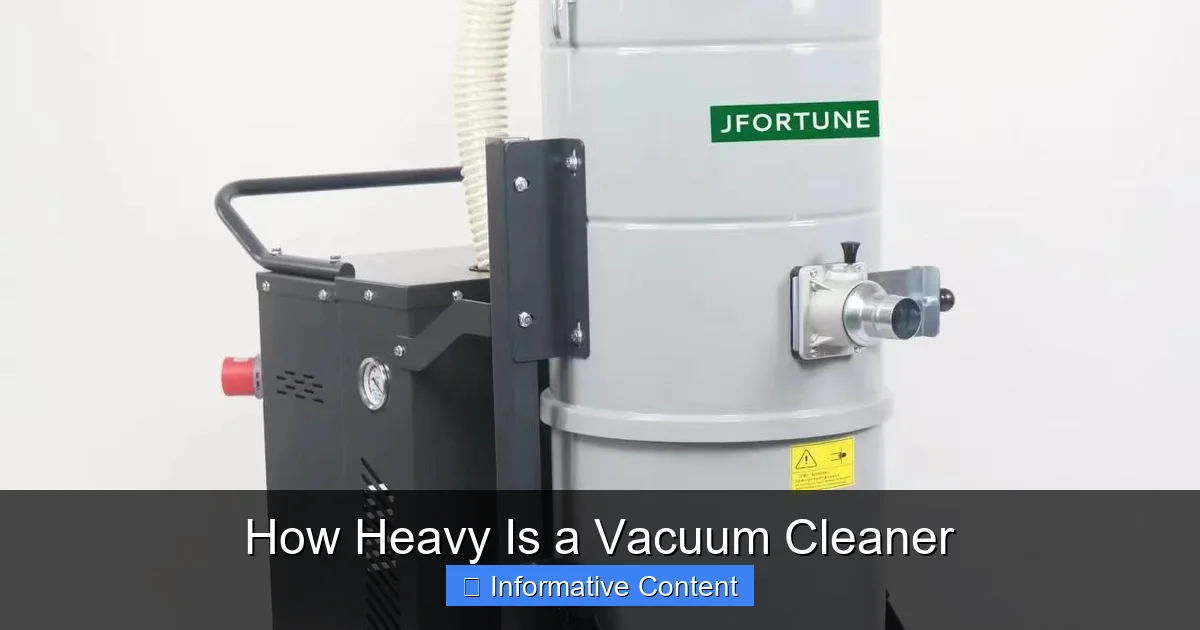
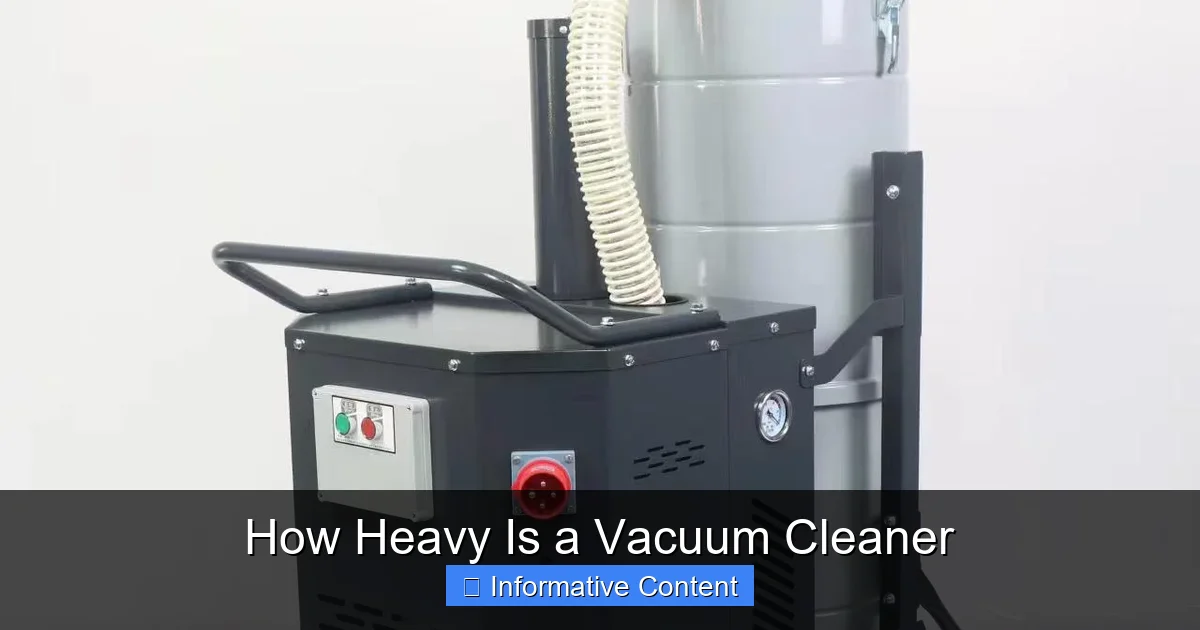
When it comes to serious spills, workshop debris, or construction cleanup, wet/dry shop vacs are the go-to. These industrial-strength machines are built for rugged tasks and are often quite heavy, ranging from 15 pounds for smaller models up to 50 pounds or more for large, professional-grade units. Their heavy-duty motors, large tanks, and durable construction explain their substantial weight, which is a trade-off for their immense power and versatility.
What Factors Influence a Vacuum Cleaner’s Weight?
Understanding how heavy is a vacuum cleaner involves looking under the hood (or, in this case, the casing). Several key factors combine to determine the final heft of any given model. It’s a delicate balance between power, durability, and features.
Visual guide about How Heavy Is a Vacuum Cleaner
Image source: industryvacuumcleaner.com
Motor Size and Power
This is often the biggest contributor to a vacuum cleaner’s weight. Generally, a larger, more powerful motor means more suction and cleaning capability. However, powerful motors are typically made with more metal components (like copper windings) and larger housing, which naturally adds weight. While technological advancements are creating more efficient and lighter motors, there’s still a correlation between raw power and physical size/weight.
Construction Materials
What a vacuum is made of plays a huge role. High-quality, durable plastics are commonly used today to keep weight down without sacrificing too much strength. However, some premium or heavy-duty models might incorporate metal components in critical areas (like the brush head, wand, or internal chassis) for added durability and longevity. Metal, while robust, is significantly heavier than plastic, directly increasing the overall vacuum cleaner weight.
Features and Accessories
The more bells and whistles a vacuum cleaner has, the heavier it tends to be. Think about it:
- Large Dustbins: While convenient for less frequent emptying, a bigger capacity bin means more plastic (or other material) and more space, adding to the bulk.
- Advanced Filtration Systems: HEPA filters, for example, are denser and often housed in more elaborate compartments, contributing to the overall weight.
- Onboard Tools: While handy, these extra attachments (crevice tools, dusting brushes, upholstery tools) add a small amount of weight and require integrated storage, which can increase the vacuum’s physical footprint.
- LED Headlights: The light fixtures and their power source (even if small) add a tiny bit.
- Brush Roll Systems: More elaborate brush rolls, especially those designed for different floor types, can be heavier.
Each additional feature, no matter how small, contributes to the overall mass.
Battery Type and Size (for Cordless Models)
For cordless vacuum cleaners, the battery pack is a significant weight contributor. Modern lithium-ion batteries, while powerful and efficient, are not weightless. A larger battery, offering longer run times, will naturally be heavier than a smaller one. The casing for the battery and the internal components all add to the vacuum cleaner’s weight, making cordless models a trade-off between freedom from cords and the weight of their power source.
Bagged vs. Bagless Systems
While often a preference choice, the system type can also influence weight. Bagless vacuums often feature more intricate cyclonic separation systems with multiple filters and compartments, which can be slightly heavier due to the additional plastic and engineering. Bagged vacuums, on the other hand, rely on a simpler bag chamber, which might be marginally lighter, although the filled bag itself will add weight during use.
Why Does Vacuum Cleaner Weight Matter to You?
Beyond mere curiosity, the weight of a vacuum cleaner has tangible effects on your cleaning experience. It’s not just a number on a spec sheet; it’s a practical consideration that impacts your comfort, efficiency, and even your health. Understanding these implications helps you choose wisely.
Portability and Maneuverability
This is arguably the most direct impact of vacuum cleaner weight.
- Stairs: If you live in a multi-story home, you’ll be regularly carrying your vacuum up and down stairs. A heavy vacuum cleaner can turn this chore into a strenuous workout, increasing the risk of back strain or even falls. A lightweight vacuum cleaner, especially a stick or a canister with a light hose, makes this task much more manageable.
- Between Rooms: Constantly moving a heavy vacuum from room to room, especially across different floor types or over thresholds, can be tiring and cumbersome.
- Around Furniture: A lighter vacuum is generally easier to pivot, turn, and navigate around obstacles, under tables, and in tight spaces, allowing for a more thorough and less frustrating clean.
User Comfort and Ergonomics
Your body will thank you (or curse you) depending on your vacuum’s weight.
- Back Strain: Pushing and pulling a heavy upright vacuum cleaner for extended periods can put significant strain on your lower back.
- Wrist and Arm Fatigue: Holding and directing a heavy stick or handheld vacuum can lead to arm and wrist fatigue, making the cleaning process uncomfortable, especially for longer sessions.
- Accessibility: For individuals with limited strength, chronic pain, or elderly users, a lightweight vacuum cleaner is not just a convenience, but a necessity for maintaining independence in household chores.
Storage Considerations
The physical size and weight of a vacuum cleaner can also impact where and how you store it. A heavy, bulky upright might be difficult to lift onto a shelf in a closet or tuck away into a compact space. Lighter, more compact stick or handheld vacuums are often much easier to store, sometimes even coming with wall mounts, making them readily accessible without being an eyesore or an obstacle.
Specific Cleaning Tasks
Different tasks call for different tools, and weight plays a role.
- Quick Touch-ups: For a sudden spill or a daily tidy-up, a light handheld or stick vacuum is perfect because it’s easy to grab and use quickly. You wouldn’t want to wrestle a 20-pound machine for a few crumbs.
- Deep Cleaning: For thorough, weekly deep cleans, a heavier, more powerful upright or canister might be preferred because their weight often correlates with robust motors and deeper cleaning capabilities, especially on carpets. However, this still needs to be balanced with user comfort.
- Above-Floor Cleaning: Reaching cobwebs, cleaning curtains, or vacuuming high shelves usually requires lifting the vacuum or its attachments. A lighter overall unit or a canister with a very light wand makes these tasks much simpler.
So, when considering how heavy is a vacuum cleaner, think about what you’ll primarily use it for and where.
Tips for Choosing the Right Weight Vacuum Cleaner
Now that you understand the different weights and why they matter, how do you pick the perfect one for your home? It’s all about balancing power, features, and comfort. Here are some practical tips to guide your decision:
Assess Your Home Layout
Before you even look at models, take stock of your living space:
- Multi-Story Home? If you have stairs, a lightweight stick or canister (where you only carry the hose/wand) will save your back. A heavy upright will be a constant struggle.
- Mostly Hard Floors or Carpets? Canisters and stick vacuums excel on hard floors. Uprights are often champions on carpets. While weight isn’t the only factor here, it influences maneuverability on different surfaces.
- Cluttered or Open Spaces? A lighter, more agile vacuum will navigate tight spaces and around furniture more easily.
Consider Your Physical Capabilities
Be honest with yourself about your strength and any physical limitations.
- Back or Joint Issues? Opt for the lightest possible vacuum cleaner that still meets your cleaning needs. A robotic vacuum might even be an ideal solution if you struggle with any lifting or pushing.
- Elderly Users: Prioritize ease of use and low weight above all else.
- General Fitness: Even if you’re fit, why make chores harder than they need to be? A moderately weighty vacuum can still offer a good balance.
Think About Frequency of Use
How often do you clean?
- Daily/Frequent Cleaning: A lightweight, grab-and-go stick or handheld vacuum is perfect for quick daily tidies, reducing fatigue.
- Weekly Deep Cleaning: If you only vacuum once a week for a thorough clean, you might tolerate a slightly heavier, more powerful machine, as long as it’s not overly burdensome.
Prioritize Features vs. Weight
It’s a trade-off. Do you absolutely need the largest dustbin, a robust metal brush roll, or a massive battery for extended run time? Each of these adds to the vacuum cleaner’s weight. Decide which features are non-negotiable and which you can compromise on to achieve a more manageable weight. Sometimes, two specialized, lighter vacuums (e.g., a stick for daily and a canister for deep cleans) are better than one heavy, all-in-one unit.
“Test Drive” If Possible
If you’re buying from a physical store, don’t be shy! Pick up the vacuum, push it around, lift it as if you’re carrying it upstairs. This hands-on experience is invaluable for understanding how heavy is a vacuum cleaner *for you*. What feels light to one person might feel heavy to another. Pay attention to how the weight is distributed – some vacuums feel more balanced than others, even if their overall weight is similar.
The Evolution of Vacuum Cleaner Weight: Lighter and Smarter
The question of how heavy is a vacuum cleaner has been a constant point of innovation for manufacturers. Gone are the days when a powerful vacuum absolutely had to be a bulky, back-breaking machine. Modern technology has revolutionized vacuum design, making them not only more effective but also significantly lighter and smarter.
Advancements in Materials
One of the most impactful changes has been the development of advanced plastics and composite materials. These materials are incredibly durable, yet significantly lighter than the metals and older plastics used in early vacuum cleaners. This allows manufacturers to create sturdy frames and components without adding excessive vacuum cleaner weight, contributing to overall lighter models that can still withstand daily wear and tear.
Motor Miniaturization and Efficiency
Engineers have made huge strides in motor technology. Modern digital motors are smaller, more efficient, and often lighter than their predecessors, yet they deliver comparable or even superior suction power. This means you can get a high-performance vacuum cleaner without the bulk that a large, heavy motor previously necessitated. The focus on maximizing suction per pound of weight has been a game-changer.
The Cordless Technology Impact
The advent of reliable lithium-ion batteries has propelled the cordless vacuum revolution. While the battery itself adds some vacuum cleaner weight, the elimination of a heavy power cord and the freedom it provides often makes the overall user experience feel much lighter and more convenient. Cordless stick vacuums, in particular, have become incredibly popular because they blend decent power with unmatched portability, making them the go-to for many households.
The Rise of Robotics
Perhaps the ultimate solution to vacuum cleaner weight concerns is the robotic vacuum. These machines are designed to operate autonomously, completely removing the user from the physical act of vacuuming. While they have a modest weight of their own (typically 5-10 lbs), you rarely have to lift them except for maintenance or moving them between levels. They represent a significant shift, where the question of “how heavy is a vacuum cleaner?” becomes almost irrelevant for the user during daily cleaning.
This ongoing evolution means consumers now have an unprecedented range of options that balance power, features, and weight, allowing for a more tailored and comfortable cleaning experience than ever before.
Conclusion
So, how heavy is a vacuum cleaner? As we’ve explored, there’s no single answer, but rather a spectrum determined by type, features, and design. From the feather-light handheld to the robust shop vac, the weight of your cleaning machine is a crucial factor that profoundly impacts your comfort, ease of use, and overall cleaning efficiency.
Understanding the average weights of different vacuum types – be it an upright, canister, stick, or robot – helps set realistic expectations. More importantly, recognizing the elements that contribute to that weight, such as motor size, construction materials, and integrated features, empowers you to make an informed decision. Remember, a heavier vacuum cleaner doesn’t always equate to superior cleaning power, just as a lightweight model doesn’t necessarily mean compromised performance. It’s all about finding the right balance for your unique needs.
When you’re next in the market for a vacuum cleaner, or simply assessing your current one, take a moment to consider its weight in relation to your home, your physical capabilities, and your typical cleaning routine. By prioritizing comfort and maneuverability alongside suction power and features, you can choose a vacuum that truly lightens your load and makes cleaning less of a chore and more of a breeze. Happy vacuuming!
Frequently Asked Questions
What’s the average weight of an upright vacuum?
The average weight of an upright vacuum cleaner ranges from 12 to 20 pounds. This can vary based on the specific model, its features, and whether it uses more plastic or metal components in its construction.
Are cordless vacuums lighter than corded?
Generally, cordless stick vacuums are lighter than traditional corded upright vacuums, often weighing 5-10 pounds compared to 12-20 pounds for uprights. However, powerful cordless models with large batteries can be heavier than some compact corded options.
Does a larger dustbin mean more weight for a vacuum?
Yes, a larger dustbin typically adds to the overall vacuum cleaner weight. It requires more material for its construction and increases the vacuum’s physical bulk, contributing to a heavier feel.
Can a lightweight vacuum be powerful enough for deep cleaning?
Many modern lightweight vacuums, especially high-end stick and some canister models, offer impressive suction power suitable for deep cleaning. Technological advancements allow for powerful motors in more compact, lighter designs.
How often should I consider the weight when buying a new vacuum?
You should always consider the vacuum cleaner’s weight as a primary factor when buying. It directly impacts your comfort, ease of use, and whether you’ll actually enjoy using it regularly, especially if you have stairs or physical limitations.
Is a heavy vacuum always more durable?
Not necessarily. While some heavy vacuums use robust metal components that enhance durability, many modern lightweight vacuums use high-quality, durable plastics and advanced engineering that provide excellent longevity without the added bulk.