How Does a Pool Vacuum Cleaner Work
Keeping your pool pristine is easier with the right tools, and understanding how a pool vacuum cleaner works is key to effective maintenance. Whether manual, automatic suction, pressure-side, or robotic, these devices all employ clever mechanisms to collect debris, from simple suction using your pool pump to advanced internal filtration and navigation. They are essential for maintaining a clean, healthy, and inviting swimming environment for everyone to enjoy.
Hey there, fellow pool owners! There’s nothing quite like a refreshing dip on a hot day, right? But that sparkling clean water doesn’t happen by magic. Beneath the surface, leaves, dirt, and all sorts of tiny particles are constantly trying to make your swimming oasis murky. That’s where a trusty pool vacuum cleaner comes into play, making sure your aquatic playground stays inviting and pristine.
You might see one gliding across the bottom of a pool or maybe you’ve wrestled with a long hose yourself. But have you ever stopped to wonder, “how does a pool vacuum cleaner work?” It’s actually a pretty clever bit of engineering, no matter the type. Understanding the mechanics behind these devices can not only help you choose the right one for your pool but also empower you to use it more effectively and troubleshoot any issues that pop up.
So, let’s dive deep (pun intended!) into the fascinating world of pool vacuum cleaners. We’ll explore the basic principles, break down the different types, and give you practical tips to ensure your pool remains a sparkling gem all season long. Get ready to uncover the secrets of crystal-clear water!
Key Takeaways
- Fundamental Principle: All pool vacuum cleaners operate on the principle of suction, drawing water and debris into a filtration system to keep the pool clean.
- Manual Vacuums: These traditional tools require human guidance and connect to your pool’s skimmer or a dedicated vacuum line, using the main pump’s suction to clean.
- Suction-Side Cleaners: These automatic devices attach to the skimmer and use the pool’s existing pump to move randomly across the pool floor, sucking up debris.
- Pressure-Side Cleaners: Powered by the pool’s return jets or a separate booster pump, these cleaners jet water to create movement and collect debris in their own attached filter bag.
- Robotic Cleaners: Independent and self-contained, robotic pool vacuums have their own motors, pumps, and filters. They intelligently navigate the pool, scrubbing and vacuuming without relying on the pool’s main circulation system.
- Choosing the Right Vacuum: The best pool vacuum depends on your pool size, the type of debris, your budget, and the level of automation you desire.
- Regular Maintenance: Proper use, priming, and routine cleaning of your pool vacuum cleaner components are crucial for its longevity and optimal performance.
Quick Answers to Common Questions
What is the primary function of a pool vacuum cleaner?
The primary function of a pool vacuum cleaner is to remove debris such as dirt, leaves, sand, and other particles from the pool floor and walls, ensuring the water remains clean and clear.
Do all pool vacuum cleaners use the pool’s main pump?
No, not all pool vacuum cleaners rely on the pool’s main pump. Manual, suction-side, and some pressure-side cleaners do, but robotic pool cleaners have their own internal pump and motor, operating independently.
How often should I vacuum my pool?
The frequency of vacuuming depends on factors like pool usage, weather, and surrounding foliage. As a general rule, vacuum your pool at least once a week, or more often if you notice significant debris.
What is “priming” a pool vacuum hose?
Priming a pool vacuum hose involves filling it completely with water before connecting it to the skimmer or vacuum port. This removes air from the hose, preventing the pool pump from sucking air and losing suction.
Can I leave an automatic pool cleaner in the pool all the time?
While some automatic cleaners are designed to stay in the pool, it’s generally best practice to remove them when not in use. This helps prolong their lifespan by protecting them from harsh chemicals and sun exposure, and also prevents them from becoming a tripping hazard.
📑 Table of Contents
The Fundamental Principle: Surition Power
At its core, understanding how a pool vacuum cleaner works boils down to one simple concept: suction. Just like the vacuum cleaner you use inside your home, pool vacuums create a low-pressure area that draws in water along with any debris floating or resting on your pool’s surfaces.
How Suction is Created
Think about sipping through a straw. When you suck, you reduce the air pressure inside the straw, and the higher atmospheric pressure outside pushes the liquid up. Pool vacuums work similarly, but on a larger scale and with water.
For most pool vacuums, especially manual and suction-side automatics, the pool’s main filtration pump is the engine driving this suction. The pump pulls water from the pool through the skimmer (where your vacuum is often connected) and pushes it through the filter, then back into the pool. By connecting a vacuum hose to the skimmer, you effectively redirect some of that powerful suction directly to your cleaning tool. This creates a strong pull at the vacuum head, allowing it to suck up leaves, dirt, sand, and other unwanted guests.
The Role of the Pump and Filter System
Your pool pump is the heart of your pool’s circulation system. It draws water, cycles it through your filter, and returns it clean. When a pool vacuum cleaner works by connecting to your skimmer or a dedicated vacuum port, it becomes an extension of this system. The debris collected by the vacuum is pulled through the hose, travels through your pool’s plumbing, and then gets trapped in your main pool filter (either sand, cartridge, or DE). This means that while the vacuum cleans your pool, your main filter is also working overtime to capture the gunk. Robotic cleaners are the exception, as they have their own internal pump and filter system, making them independent.
Exploring the Different Types of Pool Vacuum Cleaners
Visual guide about How Does a Pool Vacuum Cleaner Work
Image source: gadgetreview.com
Not all pool vacuums are created equal. They come in various forms, each with its own method of operation, pros, and cons. Understanding these differences is key to knowing how each pool vacuum cleaner works.
Manual Pool Vacuum Cleaners: The Hands-On Approach
This is the most traditional and often the most affordable option. A manual pool vacuum cleaner works by you providing the elbow grease.
Components and Operation
- Vacuum Head: This is the part that touches the pool surface. It comes in various designs (e.g., wheeled for plaster, bristled for vinyl liners) to optimize contact and suction.
- Telescopic Pole: An adjustable pole connects to the vacuum head, allowing you to reach all areas of your pool from the deck.
- Vacuum Hose: A long, flexible hose connects the vacuum head to your pool’s skimmer opening or a dedicated vacuum line.
To operate, you submerge the vacuum head and pole, then “prime” the hose by filling it completely with water to remove air. This is crucial because air in the line can cause your pump to lose its prime and stop working. Once primed, you connect the hose to the skimmer or vacuum port, which then creates suction through the vacuum head. You then manually guide the vacuum head across the pool floor and walls, much like vacuuming a carpet. The debris is sucked up through the hose and trapped in your pool’s main filter basket and filter.
Pros and Cons
* Pros: Affordable, offers precise spot cleaning, no extra energy consumption beyond your existing pump.
* Cons: Labor-intensive, time-consuming, requires constant supervision.
Suction-Side Automatic Pool Cleaners: The Persistent Wanderer
These automatic cleaners provide a good balance between cost and convenience. They essentially automate the manual vacuuming process.
How They Work
A suction-side pool vacuum cleaner works by attaching to your pool’s skimmer opening (or a dedicated suction line) via a long hose, just like a manual vacuum. It uses the suction power generated by your existing pool pump to both move itself around the pool and pull in debris.
Inside the cleaner, clever mechanisms like diaphragms, flappers, or gears convert the suction into movement. As water is pulled through the cleaner, these parts oscillate or rotate, creating a rhythmic motion that propels the cleaner randomly across the pool floor and sometimes up the walls. The debris enters directly into the pool’s filtration system.
Pros and Cons
* Pros: Generally affordable, easy to set up, no separate booster pump needed.
* Cons: Relies on your pool pump, can clog easily with large debris, slower cleaning, can put extra strain on your main filter.
Pressure-Side Automatic Pool Cleaners: The Jet-Powered Collector
These cleaners take a different approach, using water pressure rather than suction to clean.
How They Work
A pressure-side pool vacuum cleaner works by connecting to the pool’s return jets or, more commonly, to a dedicated booster pump. Instead of sucking, these cleaners use the power of pressurized water. Water is jetted out through nozzles on the cleaner, creating thrust that propels it around the pool. As it moves, the force of the water jets also helps to dislodge debris from the pool surfaces.
Unlike suction-side cleaners, pressure-side cleaners don’t send debris to your main filter. Instead, they come equipped with their own mesh bag or canister where they collect the debris. This means your main pool filter stays cleaner, longer. Many models also have rotating brushes or sweep hoses to agitate debris before collecting it.
Pros and Cons
* Pros: Doesn’t clog your main filter, often more powerful for larger debris, many models are quite durable.
* Cons: Often requires a separate booster pump (additional cost and energy), higher initial cost, debris bag needs regular emptying.
Robotic Pool Cleaners: The Smart and Independent Assistant
Robotic pool cleaners are the most advanced and independent option available. They are truly self-contained cleaning machines.
How They Work
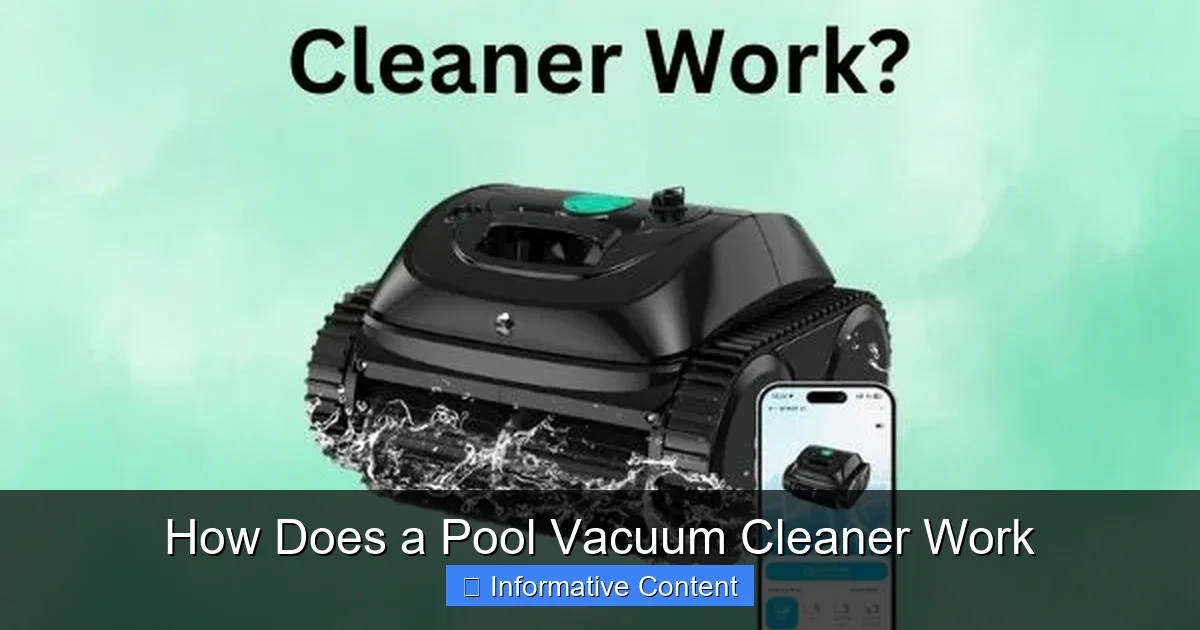
A robotic pool vacuum cleaner works completely independently of your pool’s main filtration system. It plugs into a standard electrical outlet and operates with its own internal electric motor, pump, and filtration system. You simply drop it into the pool, and it gets to work.
These smart devices are often equipped with advanced navigation systems, including microprocessors, sensors, and even mapping capabilities. They can “learn” the layout of your pool, systematically cleaning the floor, walls, and even the waterline. Their internal pump draws water through their own built-in filter bags or cartridges, trapping debris right inside the unit. Many also feature scrubbing brushes that actively agitate surfaces to dislodge stubborn dirt and algae before vacuuming it up.
Pros and Cons
* Pros: Fully independent (doesn’t use pool pump or filter), highly energy-efficient, excellent cleaning performance, systematic cleaning patterns, can scrub surfaces.
* Cons: Highest initial cost, internal filter bags/canisters need regular cleaning, not all models handle very large debris effectively.
Key Components of a Pool Vacuum System (General)
While specific designs vary, several components are common across many pool vacuum systems. Understanding these helps you see how a pool vacuum cleaner works as a complete system.
Vacuum Head
This is the part that makes direct contact with the pool surface. Manual heads attach to a pole, while automatic cleaners have integrated heads designed for movement and debris collection.
Hose
For manual, suction-side, and pressure-side cleaners, the hose is vital. It transports water and debris, connecting the cleaner to the pool’s suction or return lines. A good quality, leak-free hose is critical for efficient suction.
Telescopic Pole
Essential for manual cleaning, this adjustable pole allows you to reach the entire pool surface from the deck.
Skimmer or Dedicated Vacuum Plate
This is the entry point for manual and suction-side cleaners. A vacuum plate or skimmer adapter is often used to ensure a tight seal and maximum suction.
Pump and Filter System (for non-robotic)
As discussed, your pool’s existing pump creates the suction or pressure, and your main filter captures the debris when using manual, suction, or pressure (if not using a debris bag) cleaners.
Debris Bags or Internal Filters
Pressure-side and robotic cleaners have their own on-board filtration. These bags or cartridges need regular emptying and cleaning to maintain efficiency.
Setting Up and Using Your Pool Vacuum: Practical Tips
Now that you know how a pool vacuum cleaner works, let’s talk about putting that knowledge into action for sparkling results.
Priming the Hose (Manual and Suction-Side)
This is perhaps the most crucial step for manual and suction-side cleaners. Air in the hose equals no suction.
- Attach your vacuum head to the pole, then connect the hose to the head.
- Submerge the vacuum head and slowly feed the hose into the water, allowing it to fill completely. You’ll see bubbles stop coming out of the vacuum head when it’s full.
- Once the hose is full, quickly connect the free end to your skimmer’s vacuum port or dedicated vacuum line adapter.
This ensures your pump doesn’t suck air and lose its prime, keeping the suction strong.
Cleaning Techniques
* Manual: Work slowly and systematically, overlapping each pass slightly. Moving too fast can stir up debris, making the water cloudy.
* Automatic (Suction/Pressure): Ensure your pool pump is running for the recommended duration daily. If the cleaner isn’t moving well, check for clogs in the hose or the cleaner itself.
* Robotic: Simply drop it in, ensure it’s plugged in (if corded), and let it do its job. Clean the internal filter basket after each cycle.
Regular Maintenance
* Inspect Hoses: Check for cracks or holes which can reduce suction.
* Clean Debris Bags/Filters: For pressure-side and robotic cleaners, empty and rinse their collection bags or cartridges frequently.
* Check Impellers/Diaphragms: For automatic cleaners, periodically inspect these moving parts for wear or clogs.
* Brush Your Pool: Even with a vacuum, regular brushing helps dislodge debris and algae from surfaces, making it easier for your vacuum to pick it up.
Troubleshooting Common Issues
* Poor Suction: Check for air leaks in the hose or connections, a clogged skimmer basket, or a dirty pool filter.
* Cleaner Not Moving: For automatics, check for clogs in the cleaner itself, tangled hoses, or insufficient pump pressure.
* Leaving Debris Behind: Slow down with manual vacuums. For automatics, ensure proper run time and check for wear on brushes or cleaning mechanisms.
Choosing the Right Pool Vacuum Cleaner for You
So, you understand how a pool vacuum cleaner works, but which one is best? It truly depends on your specific needs:
- Pool Size and Type: Smaller pools might be fine with a manual or suction-side. Larger pools with lots of debris might benefit more from pressure-side or robotic.
- Type of Debris: Fine silt? Robotic or suction-side with a fine filter. Large leaves and acorns? Pressure-side often excels.
- Budget: Manual < Suction-Side < Pressure-Side < Robotic.
- Desired Automation: Do you want to do it yourself (manual), or have it mostly automated (suction/pressure), or fully automated and independent (robotic)?
- Existing Equipment: Do you have a powerful enough pool pump? Is there a dedicated vacuum line? Do you want to avoid extra strain on your main filter?
Consider these factors carefully, and you’ll find the perfect match to keep your pool sparkling.
Conclusion
Keeping your pool clean doesn’t have to be a chore when you have the right tools and understand how they work. From the simple, manual vacuum that relies on your own efforts to the sophisticated robotic cleaner that intelligently navigates your pool, each device plays a crucial role in maintaining a healthy and inviting swimming environment.
By now, you should have a solid grasp of “how does a pool vacuum cleaner work” – whether it’s harnessing your pool pump’s suction, utilizing pressurized water, or operating completely autonomously. With this knowledge, you’re well-equipped to choose, use, and maintain your pool vacuum cleaner effectively, ensuring countless hours of enjoyment in your beautifully clean pool. Happy swimming!
Frequently Asked Questions
What’s the main difference between suction-side and pressure-side cleaners?
Suction-side cleaners use your pool’s existing pump to create suction and draw debris into your main pool filter. Pressure-side cleaners use water pressure from return jets or a booster pump to move and collect debris in their own attached filter bag, bypassing your main filter.
Are robotic pool cleaners worth the higher cost?
Many pool owners find robotic pool cleaners worth the investment due to their independence, energy efficiency, and superior cleaning performance. They don’t strain your main filter, often scrub surfaces, and can save a lot of manual effort and time in the long run.
My pool vacuum isn’t picking up debris effectively. What could be wrong?
Poor debris pickup often indicates a loss of suction. Check for air leaks in the hose or connections, a clogged skimmer or pump basket, a full or dirty main pool filter, or debris stuck in the vacuum head or internal components of an automatic cleaner.
How do I know if my pool pump is strong enough for an automatic cleaner?
For suction-side cleaners, a standard pool pump is usually sufficient. For pressure-side cleaners, many require a dedicated booster pump for optimal performance. Robotic cleaners are self-contained and don’t rely on your pool’s pump at all.
Can a pool vacuum clean algae?
While a pool vacuum cleaner can remove settled algae, it’s not a solution for active algae blooms. You should first treat the pool with algaecide and shock, brush the pool thoroughly, and then vacuum the dead algae (often to waste) to prevent it from clogging your main filter.
How do I properly store my pool vacuum cleaner during the off-season?
Before storing, thoroughly clean your pool vacuum cleaner and its components. Remove and clean any filter bags or cartridges, drain all water from hoses and the unit itself, and store it in a clean, dry, and temperature-controlled environment away from direct sunlight and freezing temperatures.