How Do You Throw Away a Vacuum Cleaner
When your trusty vacuum cleaner finally gives up, resist the urge to simply toss it in the regular trash. Learning how do you throw away a vacuum cleaner responsibly is crucial for our planet. This guide explores eco-friendly alternatives like repairing, donating, recycling, or utilizing specific disposal programs, ensuring your old appliance avoids landfills and contributes to a healthier environment. Making an informed choice can significantly reduce waste.
Ah, the trusty vacuum cleaner. For years, it’s been your faithful companion in the never-ending battle against dust bunnies, pet hair, and spilled cereal. It’s helped keep your home sparkling clean, providing that satisfying hum of efficiency. But what happens when that hum turns into a whimper, or worse, an ominous silence? When your vacuum cleaner finally decides to retire, you’re left with a common, yet often puzzling, question: how do you throw away a vacuum cleaner?
It might seem like a simple task – just toss it in the bin, right? Not so fast! In today’s environmentally conscious world, simply relegating an old appliance to the landfill isn’t the best practice. Vacuum cleaners, like many other electronics, contain a mix of plastics, metals, and sometimes even hazardous components or batteries that shouldn’t end up polluting our earth. Disposing of them responsibly is not only good for the planet but can also recover valuable resources.
So, before you drag that defunct dirt-devourer to the curb, take a moment. This comprehensive guide will walk you through all the best, most eco-friendly, and often easiest ways to get rid of your old vacuum cleaner. We’ll cover everything from repairing to recycling, ensuring you make an informed and responsible choice. Let’s figure out how to properly throw away a vacuum cleaner without adding to our waste problems!
Key Takeaways
- Avoid Landfills: Never simply throw your vacuum cleaner in regular household trash due to its electronic components and potential for hazardous materials.
- Prioritize Repair: Before considering disposal, check if your vacuum can be repaired, either DIY or professionally, to extend its lifespan and reduce waste.
- Consider Donation: If your vacuum is still in good working condition, donating it to charities, thrift stores, or giving it away can provide it with a second life.
- Embrace E-Waste Recycling: The most environmentally responsible way to dispose of a broken vacuum is through e-waste recycling programs, which recover valuable materials.
- Check Manufacturer & Retailer Programs: Many brands and retailers offer take-back or recycling initiatives for old electronics, including vacuum cleaners.
- Separate Components: When recycling isn’t a full option, separate parts like batteries (especially lithium-ion) and filters for specialized disposal.
- Utilize Local Services: Always check your local municipality’s waste management website for specific guidelines, bulk pickup options, or special collection events for electronics.
Quick Answers to Common Questions
Can I throw my old vacuum cleaner in the regular trash?
No, it’s generally not recommended to throw a vacuum cleaner in regular household trash. Vacuums contain various plastics, metals, and sometimes batteries that should be recycled or disposed of responsibly to prevent environmental pollution and recover valuable materials.
Are vacuum cleaner batteries dangerous?
Yes, especially lithium-ion batteries found in cordless vacuums can be dangerous if not disposed of properly. They pose a fire risk in landfills and contain chemicals that can harm the environment, so they should be recycled at specialized battery collection points.
What should I do before recycling my vacuum cleaner?
Before recycling, you should empty the dustbin or bag, remove any reusable or disposable filters (following manufacturer instructions for disposal), and detach any removable batteries for separate recycling.
Can I donate a broken vacuum cleaner?
No, you should not donate a broken vacuum cleaner. Donation centers typically only accept items that are in good, working condition and clean. A broken vacuum is best repaired or taken to an e-waste recycling facility.
Where can I find an e-waste recycling center for my vacuum?
Check your local municipality’s waste management website, use online search tools like Earth911.com, or inquire with large electronics retailers as they often have e-waste recycling programs.
📑 Table of Contents
- Why Not Just Toss It in the Trash? The Environmental Impact
- Option 1: Repair Before Replacing – Giving Your Vacuum a Second Chance
- Option 2: Donate or Give Away Your Old Vacuum
- Option 3: Recycle Your Vacuum Cleaner – The Eco-Friendly Solution
- Option 4: Disposing of Specific Parts (if necessary)
- Option 5: Local Waste Management Programs & Bulk Waste Pickup
- Conclusion: Making a Responsible Choice for Your Old Vacuum
Why Not Just Toss It in the Trash? The Environmental Impact
You might be thinking, “It’s just one vacuum cleaner, what’s the big deal?” But the cumulative effect of millions of people throwing away their electronics directly into the garbage creates a significant environmental burden. Understanding why this isn’t the ideal solution is the first step toward making a better choice.
Environmental Impact of Landfills
When electronic waste, or e-waste, ends up in landfills, it takes up valuable space that is quickly diminishing. More critically, these devices are designed to last, meaning they decompose very slowly, if at all. This can lead to environmental pollution over long periods. The plastic components in a vacuum cleaner, for instance, can take hundreds of years to break down, releasing microplastics into the soil and water.
Moreover, the manufacturing process of a vacuum cleaner uses a lot of energy and raw materials. When we throw them away without recycling, all that embodied energy and those precious resources are lost forever. Recycling, on the other hand, allows these materials to be reprocessed and used again, reducing the need for new raw materials and cutting down on manufacturing energy.
Potential for Hazardous Materials
While a vacuum cleaner might not seem as “hazardous” as a smartphone, many models, especially newer cordless ones, contain lithium-ion batteries. These batteries can pose a fire risk in landfills and contain chemicals that can leach into the ground and contaminate groundwater. Even older corded models contain various metals and plastics that can release toxins as they degrade. Properly disposing of a vacuum cleaner helps prevent these harmful substances from entering our environment.
The Value of Recycling
Most of the components in a vacuum cleaner—metals like steel and copper, various types of plastics, and even some circuit boards—are valuable. When you recycle your vacuum cleaner, these materials are extracted and sent to be processed into new products. This closed-loop system conserves natural resources, reduces energy consumption, and minimizes pollution associated with mining and manufacturing from scratch. It’s a win-win for everyone.
Option 1: Repair Before Replacing – Giving Your Vacuum a Second Chance
Before you even think about how do you throw away a vacuum cleaner, consider if it can be fixed! Many common vacuum cleaner problems are surprisingly simple to resolve, saving you money and preventing unnecessary waste.
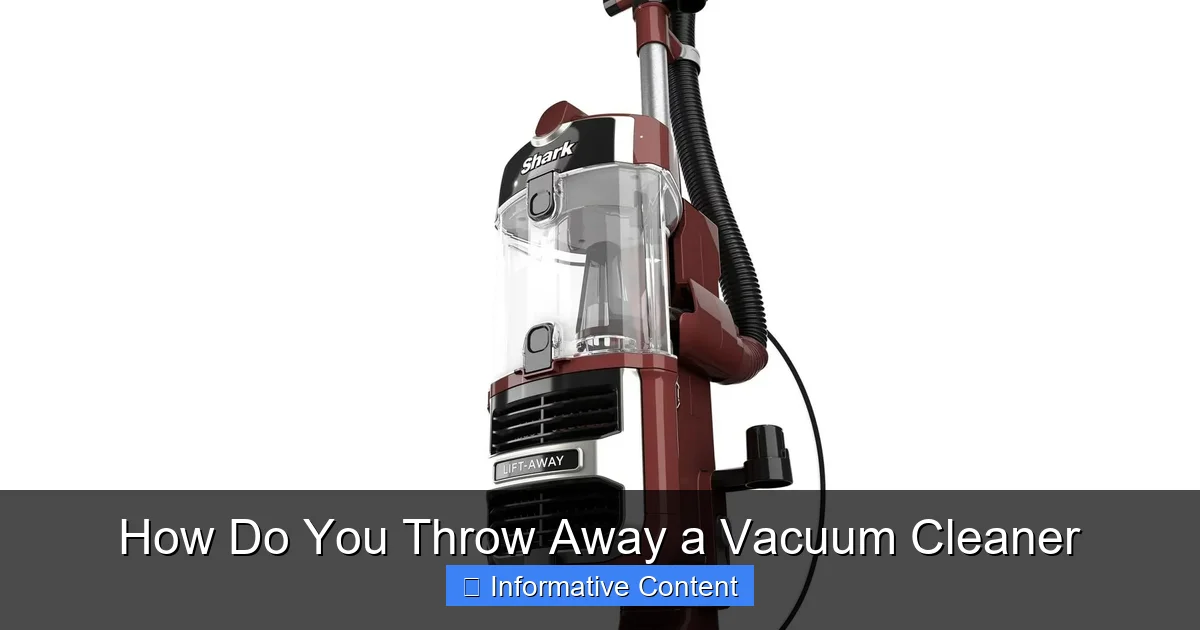
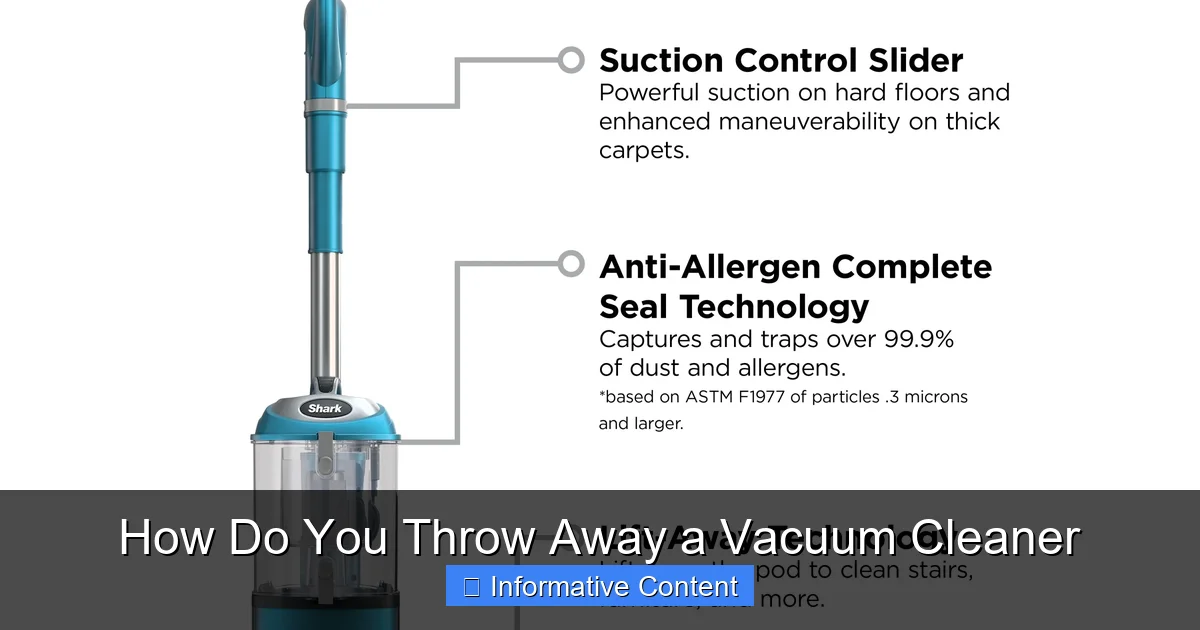
Visual guide about How Do You Throw Away a Vacuum Cleaner
Image source: m.media-amazon.com
Common Fixes and DIY Troubleshooting
Often, a vacuum cleaner isn’t truly “dead,” just a little under the weather. Here are some common issues you can often fix yourself:
- Clogged Hoses or Filters: This is the most frequent culprit for loss of suction. Detach the hose and check for blockages. Clean or replace filters regularly.
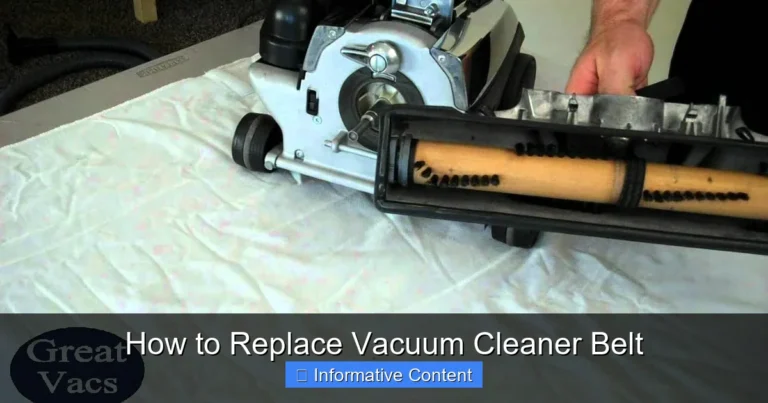
- Broken Belts: If your brush roll isn’t spinning, the drive belt might be broken. Replacement belts are inexpensive and relatively easy to install.
- Blocked Brush Rolls: Hair and threads can get wrapped around the brush roll, preventing it from spinning effectively. Carefully cut away any tangles.
- Power Cord Issues: Check for frays or breaks in the cord. Sometimes, a simple cord replacement can bring an old vacuum back to life, though this might require a bit more technical know-how.
Many manufacturers provide troubleshooting guides online, and there are countless DIY repair videos on YouTube that can walk you through specific repairs for your model. A few minutes of investigation could save your vacuum from an early retirement.
Professional Repair Services
If DIY isn’t your thing, or the problem seems more complex, consider a professional repair shop. Local appliance repair stores often specialize in vacuum cleaners and can diagnose and fix issues that are beyond the average homeowner’s skill set. While there’s a cost involved, it’s often significantly less than buying a brand-new vacuum cleaner. Get a quote first to ensure it’s a cost-effective solution.
Option 2: Donate or Give Away Your Old Vacuum
If your vacuum cleaner is still functional but you’re upgrading or simply don’t need it anymore, donation is a fantastic way to give it a second life. This is one of the best ways to ensure your old vacuum doesn’t become waste.
When Is Donation an Option?
Donation is ideal for vacuums that are:
- In good working condition: It should power on, have good suction, and all parts should be present and functional.
- Clean: Empty the dustbin, clean the filters, and wipe down the exterior. A clean donation is a respectful donation.
- Not too old: While an older model might still work, consider if someone would actually find it useful. Very old, inefficient models might not be accepted.
Where to Donate
Many organizations accept working vacuum cleaners:
- Charity Shops/Thrift Stores: Organizations like Goodwill, Salvation Army, and local thrift stores often accept small working appliances. Call ahead to confirm their current donation policies, as space and demand can vary.
- Local Shelters or Community Centers: Homeless shelters, women’s shelters, or community centers might be in need of functional cleaning appliances. A quick call can tell you if they’d be grateful for your donation.
- Schools or Churches: Sometimes, local schools or churches might need an extra vacuum for maintenance purposes.
Online Marketplaces and Local Giveaways
If you prefer to directly connect with someone who needs your vacuum, online platforms are a great resource:
- Facebook Marketplace & Buy Nothing Groups: These platforms are excellent for connecting with local individuals. You can list your vacuum for free, and someone nearby will likely be happy to pick it up.
- Craigslist & Freecycle: Similar to Facebook groups, these sites allow you to post items you want to give away for free. Specify that the vacuum is working and arrange a convenient pickup.
Giving your vacuum to someone else not only keeps it out of the landfill but also helps someone in your community who might not be able to afford a new one. It’s a wonderful example of circular economy in action when considering how do you throw away a vacuum cleaner.
Option 3: Recycle Your Vacuum Cleaner – The Eco-Friendly Solution
When repair or donation isn’t possible (e.g., your vacuum is truly broken beyond repair), recycling is the most environmentally responsible way to dispose of it. Vacuum cleaners fall under the category of e-waste, and there are specific channels for their recycling.
Finding E-Waste Recycling Centers
The easiest and most direct way to recycle your vacuum cleaner is to take it to a dedicated e-waste recycling facility. These centers specialize in disassembling electronics and properly sorting their components for recycling.
- Your Local Municipality’s Website: Start by checking your city or county’s waste management website. They usually have a section on e-waste disposal, including a list of local drop-off points or special collection events.
- Online Search Engines: Websites like Earth911.com or Greendisk.com allow you to search for recycling centers by zip code for specific items, including small appliances and electronics.
- Retailer Take-Back Programs: Many large electronics retailers (like Best Buy or Staples in some regions) offer recycling services for old electronics, often regardless of where they were purchased. Call your local store to inquire about their policy and any associated fees.
Manufacturer Take-Back Programs
Some vacuum cleaner manufacturers, particularly those committed to sustainability, offer their own recycling programs. They might have a system where you can mail back your old vacuum, or they may partner with specific recycling centers. Check the manufacturer’s website (e.g., Dyson, Shark, Miele) for details on their recycling or take-back initiatives. This is often the best option, as they are most familiar with the materials in their own products.
Preparing Your Vacuum for Recycling
Before dropping off your vacuum, it’s a good idea to:
- Empty the Dustbin/Bag: Make sure there’s no debris or dirt left inside.
- Remove Filters: If they are reusable, clean them. If disposable, dispose of them in regular trash (unless specifically instructed otherwise by the recycling center).
- Remove Batteries: If your vacuum has a removable lithium-ion battery, take it out. These often require separate recycling due to fire hazards. We’ll cover this in more detail below.
- Clean It Up: Give the exterior a quick wipe down. It makes the process easier for the recycling center.
When you recycle your vacuum cleaner, you’re directly contributing to a circular economy, ensuring that valuable materials are recovered and reused instead of becoming waste. This is the gold standard for how do you throw away a vacuum cleaner.
Option 4: Disposing of Specific Parts (if necessary)
Sometimes, you might only need to dispose of a specific, problematic part of your vacuum cleaner, or you might need to separate components before recycling the main unit. This is especially true for items that pose a particular environmental risk.
Batteries (Especially Lithium-Ion)
This is arguably the most critical component to dispose of correctly. Cordless vacuums contain lithium-ion batteries, which can be dangerous if thrown in regular trash due to fire risks and the hazardous chemicals they contain.
- Local Household Hazardous Waste (HHW) Facilities: Many communities have HHW drop-off sites that accept batteries.
- Retailer Drop-offs: Stores like Lowe’s, Home Depot, Best Buy, and sometimes even supermarkets often have battery recycling bins, particularly for rechargeable batteries.
- Call2Recycle.org: This non-profit organization provides free battery and cellphone recycling programs across North America. Use their website to find a drop-off location near you.
Always tape the terminals of lithium-ion batteries with non-conductive tape (like electrical tape) before recycling to prevent short circuits and potential fires.
Filters
Most vacuum filters (HEPA, foam, or cloth) are generally considered regular household waste once they are dirty. However, some specialized filters might have different recommendations. Check the manufacturer’s instructions for your specific vacuum and filter type. If you’re unsure, and a recycling center accepts the vacuum, they can usually handle the filter too.
Cords and Motors
If you’re disassembling a vacuum, the cords contain copper wire, and motors contain metals and electronics. These components are highly recyclable at e-waste facilities. If you’re dropping off the entire vacuum at an e-waste center, you don’t need to separate these, as the facility will do it. However, if you have loose cords or motors from other projects, they can often be recycled at metal scrap yards or e-waste centers.
Option 5: Local Waste Management Programs & Bulk Waste Pickup
Even if you’ve explored repair, donation, and specialized recycling, your local municipal waste management still plays a vital role in providing disposal options. These services vary widely by location, so it’s always best to check your specific area’s guidelines.
Checking Your Local Municipality
Every city and county has its own rules for how to dispose of bulk items and electronics. The absolute best place to start is your local government’s waste management or public works department website. Look for sections on “appliance disposal,” “e-waste,” “bulk item pickup,” or “household hazardous waste.”
On these sites, you’ll find information about:
- Designated Drop-off Locations: Your town might have a transfer station or recycling center where you can drop off appliances for a small fee or even for free.
- Special Collection Events: Many communities host annual or semi-annual “clean-up days” or “e-waste collection events” where residents can bring larger items or electronics for proper disposal.
- Specific Guidelines: They will clarify what is and isn’t accepted in regular trash, and provide instructions for items like vacuum cleaners.
Scheduled Bulk Pickups
Some municipalities offer scheduled bulk trash pickup services for larger items that don’t fit in standard bins. You might need to call ahead to schedule a pickup for your old vacuum cleaner. There could be a fee, and they might have specific rules about where to place the item and when. Make sure to clarify if they accept “small appliances” or “electronics” in their bulk pickup program. If they do, this can be a very convenient way to handle how do you throw away a vacuum cleaner.
Curbside Recycling Programs (Less Common for Vacuums)
While some advanced curbside recycling programs might accept small electronics, this is relatively uncommon for items as complex as vacuum cleaners. Do not assume your vacuum can go into your regular blue bin with plastics and paper. Always verify with your local waste provider first. Placing it in the wrong bin can contaminate the recycling stream and lead to it being sent to a landfill anyway.
Conclusion: Making a Responsible Choice for Your Old Vacuum
So, how do you throw away a vacuum cleaner? As you’ve seen, it’s not a one-size-fits-all answer, but rather a journey of responsible decision-making. From trying a simple repair to giving it a second life through donation, or ensuring its components are recycled through specialized e-waste programs, there are many avenues to choose from that benefit both your community and the environment.
The key takeaway is to avoid the landfill whenever possible. By taking a few extra steps—whether it’s checking your local recycling options, finding a charity, or even just taking the time to troubleshoot a minor issue—you can significantly reduce waste and conserve valuable resources. Each responsible choice we make, no matter how small, contributes to a healthier planet for everyone.
Next time your vacuum cleaner breathes its last, you’ll be equipped with the knowledge to send it off properly. Your home might be cleaner, but now you can rest easy knowing you’ve handled its departure with care and consideration for our shared environment.
Frequently Asked Questions
What is e-waste and why are vacuum cleaners considered e-waste?
E-waste, or electronic waste, refers to discarded electrical or electronic devices. Vacuum cleaners are considered e-waste because they contain electronic components, motors, circuits, and various materials like plastics and metals, which require specialized processing for recycling to prevent environmental harm.
Do manufacturers offer recycling programs for old vacuum cleaners?
Yes, some vacuum cleaner manufacturers do offer take-back or recycling programs for their products. It’s a good practice to check the manufacturer’s official website for details on their sustainability initiatives or specific recycling options they might provide.
Is it worth repairing an old vacuum cleaner instead of buying a new one?
Often, yes! Many common vacuum cleaner issues like clogs, broken belts, or dirty filters are simple and inexpensive to fix, either through DIY repairs or by a professional. Repairing extends the appliance’s lifespan, saves money, and reduces environmental impact.
Can thrift stores or charities accept any vacuum cleaner for donation?
Most thrift stores and charities have specific criteria for donations. They typically only accept vacuum cleaners that are in good, clean, and fully functional working order. It’s always best to call ahead and confirm their current donation policies before dropping off your item.
What should I do with the dust bag or canister from my old vacuum?
Before disposing of or recycling your vacuum cleaner, you should completely empty the dust bag or canister. The contents (dust, dirt, debris) can usually be placed in your regular household trash, and if the bag is disposable, dispose of it there too.
Are there any services that pick up old vacuum cleaners for disposal?
Many local municipalities offer bulk waste pickup services for larger items, which might include small appliances like vacuum cleaners. You usually need to schedule these pickups in advance and there might be a fee. Check your city or county’s waste management website for specific information and scheduling.