How Do Vacuum Cleaner Bags Work
Ever wondered how vacuum cleaner bags work? These ingenious filtration systems use suction to draw dust and debris into a multi-layered bag, trapping particles while allowing clean air to pass through. This process ensures effective cleaning, superior allergen retention, and protects your vacuum’s motor, making them a cornerstone of home hygiene by preventing allergens from recirculating into your living space.
How Do Vacuum Cleaner Bags Work
Have you ever stopped to think about the unsung hero inside your vacuum cleaner? That humble bag, tucked away, silently doing the dirty work. It’s easy to just see it as a receptacle for dirt, but there’s a fascinating bit of engineering going on behind the scenes. Understanding how vacuum cleaner bags work isn’t just a curiosity; it helps us appreciate why they’re so effective and how to get the best out of our cleaning routine.
For many years, the vacuum cleaner bag has been a fundamental component of keeping our homes tidy. While bagless models have gained popularity, bagged vacuums still hold a special place for their superior filtration and hygienic dust disposal. But how exactly does this simple paper or synthetic pouch manage to capture all that grime while letting clean air pass through? Let’s pull back the curtain and explore the clever science that makes your vacuum cleaner bag an indispensable part of a healthier home.
From the moment you flick the switch, a complex interplay of physics and material science begins. Air, laden with dust, pet hair, and microscopic allergens, is sucked into the machine. The bag then becomes a gatekeeper, meticulously separating the unwanted particles from the clean air. It’s a delicate balance of flow and filtration, designed to trap even the tiniest specks that could irritate our lungs. Let’s dive deep into the mechanics of how vacuum cleaner bags work and why they are so vital.
Key Takeaways
- The Core Principle: Vacuum cleaner bags work by creating a powerful suction that pulls air, dust, and debris into the bag, which then acts as a sophisticated filter to trap particles while clean air exits.
- Multi-Layered Filtration: Modern vacuum bags are typically made from several layers of synthetic material or paper, designed to capture a wide range of particle sizes, from large debris to microscopic dust mites and allergens.
- Airflow and Particle Capture: As dirty air enters the bag, larger particles are immediately slowed down and drop due to reduced air velocity, while finer particles are caught in the microscopic pores of the bag’s filter layers.
- Allergen Retention: High-quality bags, especially those with HEPA-type filtration, excel at trapping common allergens like pollen, pet dander, and dust mite faeces, preventing them from being released back into the air.
- Protection for Your Vacuum: The bag acts as a primary filter, shielding the vacuum’s motor and internal components from dust and debris, which significantly extends the lifespan of the appliance.
- Optimal Performance and Hygiene: Regularly changing your vacuum bag is crucial for maintaining strong suction, effective filtration, and hygienic disposal of collected dirt and allergens, ensuring your vacuum cleaner performs at its best.
Quick Answers to Common Questions
How do vacuum cleaner bags work to prevent allergens from escaping?
Vacuum cleaner bags work using multi-layered, often synthetic, filtration media with microscopic pores. These layers are designed to physically trap tiny particles like pollen, pet dander, and dust mite allergens while allowing clean air to pass through. High-quality bags often feature self-sealing collars for hygienic disposal, preventing trapped allergens from being released back into the air when the bag is removed.
What materials are vacuum cleaner bags typically made from?
Traditionally, vacuum cleaner bags were made from thick paper. However, modern bags are often constructed from multiple layers of synthetic micro-fibers, such as polypropylene or melt-blown materials. These synthetic materials offer superior filtration efficiency, durability, and tear resistance compared to older paper designs.
How often should I change my vacuum cleaner bag?
You should change your vacuum cleaner bag when it is about two-thirds full, or if you notice a significant drop in suction power. Many vacuums also have a “bag full” indicator light or gauge to signal when a change is needed. Waiting until the bag is completely full can reduce cleaning effectiveness and strain your vacuum’s motor.
Can a vacuum cleaner bag affect suction power?
Yes, absolutely. As a vacuum cleaner bag fills with dust and debris, the available surface area for air to pass through decreases. This increased resistance to airflow reduces the vacuum’s suction power. A full bag can significantly impair cleaning performance, making it essential to change bags regularly for optimal operation.
Are all vacuum cleaner bags interchangeable?
No, vacuum cleaner bags are not universally interchangeable. Each vacuum cleaner model requires a specific type and size of bag to ensure proper fit, sealing, and filtration. Using the wrong bag can lead to leaks, reduced efficiency, damage to your vacuum, or ineffective filtration, compromising how vacuum cleaner bags work.
📑 Table of Contents
The Basic Principle: Suction and Filtration
At its heart, a vacuum cleaner is all about creating suction. This suction is the primary force that gets the job done, but it’s the bag that defines how effectively that job is done. Understanding how vacuum cleaner bags work starts with grasping this fundamental interplay.
How Suction is Created
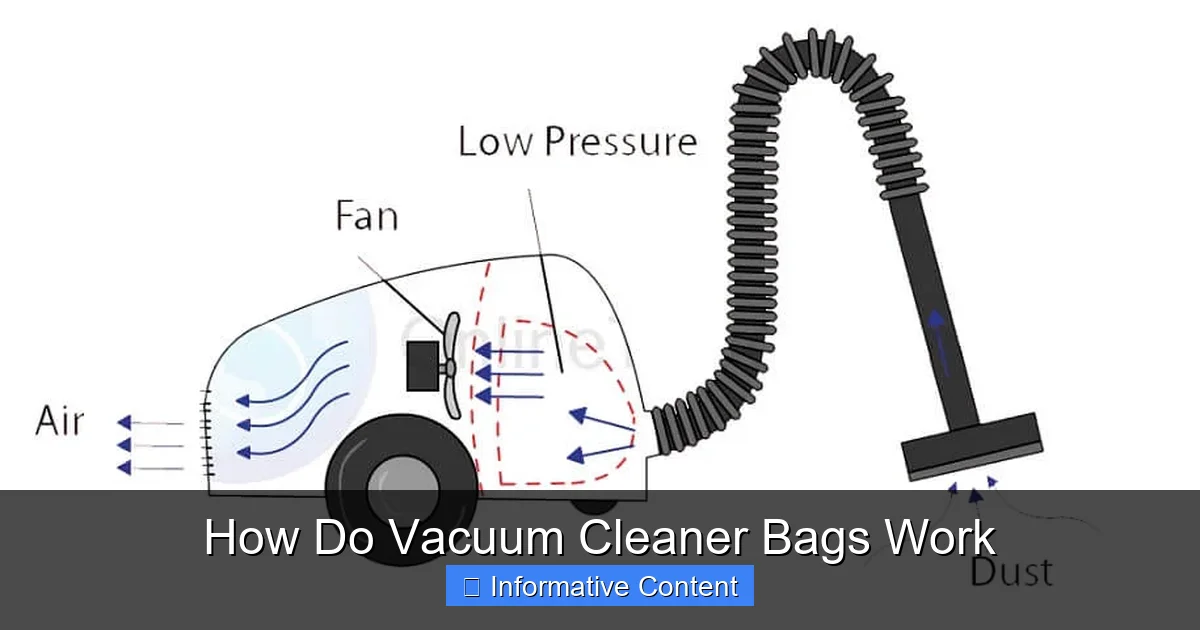
When you turn on your vacuum cleaner, an electric motor spins a fan at incredibly high speeds. This fan creates an area of low pressure inside the vacuum, essentially “sucking” the air in. Think of it like drinking through a straw – you create low pressure in your mouth, and the liquid gets pushed up by the higher atmospheric pressure outside. In a vacuum, the outside air, along with all the dust and debris on your floor, rushes into the low-pressure zone created by the fan. This dirty air travels up the hose and into the main body of the vacuum.
The Role of the Bag in the Airflow Path
Once the dirty air enters the vacuum cleaner, its first destination is the bag. The bag isn’t just a passive collector; it’s an active part of the airflow system. It’s positioned directly in the path of the incoming air. The air must pass through the bag to reach the motor and then exit the vacuum. This direct placement is crucial for how vacuum cleaner bags work because it ensures that all the incoming air is filtered *before* it reaches any sensitive components or is expelled back into your room. The bag acts as a barrier, allowing air to flow freely, but stopping solid particles in their tracks.
Anatomy of a Vacuum Cleaner Bag
Visual guide about How Do Vacuum Cleaner Bags Work
Image source: media.rainpos.com
To truly appreciate how vacuum cleaner bags work, we need to look inside. These aren’t just flimsy paper sacks; they are engineered with specific materials and structures designed for optimal performance.
Material Matters: From Paper to Synthetic
Historically, vacuum bags were made primarily from thick paper. While paper bags were effective for their time, modern advancements have introduced superior materials. Today, many high-quality bags are constructed from multiple layers of synthetic materials, often a blend of micro-fibers. These synthetic materials offer several advantages:
- Durability: They are far more tear-resistant than paper, reducing the risk of a burst bag and a messy cleanup.
- Enhanced Filtration: Synthetic fibers can be woven or layered to create much finer pores, dramatically improving their ability to trap microscopic particles.
- Moisture Resistance: Synthetic materials are less susceptible to damage from small amounts of moisture, which can degrade paper bags.
The Layers of Filtration
This is where the magic really happens. A typical modern vacuum cleaner bag isn’t just one layer; it’s usually a multi-layered system, much like an onion. Each layer serves a specific purpose in the filtration process:
- Outer Layer: Often the strongest layer, providing structural integrity and catching larger debris.
- Middle Layers (Microfiltration): These are the workhorses. They consist of tightly packed fibers or non-woven fabrics with progressively smaller pores. As air passes through these layers, increasingly smaller particles are trapped. This is where microscopic dust, pollen, pet dander, and even some bacteria are captured.
- Inner Layer (Pre-filter/Support): Sometimes there’s an inner layer that acts as an initial coarse filter, protecting the finer layers from excessive clogging by very large debris, or simply providing support.
This layered design significantly enhances how vacuum cleaner bags work, ensuring a high level of filtration efficiency.
Sealing Mechanisms and Collars
The effectiveness of a vacuum bag isn’t just about the material; it’s also about how it fits and seals within the vacuum cleaner. Every bag has a sturdy cardboard or plastic collar around its opening. This collar serves several vital functions:
- Secure Connection: It creates a tight seal with the vacuum’s intake port, ensuring that all incoming air passes *through* the bag and none escapes around it.
- Structural Support: It holds the bag in place, preventing it from collapsing or getting sucked into the motor.
- Hygienic Closure: Many modern bags feature a self-sealing flap or a rubberized seal on the collar. When you remove a full bag, this flap automatically closes, trapping all the dust and debris inside. This prevents a cloud of dust from escaping back into your home during disposal, a key benefit when considering how vacuum cleaner bags work for allergy sufferers.
The Filtration Process in Detail
Now that we understand the anatomy, let’s trace the journey of a dust particle through the bag and see exactly how vacuum cleaner bags work to trap it.
Capturing Dust and Debris
When the air, full of dirt, enters the vacuum cleaner bag, several things happen:
- Initial Impact: The air stream hits the inner surface of the bag. The rapid change in direction and reduction in air velocity causes larger, heavier particles (like crumbs, hair, and grit) to lose momentum and simply drop to the bottom of the bag.
- Surface Filtration: The remaining air, still carrying finer particles, is forced through the first layer of the bag material. This layer acts like a sieve, trapping particles larger than its pores.
- Depth Filtration: As the air continues through the subsequent layers, the filtration becomes finer. Particles get entangled in the maze of fibers within the bag material. Some particles are too large to pass through the microscopic gaps between fibers, while others are caught by electrostatic attraction.
This multi-stage process ensures that a vast majority of the debris is captured effectively.
Microfiltration and Allergen Control
This is arguably the most important aspect of how vacuum cleaner bags work, especially for people with allergies or asthma. High-efficiency bags (often labeled as HEPA-type or Allergen bags) are specifically designed to trap microscopic particles, including:
- Pollen: A common trigger for seasonal allergies.
- Pet Dander: Tiny flakes of skin shed by animals, which are highly allergenic.
- Dust Mite Faeces: The primary allergen produced by dust mites, which are microscopic creatures that thrive in household dust.
- Mold Spores: Can cause respiratory issues.
- Bacteria: Though vacuums aren’t sterilizers, bags can trap some airborne bacteria.
These bags utilize extremely dense layers of synthetic micro-fibers that can capture particles as small as 0.3 microns with high efficiency. To give you perspective, a human hair is about 50-100 microns thick. Dust mites are around 100-300 microns, while pet dander is 5-10 microns. The ability to trap these tiny irritants significantly improves indoor air quality.
Airflow Dynamics Inside the Bag
Maintaining proper airflow is critical. As the bag fills, the amount of surface area available for air to pass through decreases, and the resistance to airflow increases. This is why suction can diminish as a bag gets full. However, good bag design aims to distribute the incoming dirt as evenly as possible to maximize its capacity and maintain suction for longer. Some bags have internal baffles or are designed to expand in a specific way to optimize airflow even as they fill up. The clever engineering of how vacuum cleaner bags work minimizes the compromise between filtration and airflow.
Why Bagged Vacuums Still Rule (for some)
Despite the rise of bagless options, bagged vacuum cleaners continue to be a preferred choice for many consumers, and for good reasons related to how vacuum cleaner bags work.
Hygiene and Allergen Retention
One of the biggest advantages of bagged vacuums is the hygienic disposal of dirt. With a self-sealing bag, you simply remove the full bag and discard it directly into the trash without coming into contact with the dust or releasing a cloud of allergens back into your freshly cleaned room. This is a stark contrast to emptying a bagless dirt bin, which often involves shaking out dust and can release a significant amount of captured particles back into the air, especially for allergy sufferers. The sealed system is paramount to understanding how vacuum cleaner bags work to protect your health.
Ease of Disposal
There’s no messy bin to clean out, no filters to wash (though some bagged vacuums still have secondary filters that need attention). When the bag is full, you just toss it. This convenience is a major draw for many users who prefer a quick and clean disposal method. Plus, there’s no need to rinse and dry components, saving time and effort.
Maintaining Motor Life
The bag acts as the primary defense for your vacuum’s motor. By capturing the vast majority of dust and debris before it reaches the motor compartment, it prevents fine particles from building up on critical moving parts, causing friction, overheating, or premature wear. This protection is a significant factor in extending the lifespan of your vacuum cleaner. The robust filtration of how vacuum cleaner bags work is key to keeping your appliance running smoothly for years.
Practical Tips for Bagged Vacuum Owners
To ensure your bagged vacuum cleaner performs at its best and to maximize the benefits of how vacuum cleaner bags work, follow these practical tips.
When to Change Your Vacuum Bag
This is crucial for performance. Don’t wait until the bag is bursting at the seams!
- Rule of Thumb: Change the bag when it’s about two-thirds full. Even if it doesn’t look completely full, the collected dust can significantly reduce airflow and suction power.
- Loss of Suction: If you notice your vacuum isn’t picking up dirt as effectively, the first thing to check (after clearing any clogs) is the bag. A full bag is the most common culprit.
- Smell: If your vacuum starts emitting an unpleasant odor, it might be due to bacteria or mold growing in the dirt collected in an old bag. Change it immediately.
- Visible Indicator: Many modern vacuums have a “bag full” indicator light or gauge. Pay attention to it!
Choosing the Right Bag for Your Vacuum
Not all bags are created equal, and using the wrong one can significantly impair how vacuum cleaner bags work for your specific model.
- Model Specific: Always use the specific bag designed for your vacuum cleaner make and model. Check your vacuum’s manual or the manufacturer’s website. The collar dimensions, bag size, and material are all tailored.
- Quality Matters: Invest in high-quality bags, especially if you have allergies or pets. HEPA-type bags or those designed for allergen filtration offer superior particle retention compared to basic paper bags. They might cost a little more, but the improved air quality and motor protection are worth it.
- Genuine vs. Generic: While generic bags can be cheaper, they sometimes don’t fit as perfectly, potentially leading to leaks or reduced filtration. Stick to genuine manufacturer bags or highly-rated aftermarket alternatives for best results.
The Importance of Regular Maintenance
While bags do most of the heavy lifting, other components still need attention.
- Check Filters: Many bagged vacuums still have a pre-motor filter (protecting the motor even further) and a post-motor filter (for final air purification). Check your manual for their locations and cleaning/replacement schedule.
- Clear Hoses and Brushes: Periodically check the hose, wand, and brush roll for clogs from hair or debris. A clear path is essential for maximum suction.
- Clean Exterior: Wipe down the exterior of your vacuum cleaner regularly to prevent dust buildup.
Conclusion
So, the next time you marvel at your freshly vacuumed floor, take a moment to appreciate the humble vacuum cleaner bag. Far from being a simple dustbin, it’s a sophisticated filtration device, intricately designed to capture particles, protect your vacuum’s motor, and most importantly, safeguard the air quality in your home. Understanding how vacuum cleaner bags work reveals a commitment to hygiene and efficiency.
From the powerful suction that pulls in the dirt to the multi-layered materials that meticulously trap microscopic allergens, every aspect of the bag’s design plays a critical role. By choosing the right bags and changing them regularly, you’re not just extending the life of your appliance; you’re actively contributing to a cleaner, healthier living environment for you and your family. The bag might be out of sight, but its impact is undeniably significant.
Frequently Asked Questions
How does a vacuum cleaner create suction to begin with?
A vacuum cleaner creates suction using an electric motor that rapidly spins a fan. This spinning fan creates an area of low air pressure inside the vacuum’s housing. The higher atmospheric pressure outside then pushes air, along with dust and debris, into this low-pressure zone and through the cleaning head.
What is the difference between a HEPA-type bag and a standard bag?
A HEPA-type bag is designed with denser, finer filtration layers capable of capturing a much higher percentage of microscopic particles (down to 0.3 microns) compared to a standard bag. This includes common allergens like pollen, pet dander, and dust mite faeces, making them ideal for allergy sufferers and significantly enhancing how vacuum cleaner bags work for air purification.
Why do some vacuum cleaner bags have a self-sealing mechanism?
The self-sealing mechanism on vacuum cleaner bags is designed for hygienic disposal. When the bag is removed from the vacuum, a flap or seal automatically closes the opening, trapping all the dust and allergens inside. This prevents a cloud of dust from escaping back into the air, which is particularly beneficial for those with allergies or asthma.
Can I reuse or empty a vacuum cleaner bag?
No, vacuum cleaner bags are designed for single use and should not be emptied and reused. Attempting to empty a bag is messy, releases trapped allergens back into your environment, and can damage the bag’s delicate filter layers, compromising its ability to effectively filter air and how vacuum cleaner bags work.
How does a full bag impact the vacuum cleaner’s motor?
A full vacuum cleaner bag significantly restricts airflow, causing the vacuum’s motor to work harder to maintain suction. This increased strain can lead to the motor overheating, reduce its lifespan, and potentially cause premature failure. Regular bag changes are essential for protecting your vacuum’s motor.
Do bagless vacuums filter as effectively as bagged vacuums?
While many bagless vacuums feature advanced filtration, including HEPA filters, the act of emptying the dust bin can often release a significant amount of dust and allergens back into the air. Bagged vacuums, with their sealed disposal system, often offer a more hygienic solution for trapping and containing allergens, especially for sensitive individuals.