How Do I Dispose of an Old Vacuum Cleaner
Disposing of an old vacuum cleaner responsibly is crucial for environmental protection. Don’t just toss it in the regular trash; instead, consider donating working models, recycling through e-waste programs, or utilizing manufacturer take-back schemes. Always remove batteries and clean the unit thoroughly before exploring these sustainable options to ensure proper handling.
How Do I Dispose of an Old Vacuum Cleaner?
We all love the feeling of a clean home, and a trusty vacuum cleaner is usually our best friend in that mission. But what happens when your loyal cleaning companion finally kicks the bucket? Perhaps it’s lost its suction power, the motor is making strange noises, or you’ve simply upgraded to a shiny new model. Suddenly, you’re left with a bulky, often heavy, piece of defunct machinery, and the question looms: “How do I dispose of an old vacuum cleaner?”
It might seem like a simple problem, but tossing an old vacuum into the regular trash isn’t just irresponsible; it can often be illegal and harmful to our planet. Vacuum cleaners are complex appliances, containing a mix of plastics, metals, electronic components, and sometimes even hazardous materials like lead in older circuit boards or mercury switches. Each of these components requires careful handling to prevent environmental damage and to reclaim valuable resources.
Navigating the world of waste disposal can be confusing, but don’t worry, we’re here to help you understand your options. This comprehensive guide will walk you through everything you need to know, from preparing your old vacuum for disposal to exploring the most environmentally sound methods. Let’s make sure your old cleaner’s journey to its final resting place (or rebirth!) is as responsible as possible.
Key Takeaways
- Don’t Trash It: Your old vacuum cleaner shouldn’t go into your regular household trash due to its electronic components and plastic parts, which can harm the environment in landfills.
- Prep Before Disposal: Always clean out your vacuum, remove any bags or empty canisters, and detach rechargeable batteries before attempting to dispose of it.
- Recycle E-Waste: For non-working or irreparable vacuum cleaners, e-waste recycling centers are often the best and most environmentally friendly option. They safely dismantle and reclaim valuable materials.
- Donate or Sell: If your vacuum cleaner is still in good working condition, consider donating it to a charity, thrift store, or local shelter, or selling it to give it a second life.
- Check Local Regulations: Disposal rules vary significantly by location. Always consult your local council or waste management authority for specific guidelines on how to dispose of an old vacuum cleaner in your area.
- Batteries Are Different: Rechargeable batteries (especially lithium-ion ones found in cordless and robot vacuums) must be removed and recycled separately at designated battery collection points, as they pose fire risks if not handled correctly.
- Explore Manufacturer Programs: Some vacuum cleaner brands offer take-back or recycling programs for their old products, providing a convenient and responsible disposal pathway.
Quick Answers to Common Questions
Can I put my old vacuum cleaner in the regular household trash?
No, you should not put your old vacuum cleaner in the regular trash. It contains materials like plastics, metals, and electronics that can harm the environment in landfills and are often recyclable.
What should I do with the battery from my cordless vacuum?
Always remove rechargeable batteries from cordless or robot vacuums and recycle them separately at designated battery collection points, as they pose a fire risk if not handled correctly.
Where is the best place to recycle a non-working vacuum cleaner?
The best place to recycle a non-working vacuum cleaner is at an e-waste (electronic waste) recycling center or during a local e-waste collection event.
Can I donate a broken vacuum cleaner?
Generally, charities and thrift stores prefer working items. A broken vacuum cleaner is usually best recycled through e-waste programs, though some repair shops might take it for parts.
Do vacuum cleaner manufacturers offer take-back programs?
Some vacuum cleaner manufacturers do offer take-back or recycling programs for their old products. It’s worth checking their official website for details on their sustainability initiatives.
📑 Table of Contents
Why Proper Vacuum Cleaner Disposal Matters
Before we dive into the “how-to,” it’s crucial to understand the “why.” Why can’t you just throw your old vacuum cleaner in the dumpster? The answer lies in its composition and the environmental impact of improper disposal.
Environmental Impact of Landfills
When you simply toss electronics or appliances like vacuum cleaners into a general landfill, they contribute to a growing problem. Landfills are rapidly filling up, and these items don’t just disappear. Plastics can take hundreds of years to decompose, breaking down into microplastics that pollute soil and water. Metals might rust and leach into the ground, contaminating groundwater. Space in landfills is finite, and by disposing of items improperly, we hasten their capacity limits.
Hazardous Materials and Resource Conservation
While a vacuum cleaner isn’t packed with highly toxic waste like a car battery, it does contain components that are problematic in landfills. Circuit boards can contain small amounts of lead, mercury, or cadmium. Some plastics can release toxic chemicals as they degrade. Moreover, vacuum cleaners are rich in valuable resources: steel, aluminum, copper wiring, and various types of plastic. When these materials are landfilled, they are lost forever, meaning new virgin resources must be extracted to create new products. Recycling, on the other hand, allows us to reclaim these materials, reducing the need for new raw materials and saving significant amounts of energy in manufacturing.
Before You Dispose: The Pre-Disposal Checklist
Before you load up your old vacuum cleaner and head to a recycling center or call for a pick-up, there are a few important steps you should take. These preparatory actions ensure safety, hygiene, and make the disposal process much smoother and more effective.
Clean It Out Thoroughly
This might seem obvious, but it’s often overlooked. Nobody wants to deal with a dusty, dirty vacuum cleaner, especially if it’s going to be handled by others for recycling or potential donation. Empty the dust bag or canister completely. Shake out any remaining debris from hoses, attachments, and the brush roll. A clean vacuum is easier to handle and more appealing if you’re considering donation or selling it for parts.
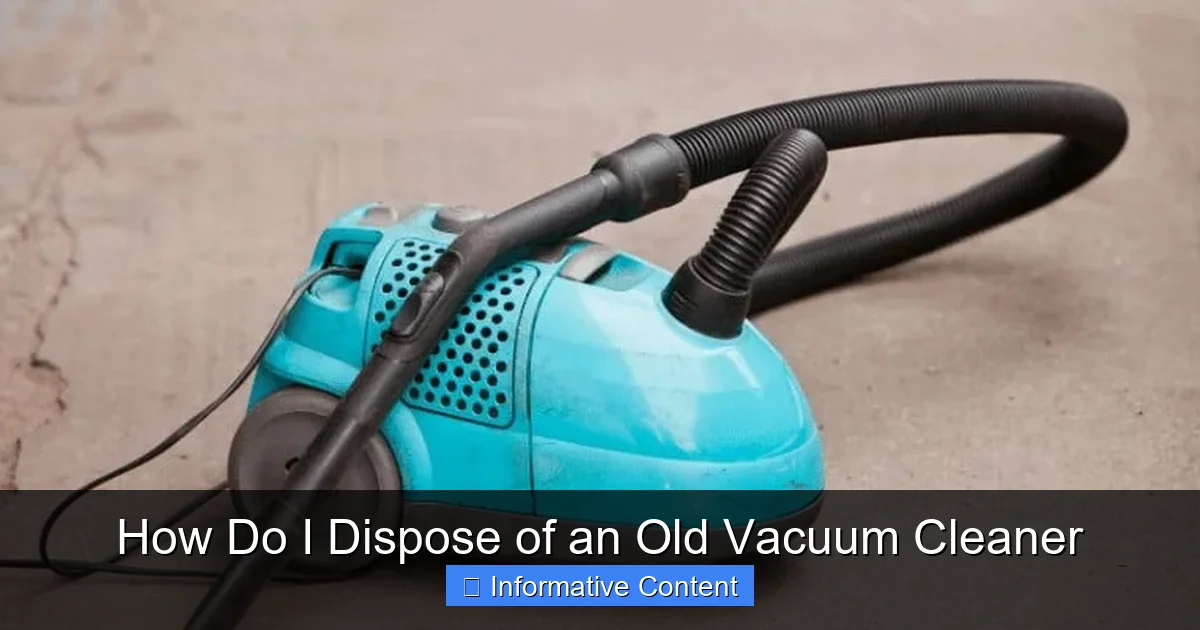
Visual guide about How Do I Dispose of an Old Vacuum Cleaner
Image source: image.pollinations.ai
Remove the Bag or Empty the Canister
If your vacuum uses disposable bags, remove the final bag and dispose of it in your regular trash. For bagless models, ensure the canister is entirely empty and wiped clean. You don’t want old dust and allergens escaping during transport or processing.
Detach Any Rechargeable Batteries
This is a critical step, especially for cordless or robot vacuum cleaners. Lithium-ion batteries, common in these devices, are considered hazardous waste and pose a fire risk if damaged or improperly disposed of. They absolutely *cannot* go into regular trash or general recycling. Most rechargeable batteries can be removed from the vacuum cleaner. Look for a battery compartment, often secured with screws. Once removed, you’ll need to recycle them separately at a designated battery recycling point. Many electronics stores, hardware stores, and local waste facilities have special collection bins for batteries. If you can’t remove the battery yourself, inquire with the recycling facility on how to proceed.
Assess for Reusability or Donation Potential
Even if you’re done with it, your old vacuum cleaner might still have life left! Before you decide to recycle or discard it, take a moment to assess its condition. Does it still work? Is it only slightly broken and easily fixable? Sometimes, a simple clog or a worn belt can be the issue. If it’s in good working order, it could be a valuable item for someone else.
Your Top Options for Responsible Vacuum Cleaner Disposal
Now that your old vacuum is prepped and ready, let’s explore the best avenues for how to dispose of an old vacuum cleaner responsibly. These options prioritize environmental protection and resource recovery.
Donating or Selling (If Working)
If your vacuum cleaner is still functional, or perhaps just needs a minor repair, giving it a second life is the most sustainable option. This extends its utility and prevents it from entering the waste stream prematurely.
- Charity Shops/Thrift Stores: Many charities and thrift stores accept working small appliances. Call ahead to confirm their policy on vacuum cleaners. They will often clean, test, and resell them at an affordable price, supporting a good cause in the process.
- Local Shelters: Homeless shelters or domestic violence shelters are often in need of household items. Your working vacuum could make a real difference to someone rebuilding their life.
- Online Marketplaces/Local Classifieds: Websites like Facebook Marketplace, Craigslist, or local community groups are excellent places to sell or even give away a working vacuum cleaner. Someone might be looking for a cheap replacement or a secondary vacuum for their garage.
- Repair Shops/Parts Dealers: If your vacuum has a specific broken part but the rest is fine, a local appliance repair shop might take it for spare parts, especially for popular models.
Recycling Programs (E-waste)
For vacuum cleaners that are truly at the end of their life – broken beyond repair, very old, or simply not worth the effort to fix – e-waste recycling is the gold standard. E-waste (electronic waste) facilities are equipped to dismantle appliances, separate materials like plastics, metals, and circuit boards, and process them for recycling.
- Local E-waste Recycling Centers: Most cities and counties have dedicated e-waste recycling centers or regular collection events. Check your local government’s waste management website or Earth911.com for locations and schedules. These centers ensure that valuable materials are reclaimed and hazardous components are handled safely.
- Retailer Take-Back Programs: Some large electronics retailers, particularly those that sell appliances, offer in-store recycling programs for old electronics, sometimes even including vacuum cleaners. It’s worth calling your local Best Buy, Staples, or similar store to inquire.
Manufacturer Take-Back Programs
A growing number of manufacturers are taking responsibility for the entire lifecycle of their products. Some vacuum cleaner brands offer their own take-back or recycling programs. This is often a convenient and highly responsible way to dispose of an old vacuum cleaner, as the manufacturer knows exactly how to best recycle their specific product. Check the official website of your vacuum cleaner’s brand (e.g., Dyson, Shark, Miele, Hoover) for information on their recycling initiatives or sustainability efforts.
Local Council Collections / Bulk Waste Days
Many municipalities offer special services for bulky item disposal or have specific days for collecting electronic waste.
- Curbside Bulk Waste Pickup: Your local council might offer a service where you can schedule a pickup for large household items, including vacuum cleaners. There might be a small fee, and you’ll typically need to place it at the curb on a specific day.
- Drop-off Events: Some communities host annual or semi-annual “Household Hazardous Waste” or “Electronics Recycling” events. These are great opportunities to dispose of your old vacuum cleaner along with other problematic items.
Always check your local council’s website or waste management guide for specific rules, schedules, and any associated costs.
Specialized Waste Management Services
If you’re unable to access public recycling services or have multiple items to dispose of, you might consider a private waste management company. These companies often offer convenient pick-up services for electronics and other bulky waste. While usually more expensive, they can be a good option for those seeking convenience or dealing with large quantities of waste. Just ensure they are reputable and follow proper recycling practices.
Dealing with Different Types of Vacuums
While the general principles apply, there are slight nuances depending on the type of vacuum cleaner you have. Knowing these can help you better understand how to dispose of an old vacuum cleaner effectively.
Corded Upright/Canister Vacuums
These are typically the most straightforward to recycle. Once cleaned out and prepped (no batteries to remove here!), they generally fall under standard e-waste guidelines. Their main components are plastic and metal, making them prime candidates for material recovery at e-waste facilities. The cords themselves contain copper, which is a valuable recyclable metal.
Cordless/Robot Vacuums (Battery Specifics)
This is where the battery removal step becomes paramount. Cordless stick vacuums, handheld vacuums, and robotic vacuum cleaners almost always contain rechargeable lithium-ion batteries. As mentioned, these must be removed and recycled separately. If you cannot safely remove the battery, contact your local e-waste facility for guidance. They might have specific instructions or services for units with integrated batteries. Never put these types of vacuums, with their batteries still inside, into general trash or recycling bins due to the fire risk.
Handheld Vacuums
Similar to cordless models, handheld vacuums are often battery-powered. Follow the same procedure: remove and recycle the battery separately. If it’s a corded handheld, treat it like any other small corded appliance for e-waste recycling.
Wet/Dry Vacuums
For wet/dry vacuums, the key is to ensure they are completely dry and thoroughly cleaned before disposal. Any residual water or debris can cause issues during recycling or attract pests if left for donation. Once dry and clean, treat them as you would a corded upright or canister vacuum for e-waste recycling.
The “What Not To Do” List
Knowing the right way is important, but so is understanding the wrong way. Avoid these common mistakes when trying to figure out how to dispose of an old vacuum cleaner.
Don’t Just Toss It in the Regular Trash
We’ve reiterated this throughout, but it bears repeating: your household waste bin is not the place for an old vacuum cleaner. It’s often illegal, contributes to landfill issues, and prevents valuable materials from being recycled. Most waste services won’t even pick up large electronics if they are outside of designated bulk trash days.
Avoid Illegal Dumping
Leaving an old vacuum cleaner on the side of the road, in an alley, or in a natural area is illegal, unsightly, and harmful. It can lead to fines, pollutes the environment, and creates an eyesore for your community. Always use official and responsible disposal channels.
Don’t Burn It
Attempting to burn an old vacuum cleaner, even if you think it’s just plastic and metal, is extremely dangerous and harmful. Plastics release toxic fumes when burned, and electronic components can emit hazardous chemicals. It’s a health risk to yourself and the environment, and usually illegal.
Making an Informed Decision & Supporting Sustainability
By now, you should feel much more confident about how to dispose of an old vacuum cleaner. The core message is clear: responsible disposal is within reach, and your efforts make a real difference.
Research Local Regulations
The single most important step you can take is to familiarize yourself with your local waste management regulations. A quick search on your city or county’s official website for “electronics recycling” or “bulky waste disposal” will provide precise information relevant to your area. Regulations can vary significantly even between neighboring towns, so local knowledge is power.
Ask Questions
If you’re unsure about a specific item or process, don’t hesitate to call your local waste management department or a reputable recycling center. They are there to help and would rather answer a question than see an item improperly disposed of.
Encourage Others
Share what you’ve learned! When friends or family ask how to dispose of an old vacuum cleaner or other electronics, you can guide them toward responsible choices. Collective action has a much greater impact on protecting our environment.
Disposing of an old vacuum cleaner might seem like a small task, but choosing the right method contributes to a much larger effort of environmental stewardship. By taking the time to prepare your old appliance and choose a sustainable disposal route, you’re not just decluttering your home; you’re actively participating in a greener, more sustainable future.
Conclusion
So, the next time your trusty vacuum cleaner reaches the end of its life, you’ll know exactly what to do. Remember to clean it thoroughly, remove any batteries, and then choose the most appropriate path: donating a working unit, recycling it at an e-waste center, or exploring manufacturer take-back programs. Avoid the temptation to simply toss it in the trash. Your thoughtful actions in disposing of an old vacuum cleaner play a vital role in conserving resources, reducing landfill waste, and protecting our precious planet. Make the responsible choice, and give your old cleaner a dignified and environmentally friendly send-off.
Frequently Asked Questions
Why can’t I just throw my vacuum cleaner in the trash?
Throwing your vacuum cleaner in the regular trash is harmful because it takes up valuable landfill space and contains various materials like plastics, metals, and electronics. These components can leach harmful substances into the environment as they degrade, contributing to pollution rather than being safely recycled.
How do I find an e-waste recycling center near me?
To find an e-waste recycling center, check your local city or county government’s waste management website. Websites like Earth911.com also offer search tools to locate recycling facilities for electronics and other specific waste types in your area.
Is it safe to disassemble my vacuum cleaner myself for parts?
Disassembling a vacuum cleaner can be done by those with mechanical knowledge and proper tools, especially if you’re salvaging parts. However, for safety, be cautious of electrical components (even when unplugged) and the potential for sharp edges. If unsure, it’s safer to let professionals at a recycling facility handle the breakdown.
What if my vacuum cleaner still works, but I want to get rid of it?
If your vacuum cleaner is still in good working condition, the most sustainable options are to donate it to a local charity, thrift store, or shelter, or sell it through online marketplaces. This gives the appliance a second life and helps others while keeping it out of the waste stream.
Are all vacuum cleaner batteries recyclable?
Most rechargeable batteries found in vacuum cleaners (such as lithium-ion) are indeed recyclable, but they require specialized processing separate from general waste. It’s crucial to remove them from the vacuum and take them to a designated battery recycling drop-off point, not your regular recycling bin.
What’s the best way to prepare a vacuum cleaner for disposal?
The best way to prepare a vacuum cleaner for disposal is to first thoroughly clean it out by emptying any dust bags or canisters. Crucially, if it’s a cordless model, remove any rechargeable batteries. This ensures hygiene, safety, and facilitates the recycling or donation process.