How to Choose a Robot Vacuum Cleaner
Choosing the perfect robot vacuum cleaner doesn’t have to be overwhelming. The key is understanding your unique home needs, from floor types and pet hair to layout and budget. Prioritize features like navigation, suction power, and battery life, and consider smart functionalities like app control and no-go zones to ensure you select a device that truly simplifies your cleaning routine.
Stepping into the world of smart home devices, few innovations promise to reclaim your time quite like the humble robot vacuum cleaner. Imagine coming home to freshly vacuumed floors without lifting a finger – it’s a dream many of us share. These clever gadgets have evolved from simple bumper-and-go cleaners to sophisticated machines capable of mapping your home, avoiding obstacles, and even emptying themselves. But with so many models, features, and price points, figuring out how to choose a robot vacuum cleaner that’s just right for you can feel like a mission in itself.
Don’t worry, you’re not alone. The sheer volume of options can be overwhelming, leading to analysis paralysis. Do you need a mop function? What about self-emptying? Is LiDAR mapping really better than camera-based navigation? This comprehensive guide is designed to cut through the confusion, helping you understand the essential factors to consider so you can confidently select the perfect robot vacuum cleaner to keep your floors pristine and your life a little easier. We’ll explore everything from basic floor types to advanced smart features, ensuring your investment truly pays off in sparkling results and regained free time.
So, let’s embark on this journey to find your ideal automated cleaning companion. By the end of this article, you’ll be equipped with all the knowledge needed to make an informed decision, transforming your home cleaning routine from a chore into a seamless, hands-off experience. Get ready to say goodbye to daily vacuuming and hello to more leisure time, all thanks to your new, perfectly chosen robot vacuum cleaner.
Key Takeaways
- Assess Your Home’s Needs First: Before looking at specific models, identify your floor types (hardwood, carpet), if you have pets (and their hair type), your home’s size and layout, and common obstacles. This will guide your feature priorities.
- Navigation and Mapping are Crucial: Opt for a robot vacuum cleaner with advanced navigation (LiDAR, vSLAM) and mapping capabilities for efficient, systematic cleaning, the ability to set virtual walls, and targeted room cleaning.
- Prioritize Suction Power for Pet Hair and Carpets: If you have pets or a lot of carpet, higher kPa suction power and specialized brushes (tangle-free or multi-surface) are essential for effective deep cleaning.
- Consider Smart Features for Convenience: App control, scheduling, voice assistant integration, and no-go zones offer significant convenience, allowing you to customize and manage your cleaning experience effortlessly.
- Don’t Overlook Battery Life and Dustbin Size: For larger homes, a longer battery life and a larger dustbin (or a self-emptying dock) are vital to ensure the robot vacuum cleaner can complete its job without frequent interruptions.
- Budget Wisely and Read Reviews: Robot vacuum cleaners range widely in price. Determine your budget, but also read independent reviews to gauge real-world performance, reliability, and customer satisfaction for models within your price range.
Quick Answers to Common Questions
What’s the best robot vacuum for pet hair?
For pet hair, prioritize a robot vacuum cleaner with strong suction (3000 Pa+), tangle-free rubber brush rolls, and ideally a self-emptying dock to manage accumulated hair without frequent manual emptying.
Do I need a robot vacuum with a mop function?
It depends on your preference. A mop function is great for light daily maintenance on hard floors but generally won’t replace a thorough manual mop. If you have mostly carpets, it’s unnecessary.
Is LiDAR mapping really worth it?
Yes, LiDAR mapping is highly recommended, especially for larger or more complex homes. It allows for efficient, systematic cleaning, accurate mapping, no-go zones, and targeted room cleaning, making the robot much smarter and more effective.
How often do I need to empty a robot vacuum’s dustbin?
If you have a standard robot vacuum cleaner, you might need to empty the dustbin after every 1-3 cleaning cycles, especially if you have pets. With a self-emptying dock, you might only need to empty the larger bag/bin once a month or less.
Can a robot vacuum clean multiple floors?
Yes, many advanced robot vacuum cleaners can map and store multiple floor plans. You’ll typically need to manually move the robot to a different floor, and it will recognize its location and use the correct map.
📑 Table of Contents
1. Understand Your Home’s Unique Needs First
Before diving into technical specifications, the most important step is to assess your own living space and lifestyle. Every home is different, and what works for one might not be ideal for another. Thinking about these core aspects will help you narrow down your choices significantly when selecting a robot vacuum cleaner.
What are Your Floor Types?
This is perhaps the most fundamental question. Do you have mostly hardwood floors, tiles, laminate, or a mix? What about carpets?
- Hard Floors (Hardwood, Tile, Laminate): Most robot vacuum cleaners perform exceptionally well on these surfaces. Look for models with soft brush rolls to avoid scratches and good suction power to pick up dust, crumbs, and pet hair. Mopping functions can be a huge bonus here.
- Low-Pile Carpets/Rugs: Many mid-range to high-end robot vacuums handle low-pile carpets with ease. Ensure they have sufficient suction power (often measured in Pascals, kPa) and brushes designed to agitate carpet fibers for deeper cleaning.
- High-Pile Carpets/Thick Rugs: This is where many standard robot vacuums struggle. If you have thick shag carpets or high-pile rugs, you’ll need a robot vacuum cleaner with very strong suction, powerful brush rolls, and enough clearance to avoid getting stuck. Some models even have a “carpet boost” mode, automatically increasing suction when they detect carpet.
Do You Have Pets?
Pet owners, rejoice! Robot vacuums can be a game-changer for managing shedding. However, pet hair presents specific challenges.
- Hair Type: Long, tangled pet hair requires specific features. Look for robot vacuum cleaners with tangle-free brush rolls or rubber brushes instead of traditional bristle brushes, which can get easily clogged.
- Allergies: If you or someone in your home has allergies, an advanced filtration system (like a HEPA filter) is non-negotiable. This prevents tiny dust and dander particles from being released back into the air.
- Accidents: This is a delicate topic, but some advanced robot vacuums now feature “pet waste avoidance” technology, using cameras to identify and steer clear of solid pet waste, preventing a truly horrifying mess.
How Large and Complex is Your Home Layout?
The size and complexity of your home will dictate battery life, navigation capabilities, and even dustbin capacity.
- Small Apartments: A basic robot vacuum cleaner with decent battery life and simple navigation might suffice. You might not need advanced mapping features.
- Medium to Large Homes: You’ll definitely want a robot vacuum cleaner with excellent battery life (120+ minutes), efficient navigation (like LiDAR or vSLAM), and the ability to map multiple floors. Larger dustbins or self-emptying stations become highly beneficial here.
- Clutter and Obstacles: If your home typically has lots of furniture, cables, or small objects on the floor, look for models with advanced object recognition and avoidance to prevent getting stuck or damaging items.
2. Essential Features to Prioritize
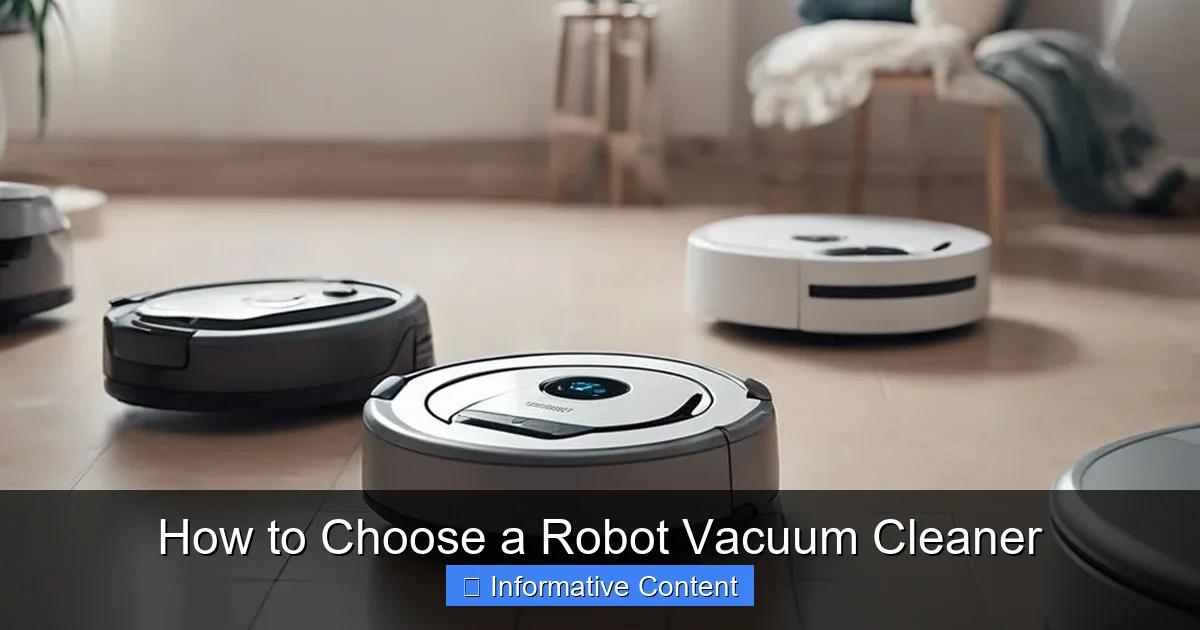
Visual guide about How to Choose a Robot Vacuum Cleaner
Image source: bestvacuumexpert.com
Once you know your basic needs, it’s time to look at the core functionalities that make a robot vacuum cleaner effective and convenient.
Navigation and Mapping Capabilities
This is arguably the most crucial feature, determining how efficiently and effectively your robot vacuum cleaner cleans.
- Random Navigation (Entry-Level): Older or budget models often use “bumper-and-go” navigation, bouncing randomly until the battery dies. They often miss spots and take longer. Not ideal for larger homes.
- Systematic Navigation (Mid-Range): Uses gyroscopes or basic optical sensors to clean in more orderly rows. Better than random, but still can be less efficient.
- Advanced Mapping (High-End): This is where the magic happens.
- LiDAR (Laser Detection and Ranging): Creates highly accurate maps of your home, allowing for efficient, systematic cleaning, room-specific cleaning, and the ability to set virtual walls and no-go zones via an app. Excellent for complex layouts.
- vSLAM (Visual Simultaneous Localization and Mapping): Uses a camera to map the environment and track its location. Can be effective but might struggle in very dark conditions.
An advanced robot vacuum cleaner with mapping means it knows where it has been, where it needs to go, and can return to its dock more reliably.
Suction Power
Measured in Pascals (Pa or kPa), higher numbers generally mean better suction.
- General Cleaning (Dust, Debris): 1500-2500 Pa is usually sufficient for hard floors and light carpet cleaning.
- Pet Hair and Deep Carpet Cleaning: Aim for 3000 Pa or more. Some premium robot vacuum cleaners offer 5000 Pa or even higher, which makes a noticeable difference on stubborn dirt and embedded pet hair in carpets.
Battery Life and Recharging
The longer the battery life, the larger the area a robot vacuum cleaner can cover on a single charge.
- Typical Run Time: Most models offer 60-180 minutes of run time. For smaller apartments, 60-90 minutes might be enough. For larger homes or homes with lots of carpet, look for 120 minutes or more.
- Recharge and Resume: Essential for larger homes. A smart robot vacuum cleaner will return to its charging dock when the battery is low, recharge, and then resume cleaning exactly where it left off.
Dustbin Capacity
A larger dustbin means less frequent emptying.
- Standard: 0.3-0.6 liters is common. If you have pets or a large home, you’ll be emptying it frequently.
- Self-Emptying Docks: This is a premium feature that revolutionizes convenience. The robot vacuum cleaner empties its small internal dustbin into a larger bag or bin in its charging dock, which might only need to be emptied once a month or less. This is a huge time-saver, especially for pet owners or those with allergies who want to avoid contact with dust.
3. Smart Features & Connectivity
Modern robot vacuum cleaners are truly smart, offering a host of features that integrate seamlessly into your smart home.
App Control and Scheduling
Almost all robot vacuum cleaners come with a companion smartphone app. These apps are indispensable for:
- Remote Control: Start, stop, or pause cleaning from anywhere.
- Scheduling: Set daily or weekly cleaning schedules.
- Mapping Features: View the cleaning map, set no-go zones, virtual walls, and direct the robot to clean specific rooms or areas.
- Battery Status and Maintenance Alerts: Keep track of your robot’s health and know when to clean brushes or empty the dustbin.
Voice Assistant Integration
Many robot vacuum cleaners can connect with Amazon Alexa or Google Assistant, allowing you to start or stop cleaning with simple voice commands. This adds another layer of hands-free convenience.
No-Go Zones and Virtual Walls
These features, typically available with advanced mapping, allow you to prevent the robot vacuum cleaner from entering certain areas (e.g., a play area with toys, a pet food bowl zone) or crossing specific thresholds (e.g., keeping it out of a room). This is incredibly useful for tailored cleaning.
4. Advanced Cleaning Capabilities
Beyond basic vacuuming, some robot vacuum cleaners offer enhanced cleaning power.
Mopping Functionality
Many modern robot vacuum cleaners are 2-in-1 devices, offering both vacuuming and mopping.
- Basic Mopping: A water tank and a microfiber pad dampen the floor. Good for light maintenance but won’t tackle dried-on stains.
- Advanced Mopping: Some models feature vibrating mop pads, spinning pads, or even ultrasonic scrubbing for more effective wet cleaning. Make sure the mopping system is suitable for your floor type – some are not recommended for certain hardwoods.
Consider if you *really* need a mop function. While convenient, a combo unit might not perform either task as well as a dedicated vacuum or mop in higher price ranges.
Self-Emptying Dustbins
As mentioned earlier, this is a premium convenience feature. The robot vacuum cleaner returns to its dock, which then sucks the debris from the robot’s small dustbin into a larger, sealed bag or container. This can significantly reduce how often you interact with the dirt, making it great for allergy sufferers.
Object Avoidance Technology
Entry-level robots might just bump into things. More advanced robot vacuum cleaners use cameras, 3D sensors, or AI to detect and actively avoid obstacles like shoes, cables, pet waste, and small toys. This reduces the chances of your robot getting stuck or creating a bigger mess.
5. Budget and Brand Considerations
Robot vacuum cleaners span a wide price range, from under $150 to over $1000. Your budget will naturally influence the features you can expect.
Entry-Level (Under $250)
These typically offer basic vacuuming, random or simple systematic navigation, and minimal smart features. Good for small spaces with minimal obstacles and hard floors. Expect simpler apps and potentially shorter battery life.
Mid-Range ($250 – $600)
This segment offers a great balance of features and value. You’ll find systematic navigation (some even with basic mapping), better suction, longer battery life, and app control. Many popular models with solid performance for average homes fall into this category. You might even find basic mopping or improved object avoidance.
High-End ($600+)
Premium robot vacuum cleaners boast the latest technology: advanced LiDAR mapping, powerful suction, self-emptying docks, sophisticated object avoidance, multi-floor mapping, and advanced mopping systems. These are ideal for large, complex homes, pet owners, and tech enthusiasts who want the ultimate in hands-free cleaning.
Warranty and Customer Support
Don’t overlook the importance of a good warranty and accessible customer support. Even the best electronics can have issues. A reputable brand with a good support network can save you a lot of headaches down the line. Check online reviews specifically for customer service experiences.
Reading Reviews and Doing Your Homework
Once you’ve narrowed down your feature wish list, spend time reading independent reviews from tech sites, consumer reports, and actual user experiences on retail websites. Pay attention to:
- Real-world performance: How does it handle different floor types, pet hair, and obstacles in real homes?
- Battery life claims vs. reality: Does it live up to the manufacturer’s stated run time?
- App functionality: Is the app intuitive and reliable?
- Durability and reliability: How long do users report their robot vacuum cleaner lasting?
Conclusion: Finding Your Perfect Cleaning Companion
Choosing the right robot vacuum cleaner truly comes down to matching its capabilities with your specific home and lifestyle. There’s no single “best” robot vacuum cleaner for everyone, but there’s definitely a perfect one for *you*. By carefully considering your floor types, the presence of pets, your home’s size and layout, and prioritizing features like navigation, suction power, and smart connectivity, you’ll be well on your way to making an informed decision.
Don’t be afraid to invest a little more for features that truly make a difference in your daily life, especially if it means less manual intervention and more consistent cleaning. A good robot vacuum cleaner is an investment in your time and peace of mind, freeing you from the daily grind of vacuuming. So, take your time, weigh your options, and soon you’ll be enjoying pristine floors with the press of a button, or even just a simple voice command. Happy cleaning!
Frequently Asked Questions
How long do robot vacuum cleaners typically last?
With proper care and maintenance, a good quality robot vacuum cleaner can last anywhere from 3 to 6 years, or even longer. Factors like brand quality, how often it’s used, and how well you maintain its filters and brushes play a big role in its lifespan.
Are robot vacuums good for allergies?
Robot vacuums, especially those with HEPA filters, can be very beneficial for allergy sufferers. They can consistently remove dust, pet dander, and allergens from your floors, helping to keep airborne irritants to a minimum. Self-emptying docks are also great as they reduce your direct exposure to collected dust.
How do robot vacuums avoid stairs?
Most robot vacuum cleaners are equipped with cliff sensors on their underside that detect drops, such as stairs. When these sensors detect an edge, the robot will automatically turn around, preventing it from falling down the stairs.
Can robot vacuums go over thresholds or rugs?
Most robot vacuums can navigate over small thresholds and low-pile rugs, typically up to 0.6 to 0.8 inches (1.5 to 2 cm) in height. Higher thresholds or very thick rugs might cause them to get stuck or avoid the area. Always check the specific model’s clearance specifications.
Do robot vacuums need Wi-Fi to work?
While many advanced robot vacuum cleaners rely on Wi-Fi for app control, smart features, and firmware updates, basic models can often operate without Wi-Fi using onboard buttons or a remote control. However, for the full smart home experience and advanced mapping features, a stable Wi-Fi connection is usually required.
Is it safe to run a robot vacuum when I’m not home?
Yes, one of the main appeals of a robot vacuum cleaner is its ability to clean autonomously, often when you’re not home. For safety, ensure there are no loose cables that could get tangled, small items that could be ingested, or potential pet accidents on the floor before setting it to clean remotely.