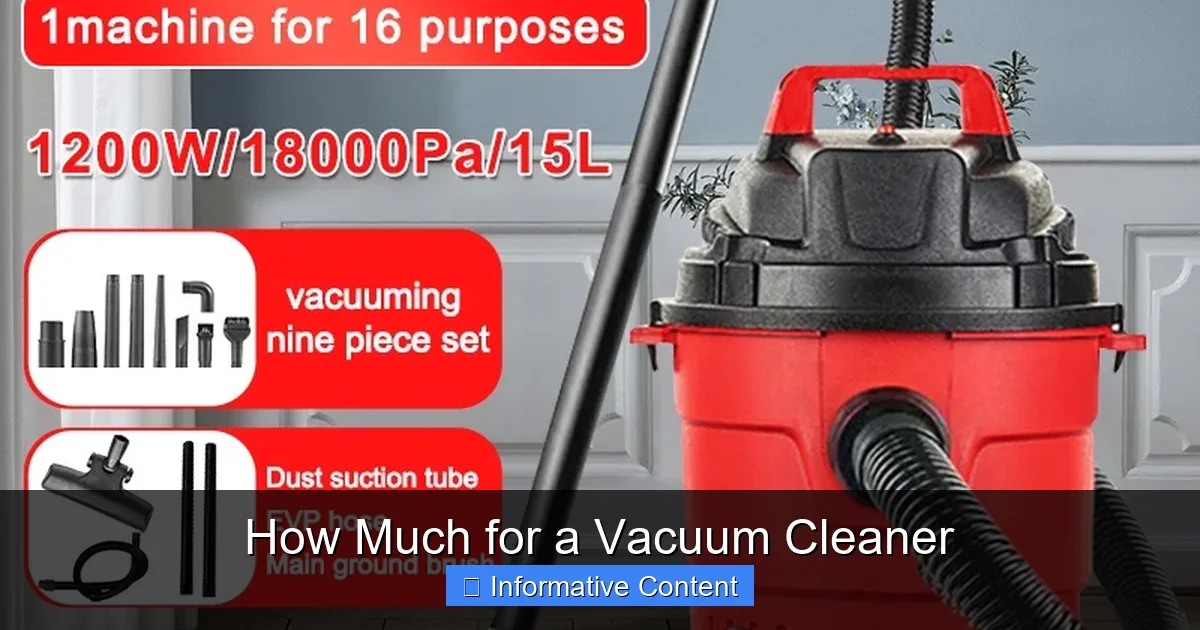
How Much for a Vacuum Cleaner
Understanding how much for a vacuum cleaner can be tricky, as prices vary greatly from under $100 to over $1,000 depending on type, features, and brand. This article breaks down the costs, explores what influences the price tag, and offers practical advice to help you find the best vacuum cleaner that fits both your cleaning needs and your financial plan, ensuring you make an informed decision without overspending or underspending.
Ah, the mighty vacuum cleaner. It’s one of those household heroes we often take for granted until it suddenly quits on us, or worse, fails to pick up that stubborn pet hair. Then, the inevitable question pops into our heads: “How much for a vacuum cleaner?” It’s a question that doesn’t have a simple answer, because just like cars or smartphones, vacuum cleaners come in a dizzying array of types, sizes, and price points.
You might be envisioning a basic upright model, while your neighbor swears by their futuristic robot vacuum. Your friend with allergies might prioritize a HEPA filter, and someone with a busy household might just want something quick and easy. Each of these preferences, and many more, significantly impacts the price tag. So, whether you’re replacing an old friend or buying your very first vacuum, understanding the landscape of costs is key to making a smart decision that leaves both your floors and your wallet happy.
In this comprehensive guide, we’ll dive deep into the world of vacuum cleaner pricing. We’ll explore the various factors that influence how much you’ll end up paying, break down typical costs by vacuum type, and even look at the often-overlooked long-term expenses. By the end, you’ll have a clear picture of what to expect and how to find the perfect balance between performance and price when asking yourself, “how much for a vacuum cleaner?”
Key Takeaways
- Wide Price Range: The cost of a vacuum cleaner can range from under $100 for basic models to over $1,000 for high-end, specialized units, making “how much for a vacuum cleaner” a question with many answers.
- Factors Affecting Cost: Price is influenced by the vacuum’s type (upright, canister, robot, stick, handheld), brand reputation, features (HEPA filter, smart capabilities, pet hair specific tools), motor power, and build quality.
- Beyond Initial Purchase: Remember to account for long-term costs like replacement bags, filters, maintenance, and potential repairs, especially when considering how much for a vacuum cleaner over its lifespan.
- Match Needs to Budget: Evaluate your home size, flooring types, pet ownership, and specific cleaning challenges to determine which features are essential and avoid paying for extras you don’t need.
- Value Over Price: A more expensive vacuum might offer better durability, performance, and features, potentially saving money in the long run through less frequent replacements and better cleaning efficacy.
- Smart Shopping: Look for sales, discounts, and consider refurbished models from reputable sellers to get premium features at a lower price point. Reading reviews is crucial for making an informed decision.
Quick Answers to Common Questions
What’s a good budget for a decent vacuum cleaner?
A good budget for a decent vacuum cleaner that offers a balance of performance and features is typically between $150 and $400. This range includes reliable uprights, versatile canisters, and capable cordless stick models suitable for most homes.
Are expensive vacuum cleaners really worth it?
Expensive vacuum cleaners can be worth it if they meet specific needs like superior filtration for allergies, extreme durability for long-term use, or advanced features for large homes or heavy pet hair. They often offer better performance and a longer lifespan, potentially saving money on replacements.
How much for a vacuum cleaner with HEPA filtration?
Vacuum cleaners with true HEPA filtration usually start in the $150-$250 range for mid-tier models and can go up to $500+ for premium brands known for their sealed systems and excellent air purification.
What’s the average lifespan of a vacuum cleaner?
The average lifespan of a vacuum cleaner is typically 5-8 years. However, this can vary widely; high-end models might last 10-20 years with proper maintenance, while cheaper models might only last 2-4 years.
Should I buy a bagged or bagless vacuum?
The choice between bagged and bagless depends on your priorities. Bagged vacuums generally offer better filtration and less contact with dust, ideal for allergy sufferers, but require ongoing bag purchases. Bagless vacuums save on bag costs and are convenient for emptying, but may expose you to more dust when emptying and require filter cleaning.
📑 Table of Contents
Understanding the Factors Influencing Vacuum Cleaner Cost
When you start shopping for a new vacuum, you’ll quickly notice the vast price differences. So, what exactly makes one model $80 and another $800? It boils down to several key factors, each playing a significant role in determining how much for a vacuum cleaner.
Type of Vacuum Cleaner
This is arguably the biggest determinant of price. Different designs are suited for different tasks and often come with varying levels of complexity and motor power.
- Upright Vacuums: These traditional workhorses are great for carpets. Basic models can start under $100, while powerful, feature-rich uprights for pet hair or deep cleaning can go up to $300-$500.
- Canister Vacuums: Excellent for hard floors, stairs, and versatility with various attachments. Entry-level models might be $150-$250, but high-end Miele or Sebo canister vacuums known for durability and performance can easily cost $600-$1,000+.
- Stick Vacuums (Cordless): Popular for quick clean-ups and lightweight design. Basic models are around $100-$200, but powerful, long-lasting cordless stick vacuums from brands like Dyson often range from $300-$700+.
- Robot Vacuums: The ultimate in convenience. Simple models might start around $150-$250, but smart robot vacuums with mapping, app control, and self-emptying features can be $400-$1,000+.
- Handheld Vacuums: Great for small messes, cars, and upholstery. Most fall between $30-$150, depending on battery life and suction power.
- Wet/Dry Vacuums: Specialized for garage, workshop, or flood clean-up. Prices usually range from $50 for small units to $300+ for large, powerful industrial models.
Brand and Reputation
Just like any product, brand name carries weight. Established brands known for quality, innovation, and customer service often command higher prices. You’re often paying for research and development, better materials, and a more robust warranty when you choose a premium brand. For example, knowing how much for a vacuum cleaner from Dyson often means bracing for a higher figure than a lesser-known brand.
Features and Technology
Modern vacuums are packed with features. Each addition can nudge the price up.
- Filtration Systems: HEPA filters are a must for allergy sufferers and often add to the cost. Multi-stage filtration systems also contribute.
- Smart Features: Wi-Fi connectivity, app control, mapping technology (for robot vacuums), and integration with smart home systems are becoming common but come at a premium.
- Attachments and Accessories: Specialty tools for pet hair, delicate surfaces, crevices, or upholstery can increase the value and price.
- Bagged vs. Bagless: Bagged vacuums typically have better filtration but require bag replacement. Bagless models save on recurring bag costs but may need more frequent filter cleaning. The initial cost isn’t drastically different, but it’s a factor in long-term spending.
- Power Modes: Multiple suction settings, boost modes, or auto-adjusting power based on floor type are desirable but add to the cost.
Motor Power and Suction
Generally, a more powerful motor and stronger suction translate to better cleaning performance, especially for deep carpets or heavy debris. Higher-quality motors that are durable and efficient tend to be found in more expensive models. This directly impacts how much for a vacuum cleaner with superior cleaning ability.
Build Quality and Materials
A vacuum made with durable, high-quality plastics, metal components, and robust internal mechanisms will typically last longer and perform better. Cheaper models might use flimsier plastics that are prone to breaking, leading to a shorter lifespan and potentially higher repair costs down the line. The difference in materials significantly impacts the overall cost.
Warranty and After-Sale Service
A longer warranty and readily available customer support can offer peace of mind, but these aspects are often built into the price. Premium brands usually offer more extensive warranties (e.g., 5-10 years) compared to basic models (e.g., 1 year).
Typical Price Ranges for Different Vacuum Cleaner Types
Let’s get down to some actual numbers. While prices can fluctuate due to sales and promotions, here’s a general idea of how much for a vacuum cleaner across different tiers.
Visual guide about How Much for a Vacuum Cleaner
Image source: static.vecteezy.com
Entry-Level Options (Under $150)
- What You Get: These are your basic, no-frills vacuums. You’ll find corded uprights, simple stick vacuums, and basic handheld models. They typically offer decent suction for light cleaning tasks on hard floors or low-pile carpets. Features will be minimal, and build quality might be a bit flimsy.
- Best For: Small apartments, dorm rooms, or as a secondary vacuum for quick spills. Good for those on a tight budget who don’t have pets or deep carpets.
- Example: A basic corded upright, a simple bagless stick vacuum, or a small wet/dry vac. If you’re wondering how much for a vacuum cleaner that just gets the job done, this is your range.
Mid-Range Workhorses ($150-$400)
- What You Get: This is where most people find a good balance of features and performance. You’ll see better-built uprights, versatile canister vacuums, and capable cordless stick models. Many vacuums in this range feature HEPA filtration, specialized attachments (like pet hair tools), and more powerful motors.
- Best For: Average-sized homes with mixed flooring, pet owners who need moderate cleaning power, and those looking for more durability and features than entry-level models.
- Example: A popular cordless stick vacuum, a good quality upright with pet hair attachments, or an entry-to-mid-level robot vacuum with basic mapping. This is often the sweet spot when considering how much for a vacuum cleaner with solid performance.
Premium and High-Performance Models ($400-$800+)
- What You Get: Here, you’re entering the realm of serious cleaning power, advanced features, and superior build quality. Expect robust motors, excellent filtration, a wide array of specialized tools, and often longer warranties. Cordless stick vacuums will have longer battery life and stronger suction. Robot vacuums will feature advanced mapping, app control, and possibly self-emptying docks.
- Best For: Larger homes, homes with multiple pets, allergy sufferers, and anyone who values durability, cutting-edge technology, and top-tier cleaning performance.
- Example: A high-end Dyson stick vacuum, a powerful Miele canister, or a sophisticated Roomba with advanced navigation. When you ask “how much for a vacuum cleaner” that offers robust, long-term performance, this is the range to consider.
Luxury and Specialized Vacuums ($800+)
- What You Get: These are the crème de la crème. We’re talking about extremely durable machines from brands like Sebo or high-end Miele models, specialized central vacuum systems, or top-tier robot vacuums with all the bells and whistles (think Lidar navigation, self-washing mops, advanced AI). These vacuums often boast exceptional filtration, incredibly powerful and quiet motors, and are designed to last for decades.
- Best For: Discerning buyers who demand the absolute best, those with severe allergies, very large homes, or specific commercial-grade cleaning needs.
- Example: A top-of-the-line Sebo upright, a premium central vacuum system, or the most advanced robot vacuums on the market. If budget is less of a concern and you want the absolute best, this answers “how much for a vacuum cleaner” at its peak.
Beyond the Initial Purchase: Long-Term Costs to Consider
When you’re figuring out how much for a vacuum cleaner, it’s easy to just look at the sticker price. But a savvy shopper also considers the ongoing expenses. Over its lifespan, a vacuum cleaner can have hidden costs that add up.
Bags and Filters
If you opt for a bagged vacuum, you’ll need to regularly purchase replacement bags. While not terribly expensive individually, these costs accumulate over years. Similarly, both bagged and bagless vacuums require filter maintenance. Some filters are washable and reusable, saving money, while others need periodic replacement (e.g., every 6-12 months). HEPA filters, especially, can be pricier to replace.
Maintenance and Repairs
Even the best vacuum cleaners need some TLC. This might include replacing belts, brush rolls, or minor repairs. While a good warranty covers significant issues, smaller parts or wear-and-tear items might be out of pocket. Cheaper vacuums might break down more frequently, leading to higher repair costs or earlier replacement.
Electricity Consumption
While generally not a huge cost, a powerful vacuum cleaner running for extended periods will consume more electricity than a low-powered one. Energy efficiency ratings can give you an idea, though this is a minor factor for most households.
Accessory Replacements
Over time, attachments can get lost, broken, or simply wear out. Replacing specialized tools can sometimes be surprisingly expensive, especially for proprietary designs from premium brands.
Tips for Getting the Best Value for Your Money
Now that we understand what influences the price and the ongoing costs, let’s talk about how to get the most bang for your buck when deciding how much for a vacuum cleaner.
Define Your Needs First
Before you even look at prices, list your requirements:
- Home Size: Small apartment vs. large house.
- Flooring Types: Hardwood, tile, low-pile carpet, thick shag rugs.
- Pets: Yes/no, how many, what kind of hair.
- Allergies: Any family members with dust or pet dander allergies.
- Cleaning Frequency: Daily quick clean-ups vs. weekly deep cleans.
- Mobility/Storage: Lightweight, compact, cordless, easy to maneuver.
This list will help you filter out unnecessary features and identify the core functions you need, preventing you from overpaying for something you won’t use.
Read Reviews
Customer reviews and independent testing sites are invaluable. They can reveal real-world performance, durability issues, ease of use, and whether a vacuum truly lives up to its price tag. Look for common complaints or praises to get a balanced view.
Look for Sales and Discounts
Vacuum cleaners frequently go on sale, especially during holiday periods (Black Friday, Prime Day, seasonal sales) or when new models are released. Patience can save you a significant amount. Sign up for newsletters from major retailers or brands to be notified of deals.
Consider Refurbished Models
Many reputable manufacturers and retailers offer factory-refurbished vacuum cleaners at a significant discount. These are often returns that have been inspected, repaired (if necessary), and certified to work like new, often with a warranty. This is a great way to get a premium model for less than how much for a vacuum cleaner brand new.
Don’t Overpay for Unused Features
A vacuum with Wi-Fi connectivity and a dozen attachments might sound impressive, but if you’ll only use it manually and stick to two basic tools, you’re paying for features that won’t benefit you. Be honest about what you actually need and will use.
When to Splurge vs. When to Save
Making the right investment depends heavily on your specific situation. Asking “how much for a vacuum cleaner” often leads to a decision point: go premium or save some cash?
When to Invest More
- Large Homes or Multiple Pets: The consistent heavy-duty cleaning demands mean a more powerful, durable, and feature-rich vacuum will save you frustration and potential replacement costs in the long run.
- Allergy Sufferers: Investing in a vacuum with excellent sealed HEPA filtration is crucial for health and worth the extra cost.
- Desire for Convenience: If you want a robot vacuum that maps your home perfectly, or a stick vacuum that lasts for a whole house clean on one charge, the higher price tags deliver on this convenience.
- Durability and Longevity: If you view your vacuum as a long-term investment and want a machine that will last 10+ years, premium brands often deliver on this promise with better materials and components.
- Specific Cleaning Challenges: If you have very thick carpets, delicate hard floors, or need specific tools for upholstery, a higher-end model often provides superior performance and protection.
When a Budget-Friendly Option is Enough
- Small Spaces/Light Cleaning: For a small apartment with mostly hard floors and no pets, a basic stick or upright vacuum will likely suffice.
- Secondary Vacuum: If you already have a main vacuum and just need something for quick clean-ups or a specific area (like a car or garage), a handheld or inexpensive stick vacuum is a smart choice.
- Temporary Solution: If you’re moving soon or just need a vacuum for a short period, a budget model makes sense.
- Infrequent Use: If you only vacuum occasionally, you might not need the top-tier performance and features of an expensive model.
Conclusion
So, how much for a vacuum cleaner? As you can see, there’s no single answer. The price varies wildly, influenced by the type of vacuum, its brand, features, build quality, and more. From under $100 for a basic model to well over $1,000 for a luxury workhorse, the market is full of options.
The key is to approach your purchase strategically. Start by clearly defining your needs and budget. Research brands and read reviews. Look for sales and consider refurbished options to maximize value. And don’t forget to factor in those long-term costs like bags and filters. By doing your homework, you can confidently answer the question of “how much for a vacuum cleaner” for your unique situation, ensuring you invest in a machine that keeps your home sparkling clean without breaking the bank. Happy vacuuming!
Frequently Asked Questions
How much for a vacuum cleaner for pet hair?
For effective pet hair removal, you can expect to pay anywhere from $200 to $600+. These vacuums often feature stronger suction, specialized brush rolls that resist tangles, and effective filtration systems to handle dander. Budget-friendly options exist, but higher prices usually mean better performance on stubborn fur.
Is it cheaper to repair an old vacuum or buy a new one?
It depends on the age of your vacuum and the cost of the repair. If your vacuum is relatively new (under 5 years) and the repair cost is less than half the price of a comparable new model, repairing might be cheaper. For older vacuums or expensive repairs, a new purchase is often more cost-effective.
How much for a robot vacuum cleaner?
Robot vacuum cleaners range widely in price. Basic models without smart mapping or advanced features can start around $150-$250. Mid-range options with app control and basic navigation are typically $300-$600, while high-end models with Lidar mapping, self-emptying docks, and advanced AI can cost $700-$1,200 or more.
Do cordless stick vacuums cost more than uprights?
Generally, comparable cordless stick vacuums tend to cost more than traditional corded uprights, especially if you’re looking for strong suction and long battery life. While basic stick vacuums can be cheap, premium cordless models often fall into the $300-$700+ range, similar to or exceeding the cost of many high-performance uprights.
How much for a central vacuum system?
A central vacuum system is a significant investment. The cost can range from $1,500 to $3,000 or more for installation, depending on the size of your home, the number of inlets, and the power unit chosen. While the upfront cost is higher, they offer superior suction and air quality.
What’s the difference between cheap and expensive vacuum cleaner filters?
The main difference lies in filtration efficiency and durability. Cheap filters might just capture larger particles, while expensive ones (like true HEPA filters) are designed to trap 99.97% of tiny particles down to 0.3 microns, crucial for allergy sufferers. More expensive filters also tend to be made from higher quality materials for better longevity and performance.