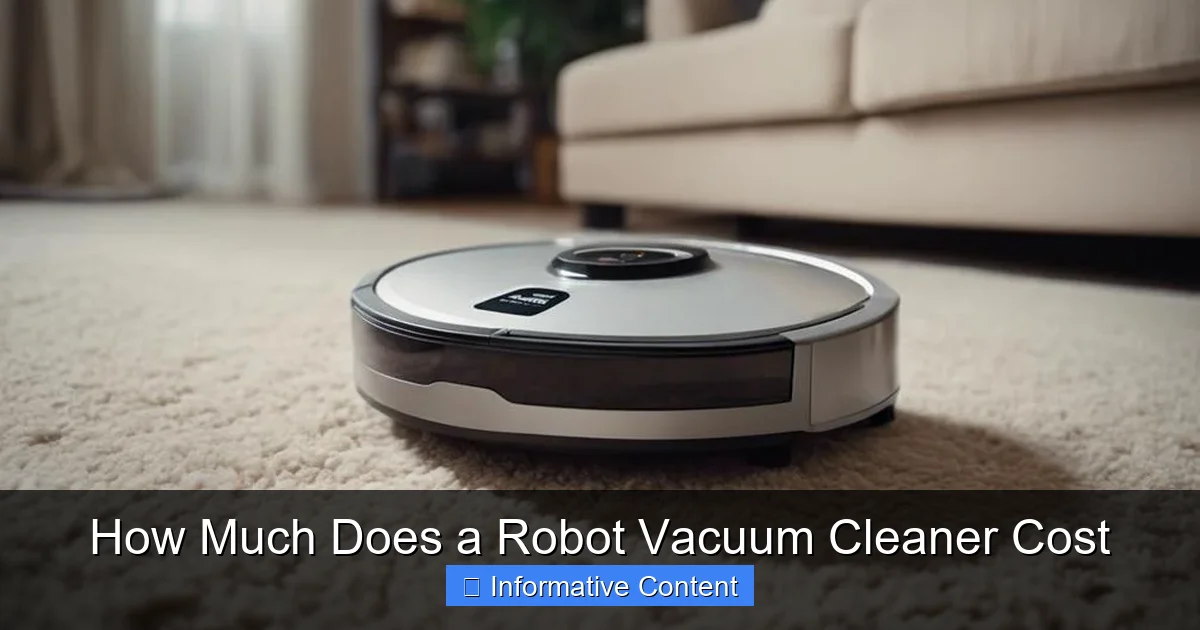
How Much Does a Robot Vacuum Cleaner Cost
Understanding how much a robot vacuum cleaner costs involves considering a wide spectrum of prices, typically ranging from under $100 to over $1500. The cost is primarily determined by features like navigation technology, suction power, battery life, smart capabilities, and additional functions such as self-emptying or mopping. Ultimately, your ideal budget will depend on your specific cleaning needs, home size, and the level of automation you desire for a truly spotless living space.
Welcome to the wonderful world of automated cleaning! If you’ve been dreaming of a cleaner home without lifting a finger, a robot vacuum cleaner might be just what you need. These clever gadgets glide across your floors, sucking up dust, dirt, and pet hair, giving you back precious time. But as you start to explore the options, a big question often pops up: “How much does a robot vacuum cleaner cost?” It’s a question with a surprisingly broad answer, ranging from budget-friendly models that barely crack a hundred dollars to high-tech marvels that can set you back well over a grand.
Understanding how much does a robot vacuum cleaner cost isn’t just about looking at a price tag; it’s about understanding what you get for your money. Like cars or smartphones, there’s a huge spectrum of features, technologies, and brand reputations that influence the final price. From basic sweepers to intelligent mapping machines with self-emptying docks, the world of robot vacuums is diverse, and so are their price points. This guide is designed to walk you through the various tiers of robot vacuum cleaners, helping you identify which features are worth the investment for your specific needs and budget.
So, let’s dive in and demystify the pricing of these futuristic cleaning companions. We’ll break down the different price segments, explore the key features that drive costs up or down, discuss long-term ownership considerations, and offer practical tips to help you make an informed decision. By the end, you’ll have a clear picture of how much does a robot vacuum cleaner cost and what you can expect at each price point, empowering you to choose the perfect cleaning assistant for your home.
Key Takeaways
- Wide Price Range: Robot vacuum cleaners vary significantly in price, from under $100 for basic models to over $1500 for high-end, feature-rich devices.
- Features Drive Cost: The primary factors influencing the cost are navigation technology (random vs. LiDAR), suction power, battery life, smart home integration, and additional functionalities like mopping or self-emptying docks.
- Entry-Level Options ($100-$300): These models offer basic cleaning, often with random navigation, suitable for smaller homes or specific rooms, providing a good introduction to automated cleaning.
- Mid-Range Value ($300-$700): This segment offers a sweet spot with improved navigation (gyroscopic or early mapping), app control, better suction, and often combination cleaning (vacuuming and mopping).
- High-End Performance ($700-$1500+): Premium robot vacuums boast advanced LiDAR navigation, AI object avoidance, self-emptying bins, sophisticated mopping, multi-floor mapping, and robust build quality, ideal for large or complex homes.
- Consider Long-Term Costs: Beyond the initial purchase, factor in the cost of replacement parts (filters, brushes, batteries) and potential energy consumption to get a complete picture of ownership.
- Match Needs to Budget: To get the best value, assess your home’s size, floor types, presence of pets, and desired level of automation before deciding on how much to spend.
Quick Answers to Common Questions
How much does a basic robot vacuum cleaner cost?
A basic robot vacuum cleaner typically costs between $100 and $300. These models offer essential cleaning functionalities, often with random navigation and straightforward controls, best suited for smaller spaces or supplementary cleaning.
What’s the average price range for a good robot vacuum with mapping?
For a good robot vacuum cleaner that includes mapping capabilities (like gyroscopic or camera-based), you can expect to pay anywhere from $300 to $700. This mid-range offers a balance of smart features and efficient cleaning.
Do robot vacuums with self-emptying features cost more?
Yes, robot vacuums equipped with self-emptying docks are significantly more expensive. This premium feature can add several hundred dollars to the base price, usually placing them in the $700 to $1500+ high-end category.
How much should I expect to pay for a robot vacuum that also mops?
The cost for a robot vacuum cleaner with mopping functionality varies. Basic vacuum/mop combos can be found in the $300-$600 range, while advanced models with sophisticated mopping systems and self-cleaning docks can cost $800 to $1500 or more.
What is the most expensive robot vacuum cleaner type?
The most expensive robot vacuum cleaners are generally high-end models that combine advanced LiDAR navigation, AI object avoidance, powerful suction, sophisticated mopping, and self-emptying and/or self-cleaning docks. These can easily exceed $1500.
📑 Table of Contents
- The Entry-Level Robot Vacuums: Affordable Automation
- Mid-Range Robot Vacuums: The Sweet Spot for Most Homes
- High-End Robot Vacuums: The Ultimate Cleaning Experience
- Factors That Influence Robot Vacuum Cost
- Beyond the Sticker Price: Long-Term Costs and Value
- Tips for Buying a Robot Vacuum on Any Budget
- Conclusion
The Entry-Level Robot Vacuums: Affordable Automation
If you’re curious about robot vacuums but don’t want to break the bank, the entry-level segment is a great place to start. These models typically fall into the **$100 to $300** range. When considering how much does a robot vacuum cleaner cost at this level, think “basic but functional.”
What to Expect from Budget Models
Entry-level robot vacuums are designed to handle fundamental cleaning tasks. They are often best suited for smaller homes or apartments, or for maintaining specific rooms.
- Basic Navigation: Most budget robot vacuums use “random” or “bump-and-go” navigation. This means they travel in straight lines until they hit an obstacle, then change direction. They will eventually cover most of your floor, but it might take a while, and they might miss spots.
- Sufficient Suction: While not as powerful as their high-end counterparts, these models offer enough suction to pick up everyday dust, crumbs, and light pet hair from hard floors and low-pile carpets.
- Limited Features: Don’t expect fancy apps or virtual walls here. You’ll usually find simple button controls for starting, stopping, and perhaps a spot clean mode. Scheduling might be available, but it’s often more basic.
- Shorter Battery Life: Battery run times typically range from 60 to 90 minutes, which is fine for smaller areas but might require multiple charges for larger spaces.
- Smaller Dust Bins: You’ll likely need to empty the dust bin more frequently compared to pricier models.
Who Are They Best For?
These robot vacuums are ideal for first-time buyers, students, seniors, or anyone with smaller living spaces who wants basic, hands-off daily cleaning. They’re also great for those who want to supplement their manual vacuuming rather than replace it entirely. If your main question is simply how much does a robot vacuum cleaner cost to get started, this category offers an accessible answer.
Mid-Range Robot Vacuums: The Sweet Spot for Most Homes
Visual guide about How Much Does a Robot Vacuum Cleaner Cost
Image source: genuinehomecleaner.com
Stepping up from the entry-level, the mid-range category offers a significant leap in features and performance without demanding a premium price tag. For many homeowners, this is where the balance between cost and functionality truly shines. You can expect to find these models in the **$300 to $700** bracket. When considering how much does a robot vacuum cleaner cost for a good all-rounder, this range often provides the best value.
Enhanced Features for Better Cleaning
Mid-range robot vacuums typically introduce smarter navigation and more robust cleaning capabilities.
- Smarter Navigation: Instead of random bouncing, these robot vacuums often employ gyroscopic sensors or basic camera-based mapping. This allows them to clean in more systematic patterns, reducing missed spots and improving efficiency. They might not build a permanent map of your home, but they’ll clean more intelligently.
- App Control and Scheduling: A major upgrade here is smartphone app integration. You can easily schedule cleaning times, start or stop the vacuum remotely, and sometimes even direct it to specific areas.
- Improved Suction Power: Expect stronger motors and better brush systems, making them more effective on medium-pile carpets and handling pet hair with greater ease.
- Combination Cleaning: Many mid-range models now offer 2-in-1 functionality, meaning they can vacuum and mop simultaneously or sequentially. This adds significant value for homes with hard floors.
- Longer Battery Life: Battery run times usually increase to 90-120 minutes, allowing them to cover larger areas on a single charge. They often have “recharge and resume” capabilities, where they return to their dock, recharge, and then pick up cleaning where they left off.
- Virtual Barriers: Some models introduce magnetic strips or simple app-based “no-go zones” to keep the robot out of specific areas.
Who Are They Best For?
This range is perfect for average-sized homes, busy families, or pet owners who need more consistent and thorough daily cleaning. If you’re looking for a balance of smart features, reliable performance, and a reasonable investment, this is likely your ideal price point when thinking about how much does a robot vacuum cleaner cost.
High-End Robot Vacuums: The Ultimate Cleaning Experience
At the top tier of robot vacuum technology, you’ll find devices that offer unparalleled convenience, performance, and smart features. These premium models typically range from **$700 to $1500 and beyond**. For those who demand the absolute best in automated cleaning and are willing to pay for cutting-edge innovation, this is where you’ll find your perfect match. When considering how much does a robot vacuum cleaner cost for a truly hands-off experience, prepare for a higher investment.
Cutting-Edge Technology and Luxury Features
High-end robot vacuums are packed with advanced sensors, powerful motors, and sophisticated software.
- Advanced Navigation (LiDAR & AI): This is the hallmark of premium robot vacuums. LiDAR (Light Detection and Ranging) technology creates precise, detailed maps of your home, allowing the robot to navigate efficiently, plan optimal cleaning paths, and even recognize furniture. Coupled with AI and camera vision, they can identify and avoid obstacles like shoes, cables, and pet waste.
- Self-Emptying Docks: A game-changer for convenience, these docks automatically suck the dirt from the robot’s bin into a larger bag inside the dock, meaning you only have to empty it once every few weeks or even months.
- Superior Suction and Mopping: Expect maximum suction power to tackle deep-pile carpets and heavy debris. High-end mopping systems are also far more advanced, offering features like vibrating mop pads, automatic mop lifting (to avoid wetting carpets), and even self-refilling/self-cleaning docks.
- Smart Home Integration: Seamless connectivity with smart home ecosystems like Amazon Alexa and Google Assistant, allowing for voice commands and complex routines.
- Advanced App Features: Detailed mapping allows for customized cleaning zones, no-go zones, multi-floor mapping, targeted room cleaning, and even monitoring the robot’s progress in real-time.
- Long Battery Life: These models boast the longest run times, often exceeding 180 minutes, ensuring they can clean very large homes on a single charge, with efficient recharge-and-resume capabilities.
- Premium Build Quality: High-quality materials and robust construction contribute to durability and a sleek aesthetic.
Who Are They Best For?
Ideal for large homes, multi-story houses, individuals with allergies, pet owners with multiple pets, or anyone who desires the ultimate in hands-off cleaning and smart home integration. If convenience, advanced technology, and flawless cleaning are your top priorities, and you’re not overly concerned about how much does a robot vacuum cleaner cost at the higher end, these models are worth every penny.
Factors That Influence Robot Vacuum Cost
Understanding the price tags attached to robot vacuums becomes much clearer when you break down the specific technologies and features that contribute to their overall value. Here’s a closer look at the key elements that dictate how much a robot vacuum cleaner costs.
Navigation Technology
This is perhaps the biggest cost driver.
- Random/Bump-and-Go (Lowest Cost): The most basic, relying on impact sensors.
- Gyroscopic (Mid-Low Cost): Offers more systematic, but not mapping-based, cleaning paths.
- Camera-Based (Mid-Range): Uses a camera to visually map the environment, allowing for more systematic cleaning.
- LiDAR (Highest Cost): Uses laser navigation to create highly accurate, real-time maps of your home, enabling efficient path planning, multi-floor mapping, and precise zone cleaning.
Suction Power
Measured in Pascals (Pa), higher suction power generally means a higher price. More powerful motors are needed to generate stronger suction, which is crucial for deep cleaning carpets and picking up heavier debris and pet hair. Entry-level models might offer 800-1500 Pa, while high-end units can exceed 5000 Pa.
Battery Life and Capacity
Longer battery life means a larger battery, which adds to the manufacturing cost. Robots that can clean for 2-3 hours on a single charge without needing to recharge and resume are typically more expensive.
Smart Features and Connectivity
- App Control: Basic app control is common in mid-range.
- Wi-Fi Connectivity: Essential for app control and smart home integration.
- Virtual Walls/No-Go Zones: The ability to define areas the robot should avoid, either with physical strips or through app-based mapping.
- Voice Assistant Integration: Compatibility with Amazon Alexa or Google Assistant for voice commands.
- AI Object Recognition: Advanced cameras and AI processing that allow the robot to identify and avoid common household clutter like pet waste, socks, or cables, preventing costly mishaps.
Additional Functionalities
- Mopping Capability: A simple mop pad adds less to the cost, but advanced vibrating mop systems, pressurized mopping, and auto-lift features increase the price significantly.
- Self-Emptying Dock: One of the most sought-after premium features, this dock automatically transfers collected debris from the robot’s dustbin into a larger bag, drastically reducing how often you need to interact with the device. This alone can add several hundred dollars to the how much does a robot vacuum cleaner cost equation.
- Self-Cleaning Mop Dock: For mopping robots, these advanced docks can wash and dry the mop pads, sometimes even refilling the water tank automatically.
Brand Reputation and Warranty
Established brands with a reputation for reliability, customer support, and innovative technology often command higher prices. A longer warranty period can also subtly influence the cost, as it reflects the manufacturer’s confidence in their product.
Durability and Build Quality
The materials used, the motor’s quality, and the overall construction contribute to the device’s longevity. Premium models often use more durable components and have a more refined finish.
Beyond the Sticker Price: Long-Term Costs and Value
When you’re asking “how much does a robot vacuum cleaner cost,” it’s important to look beyond just the initial purchase price. There are ongoing costs and a significant value proposition to consider that impact the true cost of ownership.
Replacement Parts
Robot vacuums, like any appliance, require maintenance. You’ll need to periodically replace certain components:
- Filters: Essential for trapping dust and allergens, typically need replacing every 1-3 months. Cost: $10-$30 for a pack.
- Side Brushes and Main Brushes: These wear down over time, especially with heavy use or on abrasive surfaces. Side brushes might need replacing every 3-6 months, main brushes every 6-12 months. Cost: $15-$40 for a set.
- Batteries: After a few years, the battery capacity will naturally degrade. A new battery pack can cost anywhere from $50 to $150, depending on the model and brand.
- Mop Pads: If you have a mopping robot, these will need replacing periodically. Cost: $10-$20 for a pack.
- Self-Emptying Bags: For models with self-emptying docks, you’ll need to purchase replacement bags. Cost: $15-$30 for a pack of 3-6 bags, lasting several months.
These recurring costs can add up, so factor them into your overall budget when considering how much does a robot vacuum cleaner cost over its lifetime.
Energy Consumption
While minimal compared to a full-sized vacuum, a robot vacuum that constantly sits on its charging dock will draw a small amount of power. The energy cost is usually negligible for residential use, typically just a few dollars a year.
The Value Proposition: Time and Convenience
This is where the true long-term value lies.
- Time Saved: Imagine not having to vacuum your floors manually several times a week. A robot vacuum frees up countless hours you can spend on other activities or simply relaxing.
- Consistent Cleanliness: Daily robot vacuuming keeps dust and dirt levels consistently low, improving air quality and overall home hygiene, especially beneficial for allergy sufferers or pet owners.
- Reduced Chores: It removes one significant item from your chore list, reducing mental load and daily stress.
- Pet Hair Management: For pet owners, a robot vacuum can be a lifesaver, tackling shedding hair before it accumulates into visible tumbleweeds.
When you weigh these benefits against the initial purchase and ongoing maintenance, the overall value proposition of even an expensive robot vacuum can be quite compelling. For many, the answer to how much does a robot vacuum cleaner cost is offset by the immense convenience it provides.
Tips for Buying a Robot Vacuum on Any Budget
Regardless of how much you’re willing to spend on a robot vacuum cleaner, a smart approach to buying will help you get the best value. Here are some practical tips to guide your purchase:
1. Identify Your Needs First
Before you even look at prices, consider your home and lifestyle:
- Home Size: Small apartment, medium home, or large multi-story house?
- Floor Types: Mostly hard floors, low-pile carpet, high-pile rugs, or a mix?
- Pets: Do you have shedding pets that generate a lot of hair?
- Allergies: Are HEPA filters or consistent daily cleaning crucial for you?
- Desired Features: Do you need mopping, self-emptying, app control, or just basic daily vacuuming?
- Obstacles: Is your home cluttered with cables, small items, or intricate furniture? This impacts navigation needs.
Answering these questions will narrow down the field and give you a clearer idea of how much does a robot vacuum cleaner cost for *your* specific requirements.
2. Read Reviews and Watch Videos
Once you have a few models in mind, dive deep into reviews from reliable tech websites and user testimonials. Watch video demonstrations to see the robot in action, especially its navigation and suction performance on similar floor types to yours. Pay attention to feedback regarding durability, customer service, and long-term satisfaction.
3. Look for Sales and Discounts
Robot vacuums frequently go on sale, especially during major shopping events like Black Friday, Cyber Monday, Prime Day, or holiday periods. Subscribing to newsletters from your favorite brands or retailers can alert you to upcoming deals. Sometimes, even flagship models receive significant price reductions.
4. Consider Refurbished Models
Many reputable manufacturers and retailers offer certified refurbished robot vacuums. These are often returns that have been thoroughly inspected, repaired (if necessary), and tested to work like new, usually with a warranty, but at a significantly lower price. This can be a great way to get a higher-end model for less than how much a robot vacuum cleaner would cost new.
5. Check Return Policies
No matter how much research you do, sometimes a product just isn’t the right fit. Ensure the retailer or manufacturer offers a clear and reasonable return policy (e.g., 30-day money-back guarantee). This gives you peace of mind and the flexibility to test the robot vacuum in your actual home environment.
6. Don’t Overpay for Unused Features
It’s easy to get excited by a long list of features. However, if you have a small, uncluttered apartment with only hard floors, paying for multi-floor mapping, AI object avoidance, and deep-pile carpet boosting might be overkill. Be honest about what you truly need versus what’s simply “nice to have” to avoid unnecessary costs.
Conclusion
As we’ve explored, the question “how much does a robot vacuum cleaner cost?” doesn’t have a single, simple answer. Instead, it’s a spectrum that reflects a wide range of technologies, features, and levels of convenience. From entry-level models offering basic automated cleaning for around $100-$300, through the mid-range sweet spot of $300-$700 with smarter navigation and app control, all the way up to premium devices costing $700-$1500+ that deliver ultimate autonomy with self-emptying docks and advanced AI, there’s a robot vacuum for virtually every budget and need.
The cost is driven by critical factors like the sophistication of its navigation system, the power of its suction, battery endurance, and the inclusion of advanced functionalities such as mopping, self-emptying, or intelligent object avoidance. Furthermore, it’s wise to consider the long-term investment, accounting for replacement parts like filters and brushes, and the invaluable return on investment in the form of saved time and a consistently cleaner home.
Ultimately, choosing the right robot vacuum isn’t about finding the cheapest or the most expensive model, but rather about identifying your specific cleaning requirements, understanding what features truly matter to you, and aligning that with a price point that makes sense for your household. By following the tips provided and carefully evaluating your needs, you can confidently answer how much a robot vacuum cleaner costs for your situation and bring home a cleaning companion that perfectly fits your lifestyle and budget. Happy cleaning!
Frequently Asked Questions
Are cheap robot vacuums worth it?
Yes, cheap robot vacuums can be worth it for those on a tight budget or with smaller homes. They provide basic daily cleaning, helping to maintain floors between deeper manual cleans. Just manage your expectations regarding advanced features and navigation.
How often do robot vacuums need to be replaced?
The lifespan of a robot vacuum typically ranges from 3 to 5 years, depending on the brand, usage, and maintenance. Regular replacement of filters, brushes, and eventually the battery can extend its operational life considerably.
Do robot vacuums work on thick carpets?
Entry-level and some mid-range robot vacuums may struggle with thick or high-pile carpets. High-end models with powerful suction (2500 Pa+) and specialized brush rolls are generally more effective on thick carpets, often featuring automatic carpet boost modes.
Is a robot vacuum better than a stick vacuum?
A robot vacuum offers automated, hands-free daily cleaning, perfect for maintaining cleanliness with minimal effort. A stick vacuum provides more powerful, on-demand spot cleaning and flexibility for different surfaces and upholstery, making it better for quick clean-ups or deeper, targeted cleaning.
Can robot vacuums go over thresholds?
Most robot vacuums can navigate over thresholds or transitions up to about 0.6 to 0.8 inches (1.5 to 2 cm) high. Higher obstacles might pose a problem for some models, while more advanced robots are designed to handle slightly taller transitions.
Do robot vacuums save electricity?
Compared to a traditional upright vacuum cleaner, robot vacuums typically consume less electricity per cleaning cycle because their motors are smaller and they run for longer periods at lower power. However, they consume a small amount of power constantly while docked and charging, leading to a negligible increase in your overall electricity bill.