How Do I Choose a Vacuum Cleaner
Choosing a vacuum cleaner can feel overwhelming with a myriad of options available. However, by pinpointing your household’s specific needs—such as floor types, the presence of pets, or allergy concerns—you can significantly narrow down your choices. This comprehensive guide simplifies the process, walking you through different vacuum types, essential features, and budget considerations to help you confidently select the ideal cleaning companion for your home.
How Do I Choose a Vacuum Cleaner?
Stepping into the world of vacuum cleaners can feel a bit like diving into the deep end of a swimming pool – there are so many options, so many features, and so many claims! It’s enough to make anyone feel overwhelmed. You’re not just buying a machine; you’re investing in a cleaner, healthier, and more comfortable home. So, asking “how do I choose a vacuum cleaner?” is a fantastic first step, and you’ve come to the right place for clear, straightforward answers.
Whether you’re battling stubborn pet hair, trying to keep allergies at bay, or simply looking for an efficient way to maintain spotless floors, the right vacuum cleaner can make all the difference. The good news is that by breaking down your specific needs and understanding the different types and features available, you can confidently navigate the market and find your perfect match. No more guessing, no more buyer’s remorse – just effective, effortless cleaning.
This guide is designed to cut through the confusion. We’ll walk you through everything you need to know, from assessing your home’s unique challenges to understanding the pros and cons of different vacuum types and essential features. By the end, you’ll be empowered to make an informed decision and bring home a vacuum cleaner that truly works for you. Let’s get started on finding the ultimate cleaning companion!
Key Takeaways
- Assess Your Unique Needs First: Before you even start looking, consider your home’s floor types (carpets, hard floors), the presence of pet hair, any allergy concerns, and the overall size and layout of your living space. These factors will heavily influence your best vacuum cleaner choice.
- Understand Different Vacuum Types: Familiarize yourself with upright, canister, stick, robot, and handheld vacuums. Each type excels in different scenarios, offering unique advantages in maneuverability, power, and convenience.
- Prioritize Essential Features: Don’t get bogged down by every spec. Focus on suction power, filtration system (HEPA for allergies), dustbin capacity, and the specific attachments that will benefit your cleaning routine most.
- Set a Realistic Budget: Vacuum cleaners range widely in price. Determine what you’re willing to spend and explore options within that range, balancing upfront cost with long-term durability and performance.
- Consider Maintenance and Ergonomics: Think about whether you prefer bagged or bagless models, how easy filters are to clean or replace, and important comfort factors like weight, noise level, and ease of storage.
- Leverage Reviews and Demos: Reading user reviews and watching product demonstrations can provide invaluable insights into real-world performance and user satisfaction, helping you make a more informed decision.
Quick Answers to Common Questions
What is the best type of vacuum cleaner for pet hair?
For pet hair, upright and canister vacuum cleaners with strong suction, a powerful brush roll, and specialized pet attachments (like a mini motorized brush) are generally the most effective. Many cordless stick vacuums also offer excellent pet hair performance on hard floors and low-pile carpets.
Are cordless stick vacuums powerful enough for deep cleaning?
Cordless stick vacuums are fantastic for quick clean-ups and maintaining cleanliness on hard floors and low-pile carpets. However, for truly deep cleaning embedded dirt from high-pile carpets, traditional corded upright or canister vacuum cleaners typically offer superior and more consistent suction power.
What does HEPA filtration mean for a vacuum cleaner?
HEPA (High-Efficiency Particulate Air) filtration means the vacuum cleaner’s filter can trap 99.97% of airborne particles as small as 0.3 microns. This is crucial for allergy and asthma sufferers as it captures common allergens like pollen, pet dander, dust mites, and mold spores, preventing them from being recirculated into the air.
Should I choose a bagged or bagless vacuum cleaner?
This depends on your preference. Bagged vacuums are better for allergy sufferers as they seal dust and allergens for hygienic disposal, though they incur ongoing bag costs. Bagless vacuums offer convenience with no bag costs, but emptying the dustbin can release dust back into the air, which might be an issue for those with allergies.
How often should I replace my vacuum cleaner filters?
It depends on the type of filter and how often you use your vacuum. Washable filters should be cleaned regularly (e.g., monthly) and replaced every 6-12 months. Non-washable filters (including many HEPA filters) usually need replacement every 3-6 months, or as recommended by the manufacturer, especially if you have pets or allergies.
📑 Table of Contents
Understanding Your Cleaning Landscape
Before you even start looking at specific models, the very first step in answering “how do I choose a vacuum cleaner?” is to truly understand the environment it will be cleaning. Your home’s unique characteristics are the biggest determinant of which vacuum cleaner will serve you best. Think about your floors, your furry friends, any allergies, and the overall size of your space.
Floor Types Matter Most
This is perhaps the most critical factor. Do you have plush carpets, delicate hardwood, slick tiles, or a mix of everything?
- Mostly Hard Floors (hardwood, tile, laminate): For these surfaces, you need a vacuum cleaner with gentle brushes or a dedicated hard floor attachment that won’t scratch. Strong suction is key to picking up dust and debris without scattering it. Canister vacuums with specialized hard floor tools, or stick vacuums with soft roller brushes, are often excellent choices here.
- Mostly Carpets (low-pile, medium-pile, high-pile/shag): Carpets require a vacuum cleaner with a powerful brush roll (also known as a beater bar) to agitate the fibers and lift embedded dirt and dust. Upright vacuums are traditionally strong performers on carpets. Look for adjustable brush rolls or height settings to accommodate different carpet pile heights.
- Mixed Flooring: Many homes have a combination of hard floors and carpets. In this scenario, you’ll want a versatile vacuum cleaner with a brush roll that can be turned off for hard floors and engaged for carpets. Many upright and canister models offer this flexibility, as do some higher-end stick vacuums.
Pet Hair: A Game Changer
If you share your home with shedding companions, you know that pet hair can be a constant battle. This significantly impacts your vacuum cleaner choice. Look for models specifically designed for pet owners.
- Strong Suction: Essential for lifting stubborn hair from carpets and upholstery.
- Tangle-Free Brush Rolls: Some advanced vacuum cleaners have brush rolls designed to minimize hair wrap, which saves you time on maintenance.
- Specialized Pet Attachments: Tools like mini motorized brushes or upholstery tools are invaluable for cleaning pet hair off furniture, stairs, and pet beds. Many upright and canister vacuums come with these.
- Good Filtration: Pet dander can be a significant allergen, so a strong filtration system is a must.
Allergies and Air Quality
For anyone with allergies, asthma, or a general concern for indoor air quality, the filtration system of your vacuum cleaner is paramount.
- HEPA Filtration: This is the gold standard. A true HEPA filter captures 99.97% of airborne particles as small as 0.3 microns, including pollen, pet dander, dust mites, and mold spores. Ensure the vacuum cleaner itself is “sealed” to prevent dust from leaking out before passing through the filter.
- Bagged Vacuums for Allergies: While bagless vacuums are convenient, emptying them can release a cloud of dust back into the air. Bagged vacuum cleaners, especially those with multi-layer bags, can be better for allergy sufferers as they seal allergens away, making disposal much cleaner.
Home Size and Layout
The size and layout of your home will affect the practicalities of using and storing your vacuum cleaner.
- Small Apartments: Compact, lightweight stick vacuums or even a powerful handheld model might be sufficient for quick clean-ups. Robot vacuums are also excellent for maintaining small spaces.
- Medium-Sized Homes: A versatile upright or canister vacuum cleaner often provides the best balance of power, capacity, and maneuverability.
- Large Homes with Multiple Levels: Consider a lightweight vacuum cleaner if you have to carry it up and down stairs frequently. Cordless stick vacuums are great for quick passes on different levels, but you might still want a more powerful upright or canister for deep cleaning. Robot vacuums can also help maintain larger areas.
Navigating the Vacuum Cleaner Aisle: Types Explained
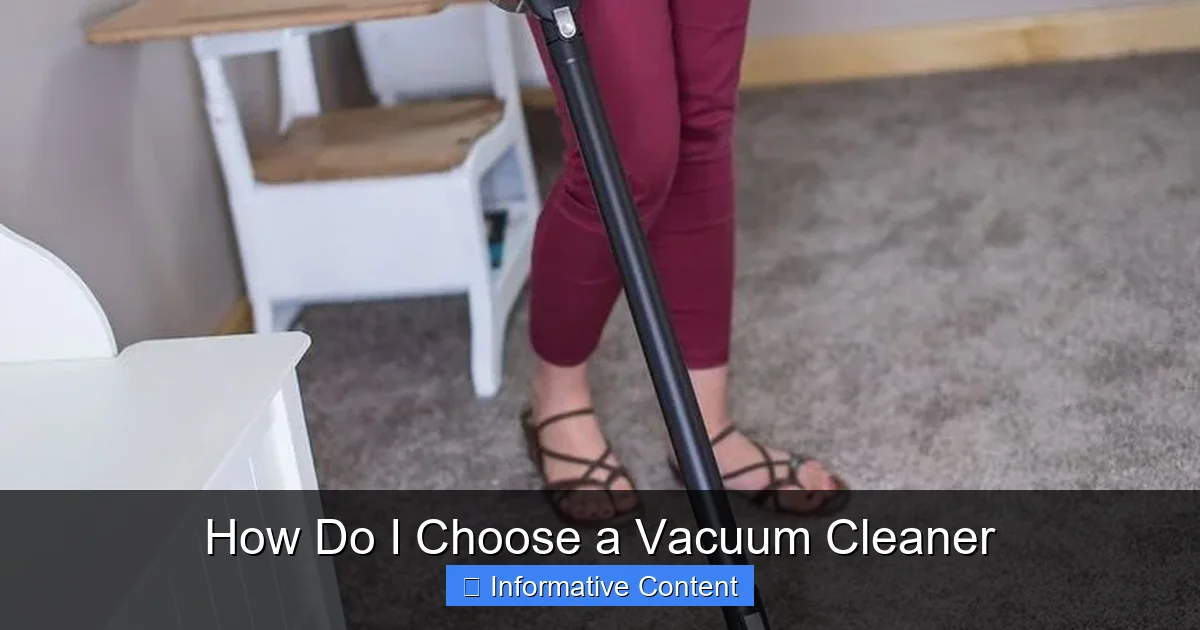
Visual guide about How Do I Choose a Vacuum Cleaner
Image source: i.pinimg.com
Once you know what you need to clean, the next step in answering “how do I choose a vacuum cleaner?” is to understand the different types of vacuum cleaners available. Each type has its own strengths and weaknesses, making it suitable for different situations.
Upright Vacuums: The Traditional Powerhouse
Upright vacuum cleaners are what most people picture when they think of a vacuum. They are typically sturdy, powerful, and excellent for deep cleaning carpets.
- Pros: Strong suction, effective brush rolls for carpets, large dustbin capacity, often good value for money. Many models include hose attachments for versatility.
- Cons: Can be heavy and bulky, making them harder to maneuver around furniture or carry up stairs. Less adept at cleaning under low furniture.
- Best For: Homes with mostly carpets, deep cleaning, larger areas, pet owners (many uprights excel at pet hair).
Canister Vacuums: Versatility and Reach
Canister vacuums consist of a main unit (the canister) on wheels that houses the motor and dustbin, connected by a long hose to a cleaning head.
- Pros: Extremely versatile, excellent maneuverability, great for hard floors, stairs, upholstery, and reaching tight spaces. Generally quieter than uprights.
- Cons: Can be cumbersome to store, and dragging the canister around can sometimes feel awkward. Changing attachments frequently might be necessary.
- Best For: Homes with mixed flooring, delicate hard floors, lots of stairs, upholstery cleaning, and reaching high places.
Stick Vacuums: Quick Clean-ups and Cordless Freedom
Stick vacuums are slender, lightweight, and often cordless, making them ideal for quick, everyday clean-ups. They are a modern favorite for their convenience.
- Pros: Lightweight, highly maneuverable, easy to store, often convertible to handhelds. Cordless models offer unparalleled freedom.
- Cons: Generally less powerful than uprights or canisters, smaller dustbin capacity, shorter battery life (for cordless models), may struggle with deep-pile carpets.
- Best For: Small apartments, quick daily clean-ups, hard floors, homes with minimal carpeting, and as a secondary vacuum.
Robot Vacuums: The Autonomous Helper
These smart little cleaners operate autonomously, navigating your home and cleaning floors with minimal human intervention.
- Pros: Convenience! Set it and forget it. Great for daily maintenance, especially for pet hair. Can clean under low furniture.
- Cons: Can get stuck, may miss spots, smaller dustbins, less powerful than traditional vacuums, not suitable for deep cleaning, struggles with stairs.
- Best For: Maintaining clean floors between deeper cleans, homes with mostly hard floors or low-pile carpets, pet owners who want daily hair removal.
Handheld Vacuums: Spot Cleaning Specialist
Small, portable, and usually cordless, handheld vacuums are designed for quick clean-ups of spills, crumbs, and small messes.
- Pros: Extremely portable, perfect for cars, upholstery, pet messes, and tight spots.
- Cons: Limited suction power, very small dustbin capacity, short battery life.
- Best For: Complementing a larger vacuum cleaner, quick spot cleaning, car interiors, and small, immediate messes.
Key Features to Consider Beyond the Basics
Once you’ve considered your home’s needs and the general type of vacuum cleaner you’re leaning towards, it’s time to drill down into the specific features. This is where you really personalize your choice for the perfect vacuum cleaner.
Suction Power and Motor Strength
While a higher wattage or amp number often indicates more motor power, it doesn’t always directly translate to superior suction at the cleaning head. Factors like airflow design, brush roll effectiveness, and sealed systems play a huge role. Look for reviews that specifically mention strong suction performance on various surfaces, rather than just relying on power ratings. For deep carpet cleaning, a powerful motor coupled with an effective brush roll is essential. For hard floors, pure suction power is more important to pick up fine dust and debris.
Filtration Systems: Breathe Easy
As discussed, filtration is key, especially for allergy sufferers.
- HEPA Filtration: If allergies are a concern, insist on a true HEPA filter and a “sealed system” design. This means all air that enters the vacuum cleaner must pass through the filter before exiting, preventing unfiltered air and allergens from escaping through cracks.
- Washable Filters: Many modern vacuum cleaners come with washable filters, which can save you money on replacements. Just make sure to clean and dry them thoroughly according to the manufacturer’s instructions to maintain efficiency.
Bagged vs. Bagless: What’s Your Preference?
This is a matter of personal preference and convenience.
- Bagged Vacuums:
- Pros: Excellent for allergy sufferers as dust and allergens are sealed in the bag for hygienic disposal. No direct contact with dust. Typically require less frequent filter cleaning.
- Cons: Ongoing cost of replacement bags. Suction can decrease as the bag fills.
- Bagless Vacuums:
- Pros: No ongoing cost for bags. You can easily see when the dustbin needs emptying. Often have cyclonic technology for consistent suction.
- Cons: Emptying the bin can release dust and allergens, making it less ideal for allergy sufferers. Filters may require more frequent cleaning.
Weight, Maneuverability, and Noise
These practical considerations greatly impact your experience with the vacuum cleaner.
- Weight: If you have multiple levels or mobility issues, a lightweight vacuum cleaner (like a stick or a lighter canister) is a blessing. Heavy uprights can be cumbersome.
- Maneuverability: Swivel steering, large wheels, and a low-profile head can make a huge difference in navigating around furniture and corners.
- Noise Level: All vacuums make noise, but some are significantly louder than others. If you live in an apartment, have sensitive pets, or often vacuum when others are sleeping, look for models advertised as “quiet” or with decibel ratings. Canister vacuums tend to be quieter than uprights.
Attachments and Accessories: More Than Just a Hose
The right tools can transform your vacuum cleaner into a versatile cleaning machine.
- Crevice Tool: Essential for tight corners, edges, and crevices.
- Upholstery Tool: Great for furniture, curtains, and car interiors.
- Dusting Brush: Soft bristles for delicate surfaces like blinds, lampshades, and bookshelves.
- Pet Hair Tool (Mini Motorized Brush): A must-have for pet owners, incredibly effective on upholstery and stairs.
- Hard Floor Tool: A specific attachment with soft bristles for safely cleaning delicate hard floors.
Budgeting for Your Perfect Cleaning Companion
The price tag on vacuum cleaners can vary wildly, from under $100 to well over $1,000. Deciding “how do I choose a vacuum cleaner” also involves setting a realistic budget. Remember, the most expensive isn’t always the best for *your* needs, and a mid-range model can often deliver excellent performance.
Entry-Level Options ($100 – $250)
In this price range, you’ll find basic uprights, simpler stick vacuums, and some handheld models.
- What to Expect: Decent suction for general cleaning, fewer advanced features, potentially less durable components, basic filtration. You might find a good bagged upright vacuum cleaner here.
- Best For: Small homes, apartments, those on a tight budget, or as a secondary vacuum for quick spills.
Mid-Range Performers ($250 – $600)
This segment offers a fantastic balance of features, performance, and durability.
- What to Expect: Stronger suction, better filtration (often HEPA-ready), more attachments, improved build quality, and more specialized features (like pet hair tools or convertible stick vacuums). Many reliable upright and canister vacuum cleaners fall into this category. You’ll also see more advanced cordless stick vacuums and entry-level robot vacuums.
- Best For: Most households looking for a reliable, effective vacuum cleaner that handles everyday cleaning challenges with ease.
Premium and Specialized Models ($600+)
At the higher end, you’ll find top-of-the-line models from renowned brands, offering superior technology and durability.
- What to Expect: Exceptional suction, multi-stage HEPA filtration, advanced features (e.g., self-cleaning brush rolls, smart navigation on robots, extended battery life), premium materials, and comprehensive warranties. These often include specialized tools for specific cleaning tasks.
- Best For: Allergy sufferers who need the best filtration, pet owners with extreme shedding, large homes requiring robust performance, or those who value cutting-edge technology and longevity.
Long-Term Value vs. Upfront Cost
Don’t just look at the initial price. Consider the long-term costs:
- Bags and Filters: Bagged vacuum cleaners have ongoing bag costs. Bagless models might have washable filters, but some still require replacements.
- Durability: A cheaper vacuum might break down sooner, leading to more frequent replacements. Investing in a more durable model upfront can save money in the long run.
- Warranty: Longer warranties often indicate a manufacturer’s confidence in their product’s durability, which is a good indicator of value.
Testing and Making Your Final Decision
You’ve done your research, understood your needs, and explored the types and features. Now it’s time to zero in on your final choice. This last stage is about confirming your selections and ensuring you get a vacuum cleaner you’ll love using.
Read Reviews and Watch Demos
Online reviews from other users are invaluable. Look for consistent feedback regarding:
- Real-world performance: Does it actually pick up pet hair effectively? How does it handle various floor types?
- Durability: Do people report common breakdowns or issues after a short period?
- Ease of use and maintenance: Is it easy to empty, clean filters, and maneuver?
- Customer service: How responsive and helpful is the manufacturer if issues arise?
YouTube videos are also incredibly helpful. Watching a vacuum cleaner in action can give you a much better sense of its size, noise level, maneuverability, and how it performs on different surfaces.
Check Warranty and Customer Support
A good warranty provides peace of mind. Most reputable brands offer at least a 1-2 year warranty, with some premium models extending to 5 years or more. Understand what the warranty covers (parts, motor, labor) and what it doesn’t. Good customer support is also crucial; knowing you can get assistance if you encounter problems is a significant plus.
The “Try Before You Buy” Dilemma
If possible, try to physically test out a few vacuum cleaners in a store.
- Lift it: How heavy does it feel? Can you comfortably carry it?
- Push it: How easy is it to maneuver? Does the head swivel smoothly?
- Listen to it: How loud is it when running?
- Check attachments: Are they easy to connect and disconnect?
Even if you can’t run it, just handling a vacuum cleaner can tell you a lot about its ergonomics and build quality. This hands-on experience can often be the final step in confidently answering “how do I choose a vacuum cleaner?” for yourself.
Conclusion
Congratulations! You’ve navigated the complex world of vacuum cleaners and are now equipped with the knowledge to make a smart, informed decision. Remember, the best vacuum cleaner isn’t necessarily the most expensive or the one with the most bells and whistles; it’s the one that perfectly matches your home’s unique cleaning needs, your lifestyle, and your budget.
By first understanding your floor types, dealing with pet hair or allergies, and considering your home’s size, you lay the groundwork. Then, by exploring the different vacuum types, evaluating key features like suction and filtration, and setting a realistic budget, you’ve narrowed down the field considerably. Finally, leveraging reviews and, if possible, hands-on testing will solidify your choice.
So, when faced with the question “how do I choose a vacuum cleaner?” you can now confidently say, “I know exactly how!” Go forth and find the cleaning companion that will bring efficiency, cleanliness, and a little more peace to your home. Happy vacuuming!
Frequently Asked Questions
What is the most important factor when choosing a vacuum cleaner?
The most important factor is understanding your specific cleaning needs. This includes identifying your primary floor types (carpet, hardwood, tile), whether you have pets, if anyone in your household suffers from allergies, and the overall size and layout of your home. These personal requirements will guide all other decisions.
Are robot vacuums worth it for a busy household?
Robot vacuums can be incredibly worthwhile for busy households as they handle daily maintenance cleaning autonomously, freeing up your time. While they don’t replace the deep cleaning power of a traditional vacuum, they excel at keeping floors free of dust, crumbs, and pet hair, especially in homes with mostly hard floors or low-pile carpets.
Can I use one vacuum cleaner for both hard floors and carpets?
Yes, many modern vacuum cleaners are designed for multi-surface use. Look for models with features like an adjustable brush roll (that can be turned off for hard floors to prevent scratching) or interchangeable cleaning heads specifically designed for different floor types. This versatility makes them a great all-in-one solution for homes with mixed flooring.
How does vacuum cleaner suction power relate to its cleaning effectiveness?
While often correlated, higher suction power alone doesn’t always guarantee superior cleaning effectiveness. Factors like the design of the cleaning head, the efficiency of the brush roll (especially on carpets), and the overall airflow design of the vacuum cleaner all play crucial roles in how well it picks up dirt and debris from different surfaces. A balanced design is key.
What maintenance is required for a vacuum cleaner?
Regular maintenance is essential to keep your vacuum cleaner performing optimally. This typically includes emptying the dustbin or replacing the bag, cleaning or replacing filters (HEPA filters, pre-filters), checking and cleaning the brush roll for tangled hair or debris, and ensuring hoses and attachments are clear of blockages. Following your manufacturer’s specific guidelines is always best.
Is a heavier vacuum cleaner always more powerful?
Not necessarily. While some very powerful upright vacuum cleaners can be heavier due to robust motors and larger dustbins, weight isn’t a direct indicator of power. Many lightweight stick vacuums now offer impressive suction, and compact canister vacuums can be very powerful without being overly heavy. Focus on suction ratings and brush roll effectiveness rather than just weight.