How to Use a Pool Vacuum Cleaner
Mastering how to use a pool vacuum cleaner is fundamental for maintaining a pristine swimming environment. This comprehensive guide provides simple, step-by-step instructions, from properly assembling your equipment and priming the hose to employing effective vacuuming techniques. You’ll also learn vital post-cleaning care and how to troubleshoot common issues, ensuring your pool remains crystal clear and inviting with minimal effort.
How to Use a Pool Vacuum Cleaner
Imagine stepping out into your backyard on a warm day, ready for a refreshing dip, only to find your pool floor speckled with leaves, dirt, and unknown sediment. Not exactly the inviting oasis you had in mind, right? A clean pool isn’t just about aesthetics; it’s about hygiene, water chemistry, and extending the life of your pool equipment. While filters work hard to catch suspended particles, heavier debris tends to settle on the bottom, requiring a more direct approach: vacuuming.
Learning how to use a pool vacuum cleaner might seem a bit daunting at first, with all the hoses, poles, and connections. But trust me, it’s a skill any pool owner can easily master. Once you get the hang of it, you’ll find that regularly vacuuming your pool becomes a straightforward part of your maintenance routine, ensuring your water remains crystal clear and your swimming experience always delightful. This comprehensive guide will walk you through every step, from gathering your tools to troubleshooting common snags, turning you into a pool vacuuming pro in no time.
So, let’s dive in and discover exactly how to use a pool vacuum cleaner to keep your backyard paradise pristine. We’ll cover everything you need to know, breaking it down into simple, easy-to-follow steps that will boost your confidence and make pool cleaning a breeze.
Key Takeaways
- Preparation is Paramount: Before you even begin, gather all necessary tools, skim the surface, and brush down your pool walls to dislodge settled debris, making vacuuming more efficient.
- Understand Your Equipment: Familiarize yourself with your manual pool vacuum components – the head, telescopic pole, hose, and skimmer connection – to ensure correct assembly and operation.
- Proper Priming is Crucial: Eliminate all air from your vacuum hose by slowly submerging it in the pool before connecting to the skimmer. This step is vital for establishing and maintaining strong suction.
- Master the Vacuuming Technique: Work slowly and systematically, starting from the shallow end and moving towards the deep end with gentle, overlapping strokes. Avoid sudden movements that can stir up debris.
- Monitor Your Filter System: Always ensure your filter is clean before vacuuming, and remember to backwash or clean it immediately after, especially when dealing with heavy dirt or algae, to prevent clogging.
- Troubleshoot Effectively: Learn to identify and resolve common problems like loss of suction (check priming, skimmer basket, hose leaks), cloudy water, or the vacuum getting stuck, to ensure smooth cleaning.
- Consistent Post-Vacuum Care: After vacuuming, disconnect and clean your equipment, backwash the filter, and recheck your pool’s water chemistry. Regular maintenance extends equipment life and keeps your pool healthy.
Quick Answers to Common Questions
How often should I vacuum my pool?
Generally, vacuum your pool once a week as part of your regular maintenance routine. If you have heavy use, frequent storms, or nearby trees, you might need to vacuum more often.
Can I vacuum my pool without a filter pump?
No, a filter pump is essential for creating the suction needed to operate a pool vacuum cleaner. Without the pump running, the vacuum will not be able to draw in water and debris.
What’s the best time of day to vacuum a pool?
The best time is usually in the morning after all debris has had a chance to settle overnight. Avoid vacuuming during windy conditions as new debris will immediately fall in.
My vacuum hose keeps getting tangled; what can I do?
Ensure your hose is properly sized for your pool; an overly long hose can tangle easily. You can also try using a hose weight or a vacuum swivel cuff to prevent tangles.
Should I turn off my skimmer for vacuuming?
No, you typically connect the vacuum hose to the skimmer opening (using a vacuum plate) or a dedicated vacuum port. This uses the skimmer’s suction power to operate the vacuum. You might temporarily close other skimmers if your pool has multiple to maximize suction for the vacuum.
📑 Table of Contents
- 1. Understanding Your Pool Vacuum Cleaner Options
- 2. Gathering Your Gear: Essential Tools for Pool Vacuuming
- 3. Pre-Vacuuming Ritual: Setting the Stage for Success
- 4. The Step-by-Step Guide to Manual Pool Vacuuming
- 5. Troubleshooting Common Pool Vacuuming Woes
- 6. Post-Vacuum Care: Finishing Strong and Maintaining Your Equipment
- Conclusion
1. Understanding Your Pool Vacuum Cleaner Options
Before we get to the “how-to,” it’s helpful to understand the different types of pool vacuum cleaners out there. While this guide primarily focuses on manual and suction-side vacuums due to their commonality and the hands-on nature of their operation, a brief overview helps set the stage. Knowing your tools is the first step in learning how to use a pool vacuum cleaner effectively.
Manual Pool Vacuums: The Classic Choice
This is the type we’ll be focusing most on. A manual pool vacuum cleaner typically consists of a vacuum head, a telescopic pole, and a flexible vacuum hose. You connect the hose to your pool’s skimmer or a dedicated vacuum line, and your pool pump provides the suction. You then guide the vacuum head across the pool floor, manually cleaning every inch. Manual vacuuming offers precise control, allowing you to target specific dirty areas. It’s perfect for detailed cleaning and for tackling unusual debris.
Suction-Side Pool Vacuums: Automatic Simplicity
These are often referred to as “automatic pool cleaners” but operate on the same principle as a manual vacuum regarding suction. A suction-side cleaner connects to your skimmer or a dedicated vacuum port, and your pool pump creates the suction to move it around the pool, collecting debris into its own internal filter bag or sending it to your pool’s main filter. While automatic, understanding the suction principle is still key to troubleshooting, and setting them up shares similarities with manual methods.
Other Options: Pressure-Side and Robotic
For completeness, it’s worth mentioning pressure-side and robotic pool cleaners. Pressure-side cleaners use pressure from a booster pump or your pool’s return line to create suction and move around. Robotic cleaners are self-contained, plug into an electrical outlet, and operate independently of your pool’s filtration system. While fantastic tools, they involve different setup and operation, so our focus for how to use a pool vacuum cleaner will remain on the manual and suction-side types.
2. Gathering Your Gear: Essential Tools for Pool Vacuuming
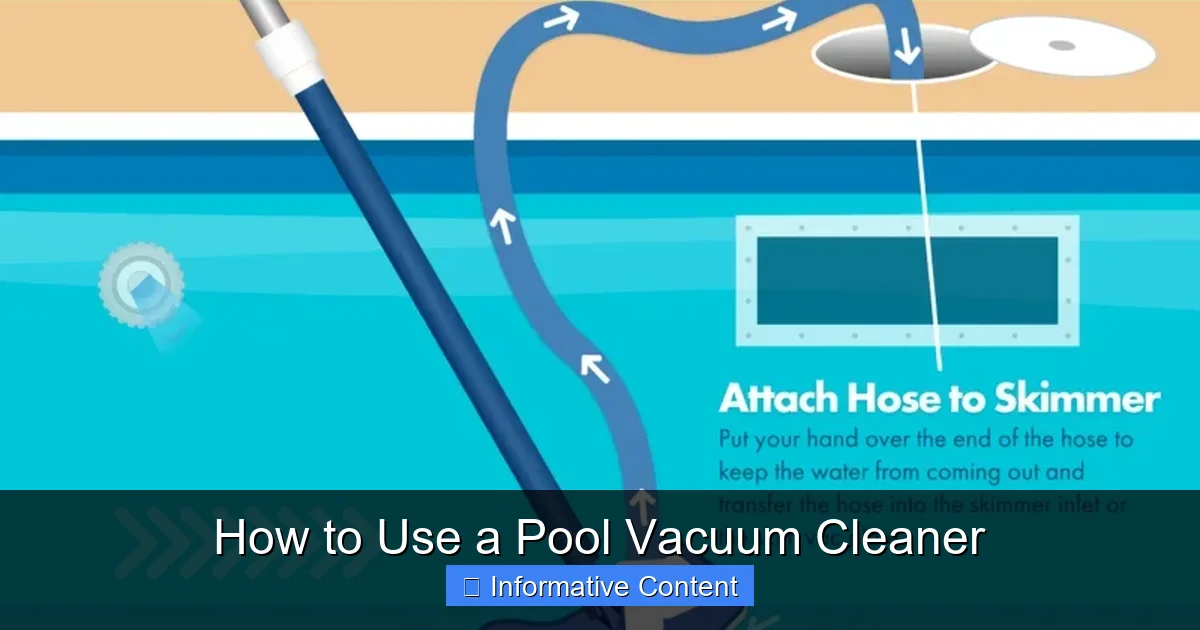
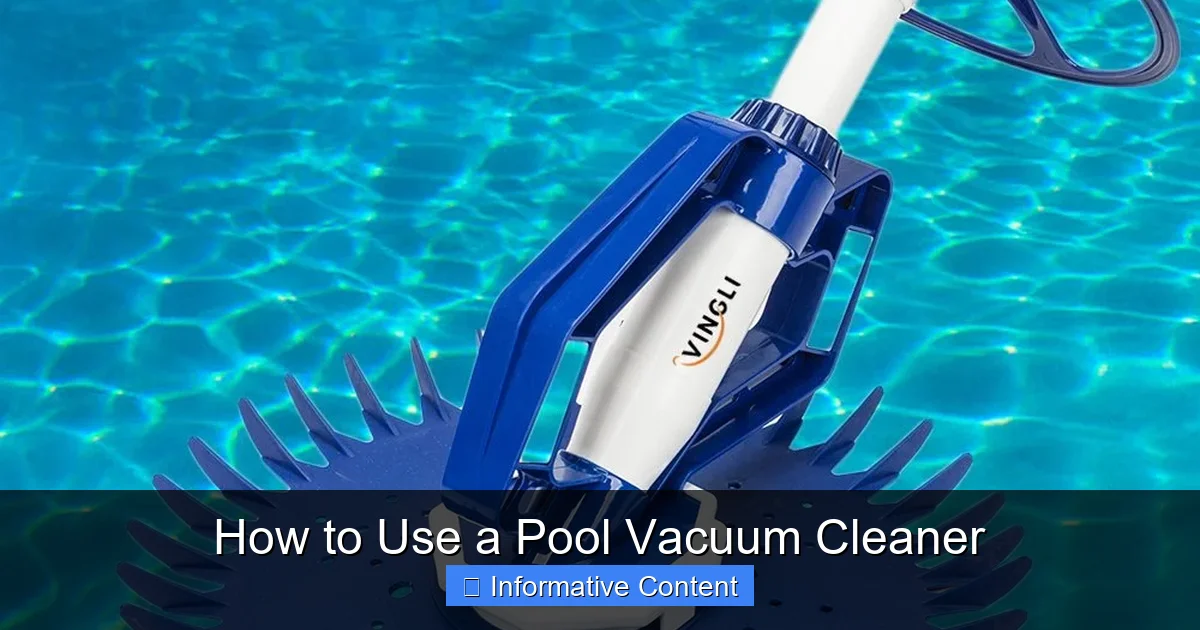
Visual guide about How to Use a Pool Vacuum Cleaner
Image source: swimuniversity.com
Before you embark on your cleaning mission, ensure you have all the necessary equipment at hand. Having everything ready will streamline the process of how to use a pool vacuum cleaner and prevent frustrating interruptions.
* Telescopic Pole: This adjustable pole connects to your vacuum head and allows you to reach all areas of your pool. Ensure it’s long enough for your deepest section.
* Pool Vacuum Head: These come in various designs.
- Weighted Vacuum Heads: Ideal for concrete or gunite pools, they have brushes to scrub surfaces.
- Wheeled Vacuum Heads: Best for vinyl or fiberglass pools, as brushes can potentially scuff the liner. They roll smoothly over the surface.
* Pool Vacuum Hose: A long, flexible hose specifically designed for pool vacuuming. Ensure it’s long enough to reach the furthest corner of your pool from the skimmer connection. Look for a heavy-duty, tangle-resistant hose.
* Skimmer Vacuum Plate or Adapter: This device creates a tight seal over your skimmer basket, directing all suction to the vacuum hose. Some pools have a dedicated vacuum port, eliminating the need for this.
* Pool Brush: For pre-vacuuming scrubbing.
* Leaf Skimmer/Net: To remove large debris from the surface.
* Gloves (Optional): For comfort and protection.
3. Pre-Vacuuming Ritual: Setting the Stage for Success
A little preparation goes a long way in making the task of how to use a pool vacuum cleaner much more effective and less strenuous. Don’t skip these crucial initial steps!
Skim and Brush First
Start by using your leaf net to skim any large floating debris from the pool surface. Leaves, bugs, and twigs can clog your vacuum or skimmer basket. Next, take your pool brush and give the walls and floor a good scrub. This dislodges any settled dirt and algae, making it easier for the vacuum to pick them up. Pay extra attention to corners and areas where water circulation might be poor.
Check Your Pool’s Water Level
Ensure your water level is at its optimal height – usually about halfway up the skimmer opening. If it’s too low, your pump might draw air, leading to a loss of prime and suction. If it’s too high, the skimmer might not function as efficiently.
Prepare Your Filter System
This is a critical step when you learn how to use a pool vacuum cleaner. For routine cleaning, you’ll typically leave your filter valve set to “Filter.” However, if your pool is exceptionally dirty, perhaps with heavy algae growth or a significant amount of fine sediment, you might want to switch your filter valve to the “Waste” or “Drain” setting.
- “Filter” Setting: Water is drawn from the pool, passed through the filter media, and returned to the pool. This is for general dirt and maintains water balance. Remember to backwash your filter immediately after heavy vacuuming in this mode.
- “Waste” or “Drain” Setting: Water is drawn from the pool and bypasses the filter, going straight out through the waste line. This prevents extremely dirty water from clogging your filter, but it will lower your pool’s water level, so keep an eye on it. Only use this for very dirty jobs and be prepared to add water afterwards.
Ensure your pool pump is running and has good suction before proceeding. If your pump isn’t running, you won’t get any vacuuming action!
4. The Step-by-Step Guide to Manual Pool Vacuuming
Now for the main event: learning the practical steps of how to use a pool vacuum cleaner. Follow these instructions carefully for the best results.
Step 1: Assemble Your Vacuum Equipment
First, securely attach your chosen vacuum head to the telescopic pole. Make sure it clicks firmly into place. Next, attach one end of the flexible vacuum hose to the vacuum head, pushing it on tightly to ensure a snug, airtight connection. Any air leaks here will significantly reduce suction.
Step 2: Prime the Vacuum Hose – This is Crucial!
This step is absolutely vital for efficient vacuuming and often where beginners stumble. You need to remove all air from the vacuum hose before connecting it to your skimmer or vacuum port.
- Slowly submerge the vacuum head into the water, allowing it to sink to the bottom of the pool.
- Hold the free end of the hose (the one not connected to the vacuum head) over a return jet. The pressure from the return jet will push water through the hose, forcing out all the air. You’ll see bubbles rising from the vacuum head.
- Alternatively, slowly feed the entire length of the hose into the pool, letting it fill with water as you go. Start from the vacuum head end and push the hose underwater segment by segment until water flows out of the free end and no more bubbles emerge from the vacuum head.
- Once a steady stream of water comes out of the free end of the hose, with no more air bubbles, your hose is fully primed. This means it’s completely filled with water.
Step 3: Connect to the Skimmer or Vacuum Port
With the hose primed and water flowing out, quickly carry the free end of the hose to your skimmer opening.
- For a Skimmer: Place the skimmer vacuum plate over your skimmer basket. Insert the hose end firmly into the designated hole on the vacuum plate. This creates a sealed suction pathway directly to your pump. If you don’t have a vacuum plate, simply push the hose end directly into the skimmer suction hole, ensuring it fits snugly without allowing air in.
- For a Dedicated Vacuum Port: If your pool has a separate vacuum line, remove its cap and firmly push the primed hose end into the port. These are usually designed for a secure, airtight fit.
You should immediately hear the change in your pump’s sound and feel the suction at the vacuum head.
Step 4: Begin Vacuuming – Slow and Steady Wins the Race
Now you’re ready to actually use a pool vacuum cleaner!
- Start Shallow: Begin vacuuming in the shallowest end of the pool. This allows you to monitor the vacuum head and suction without having to reach too far.
- Slow and Steady Strokes: Move the vacuum head slowly and deliberately across the pool floor. Think of it like mowing a lawn – use gentle, overlapping strokes.
- Avoid Stirring Debris: Resist the urge to move quickly or make sudden jerking motions. Fast movements will stir up the debris from the bottom, making the water cloudy and forcing you to wait for it to resettle.
- Overlap Your Paths: Ensure each stroke slightly overlaps the previous one to avoid missing any spots. Work your way across the entire pool floor, then up the sides a bit where dirt might collect.
- Empty Skimmer Basket: If you’re vacuuming a very dirty pool, periodically check your skimmer basket (and pump basket if vacuuming to filter) and empty it as needed. A full basket will reduce suction.
- Deep End Last: Work your way systematically towards the deep end.
- Watch for Air: If you lift the vacuum head out of the water even momentarily, you risk introducing air into the hose, which can cause a loss of prime and suction. If this happens, you’ll need to re-prime the hose.
Tips for Difficult Debris:
- Fine Silt/Algae: If you have very fine silt or a lot of green algae, it’s often best to vacuum to “Waste.” This bypasses your filter, preventing it from getting clogged and immediately removing the particles from your pool. Remember to replenish your water level afterwards.
- Heavy Debris: For large piles of leaves or heavy sediment, take extra slow passes. You might need to make multiple passes over the same area.
5. Troubleshooting Common Pool Vacuuming Woes
Even with the best preparation, you might encounter a few hiccups when you use a pool vacuum cleaner. Don’t worry; most issues are easily resolved.
Loss of Suction
This is the most common problem.
- Check Priming: Is there air in your hose? Re-prime it thoroughly.
- Skimmer Basket/Vacuum Plate: Is the skimmer basket full? Is the vacuum plate securely seated, creating an airtight seal?
- Hose Leaks: Inspect your vacuum hose for cracks or loose connections. Even a small pinhole leak can cause significant suction loss.
- Pump Basket: Is your pump’s hair and lint basket full? Empty it.
- Filter Clog: A dirty filter can restrict water flow and reduce suction. Check your pressure gauge; if it’s significantly higher than normal, your filter might need backwashing or cleaning.
Cloudy Water After Vacuuming
This usually happens for a few reasons:
- Too Fast: You might have moved the vacuum head too quickly, stirring up fine debris instead of vacuuming it.
- Filter Issue: Your filter might be dirty or not functioning optimally. Backwash/clean your filter.
- Fine Particles: Some very fine particles (like dead algae) might be too small for your filter to catch. Consider using a clarifier or flocculant to clump them together for easier filtration or future vacuuming.
Vacuum Getting Stuck or Not Moving Smoothly
- Check Wheels/Brushes: Ensure the vacuum head’s wheels are clean and spinning freely, or that its brushes aren’t worn down or clogged with debris.
- Debris Jam: A large piece of debris might be lodged in the vacuum head’s opening.
- Hose Tangles: If your hose is too long or tangled, it can restrict movement.
6. Post-Vacuum Care: Finishing Strong and Maintaining Your Equipment
You’ve successfully learned how to use a pool vacuum cleaner and your pool floor is spotless! But the job isn’t quite done. Proper post-vacuum care is essential for maintaining water quality and prolonging the life of your equipment.
Disconnect and Clean Equipment
- Turn off the Pump: Before disconnecting anything, switch off your pool pump to avoid backpressure.
- Remove Hose: Carefully remove the vacuum hose from the skimmer or dedicated vacuum port.
- Rinse Everything: Disconnect the hose from the vacuum head and telescopic pole. Rinse the vacuum head, hose, and pole thoroughly with fresh water to remove any pool chemicals or residual dirt.
- Inspect for Damage: Take a moment to inspect your hose for any new cracks or damage, and your vacuum head for worn brushes or damaged wheels. Addressing these early can prevent issues next time.
Backwash or Clean Your Filter
This step is absolutely critical, especially if you vacuumed a particularly dirty pool or used the “Filter” setting.
- Sand or DE Filters: Perform a backwash cycle until the waste water runs clear. Follow your filter manufacturer’s specific instructions.
- Cartridge Filters: Remove the cartridge(s) and thoroughly rinse them with a hose. A filter cleaning solution can be used periodically for a deeper clean.
Recheck Water Levels and Chemistry
If you vacuumed to “Waste,” your pool’s water level will likely have dropped. Refill it to the appropriate level. It’s also a good idea to recheck your water chemistry (pH, alkalinity, sanitizer levels) as the vacuuming process, especially when wasting water, can impact the balance. Adjust chemicals as needed.
Store Equipment Properly
Hang your telescopic pole and vacuum hose in a shaded area, away from direct sunlight, which can degrade plastic over time. Store the vacuum head in a clean, dry place. Proper storage extends the life of your valuable pool cleaning tools.
Conclusion
Congratulations! You now have a comprehensive understanding of how to use a pool vacuum cleaner effectively. From assembling your equipment and priming the hose to navigating the pool floor with precision and performing essential post-cleaning tasks, you’re equipped with the knowledge to keep your pool spotless.
Regular pool vacuuming is a cornerstone of good pool maintenance. It prevents debris from breaking down and affecting your water chemistry, reduces the strain on your filtration system, and most importantly, ensures your pool is always an inviting, sparkling oasis for you, your family, and your friends. Practice makes perfect, so don’t be afraid to get out there and start vacuuming. With these tips and a little patience, you’ll be a pool vacuuming pro in no time, enjoying a beautifully clean pool all season long!
Frequently Asked Questions
What’s the difference between a vacuum head with brushes and one with wheels?
A vacuum head with brushes is best for concrete or gunite pools as the brushes can scrub away stubborn dirt. A wheeled vacuum head is recommended for vinyl or fiberglass pools to prevent scratching or damaging the liner, allowing it to glide smoothly.
Can I vacuum directly to “Waste” if my pool is very dirty?
Yes, for very dirty pools with significant debris or algae, vacuuming to “Waste” is often preferred. This prevents your filter from getting overloaded and clogged, but remember that it lowers your pool’s water level, so you’ll need to replenish it afterward.
How do I know if my vacuum hose has a leak?
Submerge the entire hose in the pool and look for streams of tiny bubbles rising to the surface. Any consistent stream of bubbles indicates a leak, which will cause a loss of suction during vacuuming.
My pool pump seems to be struggling when I vacuum. What’s wrong?
This could be due to a clogged skimmer or pump basket, a very dirty filter, or a restriction in your vacuum hose. Check all baskets for debris and ensure your filter is clean. If the issue persists, check for blockages in the hose or vacuum head.
Is it okay to leave my vacuum hose in the pool?
It’s generally not recommended to leave your vacuum hose in the pool for extended periods. Sunlight and pool chemicals can degrade the hose material over time, shortening its lifespan. Always rinse and store your equipment properly after use.
What if I accidentally vacuum up a toy or large object?
Immediately turn off your pool pump to prevent damage to the pump impeller. Then, carefully disconnect the vacuum hose and check the vacuum head, hose, skimmer basket, and pump basket to locate and remove the obstruction.