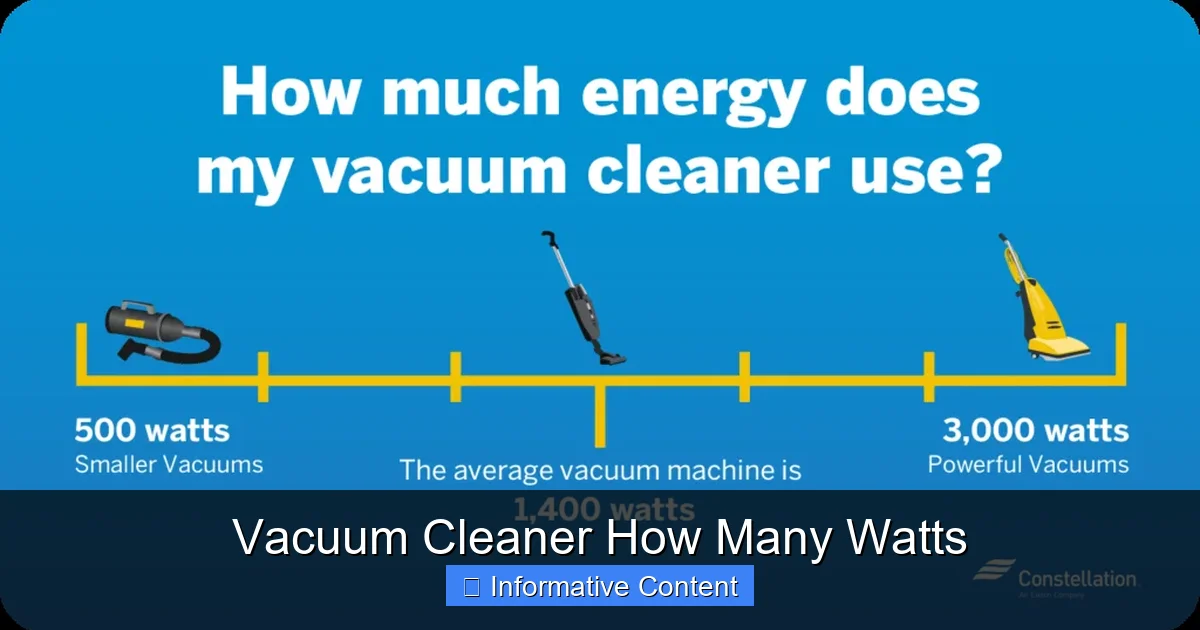
Vacuum Cleaner How Many Watts
Understanding “vacuum cleaner how many watts” is more complex than it seems, as input watts don’t directly equate to cleaning power. While corded vacuums typically range from 1000-2000 watts and cordless models are much lower, factors like air watts, design, and filtration are actually more crucial for effective cleaning. Prioritizing efficiency and suction tailored to your home’s needs is key, rather than just focusing on a high wattage number.
Vacuum Cleaner How Many Watts
Have you ever found yourself staring at a vacuum cleaner’s specifications, wondering what “vacuum cleaner how many watts” really means? It’s a common question, and one that can be surprisingly misleading if you don’t know what you’re looking for. Many people assume that a higher wattage automatically equals a more powerful and effective vacuum cleaner. While watts do indicate power, they don’t tell the whole story about how well a vacuum will actually clean your home.
Understanding the wattage of your vacuum cleaner, or one you’re considering buying, is about more than just electricity consumption. It’s about demystifying a key specification to make an informed decision. We’re here to break down what wattage really signifies, how it impacts performance, and what other crucial factors you should consider when choosing the perfect cleaning companion for your living space. Let’s dive deep into the world of vacuum cleaner power!
Understanding Watts: Power Consumption vs. Cleaning Power
When we talk about “vacuum cleaner how many watts,” we’re typically referring to the electrical power the vacuum *consumes* from the wall outlet. This is known as **input wattage**. It tells you how much electricity the motor and other components are drawing to operate. For example, a 1500-watt vacuum cleaner will use 1.5 kilowatts of electricity per hour of operation. But here’s the crucial distinction: this number doesn’t directly tell you how much suction power is being delivered to your carpets and floors.
The Difference Between Input Watts and Air Watts
Think of it this way: a car’s engine might have a high horsepower rating (input watts), but if it’s hauling a massive load or has inefficient transmission, not all that power reaches the wheels effectively to move the car forward quickly (cleaning power). For vacuum cleaners, the true measure of cleaning power is **air watts**.
Air watts measure the actual power of the airflow at the cleaning head, taking into account both airflow (CFM – cubic feet per minute) and suction (water lift). It’s a much more accurate representation of how effectively a vacuum can pick up dirt, dust, and debris. Unfortunately, not all manufacturers consistently provide air watt ratings, which can make direct comparisons challenging. However, understanding this difference is key to not falling into the trap of thinking “higher input watts = better cleaning.”
Average Wattage for Different Vacuum Cleaner Types
The number of watts a vacuum cleaner uses varies significantly depending on its type, design, and intended use. Let’s look at the typical wattage ranges you might encounter when asking “vacuum cleaner how many watts” for different models:
Corded Upright and Canister Vacuums
These are often the workhorses of home cleaning, designed for consistent power and extended use.
- Upright Vacuums: Typically range from **1000 to 2000 watts**. They often feature powerful motors to drive both suction and a motorized brush roll, making them effective for carpets. Some older or extremely powerful models might even exceed 2000 watts.
- Canister Vacuums: Similar to uprights, they usually fall within the **1000 to 1800 watts** range. Their design often allows for slightly better airflow efficiency compared to some uprights, but their motors still require substantial power.
These higher wattages enable them to maintain strong suction for longer periods and tackle deep cleaning tasks across various surfaces.
Cordless Stick and Handheld Vacuums
The rise of cordless technology has brought convenience, but it also means a different approach to wattage. These rely on batteries, so their power consumption (and thus “wattage” during operation, though often specified in voltage or air watts for battery models) is managed differently.
- Cordless Stick Vacuums: The actual motor wattage for these can be much lower, often in the range of **100 to 500 watts** (though sometimes described by battery voltage, e.g., 18V, 22V, 25V). What’s more important here is their efficiency, battery life, and often, their air watt rating. They are designed for quick clean-ups and lighter tasks, but modern cordless models are becoming increasingly powerful.
- Handheld Vacuums: These are designed for small messes and quick spot cleaning. Their wattage is typically low, ranging from **50 to 150 watts**. Again, battery life and specific suction capabilities are more relevant than raw input wattage.
Robotic Vacuums
These autonomous cleaners are designed for low power consumption to maximize battery life and allow them to complete cleaning cycles without needing frequent recharging.
- Robotic Vacuums: Generally consume the lowest power, often in the range of **20 to 100 watts** during operation. Their cleaning effectiveness comes from systematic navigation, smaller brush rolls, and consistent (though not always incredibly strong) suction over longer periods.
When you ask “vacuum cleaner how many watts” for these battery-powered devices, remember that the focus shifts more towards battery technology, run time, and air watts rather than just the input wattage number.
What Affects a Vacuum Cleaner’s Wattage?
Several factors contribute to “vacuum cleaner how many watts” an appliance consumes. It’s not just a random number; it’s a reflection of its internal components and design philosophy.
Motor Size and Efficiency
The motor is the heart of any vacuum cleaner, generating the suction. A larger, more powerful motor will naturally draw more electricity, leading to a higher input wattage. However, motor efficiency is also key. A highly efficient motor can generate significant suction with less power consumption than a poorly designed, larger motor. Advances in motor technology, like digital motors, allow for impressive power output at lower wattages.
Additional Features and Accessories
Modern vacuum cleaners come with a host of features that can add to their power draw:
- Motorized Brush Rolls: Essential for deep cleaning carpets, these separate motors require additional power.
- Advanced Filtration Systems: HEPA filters, while excellent for air quality, can restrict airflow slightly, meaning the main motor might need to work harder (and thus draw more watts) to maintain suction.
- LED Lights: Some vacuums include lights on the cleaning head, which contribute a small amount to overall wattage.
- Power Outlets for Attachments: Higher-end models might have powered attachments that increase the total wattage when in use.
Type of Vacuum (Corded vs. Cordless)
As discussed, corded vacuums have a direct, continuous power supply, allowing for higher sustained wattage. Cordless vacuums, operating on batteries, are designed to be more energy-conservative to extend run time. Their wattage is limited by battery capacity and motor design for portable use. This is why you’ll see a significant difference in “vacuum cleaner how many watts” between a corded upright and a cordless stick vacuum.
Design and Airflow Efficiency
This is perhaps one of the most underrated factors. A vacuum cleaner’s design – from the shape of its nozzles and hoses to the sealing of its system and the path the air takes – significantly impacts how efficiently it converts electrical power into cleaning power. A well-engineered vacuum with excellent seals and optimized airflow can achieve superior suction with lower input watts compared to a poorly designed model with a higher wattage motor that leaks air or has an obstructed pathway.
Beyond Watts: What Really Matters for Cleaning Performance?
While knowing “vacuum cleaner how many watts” gives you an idea of power consumption, it’s far from the only, or even the most important, metric for judging a vacuum’s effectiveness. Smart shoppers look beyond the watt number.
Air Watts: The True Measure of Suction Power
As mentioned, **air watts** are king when it comes to understanding actual cleaning capability. This metric combines airflow and suction to tell you how much power is actually reaching the surface being cleaned. If a manufacturer provides air watt ratings (which they should!), compare these across models. A higher air watt rating generally indicates better dirt pickup.
Vacuum Design and Engineering
A vacuum isn’t just a motor and a bag; it’s a sophisticated air movement system.
- Sealed System: A truly sealed system ensures that all the air drawn into the vacuum passes through the filtration system and doesn’t leak out before reaching the dustbin. Leaks mean lost suction and inefficient power use.
- Brush Roll Effectiveness: Especially for carpets, the design, material, and motorization of the brush roll are crucial. A powerful brush roll can agitate dirt from deep within carpet fibers, making it easier for even moderate suction to pick it up.
- Nozzle and Hose Design: Wide, unobstructed nozzles and smooth, non-kinking hoses minimize air resistance, allowing the motor to work more efficiently.
- Filtration System: While HEPA filters are great for allergens, they must be paired with sufficient motor power and a sealed system to avoid compromising suction. Multi-cyclonic technology can also help maintain suction by separating dust from the air before it reaches the filter.
Attachments and Tools
The right tool for the job makes a huge difference. A vacuum with specific attachments for crevices, upholstery, pet hair, or delicate surfaces can perform better in those specific scenarios than a general-purpose head, regardless of its overall wattage.
User Experience and Practicality
Finally, consider how the vacuum feels to use. A lightweight, maneuverable vacuum that you *actually enjoy* using frequently will often keep your home cleaner than a super-powerful, heavy machine that sits in the closet because it’s a chore to operate. Noise levels, dustbin capacity, ease of emptying, and filter maintenance also play a big role in overall satisfaction.
Energy Efficiency and Your Vacuum Cleaner
In an era where energy conservation is increasingly important, it’s natural to consider the energy footprint of your appliances. When thinking “vacuum cleaner how many watts,” you might wonder if a higher number means a massive electricity bill.
Are Vacuums Energy Hogs?
Compared to appliances like refrigerators or washing machines that run for hours or continuously, vacuum cleaners are used intermittently. Even a 2000-watt vacuum used for 30 minutes once a week consumes far less electricity annually than many other household items. The cost difference between a 1000-watt and a 2000-watt model, assuming equal cleaning performance, might only be a few dollars a year on your electricity bill. So, while wattage contributes to energy use, vacuums are not typically considered major energy hogs.
Choosing an Efficient Model
Instead of solely focusing on low input watts, look for vacuums that are *efficiently designed*. This means models that maximize cleaning performance (air watts) for the power they consume.
- Look for Reputable Brands: Companies known for engineering excellence often produce more efficient vacuums.
- Consider Air Watt Ratings: If available, compare air watts per input watt. A vacuum with 200 air watts using 1200 input watts is more efficient than one with 150 air watts using 1500 input watts.
- Maintain Your Vacuum: Regularly cleaning or replacing filters, emptying the dustbin before it’s full, and removing clogs from the hose or brush roll will significantly improve your vacuum’s efficiency. A clogged vacuum has to work much harder, drawing more power and potentially overheating, to achieve the same or even worse cleaning results.
A well-maintained, efficiently designed vacuum will not only save a tiny bit on your electricity bill but will also perform better and last longer.
Choosing the Right Wattage (and Vacuum) for Your Home
Now that we’ve debunked some myths and clarified what “vacuum cleaner how many watts” truly means, how do you make the right choice for your specific needs?
Consider Your Flooring Types
- Heavy Carpeting/Rugs: If you have a lot of thick pile carpets or rugs, you’ll benefit from a vacuum with strong air watts and a powerful, motorized brush roll. This might mean a corded upright or canister vacuum that typically has higher input watts to support these features.
- Hardwood/Tile Floors: For predominantly hard floors, extreme suction power isn’t always necessary, and a powerful brush roll might even scratch delicate surfaces. A vacuum with good suction control, soft brush rolls, and lower air watts can be perfectly adequate. Cordless stick vacuums are often excellent for this.
- Mixed Flooring: Many modern homes have a mix. Look for versatile vacuums with adjustable suction, multiple cleaning modes, or interchangeable heads to transition smoothly between surfaces.
Deal with Pet Hair?
Pet hair requires serious cleaning power. Look for vacuums specifically designed for pet owners, featuring:
- High air watts.
- Strong, tangle-free brush rolls.
- Excellent filtration to capture dander.
- Specialized pet tools.
These features often require more robust motors and thus might be found in vacuums with higher input wattages.
Home Size and Layout
- Small Apartments/Quick Clean-ups: A cordless stick or handheld vacuum with lower wattage (and battery power) might be perfect for convenience.
- Medium to Large Homes: A corded upright or canister vacuum offers sustained power for larger areas.
Don’t Overlook Budget and Brand Reputation
While it’s easy to get caught up in technical specs, your budget will always be a factor. Higher-wattage vacuums, especially those with advanced features and efficient designs, can be more expensive. Research reputable brands known for durability and good customer service. Sometimes, paying a bit more for a well-engineered vacuum with moderate wattage will yield better long-term results than a cheap, high-wattage model that lacks efficiency and features.
In conclusion, when you next ask “vacuum cleaner how many watts,” remember that it’s just one piece of the puzzle. Focus on the interplay between input watts, air watts, design, filtration, and your specific cleaning needs. By understanding these elements, you’ll be empowered to choose a vacuum cleaner that not only meets your expectations but truly transforms your cleaning routine. Happy vacuuming!
Key Takeaways
- Input Watts vs. Air Watts: “Vacuum cleaner how many watts” often refers to input watts (power consumption), but air watts measure actual suction power at the cleaning head, which is a better indicator of cleaning performance.
- Wattage Varies by Type: Corded upright and canister vacuums typically range from 1000 to 2000 watts, while cordless stick and robotic vacuums use significantly less power due to battery operation, often 100-500 watts.
- Higher Watts Don’t Always Mean Better Cleaning: An inefficient 2000-watt vacuum might clean worse than an efficient 1200-watt model with superior design and airflow.
- Beyond Watts: Factors like motor efficiency, brush roll design, filtration system, sealed system, and overall airflow management are critical for effective dirt pickup, often more so than raw wattage.
- Energy Efficiency Matters: While vacuums aren’t energy hogs compared to other appliances, choosing a model with good design ensures optimal cleaning without excessive power draw. Regular maintenance also helps maintain efficiency.
- Choose Based on Need, Not Just Watts: Consider your flooring types, pet hair presence, and home size. Heavy-duty cleaning on thick carpets might benefit from higher air watts, regardless of the input wattage number.
Quick Answers to Common Questions
What do watts mean on a vacuum cleaner?
Watts on a vacuum cleaner typically refer to its input wattage, which is the amount of electrical power the appliance consumes from the wall outlet to operate its motor and other components.
Do higher watts mean better suction for a vacuum cleaner?
Not necessarily. While higher input watts indicate more power consumption, they don’t directly equate to better cleaning performance. Air watts, which measure actual suction at the cleaning head, are a more accurate indicator of effective suction power.
What is the average wattage of a corded vacuum cleaner?
Most corded upright and canister vacuum cleaners typically range from 1000 to 2000 watts of input power. This allows for sustained strong suction and the operation of motorized brush rolls.
How many watts do cordless stick vacuums typically use?
Cordless stick vacuums consume significantly less power from the battery, with their motors often ranging from 100 to 500 watts. Battery voltage and air watt ratings are often more relevant metrics for these models.
Is a 1200-watt vacuum powerful enough?
Yes, a 1200-watt vacuum can be very powerful and effective, especially if it has an efficient motor, good airflow design, and high air watt rating. The overall design and engineering are often more important than the raw input wattage alone.
Frequently Asked Questions
What are “air watts” and why are they important?
Air watts measure the actual cleaning power of a vacuum by combining airflow and suction at the cleaning head. They are important because they provide a more accurate representation of how effectively a vacuum can pick up dirt and debris compared to just input wattage.
Does a higher wattage vacuum cost more to run?
Generally, a vacuum with higher input wattage will consume more electricity and thus cost slightly more to run per hour of use. However, vacuum cleaners are used intermittently, so the annual cost difference between a high and low wattage model is usually negligible compared to other household appliances.
Should I choose a vacuum cleaner based solely on its wattage?
No, you should not choose a vacuum cleaner based solely on its wattage. While wattage indicates power consumption, factors like air watts, motor efficiency, brush roll design, filtration system, and overall sealed system are far more crucial for effective cleaning performance.
Are European vacuum cleaner wattages different from those in North America?
Yes, European vacuum cleaner wattages can appear lower due to different regulatory standards focusing on efficiency. While North American models historically had higher input wattages, both regions are seeing a trend towards more efficient designs that deliver strong cleaning with less power consumption.
How can I make my vacuum cleaner more energy efficient?
To make your vacuum cleaner more energy efficient, regularly empty the dustbin, clean or replace filters as recommended, and remove any clogs from the hose or brush roll. A well-maintained vacuum works more efficiently and requires less power to achieve optimal cleaning results.
What is a good wattage for a vacuum cleaner for pet hair?
For pet hair, focus on a vacuum with strong air watts and a powerful, motorized brush roll, rather than just high input wattage. While these features might be found in vacuums with higher input watts (e.g., 1500+ watts for corded), it’s the actual suction and agitation power that makes the difference against pet hair.