How Does Your Vacuum Cleaner Work in 2025 A Deep Dive
Unraveling the mystery of “how a vacuum cleaner works” reveals a fascinating interplay of physics and engineering. At its core, a vacuum cleaner creates a powerful airflow by generating a pressure difference, drawing in dirt and debris. This guide explores the intricate mechanisms from motor to filtration, explaining how suction is created, how dirt is collected, and how the air is cleaned before being expelled. By understanding these fundamental principles, you’ll gain appreciation for your cleaning appliance and learn to maintain it for peak performance in 2025 and beyond.
How Does Your Vacuum Cleaner Work in 2025 A Deep Dive
Welcome to the ultimate guide on understanding the magic behind your everyday cleaning companion! In 2025, vacuum cleaners are more advanced than ever, boasting smart features, powerful motors, and sophisticated filtration systems. But at their heart, the fundamental principles of “how a vacuum cleaner works” remain surprisingly simple, rooted in basic physics.
If you’ve ever wondered what truly happens when you flick that power switch, or why one vacuum seems to clean better than another, you’re in the right place. This comprehensive guide will take you on a journey inside your vacuum cleaner, demystifying its components and showing you precisely how it transforms a dusty mess into a clean floor. By the end, you’ll not only appreciate your vacuum more but also understand how to keep it running at its peak, leveraging the insights of 2025 technology. Let’s dive deep into the fascinating world of vacuum mechanics!
Key Takeaways
- Suction is Key: A powerful motor spins a fan, creating a low-pressure area inside the vacuum cleaner, which pulls in high-pressure air (and dirt) from the outside, explaining how vacuum cleaner works at its most basic level.
- Agitation and Airflow: Beyond just suction, a rotating brush roll (agitator) is crucial for dislodging embedded dirt from carpets, ensuring it can be swept into the vacuum’s powerful airflow.
- Multi-Stage Filtration: Modern vacuum cleaners, especially in 2025, employ advanced multi-stage filtration systems, often including HEPA filters, to capture microscopic particles and allergens, preventing them from being expelled back into your home.
- Dirt Separation Methods: Debris is collected either in disposable bags or, more commonly in 2025, through bagless cyclonic systems that use centrifugal force to separate dust from the air efficiently.
- Smart Tech Integration: Contemporary vacuum cleaners feature smart sensors, AI-driven navigation, and adaptive suction, optimizing cleaning paths and power based on floor type and debris levels, enhancing how vacuum cleaner works in a modern home.
- Maintenance Matters: Regular cleaning of filters, brush rolls, and checking for blockages is essential to maintain optimal suction power and ensure your vacuum cleaner works effectively and efficiently over time.
Quick Answers to Common Questions
What causes a vacuum cleaner to lose suction?
Loss of suction in a vacuum cleaner is usually caused by clogged filters, a full dirt bin/bag, or a blockage in the hose or nozzle. Ensure these components are clear to restore optimal airflow.
How often should I clean my vacuum filters?
Most washable filters should be cleaned monthly, while non-washable filters may need replacement every 3-6 months, depending on usage and manufacturer recommendations. Regular cleaning ensures your vacuum cleaner works efficiently.
What is a HEPA filter and why is it important?
A HEPA (High-Efficiency Particulate Air) filter captures 99.97% of particles as small as 0.3 microns, including allergens like pollen, pet dander, and dust mites. It’s crucial for improving indoor air quality and how vacuum cleaner works to prevent recirculation of fine dust.
Why is my vacuum cleaner’s brush roll not spinning?
A non-spinning brush roll is commonly due to hair and debris tangled around it, a broken drive belt, or an obstruction in its housing. Regularly clean the brush roll and check the belt for damage to ensure proper carpet agitation.
Do bagless vacuums have better suction than bagged ones?
Not inherently. While bagless cyclonic systems are designed to maintain consistent suction as they fill, bagged vacuums with powerful motors and fresh, porous bags can offer comparable performance. The design of how vacuum cleaner works for suction is more about overall engineering than just bag vs. bagless.
The Core Principle: Air Pressure and Suction
At its most fundamental level, the entire operation of “how a vacuum cleaner works” revolves around creating a difference in air pressure. Think of it like a tiny, localized storm, but instead of creating wind, it creates an inward pull.
The Motor and Fan: Creating the Vacuum
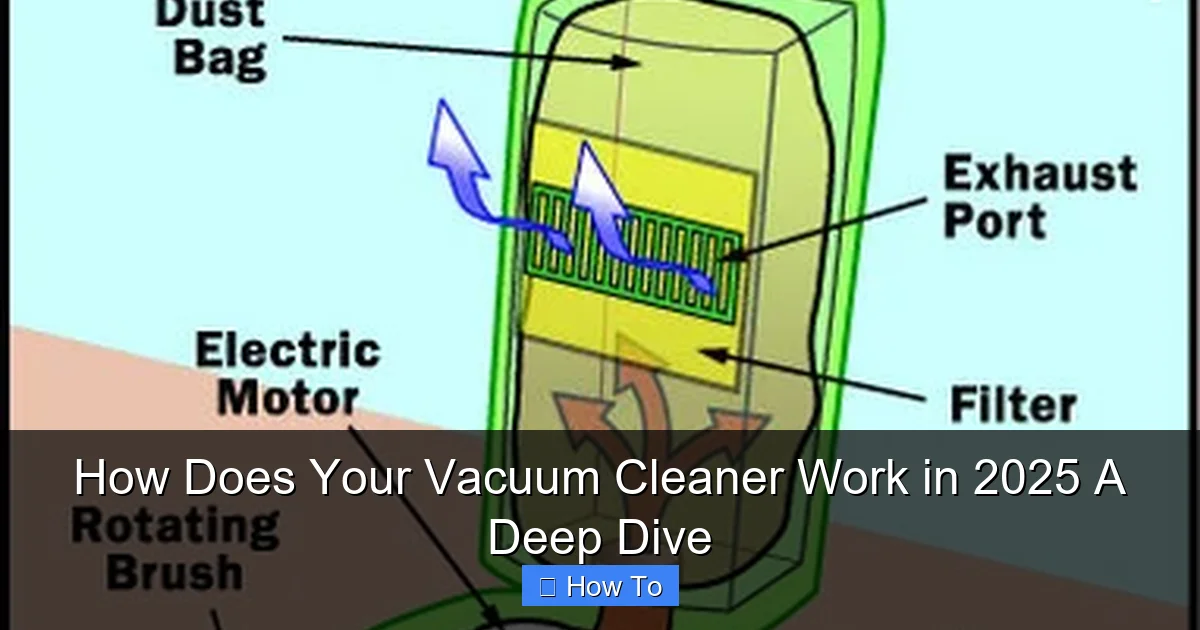
The brain and brawn of your vacuum cleaner is its electric motor. This motor, typically powered by electricity (either from a wall outlet or a rechargeable battery in cordless models), is incredibly powerful for its size. Its primary job? To spin a fan, or impeller, at incredibly high speeds. Imagine a propeller, but designed to move air in a very specific way.
As the fan spins, its blades are engineered to push air out of an exhaust port on the vacuum cleaner. When air is expelled, it creates a reduction in the air pressure inside the main body of the vacuum. This internal space becomes a low-pressure zone, a sort of partial vacuum.
Now, basic physics tells us that air naturally flows from an area of higher pressure to an area of lower pressure. Since the pressure inside your vacuum cleaner is now significantly lower than the atmospheric pressure outside of it (the air in your room), the external air rushes in through the vacuum’s intake port – the nozzle or hose opening – to equalize the pressure. This rushing air is what we perceive and call “suction.” That’s the first step in understanding how a vacuum cleaner works!
The Airflow Path: From Inlet to Exhaust
Understanding the path of the air is crucial to grasping how your vacuum cleaner works its magic. The process begins at the cleaning head, where the nozzle makes contact with the floor. This is the “inlet.”
As the powerful suction draws in air, it doesn’t just pull air; it pulls in anything light enough to be carried by that airflow – dust, dirt, crumbs, pet hair, and microscopic debris. This dirt-laden air then travels through a series of internal channels and tubes. In upright vacuums, this path is often relatively short and direct. In canister or stick vacuums, it might travel through a flexible hose before reaching the main unit.
Once the air (now carrying all the collected grime) enters the main body of the vacuum, it passes through the dirt collection system (either a bag or a cyclonic separator) and then through one or more filters. The purpose of these steps is to separate the dirt from the air. Finally, the cleaned air is pushed out through the exhaust port, completing the cycle. This continuous flow of air is what makes your vacuum cleaner work effectively.
Dust and Debris Collection: Beyond Just Air
While suction gets the dirt into the vacuum, it’s the subsequent stages that ensure the dirt stays there and clean air is expelled. This is where the intricacies of how a vacuum cleaner works truly shine.
The Agitator Brush (Beater Bar): Lifting Dirt
Have you ever noticed how effective your vacuum is on carpets? A significant part of that effectiveness comes from the agitator brush, also known as the beater bar or brush roll. Not all vacuums have this (canister vacuums often rely solely on suction and specialized attachments), but it’s a staple for upright and many stick vacuums.
Visual guide about How Does Your Vacuum Cleaner Work in 2025 A Deep Dive
Image source: cdn.shopify.com
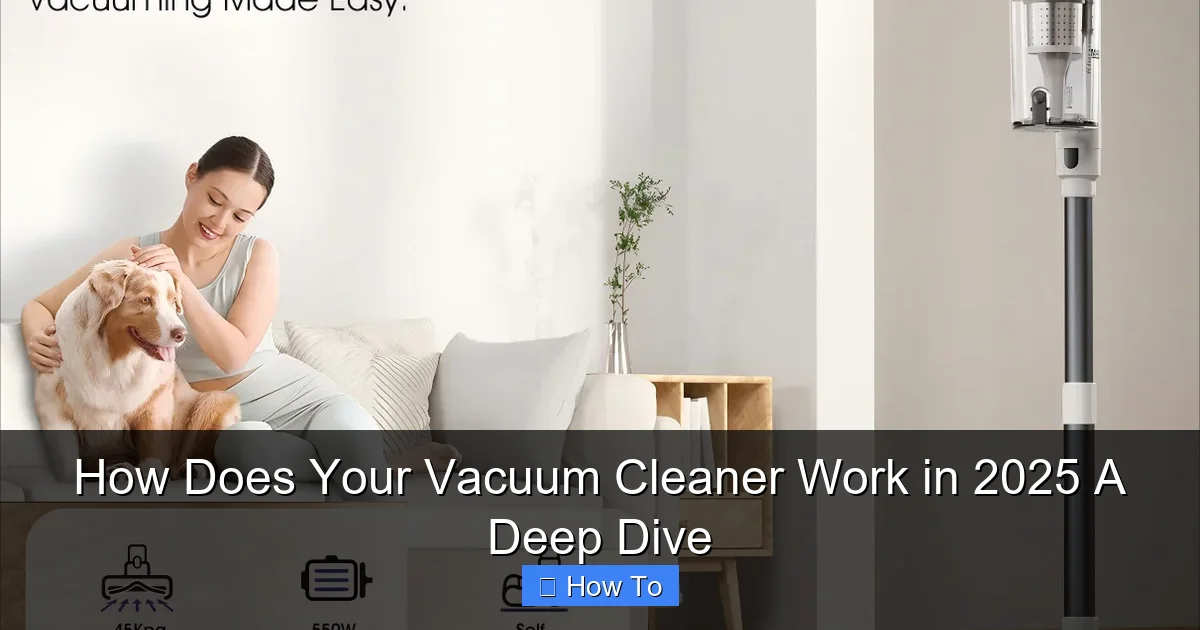
This rotating brush, often powered by a separate belt connected to the main motor or its own small motor, spins at high speeds. As it spins, bristles on the brush vigorously beat and agitate the carpet fibers. This mechanical action loosens and lifts embedded dirt, pet hair, and debris that suction alone might miss. Once dislodged, these particles are much easier for the powerful airflow to pick up and carry into the vacuum. Without this agitation, cleaning carpets would be far less effective, highlighting a key aspect of how a vacuum cleaner works for deep cleaning.
Filtration Systems: Keeping Air Clean
One of the most critical components in understanding how a vacuum cleaner works is its filtration system. Its job is to prevent the dust and allergens picked up from being simply blown back into your home through the exhaust. Modern vacuums, especially those in 2025, feature advanced multi-stage filtration.
- Pre-Motor Filter: This is often the first line of defense, usually a foam or mesh filter, designed to capture larger particles before they can reach and potentially damage the motor. It also protects subsequent filters.
- HEPA Filters: High-Efficiency Particulate Air (HEPA) filters are the gold standard. They are designed to capture at least 99.97% of airborne particles 0.3 micrometers (µm) in size. To put that into perspective, most dust mites, pet dander, pollen, and even some bacteria and viruses are larger than 0.3 µm. By 2025, many high-end vacuums include sealed HEPA filtration systems, ensuring that virtually no dirty air bypasses the filter. This is crucial for allergy sufferers and anyone concerned about indoor air quality.
- Post-Motor Filter: Sometimes present, this filter catches any tiny particles that might have escaped the main filtration system before the air is expelled, providing an extra layer of protection.
The better the filtration, the cleaner the air leaving your vacuum. This is a significant factor in how a vacuum cleaner works to not just clean floors, but also improve your home environment.
Dirt Receptacles: Bags vs. Bagless Cyclonic Systems
Once the dirt-laden air has entered the vacuum and passed the agitator, the next step is to separate the dirt from the air. There are two primary methods for this:
Bagged Vacuums:
In a bagged vacuum, the incoming air and dirt are directed into a disposable paper or cloth bag. The bag itself acts as a filter. Air can pass through the tiny pores of the bag material, but dirt particles are trapped inside. When the bag is full, you simply remove it and dispose of it, which is convenient for allergy sufferers as it minimizes contact with dust.
Bagless Cyclonic Systems:
By 2025, bagless cyclonic systems are the dominant technology, and they are a prime example of advanced engineering in how a vacuum cleaner works. Here’s how they operate:
- Centrifugal Force: As dirty air enters the collection bin (often clear plastic), it’s spun at incredibly high speeds in a conical chamber. This creates a powerful cyclonic action, much like a mini-tornado.
- Separation: Due to centrifugal force, heavier dirt and dust particles are flung outwards against the walls of the chamber. As they lose momentum, gravity pulls them down into the bottom of the collection bin, separating them from the airflow.
- Multi-Cyclonic Technology: Many modern bagless vacuums use multiple smaller cyclones. The primary cyclone separates larger debris, and then the air, still containing finer dust, passes through several smaller cyclones that spin the air even faster to capture microscopic particles. This multi-stage separation improves filtration and maintains stronger suction as the bin fills, which is a significant advantage over bags that can clog and reduce airflow.
Both systems effectively collect dirt, but cyclonic technology has become popular due to its consistent suction and the environmental benefit of not needing disposable bags, redefining how a vacuum cleaner works for many households.
Powering the Clean: Energy and Efficiency
The way your vacuum is powered also plays a crucial role in its performance and convenience.
Corded vs. Cordless: Battery Tech in 2025
The choice between corded and cordless vacuums significantly impacts usability and power. Corded vacuums offer unlimited runtime and often more consistent, higher suction power because they draw directly from a wall outlet. This continuous power supply allows for larger motors and consistent performance, explaining why some prefer them for whole-house deep cleaning.
However, by 2025, cordless vacuum technology has made massive strides. Advanced lithium-ion batteries provide longer runtimes (often 60 minutes or more on eco mode) and more powerful, energy-dense motors that rival traditional corded models. Quick charging and swappable battery packs are common features, giving cordless vacuums immense flexibility and convenience. The advancements in battery tech are a huge part of how a vacuum cleaner works in a modern, mobile context.
Smart Features and Automation: The 2025 Edge
This is where the “2025” context truly shines. Modern vacuum cleaners are not just about raw power; they’re smart. Many models incorporate advanced sensors and artificial intelligence (AI) to optimize their cleaning performance.
- Adaptive Suction: Sensors can detect the type of floor surface (hardwood, tile, carpet) and automatically adjust suction power and brush roll speed accordingly. This saves battery life and provides optimal cleaning without manual intervention.
- Object Detection and Navigation: Robot vacuums in 2025 use LiDAR, vSLAM (visual simultaneous localization and mapping), and infrared sensors to map your home, avoid obstacles, and clean in efficient, systematic patterns. They can identify specific dirtier areas and spend more time there.
- AI Integration: Some high-end models use AI to “learn” your home over time, suggesting cleaning schedules, identifying high-traffic areas, and even detecting types of debris to optimize their cleaning strategy.
- App Control and Voice Assistants: Full control from your smartphone, integration with smart home ecosystems (Alexa, Google Assistant), and features like zone cleaning (telling the robot to clean only the kitchen) are standard.
These smart features don’t change the *basic* principle of how a vacuum cleaner works, but they profoundly enhance its efficiency, convenience, and overall cleaning efficacy, making the job much easier for the homeowner.
Understanding Different Vacuum Types
While the core principles remain, different vacuum cleaner designs optimize “how a vacuum cleaner works” for specific tasks and environments.
Upright Vacuums
These are perhaps the most traditional type, with the motor, collection bin, and cleaning head all integrated into one unit that stands upright. They are excellent for carpets due to their powerful agitator brushes and wide cleaning paths. They offer strong suction and are generally robust for whole-house cleaning.
Canister Vacuums
Canister vacuums separate the motor and dirt collection unit (the canister) from the cleaning head, which is attached via a long, flexible hose. This design offers great maneuverability, allowing you to reach under furniture, clean stairs, and use a variety of attachments for different surfaces. They are often favored for hard floors and delicate surfaces.
Robot Vacuums
The epitome of hands-free cleaning, robot vacuums are autonomous units designed to clean floors on their own. As discussed, 2025 models feature advanced navigation, mapping, and AI, making them highly efficient. They excel at maintaining cleanliness with daily passes, but may not have the deep-cleaning power of a full-sized upright or canister. Understanding how vacuum cleaner works in an automated way is a fascinating evolution.
Handheld Vacuums
Compact and cordless, handheld vacuums are designed for quick clean-ups of small spills, car interiors, and hard-to-reach spots. Their motors are typically smaller, offering less suction than full-sized models, but their convenience is unmatched.
Stick Vacuums
A hybrid between upright and handheld, stick vacuums are slim, lightweight, and often cordless. They’re great for quick daily cleans on hard floors and light carpets. Many convert into handheld units. By 2025, stick vacuums often come with powerful motors and long-lasting batteries, making them a primary vacuum for many users.
Common Issues and How They Relate to Function
Even the most advanced vacuum cleaner can encounter problems. Understanding “how your vacuum cleaner works” helps diagnose and fix these common issues.
Loss of Suction
This is the most frequent complaint. If your vacuum isn’t picking up dirt as effectively, it’s almost always related to an obstruction in the airflow path or a compromise in the pressure differential. Check for:
- Full Dirt Receptacle/Bag: A full bag or bin restricts airflow. Empty it!
- Clogged Filters: Dirty, clogged filters impede air passage and drastically reduce suction. Clean or replace them regularly.
- Blockages: A sock, a tangled mass of hair, or a foreign object stuck in the nozzle, hose, or internal tubes will prevent air from flowing freely.
- Leaks in the System: Cracks in hoses or improper seals can let air leak in, reducing the pressure difference and thus suction.
Clogs and Blockages
Often caused by vacuuming up larger items not meant for the machine, or an accumulation of hair and lint. Blockages typically occur at the nozzle, in the main hose, or where the hose connects to the dirt collection system. A severe blockage will completely stop the airflow, rendering the suction mechanism useless.
Filter Maintenance
Neglecting filters is a sure way to degrade performance. Most filters (especially HEPA) are not designed to last forever. Washable filters need regular cleaning, and non-washable ones need replacement according to the manufacturer’s guidelines. A clogged filter makes your motor work harder, leading to overheating and reduced lifespan, impacting how your vacuum cleaner works overall.
Brush Roll Not Spinning
If your agitator brush stops spinning, it won’t be able to dislodge dirt from carpets effectively. Common culprits include:
- Hair and Fiber Tangles: Long hair and carpet fibers often get wrapped around the brush roll, preventing it from spinning freely. Regular cleaning of the brush roll is essential.
- Broken Belt: In many upright vacuums, a belt connects the motor to the brush roll. If this belt breaks, the brush won’t spin.
- Obstruction: A larger object caught in the brush roll housing can also stop it.
Maintaining Your Vacuum for Optimal Performance
Now that you thoroughly understand “how a vacuum cleaner works,” you can see why regular maintenance is not just recommended, but essential.
- Empty Regularly: Don’t wait until the bag is bursting or the bin is overflowing. Half-full is often a good time to empty for optimal airflow.
- Clean Filters: Follow your vacuum’s specific instructions for cleaning or replacing filters. This is perhaps the single most important maintenance task.
- Inspect Brush Roll: Regularly check the brush roll for tangled hair, strings, or debris. Use scissors to carefully cut away tangles.
- Check for Blockages: If suction drops, disconnect the hose and physically inspect all pathways for clogs.
- Clean Attachments: Keep nozzles and attachments free of debris to ensure they contribute to effective suction.
- Store Properly: Keep your vacuum in a dry, clean place to prevent dust build-up on the exterior or damage to components.
Conclusion
From the hum of the motor to the whisper of clean air, understanding “how a vacuum cleaner works” reveals a marvel of engineering that cleverly manipulates air pressure, mechanical agitation, and advanced filtration. In 2025, while smart features and powerful batteries enhance the user experience, the core principles remain timeless.
By grasping the intricate dance between the motor, fan, brush roll, filtration system, and dirt collection, you’re now equipped to not only appreciate your vacuum cleaner’s capabilities but also to maintain it with confidence. A well-understood vacuum is a well-maintained vacuum, ensuring you enjoy peak cleaning performance, cleaner air, and a healthier home for years to come. So, next time you power up your cleaner, remember the amazing science making your floors sparkle!
🎥 Related Video: How does a vacuum cleaner work? | Dyson Vacuum Cleaners | How It Works | Gadget Times
📺 Digit Hindi
Discover the inner workings of Dyson vacuum cleaners in our latest video. Dive into the world of household cleaning technology …