
Uncovering How the Vacuum Cleaner Impacted Society 2025
The vacuum cleaner profoundly impacted society by revolutionizing domestic life, drastically reducing household drudgery, and improving public health. It freed up significant time, especially for women, spurred industrial innovation, and fundamentally reshaped standards of cleanliness, continuing its deep influence into 2025. Understanding this ubiquitous appliance’s history reveals its crucial role in shaping modern living.
Uncovering How the Vacuum Cleaner Impacted Society 2025
Have you ever stopped to think about the humble vacuum cleaner? It sits quietly in a closet, ready for action. We often take it for granted. Yet, this simple appliance profoundly changed the world. Its impact reaches far beyond just clean floors. It touched society, health, and the economy in ways you might not expect. Understanding how the vacuum cleaner impacted society is a fascinating journey.
In this guide, we will explore the many layers of its influence. We will look at its beginnings and its role in homes. We will see how it shaped health and social dynamics. By 2025, the vacuum cleaner has a long and rich history. It has left an undeniable mark on how we live. Let’s uncover this incredible story together. You will learn to appreciate this everyday marvel in a new light.
Key Takeaways
- Revolutionized Domestic Labor: The vacuum cleaner drastically reduced the physical burden and time commitment of cleaning, transforming daily household chores from arduous tasks into manageable routines.
- Elevated Public Health Standards: By effectively removing dust, dirt, and allergens, the appliance significantly improved indoor air quality and hygiene, contributing to better public health outcomes.
- Reshaped Gender Roles and Expectations: It played a role in freeing up women’s time, potentially enabling them to pursue education, careers, or leisure, though it also reinforced new ideals of household cleanliness.
- Fueled Economic Growth and Innovation: The invention and subsequent mass production of vacuum cleaners created new industries, jobs, and continuous technological advancements, impacting manufacturing and retail sectors.
- Set New Standards of Cleanliness: The availability of efficient cleaning tools led to higher expectations for hygiene in both homes and public spaces, redefining what “clean” truly means.
- Continued Relevance and Evolution: Even in 2025, the vacuum cleaner continues to evolve with smart technology and sustainability, maintaining its status as an indispensable household and commercial tool.
- Beyond a Simple Appliance: Its impact extends far beyond just cleaning floors, touching upon social structures, health, economy, and the very fabric of modern daily life.
Quick Answers to Common Questions
How often should I vacuum for optimal health benefits?
For optimal health and to reduce allergens, aim to vacuum carpets and high-traffic areas 2-3 times a week. If you have pets or allergies, daily vacuuming can make a significant difference in indoor air quality.
What makes modern vacuum cleaners more impactful today?
Modern vacuum cleaners, especially robotic and cordless models with advanced filtration like HEPA filters, are more impactful due to their enhanced efficiency, smart home integration, and superior ability to trap microscopic particles, further improving indoor environments in 2025.
Did the vacuum cleaner eliminate all domestic cleaning tasks?
No, the vacuum cleaner significantly reduced the drudgery of floor cleaning, but it didn’t eliminate all domestic tasks. It allowed time to be reallocated to other household chores, leisure, or work, shifting the focus rather than removing the need for cleaning entirely.
How can I best explain the vacuum cleaner’s impact to someone new to its history?
Start by describing life before vacuums—manual, dusty, and time-consuming cleaning. Then, highlight its role in saving time, improving health, and creating new industries, emphasizing its transformation from a luxury to an everyday essential.
Is the vacuum cleaner still evolving, or has it reached its peak?
The vacuum cleaner is continuously evolving. In 2025, we see ongoing innovations in AI-powered robotics, sustainable materials, energy efficiency, and seamless smart home connectivity, ensuring its impact continues to grow and adapt to future needs.
Step 1: Delving into the Dawn of Domestic Automation
To truly grasp the vacuum cleaner’s impact, we must first look at life before it existed. Cleaning was a far more strenuous task. Imagine a time when homes were filled with dust and grime. This was a normal part of daily existence. The invention of the vacuum cleaner changed everything. It started a wave of domestic automation that continues today.
The Labor-Intensive Past
Before the late 19th and early 20th centuries, cleaning floors was physically demanding. People used brooms, dustpans, and carpets beaten outdoors. This process created clouds of dust. It was incredibly inefficient. It was also very tiring. Removing dirt and dust was a major chore for many households. The health implications were also significant. Dust contained allergens and germs. Indoor air quality was often poor. This manual labor was a constant presence in daily life. It often fell heavily on women and domestic staff. Understanding this past helps us see just how revolutionary the vacuum cleaner was. It was a true game-changer for many.
Early Innovations and Challenges
The idea of a mechanical cleaner wasn’t new. Early attempts were often bulky, hand-pumped devices. They were not very effective. Inventors in the late 1800s and early 1900s aimed to improve this. Hubert Cecil Booth’s “Puffing Billy” in 1901 was a notable early design. It used suction and was gas-powered. It was so large it had to be pulled by horses. Smaller, electric models soon followed. James Murray Spangler’s invention in 1907 was key. It was more practical for homes. He later sold his patent to William Henry Hoover. This led to the famous Hoover Company. These early machines were expensive. They were not for everyone. But they laid the groundwork. They showed what was possible. They hinted at the huge societal impact of the vacuum cleaner that was to come.
Step 2: Transforming Home Life and Domestic Labor
The most immediate and obvious impact of the vacuum cleaner was on household chores. It fundamentally changed how people cleaned their homes. This shift had ripple effects across society. It was not just about getting cleaner floors. It was about saving time and energy. It empowered individuals in new ways. The vacuum cleaner’s impact on domestic life was nothing short of revolutionary.
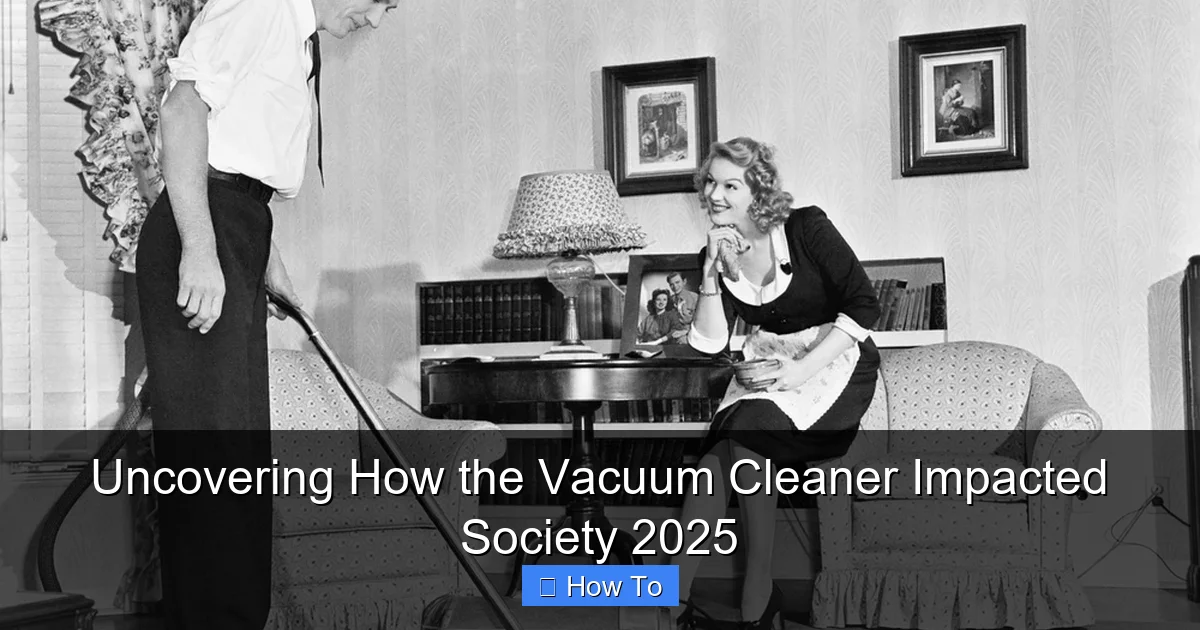
Visual guide about Uncovering How the Vacuum Cleaner Impacted Society 2025
Image source: todayifoundout.com
Empowering Homemakers and Reducing Drudgery
For centuries, women bore the brunt of household labor. Cleaning was a daily struggle. The vacuum cleaner dramatically cut down the time and effort needed for floor care. What once took hours of sweeping and beating rugs could now be done in minutes. This reduction in drudgery was a major liberation. It gave homemakers precious time back. This extra time could be used for leisure. It could also be used for education or community involvement. It offered a choice that hadn’t existed before. This change highlighted the value of domestic appliances. It showed how they could improve daily life significantly. The vacuum cleaner truly empowered those managing homes.
Shifting Standards of Cleanliness
Before vacuums, a truly “clean” home was hard to achieve. Visible dirt could be swept away. But embedded dust and unseen particles remained. The vacuum cleaner introduced a new level of hygiene. It could pull dirt from deep within carpets and upholstery. This led to higher expectations for cleanliness. Homes became noticeably cleaner. The air quality inside improved. This wasn’t just about appearance. It was about a new sense of order and health. Society began to expect a higher standard of living. This new benchmark was largely thanks to the effectiveness of these machines. The standard of what a “clean home” meant changed forever.
The Rise of the “Clean Home” Ideal
With new tools came new ideals. The ability to achieve a pristine home became aspirational. Advertising played a big role here. It promoted the idea of a spotless household. This ideal was often linked to good mothering or a successful family. The vacuum cleaner became a symbol of modern living. It represented efficiency and progress. This ideal shaped consumer behavior. People wanted these appliances. They wanted to maintain these new standards. The “clean home” ideal became deeply ingrained. It continues to influence us even in 2025. This shows the profound societal impact of the vacuum cleaner.
Step 3: Reshaping Public Health and Well-being
Beyond convenience, the vacuum cleaner played a crucial role in public health. Its ability to capture dust and allergens was transformative. It led to healthier indoor environments. This had a direct positive impact on people’s well-being. It addressed issues that brooms simply couldn’t. This health aspect is a key part of how the vacuum cleaner impacted society.
Battling Dust and Allergens
Dust is more than just dirt. It contains pollen, pet dander, dust mites, and bacteria. These are common triggers for allergies and asthma. Traditional sweeping often just moved dust around. It sent particles into the air. The vacuum cleaner, especially with improved filtration, actively removed these harmful particles. It trapped them inside the machine. This dramatically reduced airborne allergens. For many people suffering from respiratory issues, this was a huge relief. Homes became safer spaces for those with sensitivities. This was a significant public health advancement.
Improving Indoor Air Quality
The air we breathe indoors can often be more polluted than outdoor air. This is especially true without proper ventilation and cleaning. By regularly removing dust and other particulates, vacuum cleaners improve indoor air quality. This benefit extends beyond allergy sufferers. Cleaner air contributes to overall better health for everyone. It reduces the spread of germs. It creates a fresher, more pleasant living environment. This focus on indoor air quality is still vital in 2025. Modern vacuum cleaners, with HEPA filters, continue this tradition. They play a key role in maintaining healthy homes. Their contribution to better health shows the deep societal impact of the vacuum cleaner.
Step 4: Driving Industrial and Commercial Progress
The vacuum cleaner’s influence wasn’t confined to homes. It also had a significant impact on industries and commercial spaces. It changed how businesses operated. It created new markets and spurred innovation. Its versatility made it an indispensable tool outside the domestic sphere. This broader application highlights the comprehensive way the vacuum cleaner impacted society.
Revolutionizing Commercial Cleaning Practices
Large buildings, offices, hospitals, and hotels needed efficient cleaning solutions. Manual methods were impractical for vast areas. Early commercial vacuum cleaners were larger and more powerful. They allowed for quick and thorough cleaning of big spaces. This improved hygiene in public and commercial settings. It also reduced labor costs for businesses. Clean environments became a standard expectation for customers and employees. Think of spotless hospital floors or pristine hotel lobbies. This efficiency was crucial for maintaining health and safety standards. The commercial cleaning industry grew significantly thanks to this technology. It became a specialized field offering essential services.
Fueling Manufacturing and Innovation
The demand for vacuum cleaners created a thriving manufacturing industry. Factories were built. Jobs were created in design, production, and sales. This spurred innovation in materials science and motor technology. Companies constantly competed to make better, more efficient, and more affordable models. From uprights to canisters, then to handhelds and robotic versions, the evolution has been continuous. This competition drove down costs over time. It made vacuum cleaners accessible to more households. This cycle of demand, production, and innovation is a testament to the economic power of the vacuum cleaner. Its impact on manufacturing has been enduring.
Step 5: Influencing Gender Roles and Social Dynamics
The introduction of labor-saving devices often has profound social implications. The vacuum cleaner was no exception. It played a part in the ongoing evolution of gender roles and societal expectations. This aspect of how the vacuum cleaner impacted society is complex and fascinating.
Freeing Up Time for Women
For much of history, women’s primary role was seen as managing the home. Household chores consumed vast amounts of time. The vacuum cleaner significantly reduced the time spent on cleaning floors. This freed up women to pursue other interests. It created opportunities for education, social activities, or even paid work outside the home. While not the sole factor, it contributed to the broader movement for women’s increased participation in public life. It was one of many innovations that eased domestic burdens. This allowed for greater personal and professional development. It was a subtle but powerful driver of social change.
The “Housewife” Ideal and Its Evolution
While vacuums offered liberation, they also reinforced certain ideals. The image of the “modern housewife” often included effortless cleaning with her new appliance. This sometimes led to higher expectations for home cleanliness. The time saved might then be reallocated to other domestic tasks. Or it might be used to maintain an even higher standard of tidiness. So, while physical drudgery decreased, the pressure to maintain a spotless home sometimes increased. In 2025, these ideals have evolved. Both men and women share household responsibilities more equally. Yet, the expectation of a clean home, often achieved with a vacuum cleaner, remains. This ongoing tension shows the layered societal impact of the vacuum cleaner.
Step 6: Economic Ripples and Market Growth
The economic footprint of the vacuum cleaner is immense. From its invention, it sparked new industries. It created jobs. It influenced consumer spending and market trends. Its journey from luxury item to household necessity is an economic success story. This widespread economic influence clearly demonstrates how the vacuum cleaner impacted society.
Creating New Industries and Jobs
The birth of the vacuum cleaner industry led to a cascade of economic activity. It created manufacturers like Hoover, Electrolux, and Dyson. These companies employed countless people. Jobs ranged from engineers and factory workers to salespeople and marketers. Retail stores dedicated space to these appliances. Repair services emerged. The production of parts and accessories also became a substantial market. This robust ecosystem contributed to economic growth and stability. It diversified labor markets. It provided a steady source of income for many families for over a century. The industry continues to thrive and adapt.
Affordability and Accessibility
Initially, vacuum cleaners were expensive. They were luxury items for wealthy households. As technology advanced and production methods improved, prices dropped. Mass production made them more affordable. This put them within reach of middle-class families. This increased accessibility was crucial. It meant more people could enjoy the benefits of easier cleaning and better hygiene. The vacuum cleaner became a standard household appliance. It was no longer a symbol of extreme wealth. This democratization of cleaning technology greatly expanded its societal reach. It solidified its place in nearly every home by the mid-20th century. This accessibility is key to understanding its lasting economic and social impact.
Step 7: The Modern Evolution and Future Outlook (2025 Context)
The vacuum cleaner is not a static invention. It has continuously evolved. From its clunky origins to the sleek models of today, innovation never stops. In 2025, we see the culmination of over a century of development. This ongoing evolution is vital to understanding its continued impact on society.
From Canister to Robot: Continuous Innovation
The journey of the vacuum cleaner is one of constant reinvention. We’ve seen uprights, canisters, stick vacuums, and handheld models. Each design aimed to improve usability and efficiency. The biggest recent leap has been robotic vacuum cleaners. Brands like Roomba have changed how many people think about cleaning. These smart devices autonomously clean floors. They use sensors and AI. This frees up even more human time. Cordless technology also offered greater convenience. These innovations reflect a desire for less effort and more smart solutions. The market remains competitive and dynamic. Consumers in 2025 have more choices than ever before.
Sustainability and Smart Homes
In 2025, the focus on sustainability is growing. Vacuum cleaner manufacturers are responding. They are developing more energy-efficient models. They are using recycled materials. They are designing products that are easier to repair. Integration into smart home ecosystems is also key. Vacuum cleaners now connect to Wi-Fi. They can be controlled by voice commands or apps. They can map homes and learn cleaning preferences. These advancements reflect current societal values. They show a move towards integrated, eco-conscious living. The vacuum cleaner is not just a cleaning tool. It’s becoming a smart, connected part of the modern home. This ensures its continued societal impact for years to come.
Navigating Nuances and Lasting Legacy
While the benefits are clear, understanding the vacuum cleaner’s impact also involves nuance. No single invention operates in a vacuum (pun intended!). Its story intertwines with other societal changes. Recognizing these complexities gives us a fuller picture.
Beyond Simple Appliance: A Cultural Icon
The vacuum cleaner is more than just a piece of machinery. It has become a cultural icon. It appears in movies, TV shows, and advertisements. It often represents domesticity, order, or even suburban life. Its familiar hum is part of the soundscape of home. This cultural presence underscores its deep integration into modern society. It’s a symbol of convenience and a marker of cleanliness. This pervasive presence demonstrates how deeply the vacuum cleaner impacted society’s collective consciousness.
The Double-Edged Sword: Expectations vs. Reality
While labor-saving, the vacuum cleaner also created new expectations. The “spotless home” ideal could be a source of pressure. For some, the time saved was simply reallocated to other tasks, not leisure. It didn’t always lead to true liberation for everyone. The initial cost also meant it wasn’t immediately accessible to all. Its benefits were not universally distributed from the start. Understanding these nuances helps us appreciate the full, complex story of its societal impact. It reminds us that technology’s influence is rarely simple or one-sided.
Conclusion
The vacuum cleaner is a testament to human ingenuity. Its journey from a cumbersome contraption to a smart, efficient household staple is remarkable. We have explored its profound influence. We’ve seen how the vacuum cleaner impacted society in countless ways. It transformed domestic labor. It elevated public health. It influenced gender roles and drove economic growth. It continues to evolve with smart technology and sustainability in 2025.
So, the next time you hear that familiar whir, take a moment to reflect. This everyday device is a powerhouse of social and historical change. Its quiet presence in our homes belies its truly monumental legacy. The vacuum cleaner truly reshaped modern living. It reminds us that even the simplest inventions can have the most extraordinary and lasting effects on the world.
🎥 Related Video: Removing Blood Clots with Vacuum 😨
📺 Zack D. Films