Dyson Vacuum Cleaner How to Clean Filter in 2025 Easily
Maintaining your Dyson vacuum cleaner’s filter is essential for peak performance and longevity. This comprehensive 2025 guide will walk you through the simple steps to effectively clean both washable and non-washable Dyson filters, ensuring powerful suction and fresh air. Learn how to properly remove, wash, dry, and reinsert your filter, troubleshooting common issues, and knowing when it’s time for a replacement to keep your Dyson running like new.
In the bustling world of 2025, keeping your home clean and fresh is more important than ever. Your Dyson vacuum cleaner is likely a trusty companion in this endeavor, known for its powerful suction and innovative design. But even the best machines need a little TLC to perform at their peak. One of the most critical maintenance tasks for any Dyson owner is knowing how to clean your Dyson vacuum cleaner filter. It’s not just about keeping things hygienic; it’s about preserving the incredible suction power you invested in and ensuring the air released back into your home is clean.
A dirty filter is the silent saboteur of vacuum performance. Over time, it gets clogged with dust, dander, and microscopic particles, forcing your Dyson to work harder, reducing its efficiency, and potentially shortening its lifespan. If you’ve noticed your Dyson isn’t picking up debris as effectively as it used to, or if it has an unusual smell, a clogged filter is often the culprit.
This comprehensive guide will walk you through everything you need to know about cleaning your Dyson vacuum cleaner filter easily and effectively in 2025. We’ll cover different filter types, step-by-step instructions for washing and drying, crucial tips, and even some troubleshooting advice. Let’s get your Dyson back to its powerful best!
Key Takeaways
- Regular Cleaning is Crucial: Cleaning your Dyson vacuum cleaner filter every 1-3 months significantly maintains suction power and extends the life of your machine.
- Identify Your Filter Type: Dyson vacuums typically have either washable pre-motor filters or non-washable HEPA post-motor filters. Knowing your model’s filter type dictates the correct cleaning method.
- Proper Washing Technique: For washable filters, use only cold water and avoid detergents or hot water, as these can damage the filter material.
- Thorough Drying is Paramount: A washable Dyson filter must be *completely* dry—usually for at least 24 hours in a warm, airy spot—before reinserting to prevent mold, mildew, and damage to the motor.
- Non-Washable Filter Care: Non-washable filters should only be tapped or brushed to remove dust, never rinsed with water.
- Listen to Your Dyson: Reduced suction, unusual odors, or a persistent filter warning light are clear signs it’s time to clean or replace your filter.
- Replace When Necessary: Even with regular cleaning, filters have a lifespan. Replace your Dyson filter annually or as recommended by Dyson for optimal performance and hygiene.
Quick Answers to Common Questions
How often should I clean my Dyson vacuum cleaner filter?
Dyson recommends cleaning your washable filter at least once a month. For households with pets or heavy usage, every two to three weeks might be more beneficial to maintain peak performance.
Can I use soap or detergent to clean my Dyson filter?
No, Dyson strictly advises against using any soap, detergent, or cleaning agents on washable filters. These chemicals can clog the filter’s fine pores, damaging the material and making it less effective at trapping dust.
What happens if I put a damp Dyson filter back in my vacuum?
Reinserting a damp filter can lead to mold and mildew growth, unpleasant odors, and serious damage to your Dyson’s motor from moisture. Always ensure the filter is 100% completely dry (minimum 24 hours air-drying) before reassembly.
My Dyson has a filter warning light. What does that mean?
A filter warning light usually indicates restricted airflow due to a clogged filter. It’s a clear signal that your Dyson filter needs cleaning or, if very old and damaged, replacement. Ensure the filter is completely dry after cleaning before reinserting.
Can I speed up the filter drying process with a hairdryer or in a dryer?
Absolutely not. Using a hairdryer, tumble dryer, microwave, or any other heat source can melt, warp, or damage the filter material, rendering it unusable and potentially voiding your warranty. Always air dry your Dyson filter naturally.
Why Cleaning Your Dyson Filter Matters So Much
Before we dive into the “how-to,” let’s quickly reinforce the “why.” Regular cleaning of your Dyson filter offers several significant benefits:
- Restores Suction Power: A clean filter allows air to flow freely, ensuring your Dyson maintains its strong suction, picking up dirt and debris effortlessly.
- Improves Air Quality: Dyson filters, especially HEPA types, trap microscopic particles like allergens and pet dander. A clean filter ensures these aren’t recirculated into your home’s air.
- Extends Vacuum Lifespan: When the filter is clean, your vacuum’s motor doesn’t have to work as hard, reducing strain and extending the overall life of your Dyson machine.
- Eliminates Odors: Accumulated dust and grime in a filter can lead to unpleasant smells circulating through your home. Cleaning it removes these odor-causing particles.
- Prevents Overheating: A severely clogged filter can cause your Dyson’s motor to overheat, potentially leading to automatic shut-off or even permanent damage.
Now that you understand the importance, let’s get down to the actual cleaning process for your Dyson vacuum cleaner filter.
Identify Your Dyson Filter Type and Location
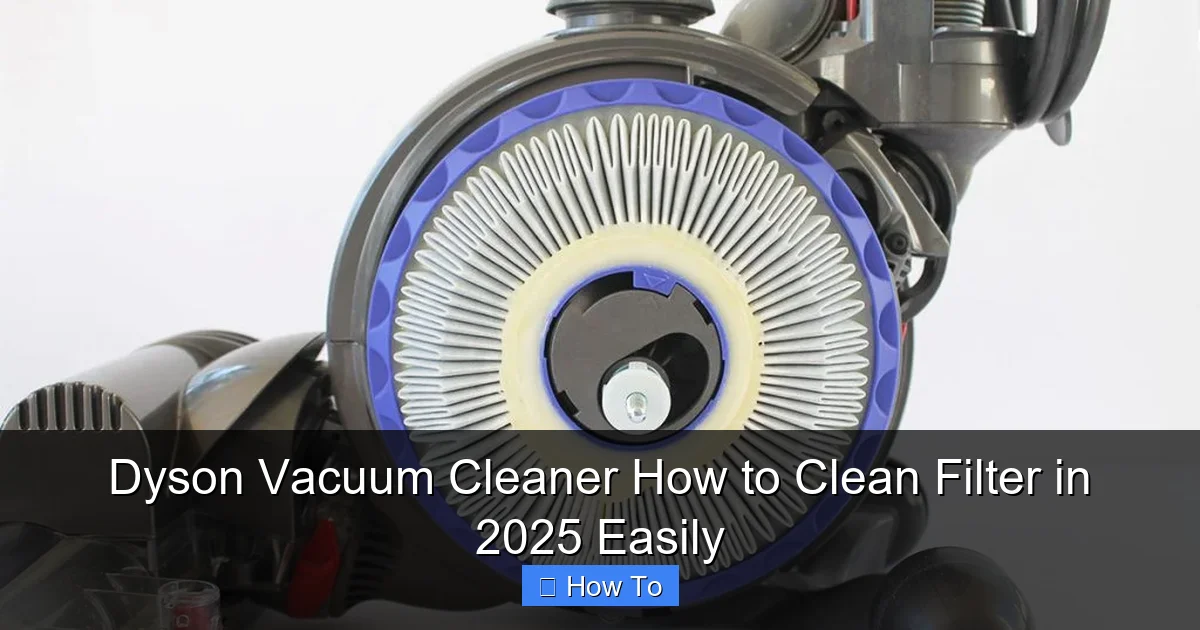
Dyson vacuum cleaners come in various models (cordless, upright, canister), and while most share similar filter types, their location might differ slightly. Generally, Dyson vacuums have one or two filters:
Visual guide about Dyson Vacuum Cleaner How to Clean Filter in 2025 Easily
Image source: acleanbee.com
- Washable Pre-Motor Filter: This is the most common type and is usually cone-shaped, cylindrical, or disc-shaped. It’s often located near the dust bin, sometimes requiring a twist or pull to remove. Most Dyson models, including popular V-series cordless vacuums (V6, V7, V8, V10, V11, V12, V15) and many uprights, feature these. These are designed to be rinsed with water.
- Non-Washable Post-Motor (HEPA) Filter: Some Dyson models, particularly older ones or specific uprights, might have a secondary HEPA filter that is not washable. These are typically flat, rectangular, and sometimes colored (e.g., purple or blue). They are usually located at the back or side of the vacuum. Never attempt to wash these with water.
Check your specific Dyson model’s manual if you’re unsure about your filter type or location. For the vast majority of modern Dyson cordless stick vacuums, you’ll be dealing with a single, washable pre-motor filter.
What You’ll Need for Filter Cleaning
Gathering your supplies beforehand makes the process smoother:
- A sink with cold running water (for washable filters)
- A clean towel or paper towels
- A soft brush (optional, for non-washable filters)
- A well-ventilated area for drying
Step-by-Step Guide: How to Clean a Washable Dyson Vacuum Cleaner Filter
This is the most common filter cleaning process for most Dyson users. Aim to clean your washable filter at least once a month, or more frequently if you have pets or use your vacuum heavily.
1. Safety First: Unplug and Disassemble
Before you start, always ensure your Dyson vacuum cleaner is unplugged from the power outlet (for corded models) or turned off and disconnected from its charger (for cordless models). This prevents any accidental activation while you’re working on it. Next, detach the dust bin from the main body of the vacuum. You’ll usually find a release button or lever for this.
2. Locate and Remove the Filter
For most cordless Dyson vacuums, the filter is located at the top or back of the main cyclone assembly, often within or very close to the dust bin. It’s usually cylindrical or conical and might have an arrow indicating “open” or “unlock.”
- Cordless V-Series (V7, V8, V10, V11, V15, etc.): The filter is typically located at the very top of the vacuum, above the cyclone and dust bin. It usually twists counter-clockwise to unlock and then lifts straight out.
- Upright/Canister Models: Filters can vary more. Often, they are beneath the dust bin or accessed by opening a small compartment. Refer to your manual for the exact spot.
Once located, gently twist or pull to remove the filter. Be prepared for some dust to fall off, so it’s a good idea to do this over a trash can.
3. Tap Out Loose Debris
Before introducing water, give the filter a good tap over a waste bin to remove any large clumps of dust, hair, or debris. This pre-cleaning step makes the washing process more effective and keeps your sink cleaner.
4. Washing the Filter: Cold Water Only!
This is where proper technique is crucial to successfully clean your Dyson vacuum cleaner filter.
Rinse Under Cold Water
Hold the filter under cold running water, ensuring the water flows into the open end of the filter (if it’s conical/cylindrical). As the water flows through, you’ll see dirty water running out. Continue rinsing until the water runs clear. Do not use hot water, as it can damage the filter material and its seals.
Squeeze and Twist
For washable filters, especially those with pleats or foam, you’ll need to gently squeeze and twist the filter to dislodge embedded dirt. Repeat this process several times under running cold water. Twist, squeeze, rinse. Twist, squeeze, rinse. Do this until no more dirt comes out, and the water remains clear.
Avoid Soap or Detergents
Dyson explicitly recommends against using any soap, detergent, or cleaning agents on their washable filters. These chemicals can clog the fine pores of the filter material, rendering it ineffective and potentially damaging it beyond repair. Stick to plain cold water.
5. The Most Important Step: Thorough Drying
This cannot be stressed enough: your Dyson filter MUST be completely dry before you put it back into your vacuum. Reinserting a damp filter can lead to:
- Mold and mildew growth inside your vacuum.
- Unpleasant, musty odors emanating from your machine.
- Damage to your Dyson’s motor due to moisture.
- Compromised filter performance.
Air Dry Only
Place the clean, rinsed filter in a well-ventilated area. A warm spot in your home, perhaps near a window or vent (but not directly in sunlight for extended periods, as UV can degrade some materials), is ideal. You can stand it upright to allow air circulation. Do NOT use a tumble dryer, microwave, oven, or direct heat source (like a hair dryer) to speed up the drying process. High heat can melt or warp the filter material.
Minimum 24 Hours
Even if it feels dry to the touch after a few hours, fine moisture can still be trapped deep within the filter material. Dyson recommends allowing a minimum of 24 hours for complete air drying. In humid environments, it might take even longer, up to 48 hours. If you’re unsure, err on the side of caution and give it more time. You can lightly shake the filter periodically to check for any residual water drips.
6. Reinsert the Dry Filter
Once you are absolutely certain the filter is bone-dry, carefully reinsert it into your Dyson vacuum cleaner. Ensure it clicks firmly into place or twists securely to lock. Then, reattach the dust bin. Make sure all components are correctly assembled before plugging in or turning on your vacuum.
How to Clean a Non-Washable Dyson Filter
If your Dyson model has a non-washable HEPA filter, the cleaning process is different and much simpler. Remember, never use water on these filters.
1. Remove the Filter
As with washable filters, ensure your Dyson is unplugged/off. Locate the non-washable filter (often at the back or side) and remove it according to your model’s instructions. These are usually rectangular or square.
2. Tap and Brush Off Dust
Hold the filter over a trash can and gently tap it against the side of the bin to dislodge loose dust and debris. You can also use a soft brush (like a clean paintbrush or an old toothbrush) to gently brush away surface dust from the pleats of the filter. Be gentle to avoid damaging the fine material.
3. Reinsert the Filter
Once you’ve removed as much dust as possible, reinsert the filter into its compartment, ensuring it fits snugly. Close the compartment cover, and you’re good to go.
General Tips for Optimal Filter Maintenance
- Consistency is Key: Make filter cleaning a routine! Set a reminder on your phone for every month or two.
- Visual Inspection: Even between washes, regularly inspect your filter. If it looks visibly dirty or discolored, it’s probably time for a clean.
- Handle with Care: Dyson filters are robust but can be damaged if handled roughly. Always be gentle when removing, washing, or reinserting.
- Consider a Spare Filter: If you rely heavily on your Dyson and find the 24-hour drying time inconvenient, consider purchasing a spare washable filter. That way, you can pop in a clean, dry one immediately after washing the dirty one.
Troubleshooting Common Filter-Related Issues
Even after cleaning, you might encounter a few hiccups. Here’s how to address them:
Reduced Suction After Cleaning
Cause: The most common reason for this is an inadequately dried filter. Even slight dampness can restrict airflow and damage the motor.
Solution: Remove the filter immediately and let it air dry for an extended period (another 24-48 hours) in a warm, dry, well-ventilated area. Never run your Dyson with a damp filter. If the problem persists after thorough drying, check other parts of the vacuum for blockages (hose, brush bar, wand).
Filter Warning Light Persists
Cause: This light indicates restricted airflow. It could mean the filter is still dirty, not fully dry, or has reached the end of its lifespan.
Solution: Re-clean the filter following all steps, paying extra attention to drying time. If it’s a non-washable filter, ensure it’s tapped out thoroughly. If the light still persists after a fresh, completely dry filter (or a new one), consult your Dyson manual or customer support, as there might be another blockage or an internal issue.
Unpleasant Odor from Vacuum
Cause: Mold or mildew growth from a damp filter, or accumulated organic matter (pet hair, food particles) within the vacuum or filter itself.
Solution: Thoroughly clean and dry your filter. If the smell persists, you might need to clean the dust bin, cyclone, and brush bar more deeply. Sometimes, deep-seated odors indicate it’s time to replace the filter entirely, as some smells can become ingrained in the material.
When to Replace Your Dyson Filter
While regular cleaning is vital, filters don’t last forever. Over time, the filter material degrades, and its ability to trap fine particles diminishes. Dyson generally recommends replacing washable filters every 12 months, and non-washable HEPA filters according to your model’s specific instructions or when they show signs of damage. Signs that it’s time for a new filter include:
- Visible Damage: Tears, holes, or significant deterioration of the filter material.
- Persistent Odors: If thorough cleaning doesn’t eliminate a lingering smell.
- Irremediable Discoloration: If the filter remains heavily stained or discolored even after washing.
- Reduced Performance: If your Dyson still suffers from poor suction despite a clean, dry filter and no other blockages.
Investing in a genuine Dyson replacement filter ensures continued optimal performance and air purification for your home.
Conclusion: Keep Your Dyson Powerful and Your Home Clean
Learning how to clean your Dyson vacuum cleaner filter is a simple yet incredibly effective way to maintain your investment and ensure your home stays sparkling clean in 2025 and beyond. By following these straightforward steps, paying close attention to drying times, and knowing when to replace your filter, you’ll ensure your Dyson continues to deliver that powerful, consistent suction it’s famous for. Regular maintenance isn’t a chore; it’s an essential part of getting the best performance and longest life out of your premium cleaning machine. Happy vacuuming!
🎥 Related Video: How to clean a Dyson vacuum filter #shorts
📺 LiTT Tech (mostly!)
Doing this on the Dyson V12 Detect Slim: https://littwebsite.com/2021/11/08/dyson-v12-detect-slim-review/ Get one for yourself …