The Secrets of How Vacuum Cleaner Works for 2025
Ever wondered how a vacuum cleaner works to effortlessly banish dirt from your home? This comprehensive 2025 guide demystifies the powerful science behind these essential cleaning machines. We’ll explore everything from the motor’s role in creating suction to advanced filtration systems, ensuring you understand the core principles that make your vacuum so effective at keeping your spaces clean and fresh.
The Secrets of How Vacuum Cleaner Works for 2025
Every household around the globe relies on that trusty hum of a vacuum cleaner to keep things spick and span. But have you ever paused to think about the clever engineering happening inside that machine? How does it actually turn dusty floors into pristine surfaces? In 2025, vacuum technology continues to advance, offering smarter, more efficient ways to clean. Understanding the core principles of how vacuum cleaner works isn’t just fascinating; it empowers you to choose the right model, maintain it properly, and get the most out of your cleaning routine.
This guide will pull back the curtain on the fundamental science and innovative features that make your vacuum cleaner an indispensable tool. We’ll explore the journey of dirt from your floor to the dustbin, explain the vital role of each component, and touch upon the exciting advancements shaping vacuum technology in the present day and beyond. Get ready to understand your cleaning companion like never before!
Key Takeaways
- Suction is Key: At its heart, a vacuum cleaner creates a powerful suction force by using an electric motor to spin a fan, causing air pressure differences.
- Airflow is the Mechanism: Dirt and debris are not “sucked” in a traditional sense, but rather carried along by a high-speed stream of air moving from a high-pressure area to a low-pressure area.
- Filtration is Crucial: Modern vacuum cleaners use multi-stage filtration, often including HEPA filters, to capture tiny particles and allergens, releasing cleaner air back into your home.
- Components Work Together: The motor, fan, nozzle, collection system (bag or canister), and filters all collaborate seamlessly to lift dirt from surfaces and trap it safely.
- Modern Vacs are Smart: By 2025, many vacuum cleaners integrate smart technology like AI mapping, dirt detection sensors, and advanced battery management for enhanced cleaning efficiency and convenience.
- Maintenance Matters: Regular cleaning of filters, emptying the dirt receptacle, and checking for blockages are vital for maintaining optimal suction and extending your vacuum’s lifespan.
Quick Answers to Common Questions
Why does my vacuum lose suction suddenly?
Often, a sudden loss of suction indicates a blockage in the hose, nozzle, or internal air pathways. Check for trapped debris. It could also mean your dirt bag or canister is full, or the filters are severely clogged, restricting crucial airflow.
Is there a big difference between bagged and bagless vacuums in terms of how they work?
While both ultimately collect dirt, bagged vacuums use the bag itself as a primary filter, trapping dirt as air passes through. Bagless vacuums typically employ cyclonic separation, spinning dirt out of the airflow into a canister, followed by separate filters. Bagless often maintains more consistent suction as the dirt bin fills.
How do advanced multi-cyclonic systems improve cleaning performance?
Multi-cyclonic systems in modern vacuums create several smaller, faster air vortices. This increases the centrifugal force, more efficiently separating even finer dust particles from the air before they reach the filters, thus reducing filter clogging and maintaining stronger, more consistent suction.
Why is maintaining the brush roll so important?
The brush roll is critical for agitating carpet fibers, loosening embedded dirt, and lifting pet hair. If it’s tangled with hair or not spinning correctly, it cannot effectively dislodge debris, significantly reducing the vacuum’s ability to deep clean and diminishing the overall effectiveness of how vacuum cleaner works.
Can a vacuum cleaner improve indoor air quality?
Absolutely! Modern vacuum cleaners, especially those with sealed systems and HEPA filtration, are designed to capture microscopic allergens, dust mites, pollen, and pet dander. By preventing these particles from recirculating into the air, they play a vital role in improving indoor air quality, particularly for allergy and asthma sufferers.
Step 1: The Core Principle – Creating the Suction Power
The magic behind how vacuum cleaner works all starts with air pressure. Your vacuum cleaner doesn’t actually “suck” in the way you might think. Instead, it creates a pressure difference that forces air, and anything lightweight in it, into the machine. Think of it like a tiny, localized hurricane for dirt.
The Motor and Fan: The Heart of the Machine
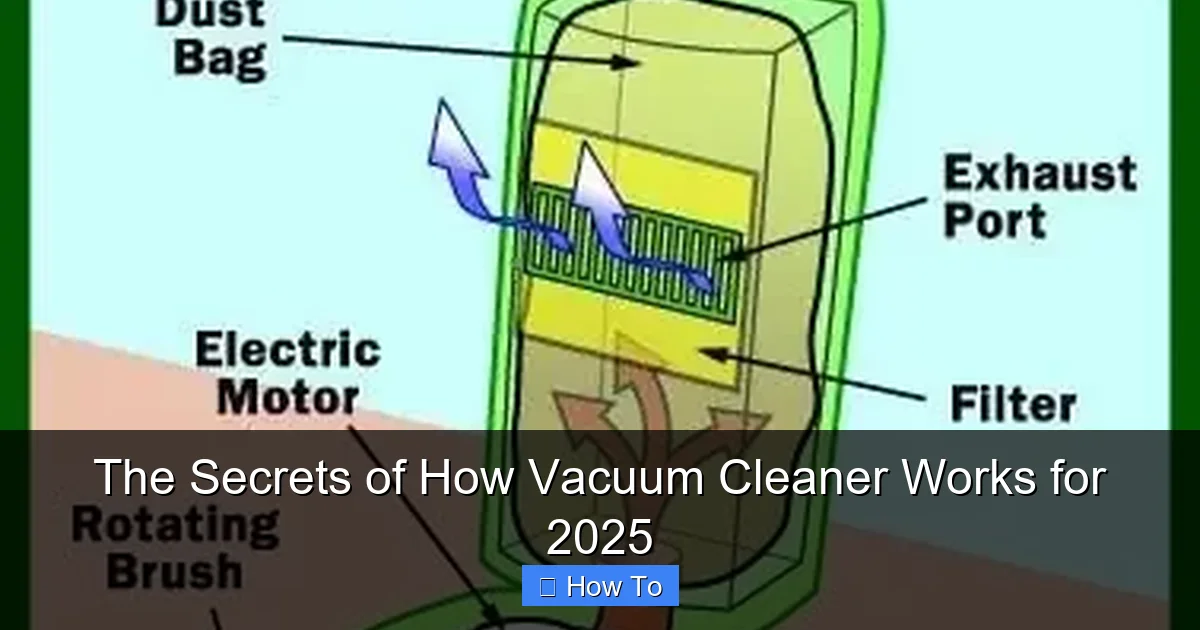
At the very core of every vacuum cleaner is an electric motor. This motor powers a fan, or impeller, which is essentially a set of spinning blades. When the motor spins the fan at high speeds, it rapidly pushes air out through an exhaust port. This action creates a partial vacuum, or an area of lower air pressure, inside the cleaner’s housing.
Outside the vacuum, the air pressure remains normal – higher than the pressure inside. Nature abhors a vacuum, so air from the outside rushes in to equalize this pressure difference. This rushing air is what we perceive as “suction.” It’s this powerful stream of incoming air that does all the heavy lifting, carrying dirt, dust, and debris along for the ride.
Step 2: The Inlet – Where the Magic Grabs Hold
Once the suction is created, the next crucial step in how vacuum cleaner works is at the point of contact with your floor: the inlet.
Visual guide about The Secrets of How Vacuum Cleaner Works for 2025
Image source: mozaweb.com
Nozzles and Brush Rolls: Engaging with Dirt
The nozzle is the opening through which the air and dirt enter the vacuum. Its design varies greatly depending on the type of vacuum and its intended use. For carpets, many vacuum cleaners feature a brush roll (also called a beater bar or agitator) located within the nozzle.
This brush roll, often driven by a separate belt from the main motor or by air current, spins rapidly. As it spins, bristles or flaps on the brush roll agitate the carpet fibers, dislodging embedded dirt, pet hair, and crumbs. This loosened debris is then easily caught by the powerful airflow rushing into the vacuum. For hard floors, the brush roll might be softer or even omitted, relying more on pure suction to pick up surface debris without scratching.
Different attachments, like crevice tools or upholstery brushes, simply modify the nozzle to concentrate suction or allow better access to specific surfaces, optimizing how vacuum cleaner works in various scenarios.
Step 3: The Journey of Dirt – From Floor to Collection
Once the dirt is agitated and lifted by the incoming air, it embarks on a swift journey through the vacuum cleaner’s internal pathways.
The Airflow Path: Guiding Debris
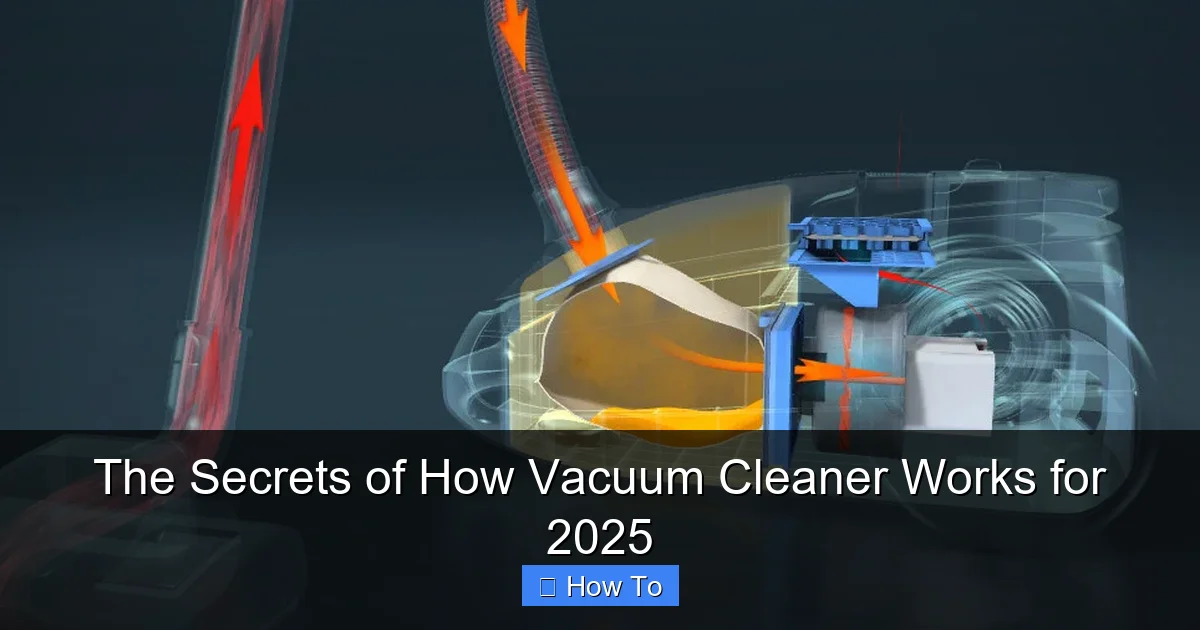
The strong airflow created by the motor and fan acts as a transport system. The dirt-laden air enters through the nozzle, travels up through the vacuum’s hose or internal ducts, and is directed towards the collection system. These internal passages are carefully designed to maintain the speed and power of the airflow, ensuring that debris doesn’t get stuck prematurely. The diameter and smoothness of these pathways are critical to an efficient system, illustrating a key aspect of how vacuum cleaner works efficiently.
Step 4: The Collection System – Trapping the Grime
After being whisked away from your floors, the dirt needs a place to go. This is where the collection system comes in. There are primarily two types:
Bags vs. Canisters: Different Ways to Hold Dirt
Bagged Vacuums: In a traditional bagged vacuum, the dirt-laden air is funneled directly into a disposable bag made of porous material. The bag acts as a filter, allowing the air to pass through its microscopic pores while trapping the larger dirt particles inside. Once full, the bag is simply removed and discarded, minimizing your contact with the dust and allergens.
Bagless (Canister) Vacuums: Bagless vacuum cleaners, which are increasingly popular in 2025, use a reusable dust cup or canister. The secret to how vacuum cleaner works without a bag often lies in “cyclonic separation.” As the dirty air enters the canister, it’s spun at high speeds in a vortex. This centrifugal force pushes heavier dirt particles to the outer walls of the canister, where they lose momentum and fall to the bottom. The cleaner air continues its journey towards the filters.
Both systems effectively separate dirt from the air, but cyclonic technology provides consistent suction as the bin fills, unlike bags which can restrict airflow as they get full. This is a significant factor in understanding modern vacuum cleaner performance.
Step 5: The Filtration System – Releasing Clean Air
After the bulk of the dirt has been collected, the air is still not perfectly clean. It contains tiny dust particles, allergens, and other microscopic debris. This is where the vacuum’s filtration system becomes incredibly important for maintaining healthy indoor air quality.
Why Filters are Essential for Your Air Quality
The air that exits the collection system must pass through one or more filters before being exhausted back into your room. These filters capture the finer particles that the bag or cyclonic system couldn’t. Common filter types include:
- Foam Filters: Often used as a pre-filter, capturing larger dust particles and protecting subsequent filters.
- Pleated Filters: Provide a large surface area for filtration, trapping finer particles.
- HEPA Filters: High-Efficiency Particulate Air filters are a gold standard. They are designed to capture 99.97% of airborne particles 0.3 micrometers in diameter. This includes pollen, pet dander, dust mites, and smoke, making them essential for allergy and asthma sufferers. Understanding the role of HEPA filters is crucial to comprehending how vacuum cleaner works to improve your home’s air.
Many modern vacuums use multi-stage filtration, passing air through several layers of filters to ensure maximum cleanliness. Regular cleaning or replacement of these filters is vital, as clogged filters can significantly reduce suction power and diminish air quality.
Step 6: The Exhaust Port – Completing the Cycle
Finally, the now-clean air, having passed through all the filtration stages, is expelled back into the room through the exhaust port. This completes the cleaning cycle, leaving your environment not just visually clean but also with improved air quality. The efficiency of the entire process, from suction creation to clean air expulsion, defines how vacuum cleaner works effectively.
Beyond the Basics: Modern Vacuum Cleaner Innovations in 2025
The fundamental principles of how vacuum cleaner works remain constant, but technology doesn’t stand still. In 2025, vacuum cleaners are more sophisticated and user-friendly than ever before. Here are some key innovations:
Smart Tech Integration
Robot vacuums are leading the charge, featuring advanced AI, LiDAR, and VSLAM (Visual Simultaneous Localization and Mapping) for precise navigation and obstacle avoidance. Many uprights and canisters now offer app connectivity for maintenance alerts, performance tracking, and even remote control. Some models include dirt detection sensors that automatically increase suction when encountering heavily soiled areas.
Battery Power & Efficiency
Cordless vacuums are dominant, powered by increasingly powerful and long-lasting lithium-ion batteries. Manufacturers are optimizing motor efficiency and battery management systems to provide longer run times and faster charging, making the convenience of a cordless unit a practical reality for whole-house cleaning.
Material Science
Advances in lightweight, durable materials mean vacuums are becoming easier to maneuver without sacrificing power or robustness. Improved insulation and motor designs also contribute to quieter operation, a welcome feature for many homeowners.
Advanced Sensor Technology
Beyond dirt detection, some vacuums incorporate allergen sensors that can detect specific airborne particles, offering real-time air quality feedback or adjusting filtration systems accordingly. This level of environmental awareness truly enhances how vacuum cleaner works to create a healthier living space.
Troubleshooting Common Issues (Understanding How They Stop Working)
Even the best vacuum cleaners can sometimes falter. Understanding how vacuum cleaner works also means knowing why it might *not* be working correctly. Many common problems stem from disruptions to the essential airflow or component function.
Loss of Suction: The Airflow Blockade
This is perhaps the most common complaint. If your vacuum isn’t picking up dirt, the first culprits are usually a clogged hose or a full dirt receptacle. A blockage in the hose, nozzle, or internal ducts will restrict the vital airflow, preventing the pressure differential needed for effective suction. Similarly, a full bag or canister won’t allow air to pass through properly, leading to a drastic drop in performance. A clogged filter also severely restricts airflow, making your motor work harder and providing less suction.
Poor Filtration: Releasing Dust
If you notice dust escaping from your vacuum’s exhaust, it’s a strong sign that your filters are either dirty, damaged, or incorrectly installed. When filters are saturated with fine dust, they can no longer effectively trap particles, allowing them to recirculate back into your home. This defeats a major purpose of how vacuum cleaner works to clean your air.
Brush Roll Malfunctions: Not Agitating
If your carpet doesn’t look cleaner after vacuuming, check the brush roll. Hair, threads, or debris can become tangled around the brush roll, preventing it from spinning effectively. A stalled or slow brush roll won’t agitate the carpet fibers, leaving embedded dirt untouched, especially on carpeted surfaces.
Conclusion: Your Clean Home, Understood
From the hum of the motor to the crisp feel of a freshly cleaned carpet, the process of how vacuum cleaner works is a fascinating symphony of physics and engineering. It’s more than just a motor; it’s a carefully designed system that manipulates air pressure, captures debris, and purifies the air we breathe.
In 2025, our vacuum cleaners are smarter, more efficient, and more specialized than ever. By understanding the core principles—the motor creating suction, the airflow carrying dirt, the filters cleaning the air—you’re better equipped to maintain your appliance, troubleshoot minor issues, and make informed choices for future purchases. So next time you grab your vacuum, remember the intricate dance of components working together to keep your home healthy and sparkling clean!
🎥 Related Video: The Amazing Engineering behind the Cleaning Robots!
📺 Sabin Civil Engineering
Cleaning robots are becoming one of the most popular new home appliances, a trusted little cleaning partner in many households …