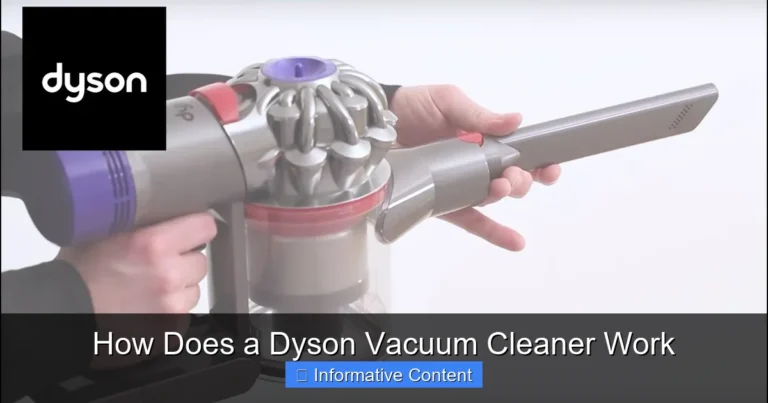
How Does a Vacuum Cleaner Work?
A vacuum cleaner works by creating a low-pressure area inside its housing, using a motor to spin a fan. This pressure difference causes higher-pressure ambient air, along with dirt and debris, to rush into the vacuum’s nozzle, where the particles are separated and collected while the filtered air is expelled.
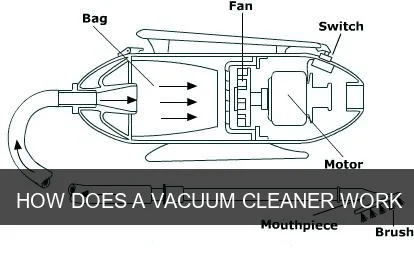
Image source: Blogspot
📋 Table of Contents
- 🔹 Introduction: Unveiling the Cleaning Mystery
- 🔹 The Basic Principle: Suction and Air Pressure
- 🔹 Inside the Machine: Core Components of a Vacuum Cleaner
- 🔹 The Cleaning Cycle: How a Vacuum Cleaner Works, Step-by-Step
- 🔹 Different Types, Same Science: How Variations Still Apply the Core Principles
- 🔹 Why Understanding How a Vacuum Cleaner Works Matters
- 🔹 Common Misconceptions About Vacuum Cleaner Operation
- 🔹 Practical Tips for Optimal Vacuum Cleaner Performance
- 🔹 People Also Ask (FAQ)
- 🔹 Conclusion: The Simple Genius of Suction
Introduction: Unveiling the Cleaning Mystery
Ever wondered what’s really going on inside that humming machine as it gulps down dust and debris? You push it across the floor, and magically, the mess disappears. It feels like a simple enough process, but there’s some clever science at play.
Understanding how a vacuum cleaner works isn’t just for engineers. It helps us appreciate this everyday marvel and even understand why good maintenance makes a difference. In this guide, we’ll break down the mechanics, the physics, and the various components that come together to create that powerful cleaning action. We’re going to explore the core principles, look inside the machine, and trace the path of dirt from your floor to the dustbin, all without getting bogged down in complicated jargon.
By the end, you’ll have a clear picture of this fascinating household helper, turning a common chore into an interesting demonstration of applied physics.
The Basic Principle: Suction and Air Pressure
At its heart, a vacuum cleaner is all about manipulating air pressure. It doesn’t actually “suck” dirt up in the way you might imagine pulling something with a string. Instead, it creates a situation where the natural force of air pressure does the heavy lifting.
It’s All About Pressure Differences
Think about a drinking straw. When you sip, you’re not pulling the liquid up directly. You’re actually reducing the air pressure inside the straw. The higher atmospheric pressure outside then pushes the liquid up into the straw and into your mouth. A vacuum cleaner operates on a very similar principle.
- Creating Low Pressure: The vacuum cleaner uses a powerful motor to spin a fan very quickly. This fan pushes air out of a sealed compartment within the vacuum.
- Atmospheric Pressure Takes Over: As air is expelled, the pressure inside the vacuum cleaner drops significantly, creating a partial vacuum. The air outside the vacuum cleaner, which is at a higher atmospheric pressure, naturally wants to rush into this low-pressure area.
- The “Suction” Effect: This rushing air enters through the vacuum cleaner’s nozzle, bringing with it dust, dirt, crumbs, and whatever else is loose on the surface. That’s the “suction” you feel and see in action.
So, in essence, the vacuum cleaner doesn’t pull; it creates a void, and the outside air pushes the dirt in. It’s a subtle but important distinction that explains how a vacuum cleaner works so effectively.
Inside the Machine: Core Components of a Vacuum Cleaner
While the principle of air pressure is simple, a few key components work together to make the magic happen. Let’s look at the essential parts you’ll find in almost any vacuum cleaner, regardless of its shape or size.
1. The Motor
This is the powerhouse of the vacuum. Typically an electric motor, it drives the fan. The motor’s power directly influences how fast the fan spins, and therefore, how strong the suction effect will be. Modern motors are designed to be efficient and durable, providing consistent performance.
2. The Fan (Impeller)
Attached to the motor, the fan is the component responsible for moving air. It usually has several blades, angled to efficiently push air in one direction. As the fan spins, it creates a powerful airflow, pulling air from the dirty side (the inlet) and expelling it out the clean side (the exhaust).
3. The Inlet (Nozzle or Suction Head)
This is the part that touches the surface you’re cleaning. Its design varies widely depending on the vacuum type and intended use. Some have wide openings, others narrow crevice tools. The key is that it’s the gateway for the dirt and the higher-pressure air to enter the system.
4. The Hose and Ducts
Once the air and debris enter through the nozzle, they travel through a series of hoses and internal ducts. These pathways are designed to be smooth and unobstructed to maintain maximum airflow and prevent clogs, ensuring efficient transfer of dirt to the collection area.
5. The Filter System
This is a crucial part of how a vacuum cleaner works safely and effectively. Before the air is expelled back into the room, it must pass through one or more filters. Filters trap the dust, allergens, and fine particles, preventing them from being blown back into the air you breathe. Without a good filter, a vacuum would just be redistributing dust.
6. The Dirt Receptacle (Bag or Dustbin)
This is where the collected dirt, dust, and debris end up.
- Bags: Traditional vacuum cleaners use disposable bags made of porous material. Air can pass through, but dirt particles get trapped inside.
- Bagless Dustbins: Many modern vacuums use a removable, reusable dustbin. These often employ cyclonic separation (more on that later) to spin the dirt out of the airflow and into the bin.
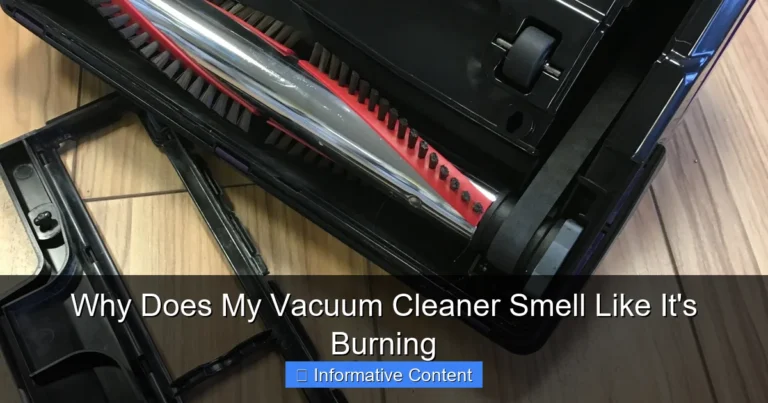
7. The Brush Roll (Beater Bar)
Commonly found in upright and some canister vacuum nozzles, the brush roll is a spinning cylinder with bristles. Its job is to agitate carpets, loosening embedded dirt, pet hair, and fibers, making it easier for the suction to pick them up. It’s especially effective for deep cleaning carpets.
| Component | Primary Function |
|---|---|
| Motor | Drives the fan, providing power for suction. |
| Fan (Impeller) | Creates the low-pressure zone by expelling air. |
| Inlet/Nozzle | Where air and debris enter the vacuum. |
| Hose/Ducts | Pathways for air and dirt from nozzle to collection. |
| Filter System | Traps dust and allergens before air is exhausted. |
| Dirt Receptacle | Stores collected debris (bag or dustbin). |
| Brush Roll | Agitates surfaces to loosen embedded dirt (optional). |
The Cleaning Cycle: How a Vacuum Cleaner Works, Step-by-Step
Now that we know the key players, let’s trace the journey of a dust particle from your floor to the dirt bin. This step-by-step process highlights the coordinated action of all components.
Step 1: Power On and Motor Activation
When you switch on your vacuum cleaner, electricity flows to the motor. This immediately starts the motor spinning at a very high RPM (revolutions per minute).
Step 2: Fan Creates Low Pressure
The spinning motor drives the fan (or impeller). The fan’s blades rapidly push air out of an internal sealed compartment of the vacuum, towards the exhaust port. This action removes air from the main body of the vacuum, causing the air pressure inside to drop significantly, creating a partial vacuum.
Step 3: Atmospheric Pressure Pushes Air and Dirt In
Because the air pressure inside the vacuum is now much lower than the ambient atmospheric pressure outside, the surrounding air rushes in to equalize this difference. It enters through the path of least resistance: the vacuum’s nozzle or inlet. This incoming air stream isn’t empty; it carries loose dust, dirt, pet hair, and other debris from the floor surface.
Think of it like a crowded room suddenly getting an empty space – everyone rushes to fill it! In this case, “everyone” is the air and dirt.
Step 4: Optional Agitation by Brush Roll
If your vacuum has a brush roll, it spins rapidly as you push the vacuum, actively sweeping and flicking up dirt particles from carpets and rugs. This agitation is crucial for dislodging deeply embedded debris, making it easier for the incoming air current to pick it up.
Step 5: Dirt Travels Through Hoses and Ducts
The air stream, now laden with dirt, travels from the nozzle through the vacuum’s hoses and internal ducts. These are designed to guide the airflow efficiently towards the collection area.
Step 6: Dirt Separation and Collection
This is where the dirt is separated from the air.
- Bagged Vacuums: The air and dirt enter a porous bag. The air molecules are small enough to pass through the bag’s material, but the larger dirt particles are trapped inside.
- Bagless (Cyclonic) Vacuums: The air and dirt are swirled at high speeds in a conical chamber. Centrifugal force pushes the heavier dirt particles against the walls of the chamber, where they lose momentum and fall into the dustbin below. The cleaner air then continues upwards towards the filters.
Step 7: Air Filtration
After the main dirt separation, the air, now much cleaner but still containing microscopic particles, passes through one or more filters. These filters, often made of pleated paper or foam, capture fine dust, pollen, pet dander, and other allergens. Higher-efficiency filters, like HEPA filters, can trap an even greater percentage of very tiny particles.
Step 8: Clean Air Exhaust
Finally, the now-filtered and cleaned air is expelled back into the room through the vacuum’s exhaust port. This process completes the cycle, leaving your floors cleaner and the air in your room refreshed (at least from the vacuum’s perspective!).
Different Types, Same Science: How Variations Still Apply the Core Principles
You’ll find many different kinds of vacuum cleaners out there: uprights, canisters, handhelds, robot vacuums, stick vacuums, and even wet/dry vacs. While their appearances and specialized features differ wildly, the fundamental principle of how a vacuum cleaner works remains consistent across all of them.
- Upright Vacuums: These combine the motor, fan, and dirt collection in a single unit, often with a powerful brush roll in the base. The suction path is quite direct.
- Canister Vacuums: Here, the motor and collection unit are in a separate canister, connected to the cleaning head by a flexible hose. This allows for greater maneuverability and access to tight spaces. The suction still comes from the canister unit.
- Handheld Vacuums: Compact and portable, these use smaller motors and fans but rely on the exact same pressure differential to pick up small spills and crumbs.
- Robot Vacuums: These autonomous cleaners navigate your home on their own. They have compact motors, fans, and often small brush rolls and dustbins, applying the same principles on a smaller scale.
- Wet/Dry Vacuums: These are designed to handle liquids in addition to dry debris. While their filtration and collection systems are robust to prevent electrical damage from water, the core suction mechanism is identical. They still create a low-pressure zone to pull in air and whatever it carries.
Regardless of the design, the goal is always to create a strong airflow by generating a pressure difference, then separating the debris from that airflow before releasing the clean air.
Why Understanding How a Vacuum Cleaner Works Matters
Knowing the mechanics behind your cleaning appliance isn’t just a fun fact; it has practical implications for keeping your home clean and your vacuum running efficiently.
- Better Cleaning Performance: When you understand that suction relies on airflow, you’ll know that a clogged hose or a full bag/dustbin will reduce efficiency. This knowledge helps you maintain optimal cleaning power.
- Problem Solving: If your vacuum isn’t picking up dirt, you can troubleshoot by checking for blockages in the nozzle or hose, a full dirt receptacle, or a dirty filter, because you understand their roles in the suction process.
- Filter Importance: Realizing that filters protect your indoor air quality emphasizes the need to clean or replace them regularly. A dirty filter restricts airflow, reducing suction, and allows allergens to escape.
- Choosing Attachments: Understanding how different nozzles affect airflow and concentration of suction can help you pick the right attachment for the job, from a wide floor head to a narrow crevice tool.
- Maintenance Habits: Regular emptying of the dustbin, cleaning the brush roll of tangled hair, and maintaining filters directly supports the efficient functioning of the core suction system.
In short, a little bit of knowledge about how a vacuum cleaner works goes a long way in getting the most out of your appliance and maintaining a truly clean living space.
Common Misconceptions About Vacuum Cleaner Operation
Even though vacuum cleaners are common household items, there are a few misunderstandings about their operation.
- “They literally ‘suck’ everything up.” As we discussed, it’s more accurate to say that higher external air pressure pushes debris into the low-pressure area created by the vacuum. It’s a subtle but important distinction in physics.
- “More watts always means more suction.” While motor power (often measured in watts) is a factor, it’s not the only one. Airflow (measured in cubic feet per minute, CFM) and sealed suction (measured in inches of water lift) are more direct indicators of cleaning performance. A well-designed fan and internal air pathways are just as crucial as a powerful motor.
- “Bagless vacuums never lose suction.” While cyclonic separation helps maintain airflow better than an overfilled bag, bagless vacuums still rely on filters. If those filters become clogged with fine dust, airflow will restrict, and suction will diminish. Regular filter cleaning is essential for all types.
- “The brush roll is the most important part for all cleaning.” While the brush roll is excellent for agitating carpets, for hard floors, it’s primarily the strong airflow and nozzle design that do the work. In fact, on some delicate hard floors, a spinning brush roll can cause damage.
Knowing these points helps clarify the true science at play and guides us toward better vacuum cleaner care and usage.
Practical Tips for Optimal Vacuum Cleaner Performance
To ensure your vacuum cleaner always works at its best, keeping the core principles in mind, here are some practical tips:
- Empty the Dirt Receptacle Regularly: A full bag or dustbin severely restricts airflow, reducing suction power dramatically. Emptying it before each use or when it’s about two-thirds full helps maintain peak performance.
- Clean or Replace Filters: Filters are vital for capturing fine particles and protecting the motor. Clogged filters choke the airflow, leading to weaker suction and potentially overheating the motor. Follow manufacturer guidelines for cleaning (washable filters) or replacing (disposable filters).
- Check for Blockages: Hoses, nozzles, and internal ducts can become clogged with large debris, socks, or tangled hair. If you notice a sudden drop in suction, check these areas first. Clearing blockages immediately restores airflow.
- Keep the Brush Roll Clean: Hair, threads, and fibers often get tangled around the brush roll. This can prevent it from spinning effectively, reducing its ability to agitate carpets and even put strain on the motor. Regularly cut away and remove any obstructions.
- Use the Right Attachments: Different attachments are designed to optimize airflow and suction for specific tasks. A crevice tool concentrates suction for tight spots, while a dusting brush diffuses it for delicate surfaces.
By following these tips, you’re directly supporting the core mechanism of how a vacuum cleaner works, ensuring powerful and efficient cleaning every time.
People Also Ask (FAQ)
What is a vacuum cleaner and how does it work?
A vacuum cleaner is an appliance that uses an air pump to create a partial vacuum, causing air and dust to be sucked in. It works by a motor spinning a fan, which expels air and thus lowers the internal air pressure. Higher atmospheric pressure outside then pushes air, along with dirt, into the vacuum, where filters separate the debris before clean air is released.
Why is suction important in a vacuum cleaner?
Suction is paramount because it’s the force that carries dirt and debris into the vacuum cleaner. Without sufficient suction (which is actually the result of a strong pressure difference), the vacuum wouldn’t be able to lift particles from surfaces and transport them to the collection bin. It’s the primary mechanism for moving dirt.
How does a bagless vacuum cleaner work differently?
While the fundamental suction principle is the same, a bagless vacuum cleaner differs in how it separates dirt. Instead of a porous bag, it typically uses cyclonic technology. Air and dirt are spun rapidly in a conical chamber. Centrifugal force pushes heavier dirt particles to the outside, where they fall into a removable dustbin, while cleaner air continues to the filters.
Can a vacuum cleaner work without a filter?
Technically, a vacuum cleaner could create suction without a filter, but it wouldn’t be effective or safe for cleaning. Without a filter, all the dust, dirt, and allergens picked up would simply be blown straight back out into the room through the exhaust, making the air quality worse and potentially damaging the motor over time. Filters are crucial for trapping debris.
What happens if a vacuum cleaner loses suction?
If a vacuum cleaner loses suction, it means there’s a problem with its ability to maintain a strong pressure difference or airflow. Common causes include a full dirt bag or dustbin, a clogged filter, an obstruction in the hose or nozzle, or a worn-out motor or fan. Addressing these issues, usually through cleaning or replacing parts, can restore suction.
Conclusion: The Simple Genius of Suction
The everyday vacuum cleaner, in all its various forms, is a brilliant example of simple physics applied to a practical problem. It doesn’t use complex magic or mysterious forces. Instead, it leverages the natural behavior of air pressure to make our living spaces cleaner.
By understanding that a motor and fan create a low-pressure zone, allowing atmospheric pressure to push dirt and air into the machine, we grasp the core of how a vacuum cleaner works. Add to that the clever design of filters and collection systems, and you have a powerhouse of cleanliness that has transformed how we maintain our homes.
So, the next time you hear that familiar hum, you’ll know exactly what’s going on beneath the surface. It’s a testament to ingenious engineering, making a seemingly complex task incredibly straightforward. Knowing this science helps us appreciate the tool and use it more effectively, ensuring those dust bunnies don’t stand a chance.